Across rural Japan, villages that once supported thriving farming communities are steadily emptying as younger generations move to the cities and the population ages. Schools have closed, businesses have disappeared, and homes have been left behind. The result is a growing inventory of vacant properties—known as akiya—that can often be purchased for astonishingly low prices, creating an opportunity that is attracting increasing attention from foreign buyers.
Yet the akiya story is more complicated than the headlines suggest. Japan’s empty homes can offer an affordable path to property ownership in one of the world’s safest and most developed countries, but they also come with significant hurdles, including renovation costs, remote locations, cultural barriers, and the fact that foreign buyers still lack a clear path to year-round residency. As Japan considers a possible retirement visa, the country’s vacant homes may become more attractive to overseas buyers—but only for those willing to approach the opportunity with patience, capital, and realistic expectations.
The houses themselves are astonishing bargains. A two-story kominka farmhouse with blackened beams and tatami rooms might sell for less than the price of a used car.
But roofs sag. Floors creak. Gardens have become wild forests of hydrangea and weeds. Yet beneath the dust there is irreplicable craftsmanship: hand-planed cedar pillars, paper shoji screens glowing amber in afternoon light, deep engawa porches facing the rain.
For the right person, these homes offer something larger than cheap property: slowness. The chance to wake to river water and temple bells instead of traffic. To repair old wood with your hands. To grow daikon in volcanic soil dark as charcoal. To learn the shape of seasons again.
The World’s Best Retirement Havens for 2026
The World’s Best Retirement Havens for 2026
24 Countries Compared, Contrasted, Ranked, and Rated. You don’t have to be rich to enjoy a pampered retirement, you just need to know where to go. With our 35th Annual Global Retirement Index, our experts hand you a detailed roadmap. Details—and a Special Offer—Here

By submitting your email address, you will receive a free subscription to IL Postcards, The Untourist Daily and special offers from International Living and our affiliates. You can unsubscribe at any time, and we encourage you to read more about our Privacy Policy.
Opportunity in Demographic Decline
The opportunity now on offer to foreigners comes about because of Japan’s shifting demographics.
Just over a century ago, Japan was an overwhelmingly rural nation. Most people lived in small farming villages surrounding feudal estates. But starting with the Meiji Restoration in 1868, Japan made the fastest transition from feudalism to capitalism in history. Today, Japan is overwhelmingly an urban society: An astonishing 92.14% of the total population lives in cities, making Japan the fifth most urbanized country in the world.
Unlike countries that had more time to adapt, Japan’s transition left rural areas depopulated. Long-term forces continue to push Japanese away from the countryside: low birth rates, an aging population, weak rural job markets, and the inheritance of homes that younger generations don’t want.
The result is akiya—vacant homes, many of which are available for sale at prices that, from the foreign perspective, are astonishingly low. Recent estimates show that 14% of all houses in Japan—as many as 9 million homes—are vacant. That’s enough to accommodate the entire population of Australia.
The akiya phenomenon is thus physical evidence of a society shrinking unevenly. Japan’s cities remain powerful, wealthy, and crowded, while many rural communities are losing the population base needed to sustain everyday life.
The Akiya Opportunity
Japan’s akiya present a real opportunity to foreigners, but only if they are approached with patience, capital, and a realistic understanding of the challenge.
The headline version is seductive: thousands of empty homes in one of the world’s safest and most cultured countries, at prices that would barely cover a used car in the US.
But the serious opportunity is not simply “cheap houses.” It is the chance to acquire underused property in communities that need new residents, new businesses, and new ideas.
For foreigners priced out of housing markets at home, akiya offer a low-cost entry point into property ownership in a developed country. Japan has excellent infrastructure, reliable public services, low crime, good healthcare, high-quality food, and an extraordinary cultural environment. A rural house in Japan may not be easy to monetize, but it can offer a base for a different kind of life: slower, more local, and less financially pressured.
The opportunity is especially strong for people who aren’t trying to flip houses for quick profit. Akiya often make more sense as lifestyle assets than as conventional investments. A foreign buyer might restore an old farmhouse as a part-time residence, artist retreat, remote-work base, small guesthouse, café, workshop, language school, or cultural tourism project. When and if it comes time to sell, it’ll probably be to another foreigner rather than to a Japanese resident.
There is also a community angle. Many rural Japanese towns are trying to survive demographic decline. A foreigner who buys an akiya, restores it properly, respects local customs, learns some Japanese, and contributes to the local economy may be welcomed as part of the solution.
But a cheap akiya can become expensive quickly. Roofs, wiring, plumbing, septic systems, termites, damp, earthquake reinforcement, heating, insulation, and legal title issues can all turn a bargain into a project. Rural houses may be far from hospitals, schools, rail connections, and reliable contractors. Some properties can’t easily be rented, resold, or rebuilt. In many cases, the purchase price is the least important number; the renovation budget is what determines whether the project makes sense.
According to Hana Sakata, who renovates and rents out akiya, “There is a lot of hype now, particularly among foreigners, about these gigantic farmhouses in Japan being available very cheaply or free. But it’s a huge commitment, and there aren’t many contractors that can fix them up—the traditional carpentry skills are dying out. Nevertheless, in 10 years, we could see a lot of foreign-owned akiya.”
That’s why the akiya opportunity isn’t a gold rush. It’s an opening for foreigners with patience, cultural respect, renovation capital, and a clear use case. For the right person, an akiya can be a home, a project, a small business platform, or a bridge into rural Japanese life.
How to Get a European Passport in Three Months

... Getting Citizenship in as Little as 3 Months? (even if you don’t have a European parent or grandparent)
... How to Live in Europe Year-Round on an American Passport Alone (no visa or second citizenship required)
... Why 2026 May Be the Last Year for Easy European Passports for Americans
Akiya and Japanese Residency
It’s important to understand one thing right off the bat: Owning a house in Japan doesn’t create a right to live there.
Japan is famously reluctant to allow foreigners to settle in the country. There are many cultural and political reasons for this, but even in the mid-21st century, most Japanese are unwilling to countenance a dilution of the country’s racial and cultural character.
Earlier this year, however, the Japanese government announced it was considering a retirement visa along the lines of Portugal’s famous D7: anyone with sufficient guaranteed income is welcome to live in the country.
The logic is clear. Japan has an oversupply of rural housing, underpopulated towns, and local economies that need consumers. Foreign retirees could bring outside money into communities that badly need it. They would buy or renovate homes, spend locally, pay property taxes, use restaurants and shops, and help preserve villages that are otherwise drifting toward extinction. Unlike migrant workers, retirees wouldn’t compete in the Japanese labor market.
What’s still unclear is whether this opportunity will be as broad as those available in Europe, Southeast Asia, or Latin America. The country’s existing long-stay visas suggest high financial thresholds, private insurance requirements, limited durations, and tight control over renewals. Japan wants economically useful foreigners, not foreign residents who might become dependent on the state. That is why any eventual retirement visa is likely to be selective, conservative, and administratively demanding.
The connection with akiya is especially important. A retiree visa could give foreign buyers a practical reason to purchase vacant homes. At present, a foreigner can buy Japanese property, but they can’t live in it year-round. That limits the appeal of akiya for those who want more than a holiday project. A visa that allowed renewable long-term residence would make rural home ownership far more realistic.
The Next Chapter for Japan’s Empty Homes
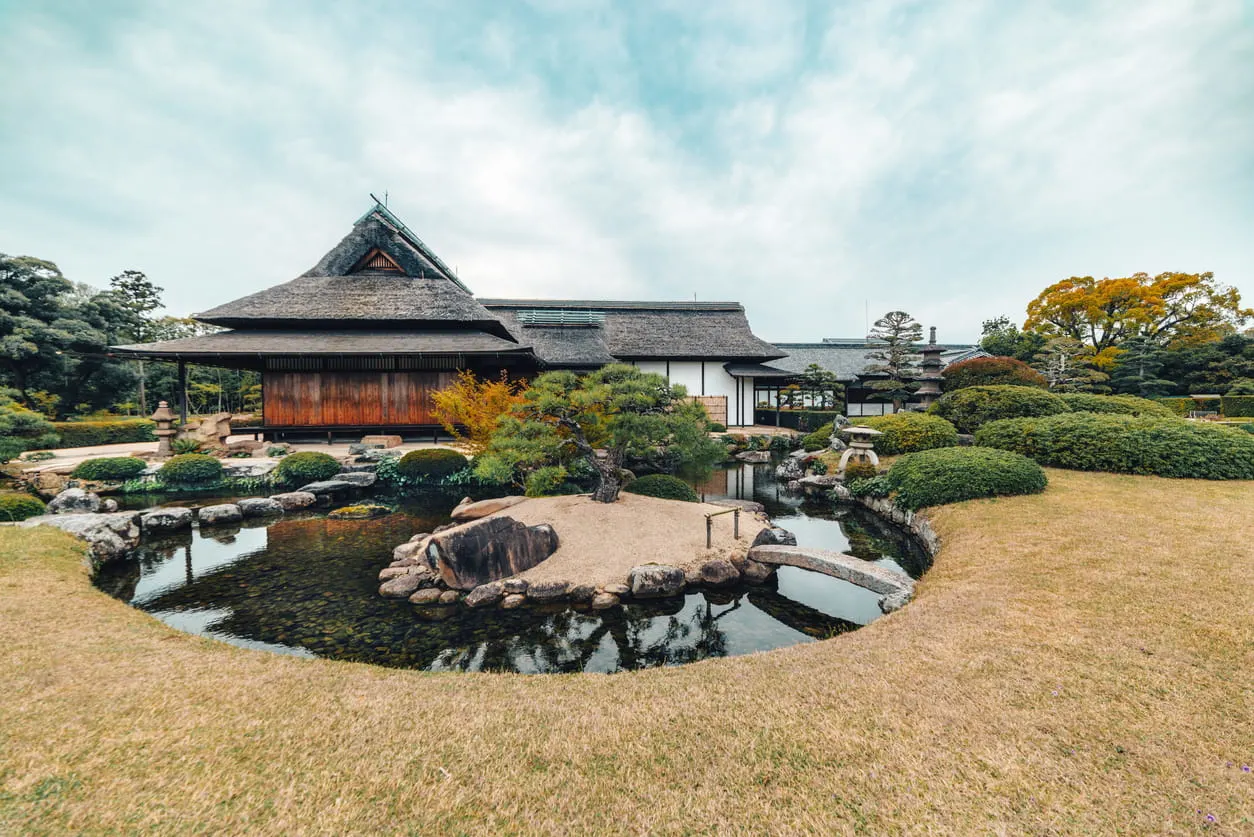
Japan is not for everyone. That’s part of the point. For the impatient, the purely transactional, or anyone expecting a plug-and-play retirement destination, an akiya is likely to disappoint. Japan is orderly but not simple. It is welcoming in small human ways, but not casually open in the way Americans or Europeans might expect. The language is difficult. The paperwork can be opaque. Rural communities move at their own pace. But for the right person, that is exactly the appeal.
The akiya opportunity is about stepping into the gap created by one of the great demographic shifts of our age. Japan’s countryside is not empty because it lacks beauty, history, or meaning. It’s empty because modern life pulled people elsewhere. What remains are valleys, farmhouses, shrines, terraces, forests, and entire communities waiting to see whether the next chapter will be abandonment or renewal.
Foreigners will not solve Japan’s demographic crisis. But some may find themselves unusually well placed to benefit from it—and perhaps, in small ways, to soften it. A retired couple with income from abroad, a remote worker with patience, an artist, a craftsman, a small hospitality operator… Or a Japan obsessive with enough capital and humility could find in an akiya something almost impossible to buy elsewhere: space, safety, beauty, and a sense of purpose.
The missing piece is residency. Until Japan creates a clear, renewable pathway for financially independent foreigners, the akiya dream remains incomplete. You can buy the house. You can restore the beams, clear the garden, and watch the morning mist lift from the rice fields. But unless you can stay, the project remains part-time. A true retirement visa would change that equation. It would turn akiya from curiosities into viable homes.
That is why Japan’s tentative moves toward a retiree visa matter. If the government gets the policy right, it could connect two problems: foreigners looking for an affordable, stable, beautiful place to live, and rural Japanese towns looking for people with time, money, and commitment.
No one should romanticize the challenge. The cheap house is only the beginning. The real investment is in repair, patience, language, trust, and belonging. But in villages where old houses wait beneath mossy roofs, there is a strange and powerful possibility.
Join Us in Europe in 2027!
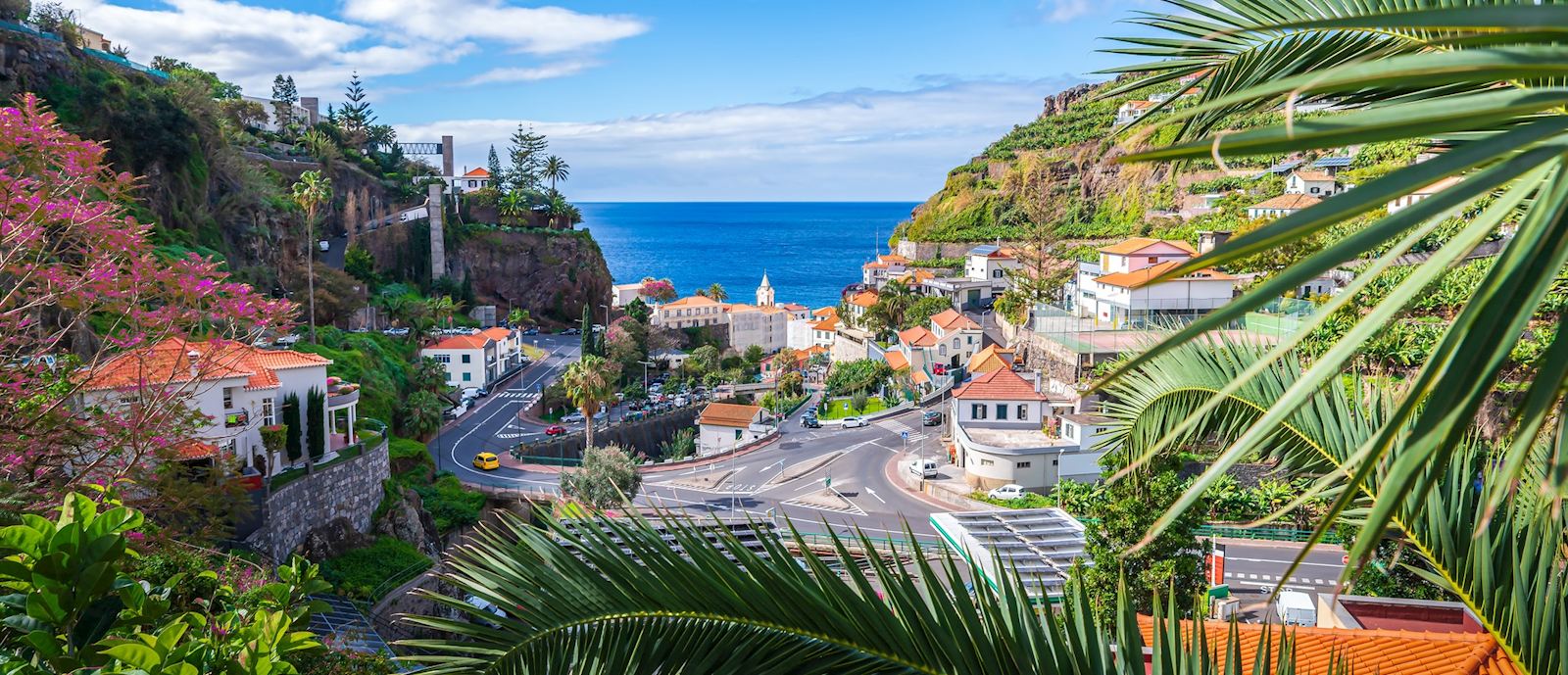
Portugal, Spain, Italy, France, Greece... You’ll find gorgeous, culturally rich cities and towns and beautiful sunny beaches. You can enjoy a high quality of life—yet a surprisingly low cost of living. Starting at $2,500 a month, a couple can live well. With more, you could live large.
If you’ve been dreaming of life in Europe, join us March 20-22, 2027, for International Living’s Fast Track Europe Conference. We’ll meet in Portugal’s sunny Algarve, and our focus will be on Europe’s best destinations to retire better, live well, and spend less.