

Forget everything you’ve read about German Christmas markets. The real thing? It’s so much better than you can imagine. Picture this: you’re in Munich, going up the escalator at Marienplatz as the towering Gothic Neue Rathaus building slowly emerges, uncovering an enormous twinkling Christmas tree and little wooden huts decorated with red paper star lanterns. As you wander around, the mouthwatering aromas of gingerbread and roasted chestnuts fill your nostrils, and everywhere you look, the plaza is buzzing with people chatting, laughing, and holding steaming hot mugs of mulled wine. Others are eating chocolate-covered bananas or grilled Käsekrainer sausages with cheese in the middle.
Since living abroad, there are some holiday traditions that I’ve been fortunate enough to experience in other cultures that I really cherished. In China, it was seeing Chinese New Year light up the sky with thousands of never-ending fireworks. In Argentina, I got to see Carnaval in Gualeguaychú. When I moved from Beijing to Munich in 2012, Marienplatz was my first impression of this incredible Germanic tradition of Christmas markets that I now can’t imagine being without. Every winter, Munich turns into a chilly, twinkly, delicious adventure of markets perfect for people of all ages and walks of life. Plus, there are so many to choose from depending on what kind of vibe and price range you’re looking for.
If you’ve never been before, here are some tips that will help you get the best experience and prepare a bit beforehand. And while Marienplatz is certainly a great place to start, it’s far from the only Christmas market worth seeing here.
Read on to learn about five more unique markets that locals love.
The World’s Best Retirement Havens for 2026
The World’s Best Retirement Havens for 2026
24 Countries Compared, Contrasted, Ranked, and Rated. You don’t have to be rich to enjoy a pampered retirement, you just need to know where to go. With our 35th Annual Global Retirement Index, our experts hand you a detailed roadmap. Details—and a Special Offer—Here

By submitting your email address, you will receive a free subscription to IL Postcards, The Untourist Daily and special offers from International Living and our affiliates. You can unsubscribe at any time, and we encourage you to read more about our Privacy Policy.
Christmas Markets 101
A Brief History
Munich is the nearly 900-year-old capital of Bavaria in southern Germany, known for beer, Oktoberfest, the Bavarian Alps, big companies like BMW and Siemens, and, of course, FC Bayern football. Munich’s first Christmas market started around 700 years ago, inspired by medieval fairs, and was called Nikolaimarkt in honor of St. Nicholas. The markets became part of a winter tradition on December 6, with people buying toys and sweets from local craftspeople and merchants to honor St. Nicholas’ love of children and gift-giving.
With the rise of the Catholic Church and the Holy Roman Empire, the markets were adapted to a more Christian theme with the Nativity to mark the story of Jesus’ birth on December 25. Later, the focus shifted from saints to the Christkind, meaning Christ child, so the markets were renamed Christkindlmarkts.
Practical Insider Knowledge
After 13 years living in Munich and checking out the different Christmas markets, I’d like to share a few essentials for anyone who's just moved here. For starters, there are more than 100 Christmas markets in Munich, including the winter festivals, with different themes, from traditional to modern, and they vary in vibes and decorations, prices, and food and drink offerings. Most of them are held all day long, all week long, and are free to enter.
I recommend going to the Christmas markets during the week or visiting the smaller ones outside the Old Town, which tend to be a bit more commercial and more crowded. However, the winter festivals often have music events with better shows and famous bands on the weekends. Also, don’t forget to try other areas in Munich like Giesing, Schwabing, Neuhausen, Haidhausen, or the Praterinsel.
Start Here
Christkindlmarkt at Marienplatz – The Iconic Classic

The Marienplatz Christmas Market is the oldest and most famous; it’s right in the Old Town plaza, ticks all the boxes, has all the delicious varieties of wine and treats, features a gigantic 25-meter Christmas tree sparkling with 3,000 lights, and is the perfect place to start because of all the traditional cultural events here. Another aspect I appreciate is that it tends to attract street musicians (even one with a piano!), so there’s always a nice, cheery feeling and festive atmosphere.
If you’ve had enough holiday cheer and are looking for the darker side of German Christmas lore, the 500-year-old Krampus Run is one for the books. This year, on Dec. 14, you can see the stars of Alpine European folklore: Perchta, Krampus, and sometimes Klaus. Perchta is a female pagan figure with a dual nature as a beautiful winter goddess or a haggard old “belly-slitter” who sneaks into houses during the Twelve Days of Christmas and stuffs the tummies of bad, lazy children with straw. Similarly, Krampus is the famous demon-like figure who takes bad children away in burlap sacks, whereas Klaus (St. Nicholas) is kind and caring, bringing them sweets and presents instead. If you didn’t know, this is where the idea of Santa’s naughty and nice list comes from.
If that’s not exactly your idea of family fun, there are other daytime activities at Marienplatz, such as a free “Heavenly Workshop” in the beautiful Gothic Neue Rathaus (New Town Hall) for craft-making activities, such as candle making and cards, and even photo opportunities for the kids to dress up as little angels.
Opening times:
Nov. 24 – Dec. 24. From 10 a.m. to 9 p.m. Sundays until 8 p.m.
The World’s Best Retirement Havens for 2026
The World’s Best Retirement Havens for 2026
24 Countries Compared, Contrasted, Ranked, and Rated. You don’t have to be rich to enjoy a pampered retirement, you just need to know where to go. With our 35th Annual Global Retirement Index, our experts hand you a detailed roadmap. Details—and a Special Offer—Here
By submitting your email address, you will receive a free subscription to IL Postcards, The Untourist Daily and special offers from International Living and our affiliates. You can unsubscribe at any time, and we encourage you to read more about our Privacy Policy.
5 More Enchanting Markets to Explore
1. Medieval Christmas Market – Step Back in Time
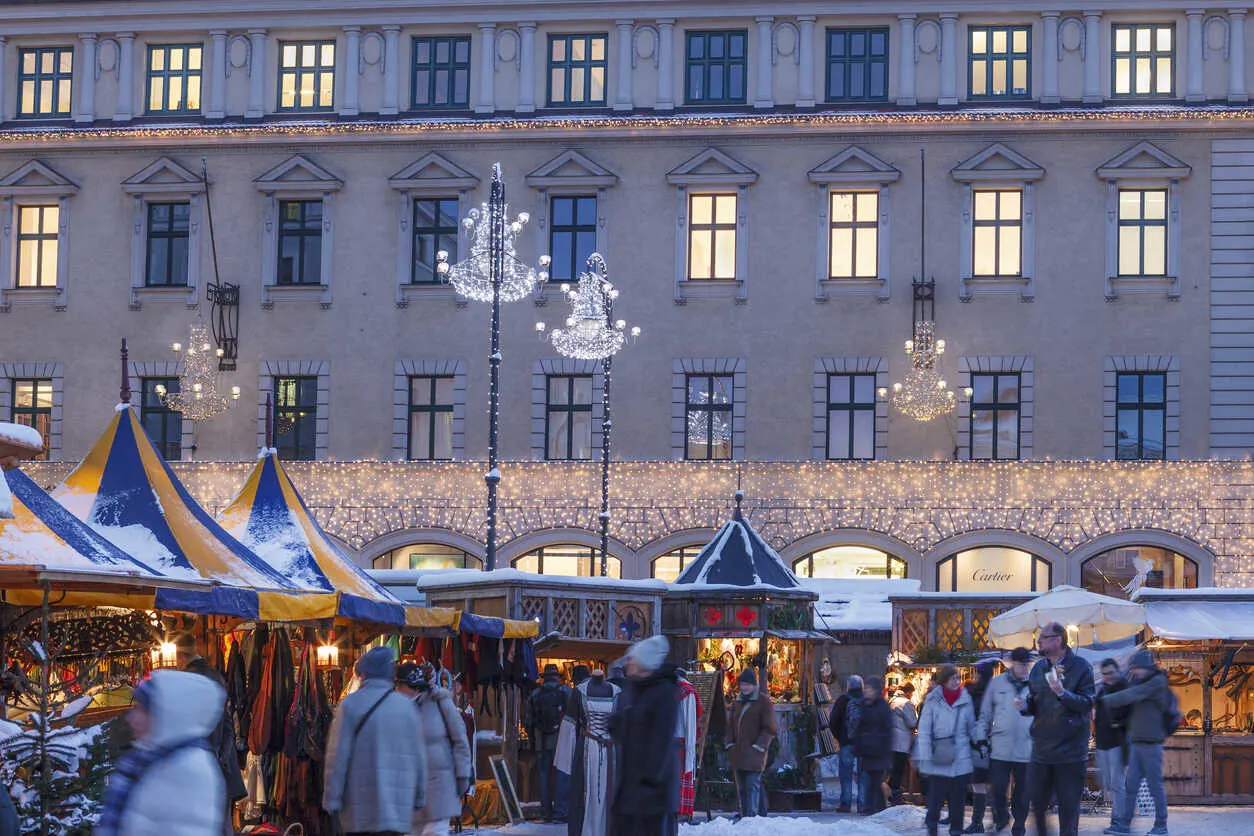
The Medieval Christmas Market at Wittelsbacherplatz reminds me a tiny bit of the Minnesota Renaissance festivals I loved as a kid, combined with glorious German Christmas market cheer. This is the place to be if you’re looking to see court jesters, knights in shining armor with maidens, kings and queens in slashed puffy outfits, sword fighting, and even fire juggling. This market makes you feel like you’ve stepped back in time, where you can even drink mead like King Arthur (real honey wine).
The medieval twist on holiday favorites includes roasted suckling pig on the fire, Schupfnudeln mit Sauerkraut (German gnocchi), Flammkuchen (flatbread with cream and bacon), suspended chained platters filled with sausages, and giant cauldrons of punch and Glühwein served in old goblets. This market is a bit pricier for its location by Odeonsplatz, its novelty, and its quality organic food, but it’s a special one that’s worth it.
This market also focuses on disability accessibility, so there are sloped ramps, easily reachable tables at some stands, and disabled toilets.
Opening times:
Nov. 24 – Dec. 23. 11 a.m. – 9 p.m.
2. Mondscheinexpress Winter Festival Baumgärtner Thiel – Alternative & Artistic
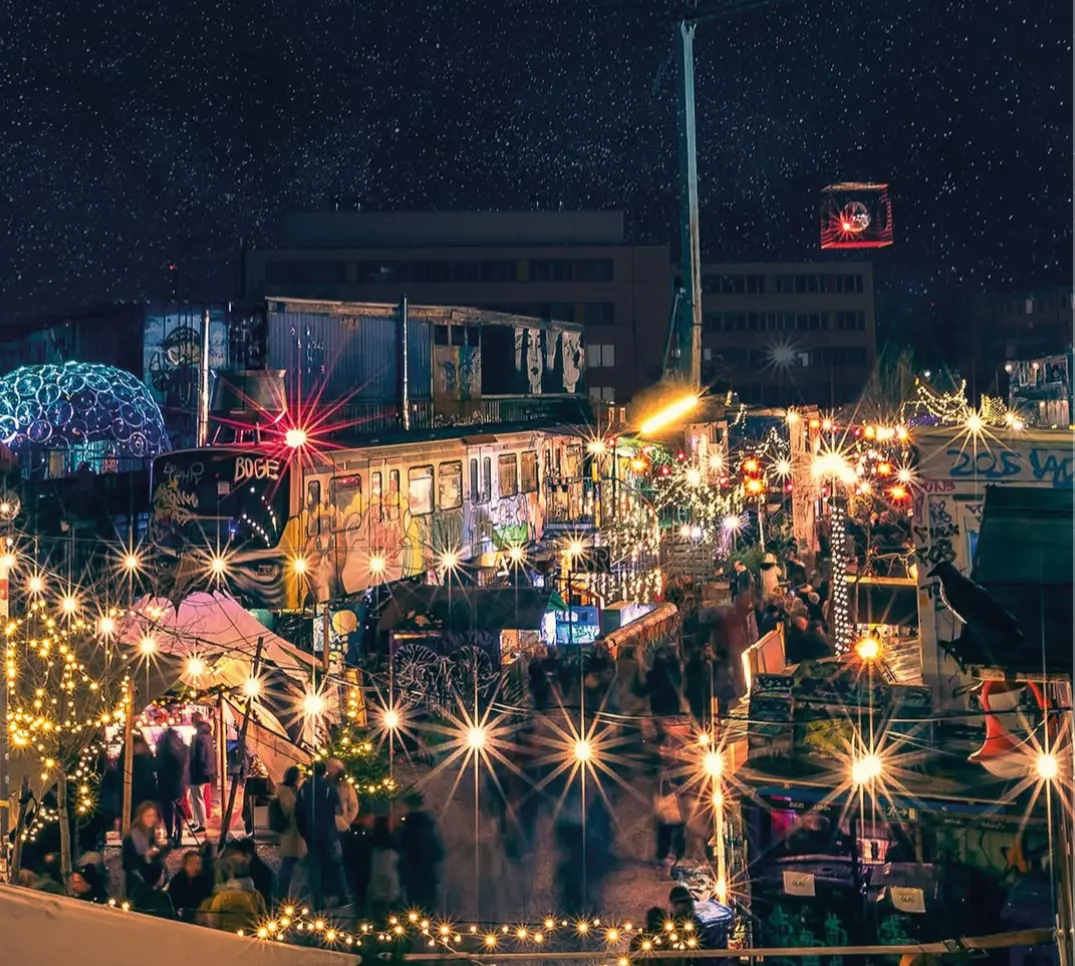
The Baumgärtner Thiel Christmas market is perfect if you’re looking for something nontraditional yet authentic, with alternative vibes. This area is known for its techno club on the weekend and open outdoor summer events. It’s a great way to see an unexplored side of Munich that’s artistic, creative, and completely unique. What I love is that the whole area is upcycled from old cargo shipping containers painted in bright colors with graffiti, train cars turned into bar seating areas, and installations of painted, lit-up bicycle piles, transforming it into a funky place with Bohemian vibes. There’s comedy night, poetry slams, flea markets, and live music.
If you’re vegan or vegetarian, this is the place to eat, as they have a “vegan butcher shop” with all kinds of sausages, a Käsepätzle stand (dumplings with cheese), Kaiserschmarrn (sweet pancake strips), candied fruits, crepes and coffee, and a pizzeria. Enjoy their organic Glühwein or their “hot cocktails” like the recommended Hot Apfelstrudel drink in a mug.
Stay past dark in their club area with super late-night DJs (usually 5–10 EUR cover). This place is a local hidden gem with a chill crowd, and their rules are no homophobia, no sexism, no racism, no hate.
Opening times:
Nov. 20 – Dec. 23. Mon–Fri: 5 p.m. – 10 p.m. Weekends: 1 p.m. – 10 p.m.
3. Christmas Market at the Residenz – Elegant Luxury
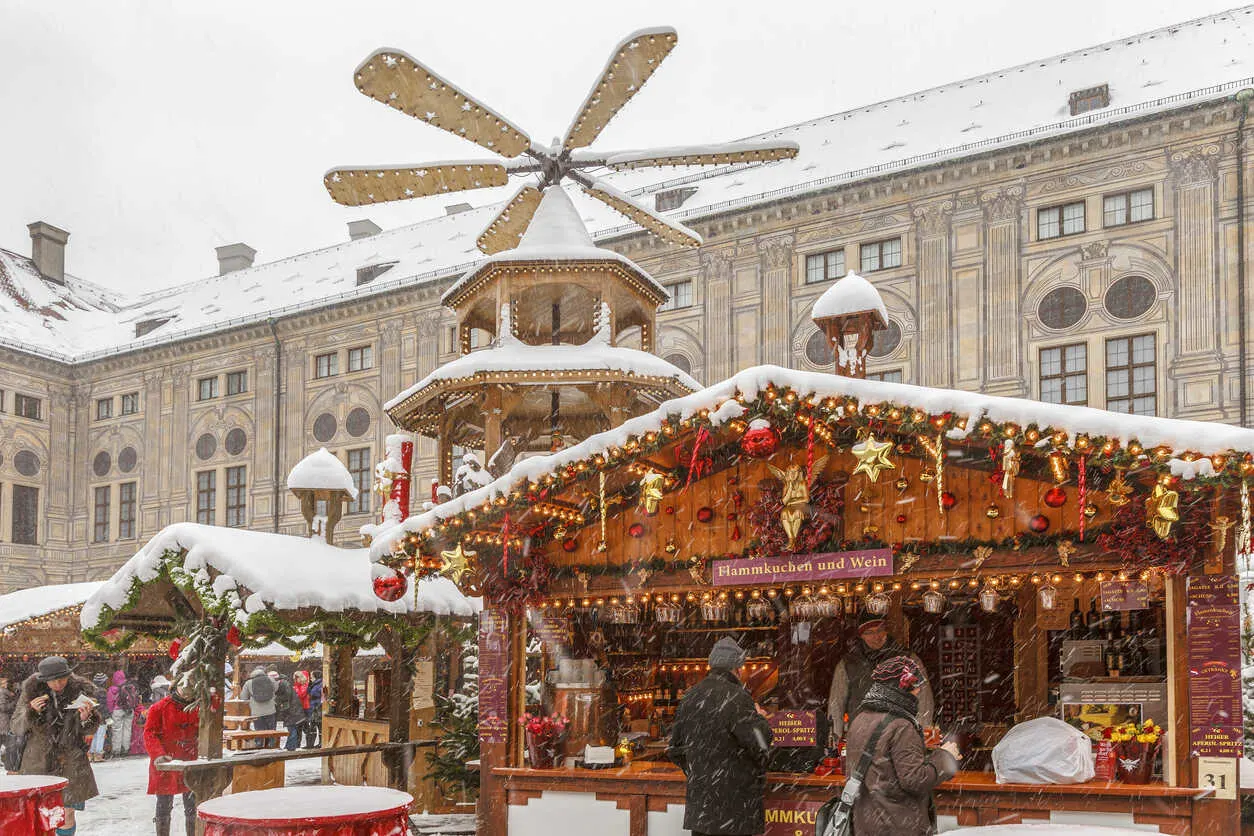
This elegant market takes place in the iconic Residenz, which was initially a medieval castle from 1385 and was later turned into a royal palace for the Wittelsbach dynasty until the end of the German monarchy after World War I. Today it is also used for upscale expositions and events, but in December the Kaiserhof palace courtyard transforms into a twinkling Weihnachtsdorf (Christmas village) that locals rank among Munich’s most beautiful.
What I find charming about this royal courtyard is that it’s surrounded by ornately designed palace walls and has a traditional feel with nativity scenes and even a Weihnachtspyramide, or Christmas pyramid—a large, tiered wooden structure with a giant lighted propeller on top. It’s worth noting that due to its proximity to the Bavarian State Opera and Maximilianstraße (Munich’s Rodeo Drive), it’s a bit more expensive than others and has a romantic “Christmas movie” vibe in the evenings, but during the day, it is family-friendly with face painting, St. Nicholas visits, and even a talking mouse in the fairytale forest.
Opening times:
Nov. 17 – Dec. 22. From 11 a.m. – 9 p.m.
4. Glockenbachviertel’s “Pink” LGBTQ Christmas Market – One of a Kind
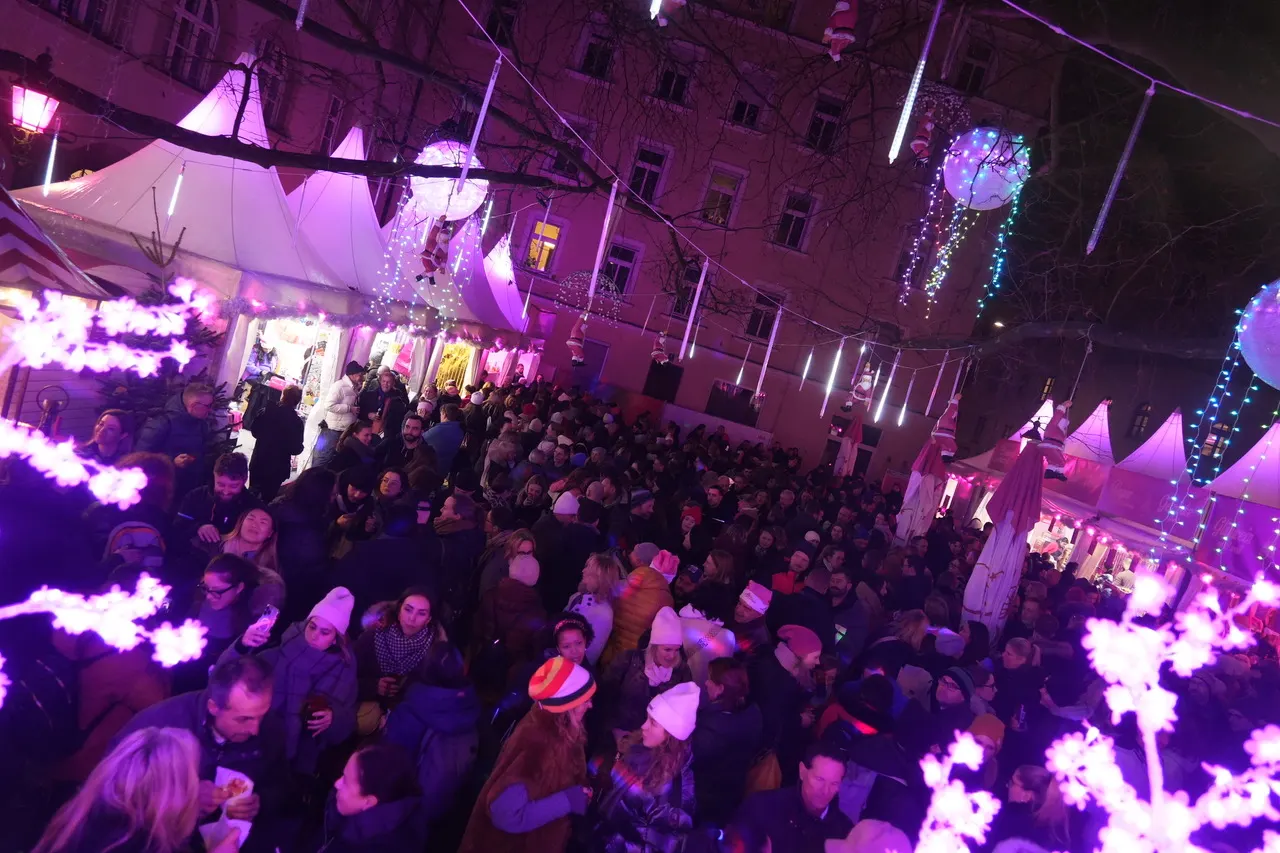
The Pink Christmas market takes place at Stephansplatz in Glockenbachviertel, also known as Munich’s “gayborhood” in the center of town. Now in its 20th year, this special market started by Robert Maier-Kares has a lovely charm with trees decked out in twinkling pink lights, umbrellas, lanterns, and colorful pink pagoda tents. With slogans like “love is always the right direction,” they offer a warm, cozy vibe meant to welcome everyone and raise awareness for the community, including special events like World AIDS Day on Dec. 1.
One of the highlights of Munich’s queer Christmas market is its small stage for super-popular Sunday drag shows with the famous Gene Pascale, plus daily Christmas music after 6 p.m. with DJ James Munich. The Pink Market has all the traditional culinary treats plus pink Glühwein, special bottles of pink wine spritzers, and even its own pink Prosecco tent.
Opening times:
Nov. 24 – Dec. 21. From 4 p.m. – 10 p.m. Weekends 2 p.m. – 10 p.m.
5. Tollwood Winter Festival – Colorful Winter Wonderland

Tollwood Winter Festival is my favorite because it’s not only a Christmas market but a whole Munich cultural experience. It’s colorful, creative, artistic, and musical, and has a uniquely German mystical touch. Every year their special motto reflects global priorities, and the 2025 theme is “Now more than ever,” in the name of peace, democracy, and the protection of the environment. If you live in Munich and really want to impress visiting friends and family, this place will wow them and give visitors an experience they’ll remember.
There’s a strong focus on sustainability, fair trade, organic food, art, and music that I love, along with colorful art installations and tall, blue-and-red fairylike figures on stilts waltzing above the crowd.
Tollwood takes place at Theresienwiese, a huge fairground with several large tent areas like the Grand Bazar, Mercato, Ice Curling, Food Plaza, and Hexenkessel for music. There’s even an entire tent dedicated to certified organic international dishes, so you can get Indian curry, a burrito, Greek souvlaki, or a Moroccan skewer platter. The tents tend to get crowded, so I recommend going with a small group of no more than five people since it can be hard to move around inside if you want to sit and eat.
In my opinion, this is the best place to get handmade Christmas gifts of all varieties and prices while also supporting craftspeople.
One of the highlights of Tollwood is the event program, which includes fire dancers, live bands playing rock, blues, jazz, and salsa, and even famous international bands, plus a special New Year’s Eve event.
Opening times:
Nov. 25 – Dec. 23. From 2 p.m. – 10:30 p.m. and 11:30 p.m. Weekends: 11 a.m. – 1 a.m. Tent closing times vary.
The World’s Best Retirement Havens for 2026
The World’s Best Retirement Havens for 2026
24 Countries Compared, Contrasted, Ranked, and Rated. You don’t have to be rich to enjoy a pampered retirement, you just need to know where to go. With our 35th Annual Global Retirement Index, our experts hand you a detailed roadmap. Details—and a Special Offer—Here
By submitting your email address, you will receive a free subscription to IL Postcards, The Untourist Daily and special offers from International Living and our affiliates. You can unsubscribe at any time, and we encourage you to read more about our Privacy Policy.
Munich Christmas Markets Essential Survival Guide

What to Wear and How to Stay Warm
For starters, dress in warm layers, including gloves and a hat (don’t forget warm socks!), and wear comfortable clothes and shoes since you’ll be standing outside or walking around the whole time. Munich’s December average is a low of 30 F and a high of 39 F. Whatever shoes you wear, make sure they’re warm and comfortable, and keep in mind it can get a bit muddy.
If you want an insider tip, I recommend keeping extra layers at the office because it’s common for co-workers to grab a quick Glühwein after work. It’s a nice chance to get to know your colleagues better; I have so many good memories of Christmas markets with colleagues.
Money
In Germany, I always recommend having cash on you because many places don’t accept credit cards. If there’s an ATM nearby, it will most likely be a Euronet with a hefty 5–7 EUR fee—and often a long line.
Costs
Entry is free unless there’s a special event like a show or concert. Food and drink prices vary, so if you’re on a budget, eat dinner beforehand and just get a wine or two. Expect 5–9 EUR for mulled wine and 4–9 EUR for snacks like sausages, fries, potato pancakes, and chocolate-covered fruits. Hot meals like Käsespätzle or Schupfnudeln mit Sauerkraut cost 7–10 EUR, and at the winter festivals hot dishes can cost up to 15–20 EUR.
Note that for every Glühwein mug and dinner plate, they charge a pfand (deposit) of 2–5 EUR and give you a token. If you want to keep the mug, simply don’t return it. If you want your deposit back, return it before closing or wait until the rush dies down—lines can be long at the end of the night.
Food & Drink You Must Try
Christmas markets have so many delicious traditional treats, snacks, dishes, and drinks, but my best tip is to follow your nose and see where people are lined up—it’s usually worth the wait.
The most famous beverage is Glühwein, hot mulled wine with spices in a ceramic mug. There’s also nonalcoholic Kinderpunsch. If you’re feeling festive, there’s the stronger Feuerzangenbowle, served with a flaming rum-soaked sugar cube on top. Be careful with these if you’re out with colleagues, as they’re much stronger. Markets also offer regular wine, beer, hot chocolate, coffee, and sodas. Each market usually has its own mug designs you can buy and collect.
Traditional snacks include chocolate-covered fruits, marzipan sweets, gingerbread, roasted chestnuts, and candied almonds. If you prefer savory flavors, try the smoked Käsekrainer sausages or a grilled bratwurst with spicy mustard. For something starchier, get a Flammkuchen or Kartoffelpuffer potato pancakes with applesauce. My favorite is the seasoned spiral potato on a stick called Kartoffellanzen. For maximum comfort food, you can’t go wrong with Käsespätzle.
Some places like Tollwood and the Medieval Christmas Market prioritize fair trade, sustainability, and organic ingredients (look for “bio”). In recent years, vegetarian and vegan options have also increased. If you don’t eat meat, the best options are Tollwood, the Pink Christmas Market, and the Mondscheinexpress Winter Festival.
Unique Finds & Treasures
Another reason I love the Weihnachtsmärkte is that I’ve found fantastic gifts for when I visit family in the U.S. I also like supporting local and visiting artists. You’ll find handmade ornaments, star-shaped lanterns, blown-glass items, hand-carved nativity scenes, jewelry, toys, collectible pieces, candles, and more.
Conclusion: Something for Everyone
If you’re new to Munich, you’re in for a real treat. With more than 100 Christmas markets across the city, you’ll find everything from cozy traditional vibes to alternative creative scenes, each with its own flavors and atmosphere. Since moving to Germany, I’ve fallen in love with how the markets turn the season into something more than just worrying about Christmas shopping like I used to in the U.S. Here, it’s about soaking up the holiday magic—whether you’re grabbing a quick snack, taking photos, dancing along to a band, or helping your kids make candles.
Don’t take my word for it: go lose yourself in the warmth of Munich’s Christmas spirit. And trust me, thirteen years later, I still get that same giddy feeling going up the Marienplatz escalator—and you will too. Your favorite market is out there waiting for you.
The World’s Best Retirement Havens for 2026
The World’s Best Retirement Havens for 2026
24 Countries Compared, Contrasted, Ranked, and Rated. You don’t have to be rich to enjoy a pampered retirement, you just need to know where to go. With our 35th Annual Global Retirement Index, our experts hand you a detailed roadmap. Details—and a Special Offer—Here
By submitting your email address, you will receive a free subscription to IL Postcards, The Untourist Daily and special offers from International Living and our affiliates. You can unsubscribe at any time, and we encourage you to read more about our Privacy Policy.