Paraguay is a country reinventing itself. Between 1989 and 1993, it transitioned from a dictatorship to a democratic system of government with a civilian president. Then, between 2016 and 2025, it transitioned again. This time, from one of South America’s poorest and least developed countries to one of the continent's fastest growing economies.
Paraguay turned its economy around by reforming its institutions and monetary policy, combined with flexible residency rules and tax incentives.
In 2025, Paraguay received a record number of international arrivals and residency applications, and registered more than 92,000 new taxpayers (both companies and individuals). It has received investment-grade credit ratings from Moody’s and S&P. And the IMF predicts robust economic growth through 2026 and beyond.
I can tell you from firsthand observation that economic opportunities in Paraguay don’t just apply to big corporations and deep-pocket investors. They also apply to the little guy: retirees on a budget, small investors, and one-person online businesses.
The following are five examples of what I mean.
The World’s Best Retirement Havens for 2026
The World’s Best Retirement Havens for 2026
24 Countries Compared, Contrasted, Ranked, and Rated. You don’t have to be rich to enjoy a pampered retirement, you just need to know where to go. With our 35th Annual Global Retirement Index, our experts hand you a detailed roadmap. Details—and a Special Offer—Here

By submitting your email address, you will receive a free subscription to IL Postcards, The Untourist Daily and special offers from International Living and our affiliates. You can unsubscribe at any time, and we encourage you to read more about our Privacy Policy.
1. A Lower Cost of Living
Paraguay’s current economic conditions, which include a monetary policy that keeps inflation in check, result in a significantly lower cost of living.
One of the country’s most exclusive residential communities is in and near the Villa Morra neighborhood in the city of Asunción, Paraguay’s capital. It’s where you find high-end apartment towers, upscale shopping, and a broad selection of inviting restaurants.
Even here, in one of Paraguay’s most coveted quarters, you can live a comfortable life at a fraction of the cost back home. Here are some specifics:
Dining out
In the Villa Morra Area, a nice dinner out doesn’t need to break the bank. For example, a steak dinner with sides, salad, and a craft beer or two may come in at around $20 per person.
A casual lunch may cost between five and $10. One of my favorite places to eat turned out to be a cafeteria where you pay by weight. (It’s in the spacious deli section of the Superseis grocery market on Mariscal López Avenue.) It offers a huge variety of fresh, high-quality dishes along with a dining area. I liked it because I could get exactly what I wanted in just the amount I wanted. One day, I selected generous helpings of chicken and beef, along with a couple of different salads. To drink, I had sparkling water and then a coffee. The total price: $4.43
Groceries
I compared the prices of several food items at a high-end grocery store in Asunción with those at a popular grocery store chain in the US. Eggs in Asunción were 30% less than in the US. Ground beef was 68% less, basic white rice was 70% less, regular milk was 60% less, and a liter of beer was 65% less.
Rent
In Villa Morra, I found furnished one-bedroom apartments starting at around $700 per month. I also found a selection of furnished two-bedroom apartments in buildings with amenities starting at around $1,100 per month.
Utilities
Regarding utilities, an expat family of three reports that their combined power and water costs are about $60 in summer due to air conditioning use and about $20 in winter, when usage is minimal.
A home WiFi and cellphone service bundle costs about $45 per month. If you add a second cellphone plan, the total for home WiFi and two cellphone plans is around $65 per month.
Transportation
To get around the Villa Morra Area, most expats walk or take an Uber. When you take an Uber in Asunción, you can choose between a regular and a "comfort" ride. With an Uber Comfort, you pay a little more for an experienced driver, a roomier car, and air conditioning. For a 15-minute Uber Comfort ride, I paid $4.57.
Healthcare
You can choose from a variety of health insurance plans with varying degrees of coverage. An expat in his early 70s reports obtaining a plan with ASISMED, a large health insurance provider in Paraguay, for about $25 per month.
A Paraguayan professional I spoke with pays $35 per month for a health plan with Sanatorio Adventista, a private Adventist hospital. She likes it because it’s a smaller institution and believes she gets more individual attention than she would with a larger organization.
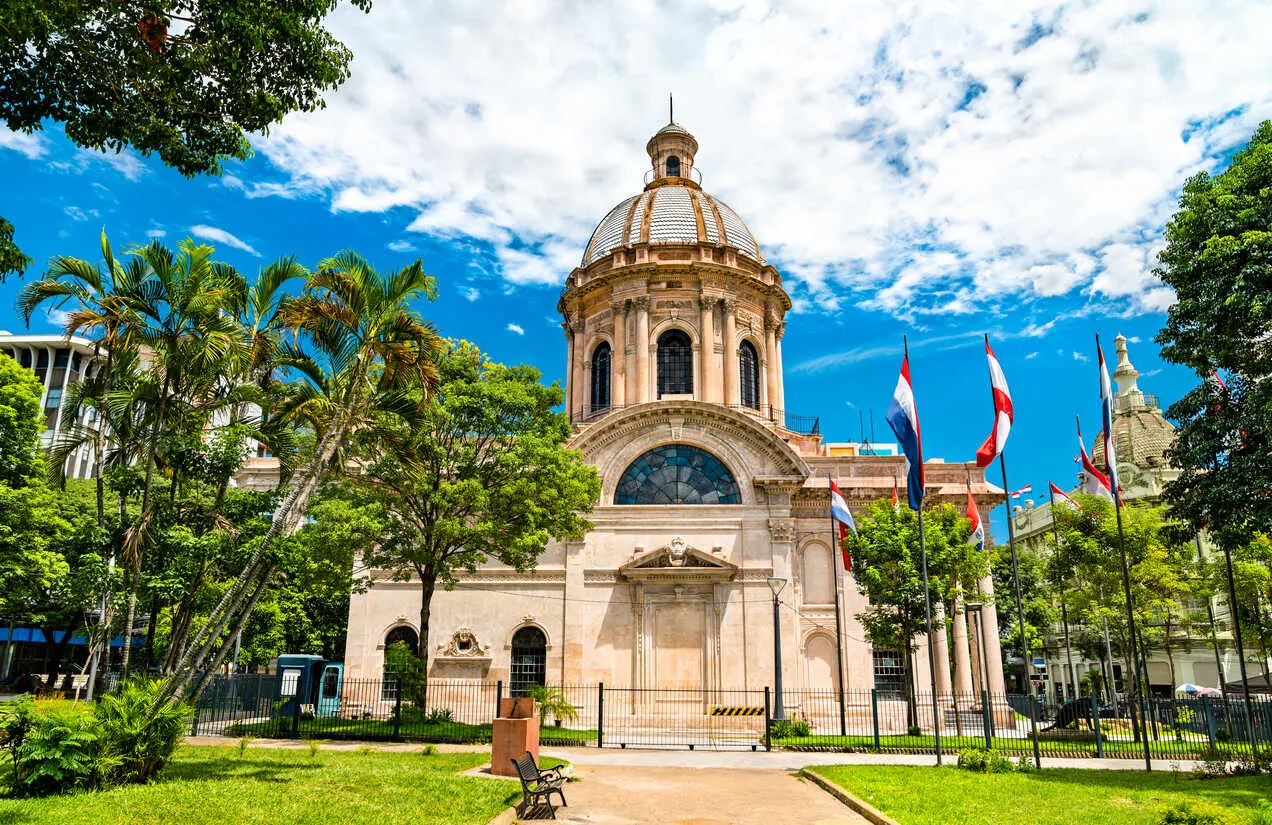
2. Low Financial Requirements for Residency
In many countries, the monthly income and/or investment requirements to qualify for legal residency keep rising. However, in Paraguay, the income requirement is simply a solvency test to show you can support yourself.
Here’s how it works. In Paraguay, you need two years as a temporary resident before you can become a permanent resident.
You don’t need to prove financial solvency when you apply for temporary residency. Anyone who can travel to Asunción, submit the required paperwork (including a passport, birth certificate, a clean criminal background check, and proof of marital status), and pay the applicable fee can become a temporary resident.
However, when you apply to change your temporary residency status to permanent residency, you do need to prove financial solvency, which can be accomplished in a number of ways.
If you’re a retiree, you need to prove your retirement income and show the amount, but no set minimum is specified. If you’re of working age, holding a professional or trade degree can satisfy the requirement. You can also move to Paraguay and, during the two years of temporary residency, start a business activity, such as working online. Then, at the end of the two years, present your local tax filings to prove you can support yourself.
Join Us in Europe in 2027!
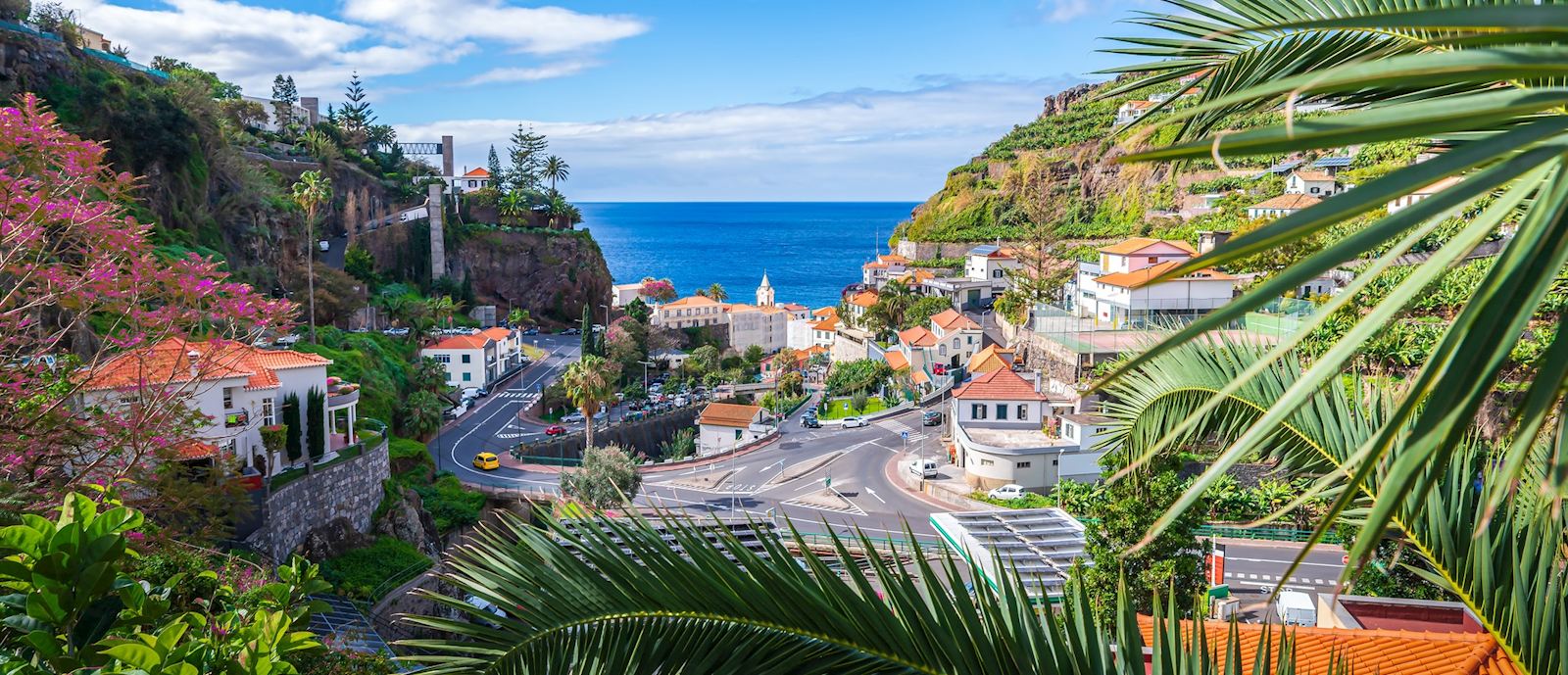
Portugal, Spain, Italy, France, Greece... You’ll find gorgeous, culturally rich cities and towns and beautiful sunny beaches. You can enjoy a high quality of life—yet a surprisingly low cost of living. Starting at $2,500 a month, a couple can live well. With more, you could live large.
If you’ve been dreaming of life in Europe, join us March 20-22, 2027, for International Living’s Fast Track Europe Conference. We’ll meet in Portugal’s sunny Algarve, and our focus will be on Europe’s best destinations to retire better, live well, and spend less.
3. Modern Apartments for Under $100,000
As mentioned, Asunción’s Villa Morra area is among the most upscale communities in Paraguay. While looking into real estate offerings here, I found a selection of newer one-bedroom apartments starting at around $90,000. Two-bedroom, two-bathroom units in buildings with amenities are priced from about $160,000.
In other areas of Gran Asunción (the Asunción metropolitan area), prices are lower. In the city of Luque, 7.5 miles east of Villa Morra, I found basic one-bedroom, one-bathroom apartments starting at $60,000. Two-bedroom, one-bathroom units can be found from around $85,000.
Another city with an expat community is Encarnación. It fronts the Paraná River in southern Paraguay, across from the city of Posadas, Argentina. With its long, sandy riverfront beaches, it’s popular with summer vacationers from other parts of the country.
One-bedroom apartments within walking distance of the beach are available from about $70,000. Two-bedroom, two-bathroom units begin at roughly $95,000.

4. Tax Incentives for Retirees and Solo Online Businesses
Paraguay’s territorial “10-10-10” tax system (10% value-added tax, 10% income tax, and 10% corporate tax) results in one of the lowest tax burdens in Latin America.
Because the system is largely territorial (as opposed to worldwide), retired expats in Paraguay don’t need to pay local taxes on pension or Social Security income from back home.
Paraguay’s tax regime also includes programs that offer even lower rates for sole proprietors, including online freelancers. For example, under a program called SIMPLE, a sole proprietor earning less than about $300,000 per year can opt to pay 3% of gross turnover rather than the standard 10% on business income after expenses.
As a sole proprietor earning up to around $1,000 per month, you may qualify for a program called RESIMPLE. Under this program, you pay a single monthly tax of between $3 and $12, depending on your income level.
Social Security contributions for sole proprietors are optional. For expats from the U.S. who are required to contribute to U.S. Social Security, this provides a simple way to avoid paying into two systems.
5. An Ideal Plan B Destination
Perhaps you want to move abroad, but you’re not ready to do so just yet. You want to work for another year or two. Or you need time to wind things down back home. At the same time, you’d like to get legal residency set up, to hold the door open so that when you’re ready to make a move, you know you can.
In many countries, doing this is difficult due to a physical presence requirement, the amount of time you’re required to spend in the country (for example, at least 183 days per year) to maintain your status as a resident in good standing.
For a Plan B, you need a country with a low physical presence requirement. In this regard, Paraguay is ideal. Once you obtain a two-year temporary residency, you can visit the country as infrequently as once a year. Then, after becoming a permanent resident, you can visit as little as once every three years to maintain your status.
The World’s Best Retirement Havens for 2026
The World’s Best Retirement Havens for 2026
24 Countries Compared, Contrasted, Ranked, and Rated. You don’t have to be rich to enjoy a pampered retirement, you just need to know where to go. With our 35th Annual Global Retirement Index, our experts hand you a detailed roadmap. Details—and a Special Offer—Here
By submitting your email address, you will receive a free subscription to IL Postcards, The Untourist Daily and special offers from International Living and our affiliates. You can unsubscribe at any time, and we encourage you to read more about our Privacy Policy.
Join Us in Europe in 2027!
Portugal, Spain, Italy, France, Greece... You’ll find gorgeous, culturally rich cities and towns and beautiful sunny beaches. You can enjoy a high quality of life—yet a surprisingly low cost of living. Starting at $2,500 a month, a couple can live well. With more, you could live large.
If you’ve been dreaming of life in Europe, join us March 20-22, 2027, for International Living’s Fast Track Europe Conference. We’ll meet in Portugal’s sunny Algarve, and our focus will be on Europe’s best destinations to retire better, live well, and spend less.