“Why would I go back? I have no reason to go back. I don’t want to go back. This is my life now.”
That comment came inside a coffee shop in Nafpaktos, a truly ancient Greek port town more than 3,000 years in the making. It sits on the continental side of Greece, just across the Gulf of Corinth from the Peloponnese peninsula.
It was there that I met Margie and Frank Borth, Americans (66 and 69, respectively) who decamped from Albuquerque and landed in the Florida of Europe.
I’d ventured to western Greece specifically to seek out Americans living in a corner of the country that rarely shows up in the travel press… or even the work-from-anywhere digital nomad press.
Which itself raises the initial question I had for the Borths: Why Europe… Why Greece… and why Nafpaktos?
Most folks who travel to Greece on holiday, or to live, almost always choose a few highly obvious spots: Athens, sometimes Thessaloniki, or the islands of Corfu and Crete.
Few choose western Greece, the “real” Greece. This is the bulk of the Greek mainland—by turns Alpine and beachy— that stretches from Athens back toward the rest of Europe. While Western tourists are overcrowding places like Mykonos and Santorini, the Greeks are instead vacationing in Western Greece—up in the heavily forested mountains, or down along the shore in towns that get little Western press but look every bit as Greek-restaurant poster-worthy as the more famous cities and islands.
How to Get a European Passport in Three Months
... Getting Citizenship in as Little as 3 Months? (even if you don’t have a European parent or grandparent)
... How to Live in Europe Year-Round on an American Passport Alone (no visa or second citizenship required)
... Why 2026 May Be the Last Year for Easy European Passports for Americans
A Move to Mexico Leads to Greece
For the Borths, this move “didn’t start off as ‘We’re moving to Greece,’” Margie told me.
“We were thinking Mexico. We lived in Albuquerque, and we thought we could be out of the country, but close enough that we could still drive home to see family and friends. We made three visits to different parts of Mexico, and we were ready to make the move—the permits, everything, ready to go. And then we decided to go back to Europe just because we hadn’t been back in five years after the pandemic.”
While on a cruise from Italy, through the Mediterranean, Margie said, “something just happened. We got home and we started rethinking the whole Mexico thing.
The Borths knew that Frank had European heritage, which turned out to be Romanian. His grandparents were Romanian; his parents lived there until they were 19. And until recently, Romania didn’t have a language requirement for citizenship, making the process of picking up a Romanian passport substantially easier.
Thus, the Borth’s new plan was born: Move to Europe instead of Mexico.
The couple shut down their life in Albuquerque and moved to Bucharest in April 2025 and “loved it,” according to Frank. Living in the center of Old Town (a picturesque and quickly regentrifying European capital), they nabbed a penthouse for the equivalent of just $1,400 per month.
But the residency path open to them while wiling away the years it takes to process a citizenship application, meant starting a business and paying about $5,000 per year in ongoing costs.
That wasn’t part of their plan.
They realized, however, that they could live anywhere while waiting on Frank’s Romanian passport. And that was their path back to the Mediterranean—to Greece.
So, one Greek attorney later and the Borths traded an Old World European capital—once known as the Paris of the East—for a beach village on the north shore of the Peloponnese peninsula, Akrata. That was functional; they needed a Greek address for the visa application and they found a Canadian on Facebook who had an apartment for rent… that happened to be in Akrata.
“We knew it was going to be a stepping stone,” Margie said. “It was really small. We have two big dogs. It was up on a hill. It just wasn’t a good fit. But it was an address, and we could use it for the visa and to start looking around for where we really wanted to live.”
They explored all through the Peloponnese, an under- touristed peninsula of rugged mountain villages and quiet coastal towns. On a lark, they crossed the Rio-Antirrio Bridge—one of the world’s longest cable-stayed bridges—that connects the Peloponnese to the mainland. A few minutes to the east of the bridge’s mainland terminus they stumbled upon Nafpaktos, a historically significant seaside town of roughly 13,000 people. The Holy League decisively broke Ottoman naval power here and it’s where author Miguel de Cervantes lost the use of his left arm in that battle.
“We came here on a whim,” Margie said. “We thought it was an idyllic little town and just fell in love with it.”
Quaint atmosphere. Walkable streets. An ancient Venetian harbor ringed on three sides by shops, tavernas, and cafés, and on the forth, a beach that sits on the Gulf of Corinth.
A pine-covered hill rises just beyond the harbor, atop which is perched a Venetian/Ottoman Castle, recognized as one of the most architecturally distinctive medieval fortifications in the country.
As with much of Western Greece, this is Greece for the locals. Shops and services operate on a Greek rhythm. Think: siesta. The Greeks—and now the Borths—know it as mesimeri, the traditional mid-day break typically running from 2:30 to about 5:30. Shops close. The post office shutters. Streets go silent. The Greeks are at home sharing the biggest meal of the day, and resting during the hottest hours, when no one wants to be out and about… unless you’re an American accustomed to a different rhythm.
“It has taken some getting used to,” Margie told me.
The Roots of Life in Nafpaktos
After looking around, the Borths decided to buy a house in Nafpaktos.
For $205,000 they picked up a maisonette of roughly 1,550 square feet, giving them two floors of living space, with three bedrooms and two-and-a-half baths.
As well, it has a garage Frank wanted and a garden out back that Margie wanted, with a banana and a mandarin tree.
There’s also plenty of space for their dogs to run around. And because it’s modern, it meets earthquake standards in a part of the world that gets the shakes. Plus, it’s subdividable into two units if the couple ever wants to sell half.
Life here is much cheaper than back in the States. Property tax is a good example: A bit more than $300 annually in Greece versus $5,000 back in Albuquerque. Electricity here: $30 to $60 a month, depending on weather and the use of their clothes dryer.
The Borths have settled into Greek life now, and they plan to stay.
“We’re not going back to where it’s cold—Romania,” Frank said. “We’re staying. We want to be in the Florida of Europe.”
They have no long-range plans to return to the US. “I don’t see why we would do that,” Margie said. “We’d go broke there,” Frank added.
“It’s like, you go back to the US and all your money goes to just paying for healthcare. We’d be undoing everything we’ve done by moving to Europe. What would be the point? No—we’re settled in here.”
Get Your Free Greece Report Today!
Get Your Free Greece Report Today!
Learn more about a slower pace of life in Greece and other countries in our free daily postcard e-letter.
Simply enter your email address below and we'll also send you a FREE REPORT — Retire in Greece—Find Your Dream Retirement in This European Archipelago.
Get the latest info on properties, healthcare and visas in our most recent research.

By submitting your email address, you will receive a free subscription to IL Postcards, The Untourist Daily and special offers from International Living and our affiliates. You can unsubscribe at any time, and we encourage you to read more about our Privacy Policy.
Join Us in Europe in 2027!
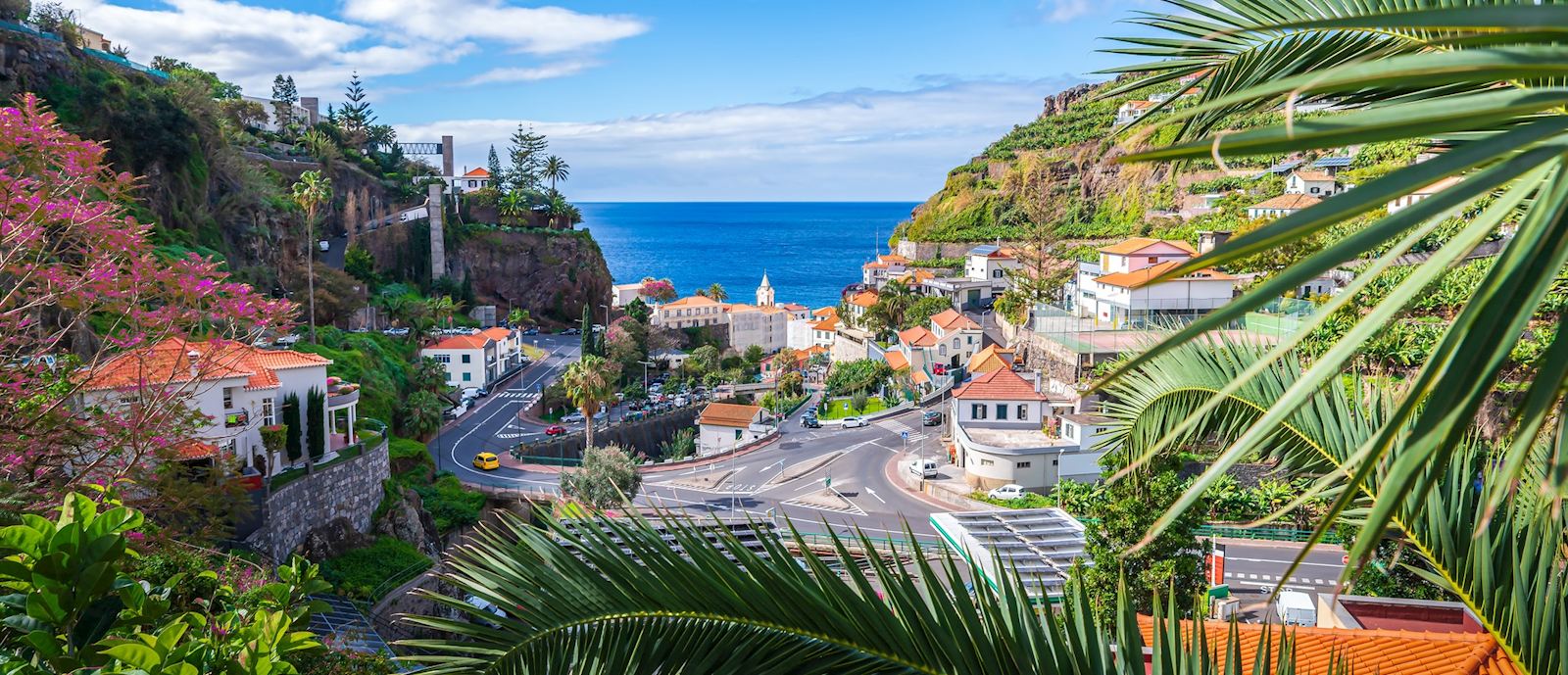
Portugal, Spain, Italy, France, Greece... You’ll find gorgeous, culturally rich cities and towns and beautiful sunny beaches. You can enjoy a high quality of life—yet a surprisingly low cost of living. Starting at $2,500 a month, a couple can live well. With more, you could live large.
If you’ve been dreaming of life in Europe, join us March 20-22, 2027, for International Living’s Fast Track Europe Conference. We’ll meet in Portugal’s sunny Algarve, and our focus will be on Europe’s best destinations to retire better, live well, and spend less.