When my family and I purchased a vacation home in Zaragoza, Spain, one of the nation's largest inland cities, I felt a stark contrast in daily life from what I’d grown up experiencing while visiting friends in the coastal, southern regions of the country.
In my new home, I struggled to find English-speaking friends, I struggled with the language, and I struggled with the slower pace of life. It was all a culture shock, even though I knew exactly what I was getting into. I wanted to feel foreign in my new home because it challenged me in many ways. Being outside my comfort zone was exactly what I needed during a time of personal transformation.
And yet, we all need a reprieve from being pushed past our boundaries, which I discovered during the weeklong Easter festival called Semana Santa a couple of years ago. Drum processions banged through the streets day and night, sometimes into the wee hours, from midnight until 5 a.m.—a cacophony of noise that sent me searching for a new living situation. I got on Idealista and started pulling up property listings around the nation so we could uproot, and I could escape. I’d had enough of the intensity of the religious parades and the traditional way of life. I needed to get out.
My respite? Jávea. Sandwiched between the large port cities of Valencia and Alicante, modern and lively Jávea has often been a getaway destination for a few nights for my family. We’ve been visiting our British friends there for nearly 15 years, staying in their picturesque whitewashed villa, enjoying grilled sardines by the ocean, hiking up to the windmills and miradores, and taking the deep breath of relief that naturally comes with visits to the sea.
Jávea and the neighboring town of Moraira, as I’ve found over the years, offer English speakers like myself the perfect sanctuary for settling down (or for short stays, all the same). It’s the ideal blend of English living and Spanish culture, without overdoing either.
For expats seeking a new life abroad in Spain but fearing it may be too far outside their comfort zone, the towns of Jávea and Moraira might be the perfect fit for an international debut.
Get Your Free Spain Report Today!
Get Your Free Spain Report Today!
Learn more about the lower cost of living in Spain and other countries in our free daily postcard e-letter. Simply enter your email address below and we'll also send you a FREE REPORT — Live the Good Life in Sunny, Affordable Spain.

By submitting your email address, you will receive a free subscription to IL Postcards, The Untourist Daily and special offers from International Living and our affiliates. You can unsubscribe at any time, and we encourage you to read more about our Privacy Policy.
An Easy Landing in Spain
Language and People
Jávea and Moraira offer an easy introduction to life in Spain. While the landscape, climate and food culture certainly hold steadfast to Spain’s authentic core, the reality is that nearly everyone I’ve encountered in my 15 years of visits to the area has been an English speaker.
While the local Spaniards I have met were typically bilingual English speakers I met through my British friends, I’ve been told that Jávea and Moraira have large communities of expats from the U.K., Holland and Germany.
These communities have greatly shaped the expat lifestyle, leaning toward an English-speaking one in Jávea.
Not So Far From Home
To illustrate this, on one particular visit to Jávea to see my longtime family friends, we were invited to an Easter party. Typically, especially if this party were at my house in Zaragoza, we’d be expected to speak predominantly in Spanish, and the food would be exceptionally Spanish—sometimes to the point of, “Should I eat that?” (They do like intestines and pigs’ feet.)
However, at this Easter party, it was a welcome and really comforting surprise for us, having just escaped the aforementioned chaos of Semana Santa in Zaragoza. We walked into an all-British (with a trickle of Americans) traditional Easter egg party.
There was an egg hunt, bunny decor, even deviled eggs on the table. Silly me, I brought bellota jamón as a shareable appetizer—but everyone else had brought platters of comfort food from their homeland. There was chili with nachos, cornbread, casseroles, and all sorts of familiar favorites. I was actually surprised by how “American” the buffet spread felt in a room full of Brits.
My daughter gleefully enjoyed the egg hunt, and I got to sit down with Americans and Brits for a totally unobstructed day of laughter and fun.
How to Get a European Passport in Three Months
... Getting Citizenship in as Little as 3 Months? (even if you don’t have a European parent or grandparent)
... How to Live in Europe Year-Round on an American Passport Alone (no visa or second citizenship required)
... Why 2026 May Be the Last Year for Easy European Passports for Americans
Overcoming Language Barriers
Undoubtedly, having social circles that speak your language is an easy way to settle into a routine in Jávea or Moraira, but I understand the fear that everyday life may require more Spanish-language skills than Duolingo can teach you in a 1,500-day streak.
I know firsthand the isolation of wanting to join a conversation and not being able to find the words to make jokes or show your full personality. I’ll feel left out of casual conversations when the whole room is laughing or kick myself for struggling to tell a story I’ve told in English a hundred times.
Often, especially for me in Zaragoza, I’ve had to speak Spanish to everyone I meet. Only on rare occasions do I find someone who knows how to direct me to the bathroom in English. Most interactions are in Spanish. I welcome the challenge, but for many, this is one of the greatest fears of a big move abroad.
Luckily, in Jávea and Moraira, you’ll find that speaking the language isn’t so much a requirement as it is a “nice to have.”
English was easy to come by, shop after shop. I was surprised to bring my seashell jewelry or little trinket souvenirs to the counter and be greeted with “Did you find everything you need?” versus “¿Necesitas una bolsa?”
I’ve learned the typical Spanish interactions at the cashier—do you need a bag, are you paying with a card? You can anticipate these and flow easily with some sí and no responses, but this was bafflingly easy. In Jávea and Moraira, I can have full, sometimes even lively, conversations with these shopkeepers.
While it can be rather disarming coming from inland Spain, where the Spanish language is king, hearing English so readily in Jávea and Moraira is quite the comfort.
A Glimpse Into Everyday Life
Mediterranean Living
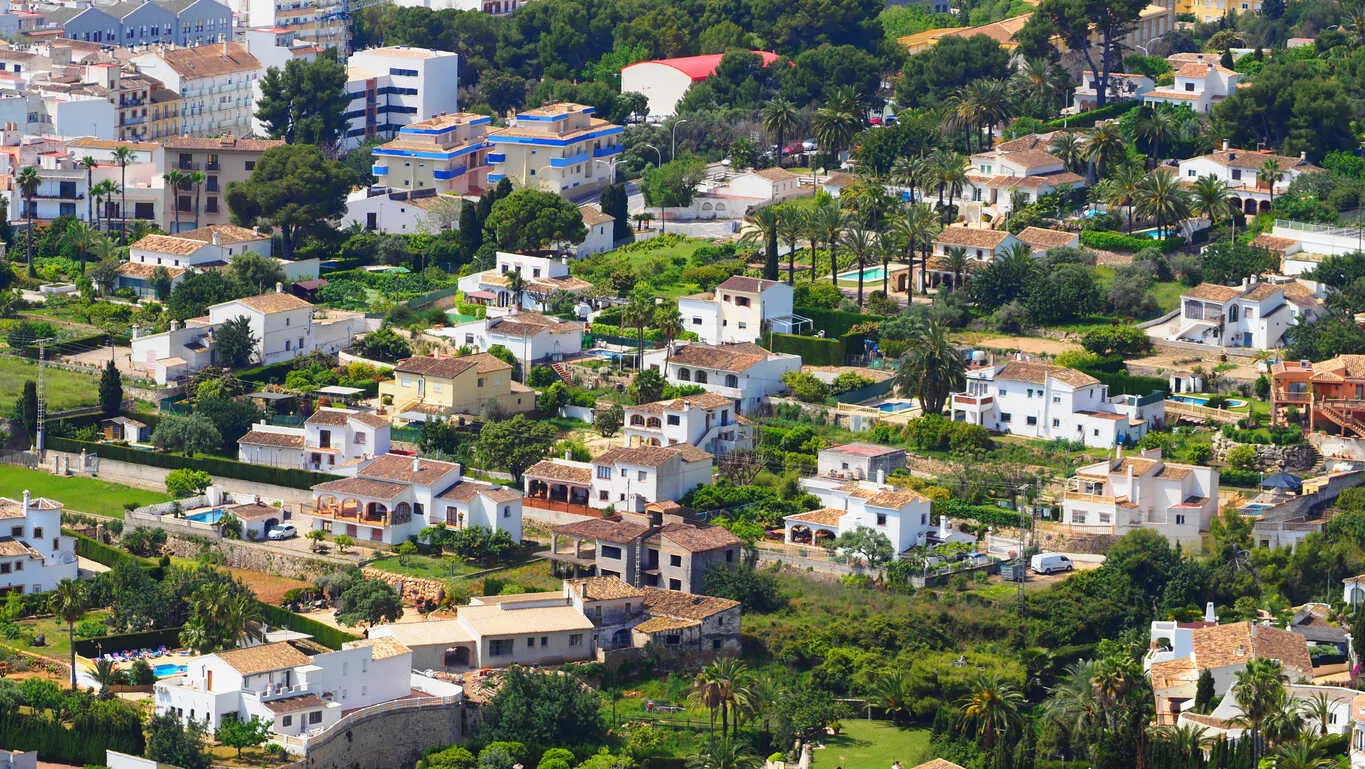
Whitewashed Mediterranean villas dot the hills of the Costa Blanca, and many expats have built their new lives in them.
Many homes boast pools and outdoor kitchens for afternoons grilling sardines (a favorite pastime of ours when we visit), and although the neighboring landscape is rather arid, the sun is often shining, and the weather feels warm.
Settling Into Routine
Typically, any Spanish day for expats is spent in a leisurely fashion, moving like molasses, oozing from one long meal into the next, and it’s not all that different in Jávea, either.
We always enjoy our afternoons by the pool and our mornings bopping in and out of the Chinese shops, which operate as “find anything” bazaars, like dollar stores.
But on the average outing, it’s important to note that there are large shopping malls, like Portal de la Marina in Ondara, or stores like Bricoman, a major hardware emporium for all your DIY home projects. The supermarkets are huge, the boutiques are plentiful and easy banking or English-speaking contractors are never far at hand.
Hidden coves offer solace from bigger-city living, where my daughter and I love to pick up sea glass (and I hope she doesn’t notice the many topless women sunbathing).
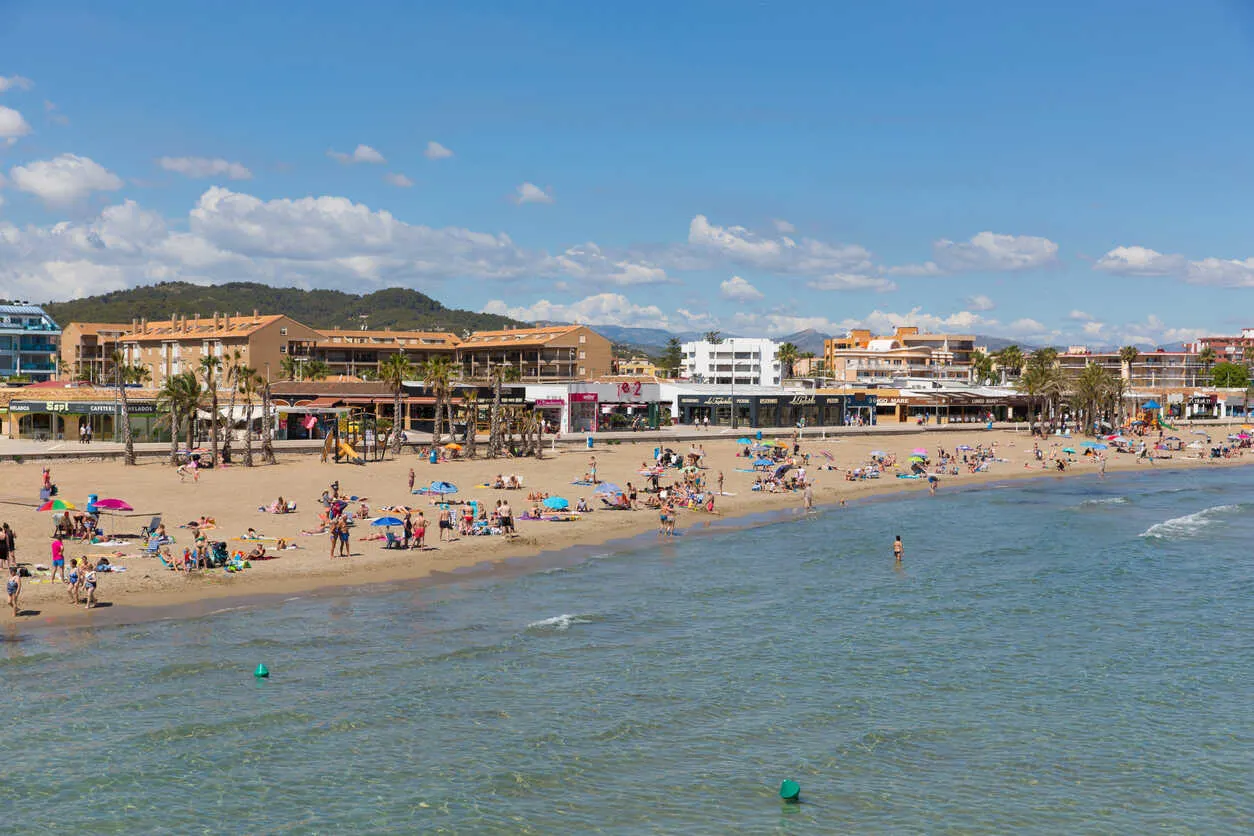
Many restaurants offer a full English breakfast to start the day, and evenings take you into town for a stroll along the beach promenade at Playa del Arenal. Ultimately, a shorefront meal will be the highlight. You’ll find every cuisine from Italian to sushi, but nothing decidedly Spanish—you’ll have to go into the Old Town for that.
Beyond the Old Town, the strolling lanes and the beach days, the Costa Blanca provides a number of wonderful day trip opportunities. You can visit local wineries, head to popular Benidorm for bigger-city vibes and theme parks or head to Dénia for the ferry to Ibiza and Palma de Mallorca.
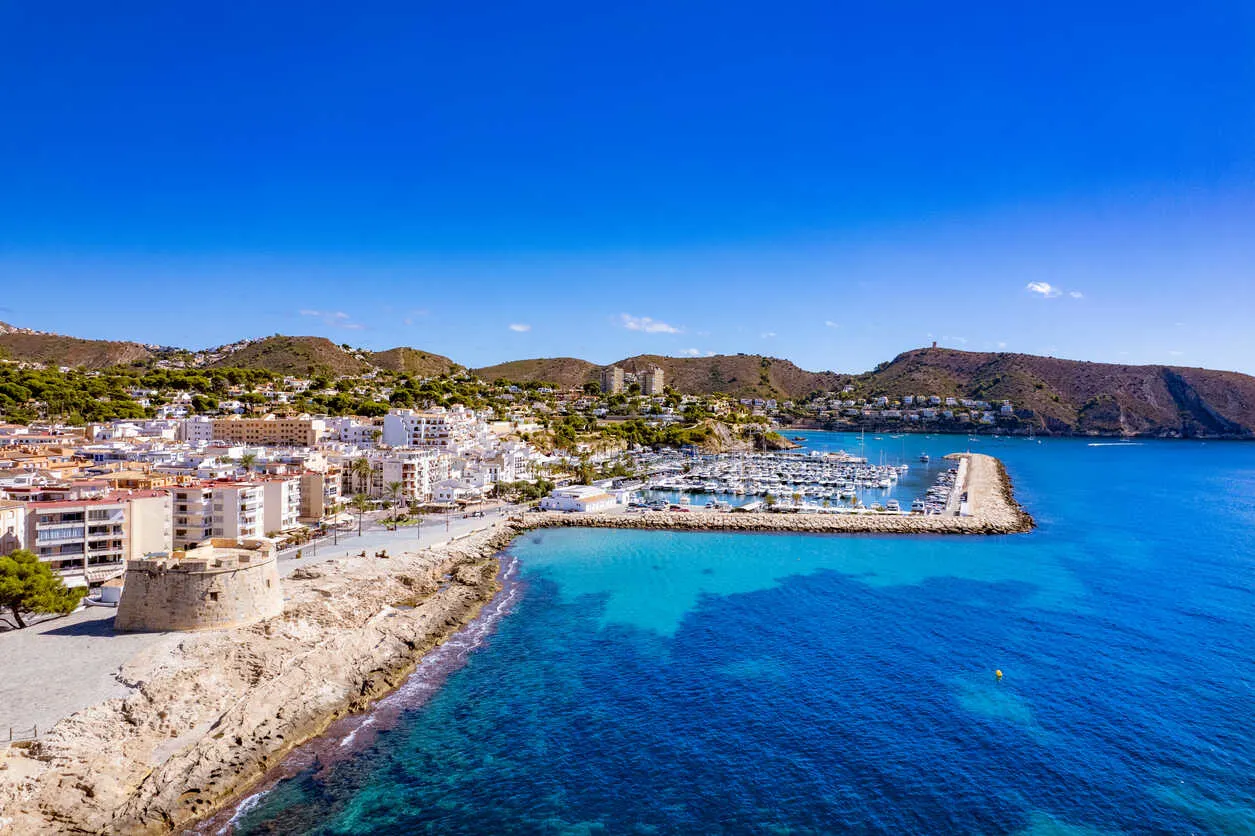
Sailors may want to get a boat and dock it in Moraira’s beautiful marina, ready to sail anywhere and everywhere.
Finding Authentic Spain
While comfort in language and homestyle traditions are some of the biggest draws in Spain’s Costa Blanca communities, Spain’s culture is ultimately what draws many expats to live there, and it shouldn’t be left out as an enticing feature of the area.
In the Old Town, you’ll find terrace cafés and jamonerías, where the typical British pub gives way to plates of serrano ham and a copa of local beer. Local markets feature rotating tapas and a bustling example of Spanish culture at any time of day.
My personal favorite, the Mercado Municipal de Jávea, is a fantastic example of “real Spain” in an otherwise heavily redeveloped expat community down by the Playa del Arenal corridor. Exploring the mercado, you’ll discover gildas (olive and anchovy skewers) with pipettes of vermouth, glorious cuts of cured fish roe similar to Sardinia’s bottarga, and all the produce or dried fruits you could desire.
The historic center also boasts a number of sites that are great for taking out-of-town guests, and the lanes are charmingly authentic, draped with clotheslines full of the morning wash and celebratory banners for whatever festival is currently on in town.
On my last visit, they had both a strange Formula 1-looking racetrack built into the town streets and a folk festival just ramping up for a parade, with young men and women in traditional clothing.
Being Authentically You in Jávea
I find that on my visits to the area, the residents are unapologetic about being who they are and where they came from. There’s no shame in speaking English everywhere they go and, admittedly, not fitting in from an outsider’s perspective.
It’s an “anything goes” culture—welcoming to all—and I love that.
I know that for me in Zaragoza, I am always trying to fit in and not stand out as an American or (worse!) as a tourist. I try so hard to wear the right clothes, go to the right places, and speak the language the way a local would. It’s not that I’m ashamed to be me, but I moved to an authentic Spanish community because I wanted to become ingrained in it. I wanted to speak the language, eat the food, and be a Spaniard.
But in Jávea, it’s inherently different. It’s quite obvious who the expats are, and they’re not trying to be anything other than who they are—just in a different country.
The residents of Jávea and Moraira have settled there for an opportunity to be themselves, but in a Spanish landscape where they can speak English, make friends easily and settle into a routine without having to sacrifice comfort. That’s worth its weight in gold.
Join Us in Europe in 2027!
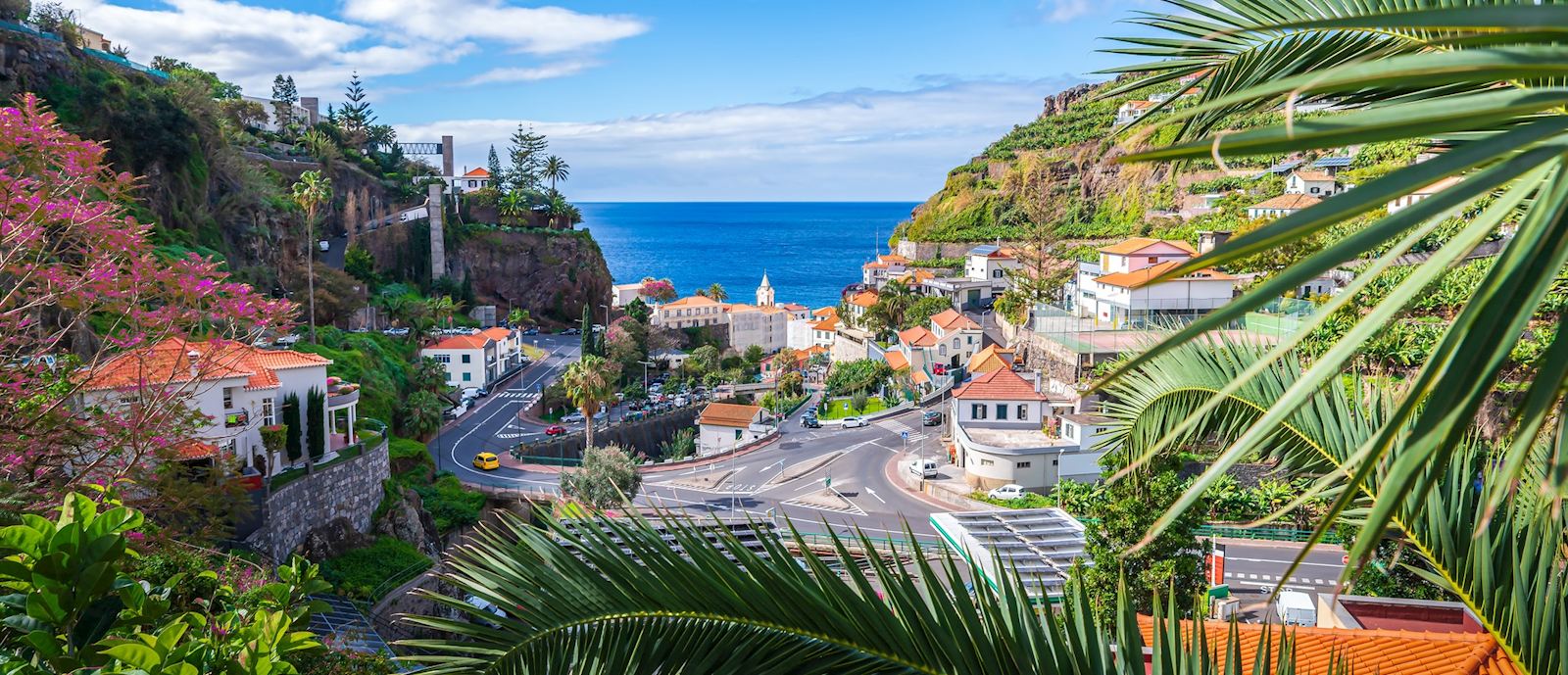
Portugal, Spain, Italy, France, Greece... You’ll find gorgeous, culturally rich cities and towns and beautiful sunny beaches. You can enjoy a high quality of life—yet a surprisingly low cost of living. Starting at $2,500 a month, a couple can live well. With more, you could live large.
If you’ve been dreaming of life in Europe, join us March 20-22, 2027, for International Living’s Fast Track Europe Conference. We’ll meet in Portugal’s sunny Algarve, and our focus will be on Europe’s best destinations to retire better, live well, and spend less.