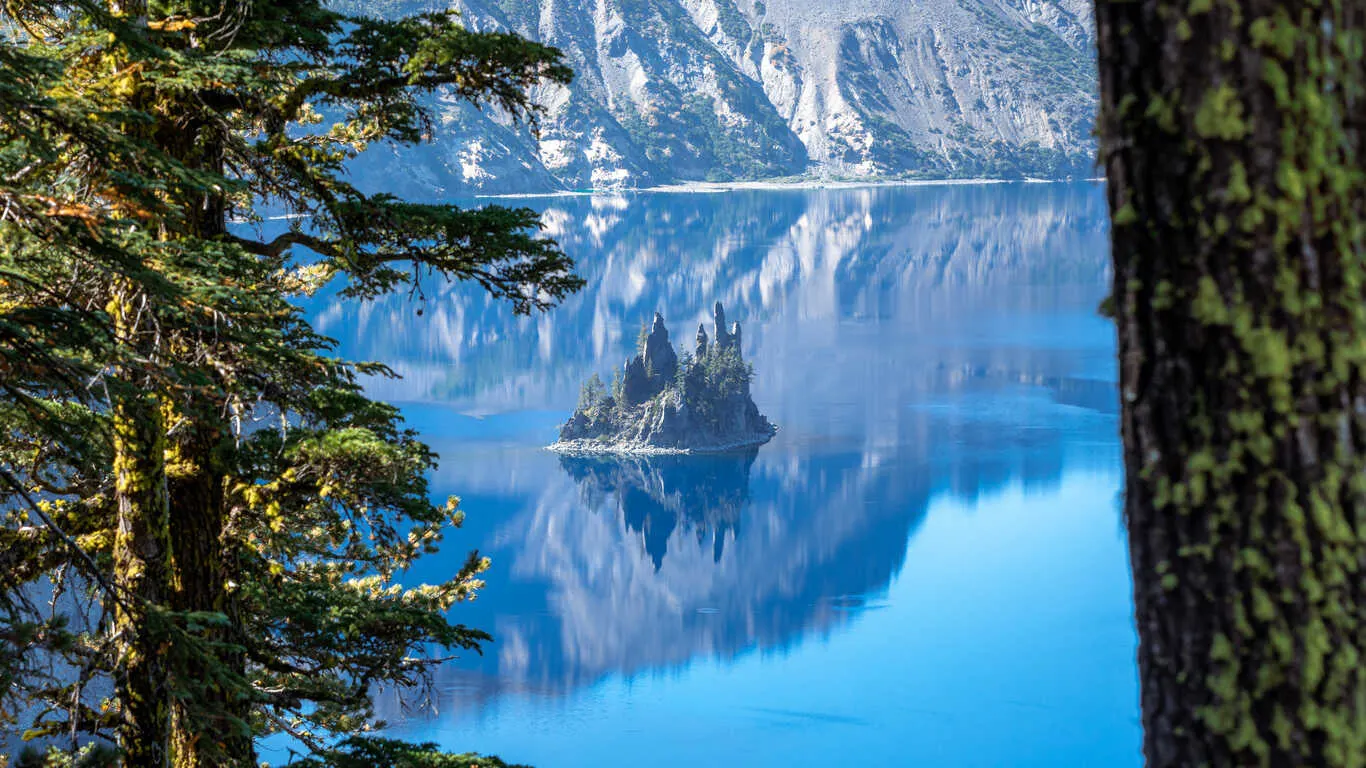
I stood at the railing on Rim Drive and looked down. What they say is true. You can see a dime at a depth of 100 feet in the crystal clear water of Oregon’s Crater Lake. Looking further out, I spied the “phantom ship,” actually a small island that earned its name for its resemblance to a ghostly galleon. The experience mirrored my state of mind in July of 2012: an odd mix of clarity and mystery of the unknown.
We had sold our mountain home in Woodland, Utah. My husband, Keith, rented a moving van and drove to Indiana to put our belongings in storage near our son. When he flew back to me, we began a tour of national parks in the Pacific Northwest. Knowing we were moving abroad, we felt a sort of sudden panic about seeing places on our bucket list. Importantly, we needed to go to the Portuguese Embassy in San Francisco to arrange for our long-term visas.
We would soon be on our way to a new life on the Iberian Peninsula.
Get Your Free Portugal Report Today!
Get Your Free Portugal Report Today!
Discover why we love a slower pace of life in Portugal and info on other European countries in our daily postcard e-letter. Simply enter your email address below and we’ll send you a FREE REPORT – Explore the Old World in Laidback Portugal.

By submitting your email address, you will receive a free subscription to IL Postcards, The Untourist Daily and special offers from International Living and our affiliates. You can unsubscribe at any time, and we encourage you to read more about our Privacy Policy.
Finding Our Feet in Portugal
We had been thinking about expatriation for years. The more we vacationed in Europe, the more we fell in love with its history, architecture, and culture. But where to go?
We deemed France too expensive and could not find a suitable long-term rental in Spain. With Keith’s Portuguese heritage, we assumed (erroneously, it would turn out) that we would be on a fast track to dual citizenship. So, Portugal it was.
By autumn, we were settled in a stone cottage on a quinta in the north of the country. Our six-month lease, required as a term of our visa, could have been extended, but as the cold, rainy winter wore on, we wanted a warmer, drier place to live.
A real estate agent in town leased us his seaside condo in Esposende for a while, but when we realized we needed to improve our Portuguese, we moved south and rented a home in the castle town of Penela, half an hour from the University of Coimbra. There, we took an intensive, five-week course that boosted our confidence and helped shop and restaurant owners better understand what we were saying.
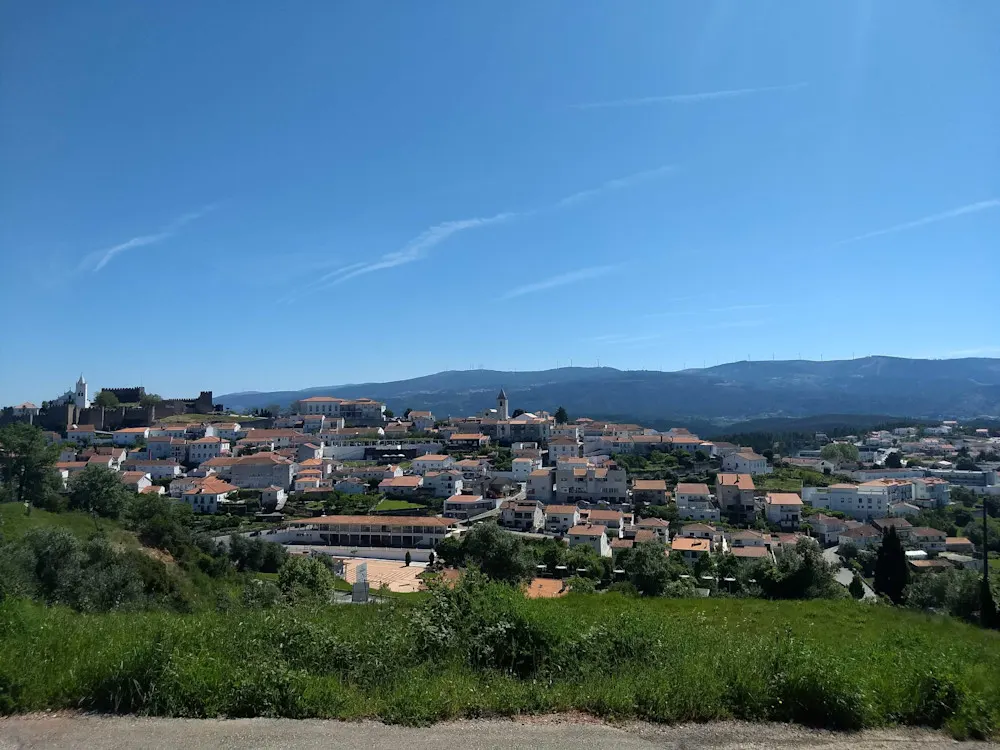
We wanted to stay in the large Spanish-style home with a pool and vineyard views in the hills above Penela. But the owner refused to commit to a long-term lease. We decided to move south again, about 30 miles northwest of Lisbon.
That rental was located on Estrada Municipal in the Zambujal neighborhood. It was basically single-family dwellings, several cafés, and a couple of churches. But there was plenty in the nearby town of Mafra: supermarkets, gyms, bakeries, pharmacies, restaurants, hotels, green spaces, and, of course, the grand national palace.
Living in Zambujal led to one of the closest relationships we developed in Portugal.
Each morning, we walked down the road past vineyards to Café Fagulha. “Fagulha” means “spark,” and perfectly describes its owner. Lena, full of energy and mischief, treated us like family, including our Maltese, Carson, to whom she fed bits of ham and cheese. He developed quite a crush on her. Lena threw us birthday parties, made us dinner and desserts, and hosted gatherings in the café’s backyard.
Unfortunately, we fell victim to what I call “the cranky canine connection.” After about a year, we gave up trying to sleep, thanks to a large dog that barked for hours on the patio directly across from our bedroom.
We rented again, but eventually wanted to own. Rising property values in the area drove us to central Portugal. There we found an affordable five-bedroom quinta with a pool and a small vineyard. Our nearest neighbor was a shepherdess, whose sheep and goats grazed freely on our land.
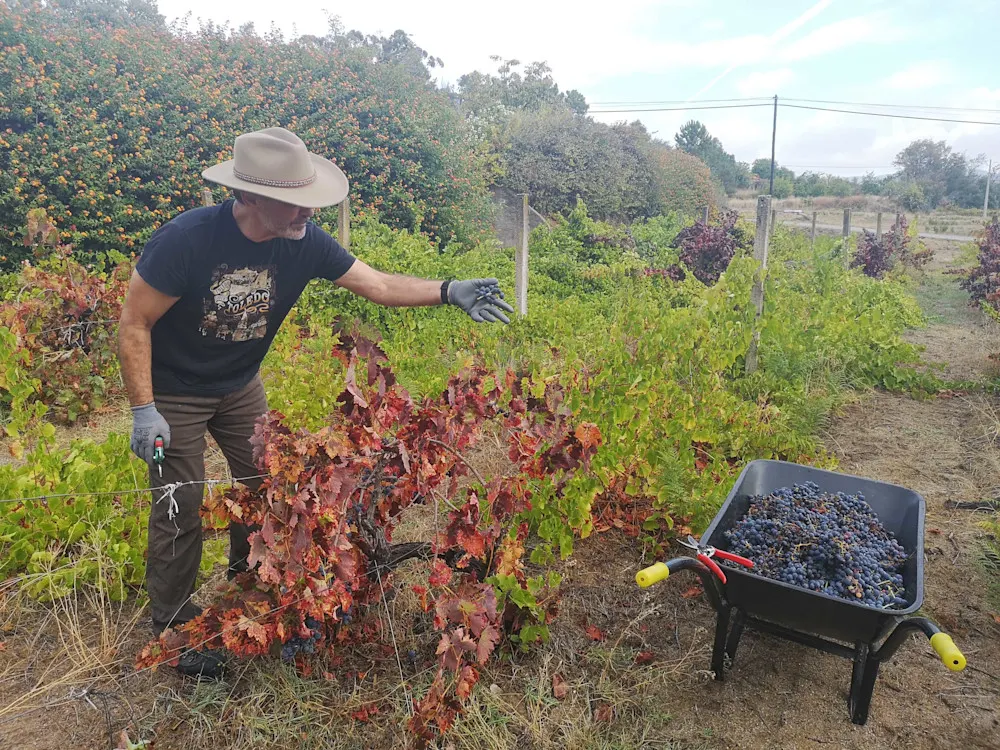
Life was sweet. We improved the property, had our own grape harvest, or vindima, and entertained often. We named our home “Quinta dos Sonhos” because it truly felt like a dream—until late 2019.
My spouse’s employer, for whom I had also worked for decades before retiring, experienced a rapid decline in physical and mental health. Overnight, we were relying solely on Social Security and my writing income. It wasn’t enough.
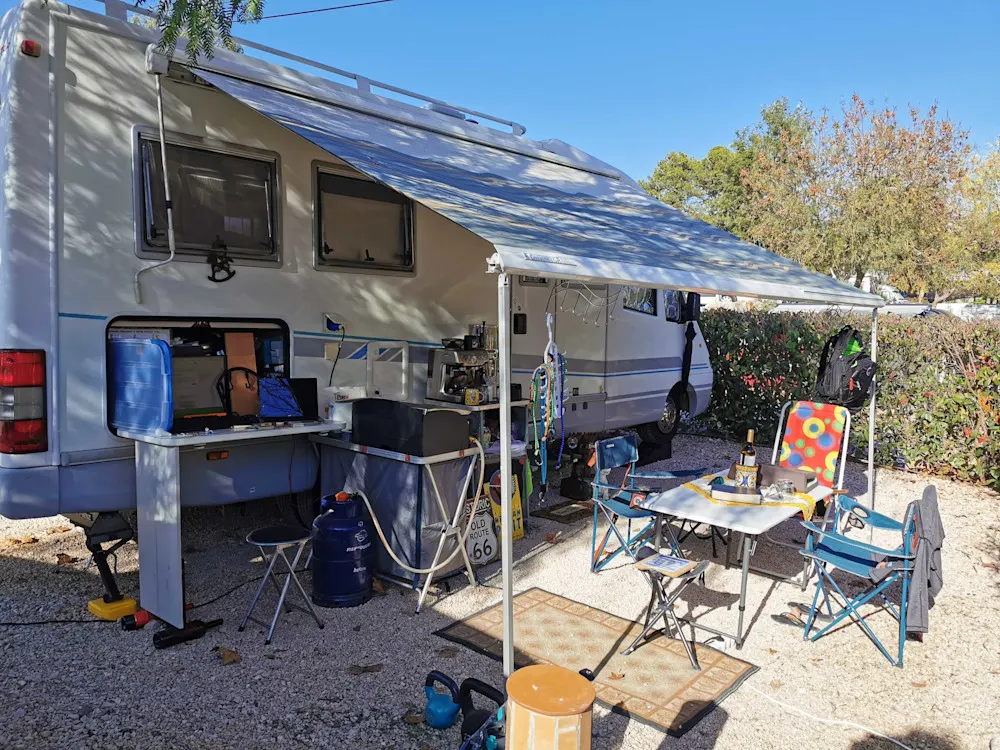
It took a year to sell the quinta. Our next home was a motorhome, or autocaravana. We planned to buy land, live in it while building a log home, and then keep it as guest quarters. That plan fell through when we couldn’t get permission to build on the land we had chosen. Agents told us, “Buy now, confirm later!” No way, we knew people who had ended up with unusable land.
We headed south to the Algarve, put our belongings in storage, and parked ourselves, literally, in the city of Lagos. I had never lived in a camper and wondered if I would survive. The truth? It was a piece of cake.
At Yelloh! Village, we had access to pools, a restaurant, and a small grocery store. There was live entertainment on Saturday nights, and I played pétanque a few afternoons each week with fellow campers. All this for $15 a day.
But when COVID-19 restrictions intensified, we risked major fines if we left the campground. Our residence cards showed an address in central Portugal, hundreds of kilometers from our actual location, which put us in violation of the rules. Suddenly, even stepping away from our space meant wearing a mask.
After 10 years in our Iberian idyll, we were watching our world crumble. That’s when a friendly couple told us how different life was in Sweden.
Home Swede Home
Tired of battling Swedish winters, Anna and Roger were house hunting in Portugal. (They subsequently found their dream home and are living happily ever after in the south of the country.) They gave us a link to what they considered the best real estate website in Sweden, and in short order, Keith had chosen no fewer than 17 listings for me to check out in person.
ME? There was no way I was going to go cold—pun intended—to a country I’d never been to and make the major decision to buy a house.
Three days later, I disembarked at Stockholm Arlanda Airport.
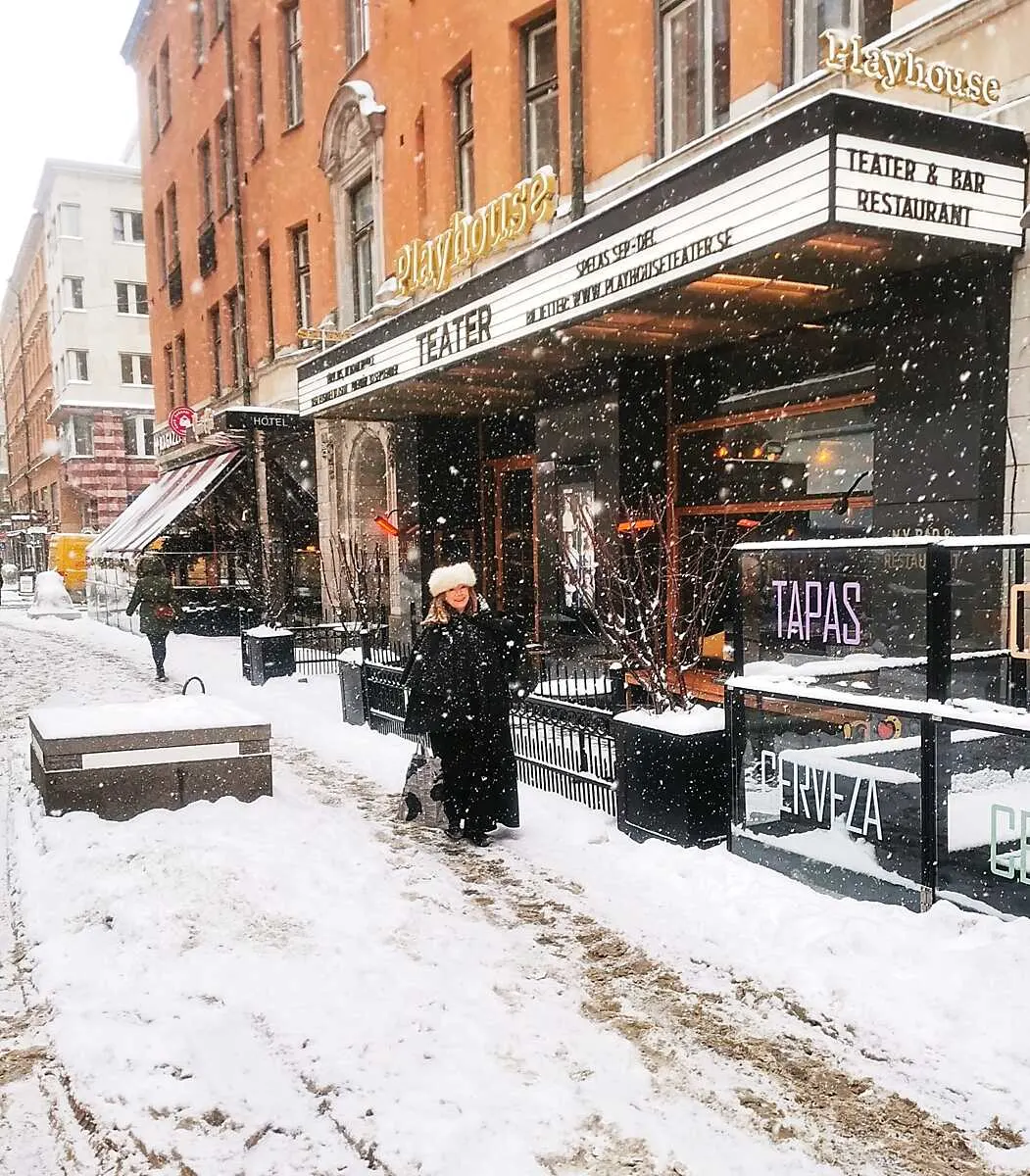
In the intervening time, I had dramatically reduced my list by eliminating properties that were land only. Who was going to build a home in December in snowy Sweden? That left me only a handful of houses to see. The second one stole my heart.
Five hours north of Stockholm, deep in the countryside, there were two houses on the 20-acre property: a 1906 farmhouse and a more modern structure built in the year of our marriage, 1992. It felt like a sign.
It was also a challenge. There were improvements to be made, including remodeling the farmhouse kitchen, replacing a malfunctioning potbelly stove, and sealing gaping crevices that had long invited rodents to lodge there.
Despite all that, our Scandinavian sojourn was outstanding. We put down roots quickly, contracting with a Swedish moving company that specialized in transporting goods to and from Portugal. Within a month, everything we owned was back in our possession. Our homes sat on a rise overlooking a lake, and we had our own forest. Thirty minutes away was a small town with a grocery store, bakery/café, post office, school, library, and a restaurant—civilization. An hour away was the city of Mora in Dalarna County, with a population of roughly 10,100 and everything else we might need.
After a year, we moved from the newer house, which had electric heating, into the farmhouse, where we relied on fireplaces. In winter, we would come downstairs and crank up the antique cast-iron stove, the kitchen thermometer reading 41 F. One day in March 2023, my husband walked in, arms full of cut wood, and announced he could not face a fourth punishing winter.
By summer, both homes were ready for sale. We put the property on the market and had a deal in three days. It was time to head home and embark on one of our more adventurous road trips.
The Road Back to Portugal
We had our car serviced before beginning our 2,300-mile journey, asking for special attention to the brakes, which we were a tad worried about. Five minutes after leaving the mechanic’s shop, a suspicious smell and smoke from under the hood sent us back. We were reassured it was normal after the service. We went home, loaded up the car, and set off.
I’ve never gotten over how much larger Sweden is than Portugal. It took 10 hours from our house just to reach the border with Denmark. Then it was on to Hamburg, Germany, where we had our next brake repair. In Belgium, the tires gave out, and we spent three days in Waterloo waiting for new ones. Fearing defeat, we developed new empathy for Napoleon.
As we crossed into France, the car was bumping oddly, and one tire was red hot. We lucked out by finding a former rally mechanic who managed to locate the part we’d needed all along—the only one available in all of France. Amazingly, Didier came through. (Also amazingly, he seemed to be the only Frenchman in July who was not en vacances.)
On to Normandy, where my father landed on D-Day at Sword Beach, then to Jules Verne’s house in Amiens, and Zarautz in Spain’s Basque Country, before crossing into Portugal. There, we house-surfed for two months while searching for a long-term rental. Friends welcomed us warmly, but when we still hadn’t found a place by September, we worried about wearing out that welcome and spent the month in an Airbnb.
October found us back on familiar turf, renting a spacious home in the hills above Coimbra. One problem: rainy season came early—and rain it did. Even inside. The resulting mold and mildew gave Keith headaches from January to July, sending him to the hospital twice.
When our lease was nearly up, we looked for another rental. But as prices rose in Portugal, we began looking across the border.
Get Your Free Spain Report Today!
Get Your Free Spain Report Today!
Learn more about the lower cost of living in Spain and other countries in our free daily postcard e-letter. Simply enter your email address below and we'll also send you a FREE REPORT — Live the Good Life in Sunny, Affordable Spain.

By submitting your email address, you will receive a free subscription to IL Postcards, The Untourist Daily and special offers from International Living and our affiliates. You can unsubscribe at any time, and we encourage you to read more about our Privacy Policy.
Sweet on Spain
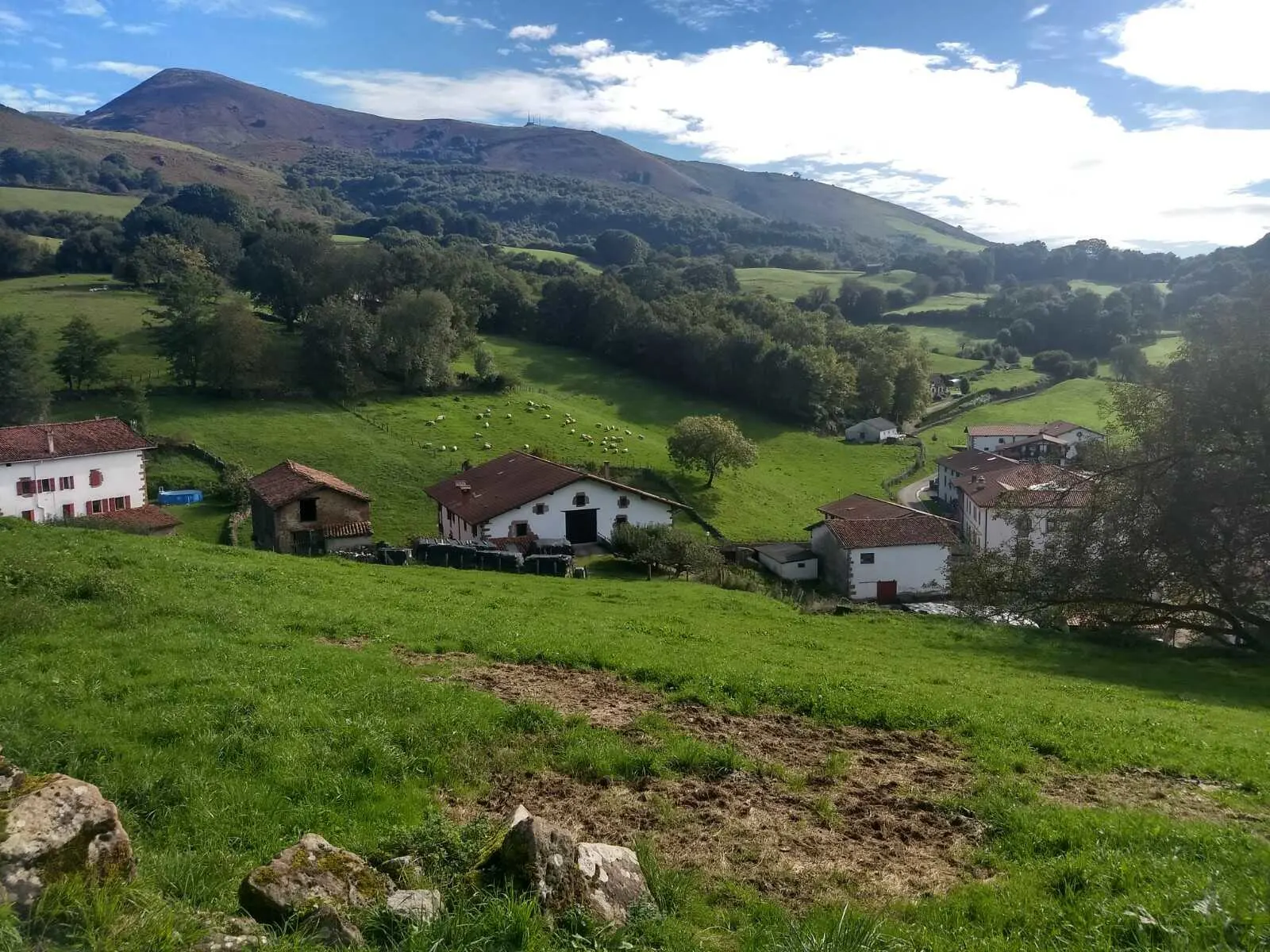
One day, a gem appeared in an online search: a furnished four-bedroom, two-bath home with grand polished wooden staircases and antiques in the entry, located in a medieval village in the foothills of the Pyrenees. And for €900 a month? So what if we had to drive across two-thirds of Portugal and the entire width of Spain to get there? No big deal.
As we neared our destination, just 20 minutes from the French border, we were entranced—drawn to the peace and natural beauty of the river and rolling green hills of the Baztán Valley, dotted with grazing sheep.
When we arrived, the real estate agent explained that another family lived in the building. The sweeping, open downstairs area was communal space. Uh oh. Red flag. In 32 years of marriage, we had never lived in an apartment; we had always owned or rented a standalone house. Yet there was an undeniable sense of privacy in the unit. We agreed to rent on the spot.
We’ve been living in the historic village of Amaiur in the Basque Country for more than a year and a half now and have no plans to move. Less than an hour from Pamplona and San Sebastián, Spain, and just as close to Bayonne and Biarritz, France, we love the location. We have great neighbors, with whom we speak in a blend of Spanish, French, and Basque, and a church in Biarritz where some members speak English. It feels like home.
Finally.
7 Lessons From Our 14 Years Abroad
Bring just enough personal belongings to feel at home without being weighed down. If you are selling items separately from the house, make sure you receive payment for the furniture up front. When we left Utah, our agreement with the new owners was $500 a month until the sum of $3,000 was reached. They paid only two months.
You’ve heard it before, but it cannot be overemphasized: rent, don’t buy immediately. Also, check out the area or neighborhood day and night over a period of time before signing on the dotted line—even if you are renting.
As mentioned above, do not buy property on which you plan to build unless you have written permission from local authorities. There are many nightmare tales of people (expats and locals) who have been burned.
If you realize you goofed—or the situation changes—don’t hesitate to make another move. Cut your losses (legally). We should have left the moldy house in Coimbra long before we did.
Let go of comparisons with the U.S. or wherever your home is now. Things will be different, for better or worse. Accept it.
Nurture your friendships. Although we are now in Spain, we have many people we look forward to seeing when we travel back to Portugal.
At a minimum, become somewhat conversant in the local language. It will make a huge difference in the quality of everyday life.
Boa sorte, Lycka till, ¡Buena suerte!
The World’s Best Retirement Havens for 2026
The World’s Best Retirement Havens for 2026
24 Countries Compared, Contrasted, Ranked, and Rated. You don’t have to be rich to enjoy a pampered retirement, you just need to know where to go. With our 35th Annual Global Retirement Index, our experts hand you a detailed roadmap. Details—and a Special Offer—Here

By submitting your email address, you will receive a free subscription to IL Postcards, The Untourist Daily and special offers from International Living and our affiliates. You can unsubscribe at any time, and we encourage you to read more about our Privacy Policy.