The Var département (similar to a county in the U.S.) is sandwiched between the French Riviera city of Nice to the east and France’s third-largest city, Marseille, to the west.
Even though it’s thought to be one of the most beautiful, naturally diverse regions in all of southern France, chances are you may never have heard of it.
The name Var comes from a river that was a prominent feature of the region decades ago and currently forms the border with the département of Alpes-Maritimes—the home of Nice and Cannes. The river itself no longer runs through most of the Var because the borders changed in the 19th century.
The Varois, as the local residents are called, are fiercely proud of their region.
Their beloved 83, the administrative number attached to every license plate in the département, is a badge of honor to locals. The 83, many would argue, is both a geographic zone and a state of mind. Life moves more slowly here. Lazy picnics in the vineyards, sunset walks along the sea, aperitif hours on the beach, and even weekend surfing classes are some of the cherished local activities.
The Var is far from the glitz and oversized luxury of the French Riviera. Folks are simple, and life is good. With more than 300 days of sunshine a year, one of the sunniest spots in the country, it’s a pretty idyllic lifestyle.
“Well, you are in the California of France,” a bartender said to me many years ago (while trying to mix up a beloved margarita). At the time, having moved from Southern California myself, I thought that was a pretty wild idea. California in France? The land of croissants, Champagne, designer fashions, and one immaculate-looking Frenchman after another.
Well, I was quite wrong.
Although the Var is a far cry from California icons like Malibu, Venice, or Huntington Beach, it does share much in common with the Golden State—at a fraction of the cost.
While there are pockets of the département that are relatively expensive (Saint-Tropez being the most famous), there are many places where the living is so good, the pleasures of southern France so abundant, that you’ll wonder why no one is talking about this flip-flop-wearing, Sunday-surfing corner of Provence.
One such spot is Bormes-les-Mimosas.
Get Your Free France Report Here
Get Your Free France Report Here
Learn more about France and other countries in our daily postcard e-letter. Simply enter your email address below and we’ll send you a FREE REPORT: A Taste of France: All the Ingredients for the Good Life.

By submitting your email address, you will receive a free subscription to IL Postcards, The Untourist Daily and special offers from International Living and our affiliates. You can unsubscribe at any time, and we encourage you to read more about our Privacy Policy.
From Medieval Stronghold to Flowering Village
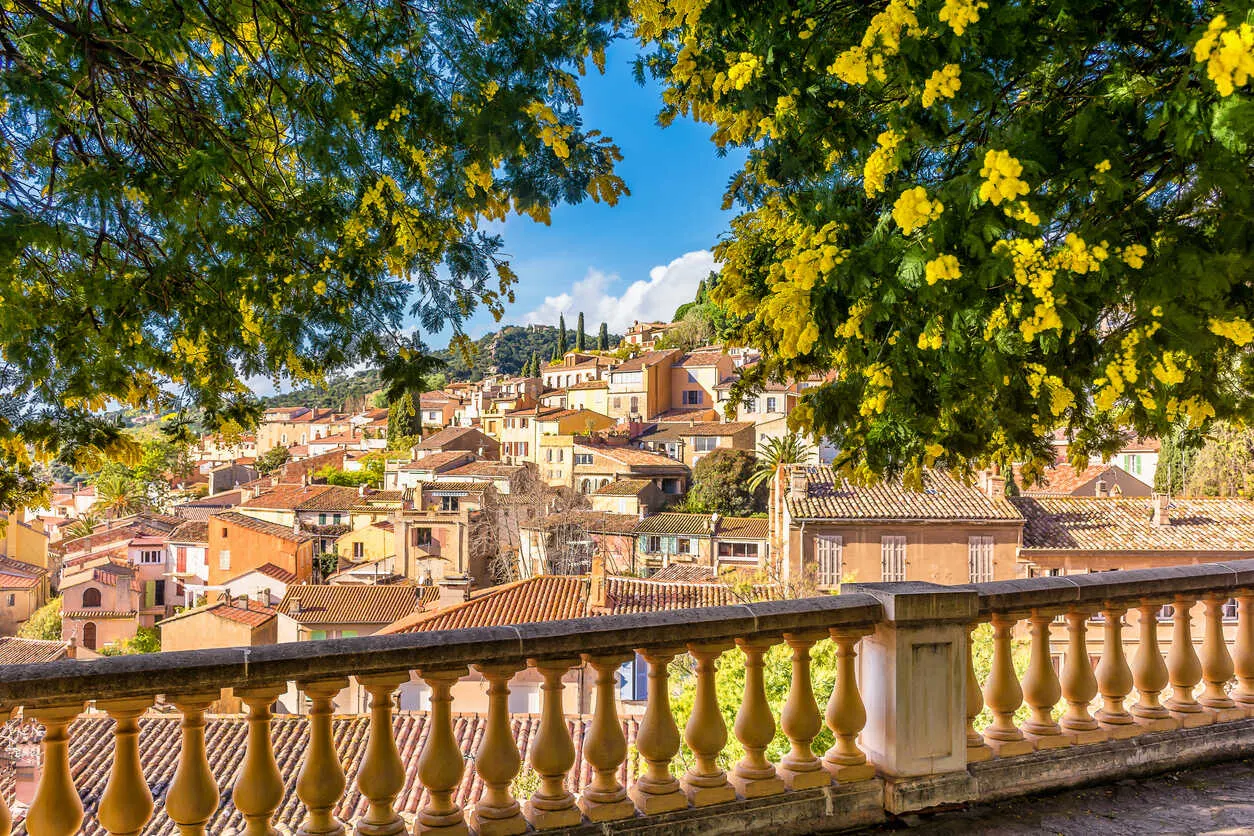
Located between the towns of Hyères (about 20 minutes from Toulon) and the seaside city of Le Lavandou, this community of around 8,600 residents enjoys some of the finest living in all of the Var.
First of all, the town is geographically blessed.
As one of the oldest settlements in Provence, Bormes’ history stretches back to before the Romans, when Ligurian tribes took advantage of its strategic position between the mountains and the sea. At the time, the Massif des Maures mountain range provided a natural defensive line for bands of settlers looking for protection from marauding pirates arriving from the coast.
As pirate raids continued, Bormes strengthened its defenses and became a fortified hilltop village during the Middle Ages. From the 10th to the late 15th century, Provence was governed by feudal rule, with power shifting to different family dynasties in the region known as the Counts of Provence.
The defensive features of the Middle Ages—tightly packed stone homes, narrow streets, fortified walls and gates, and dedicated lookout spots toward the sea—make up the core features of modern-day Bormes.
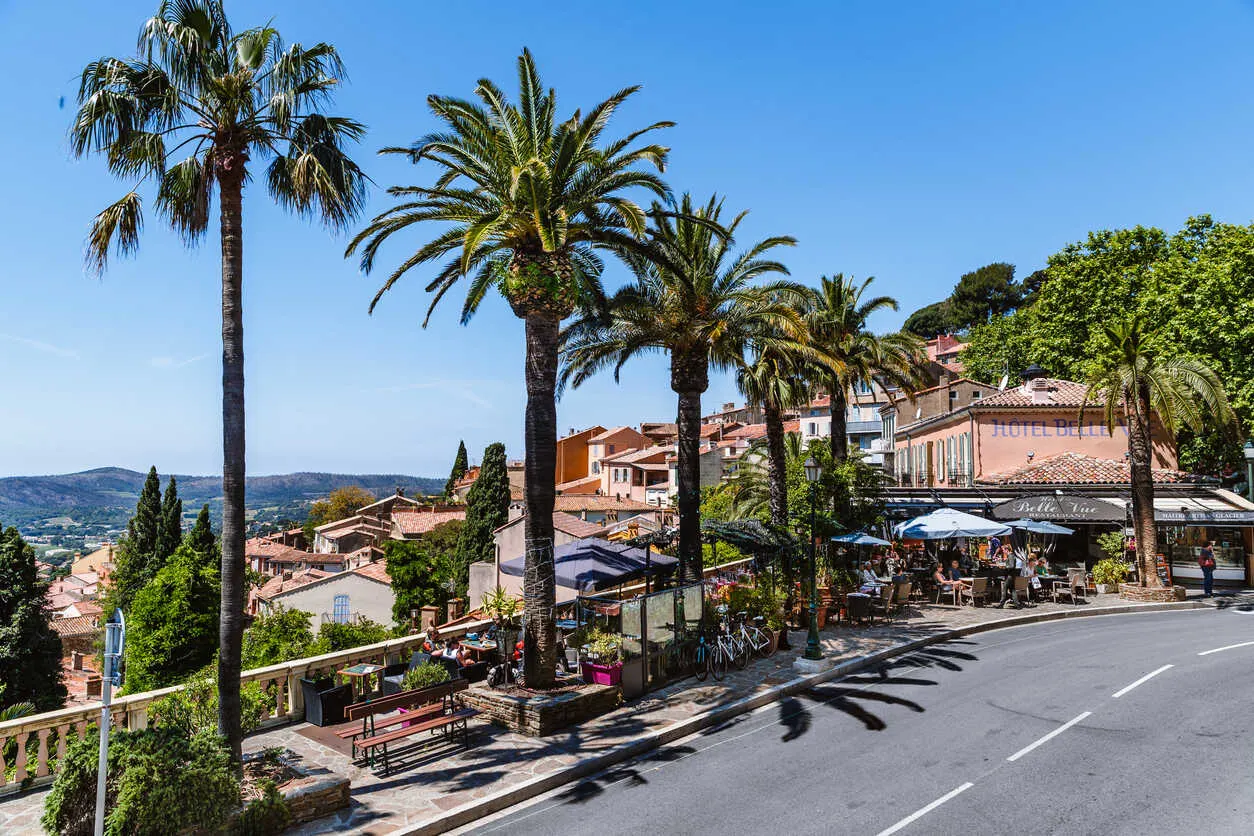
The medieval stronghold of yesteryear is now one of the most picturesque villages in all of Provence. Famous for the flowers found throughout the historic center—there are more than 700 different plant species—Bormes has been awarded the top prize of the “4 Flowers” label from the national Villes et Villages Fleuris association in France.
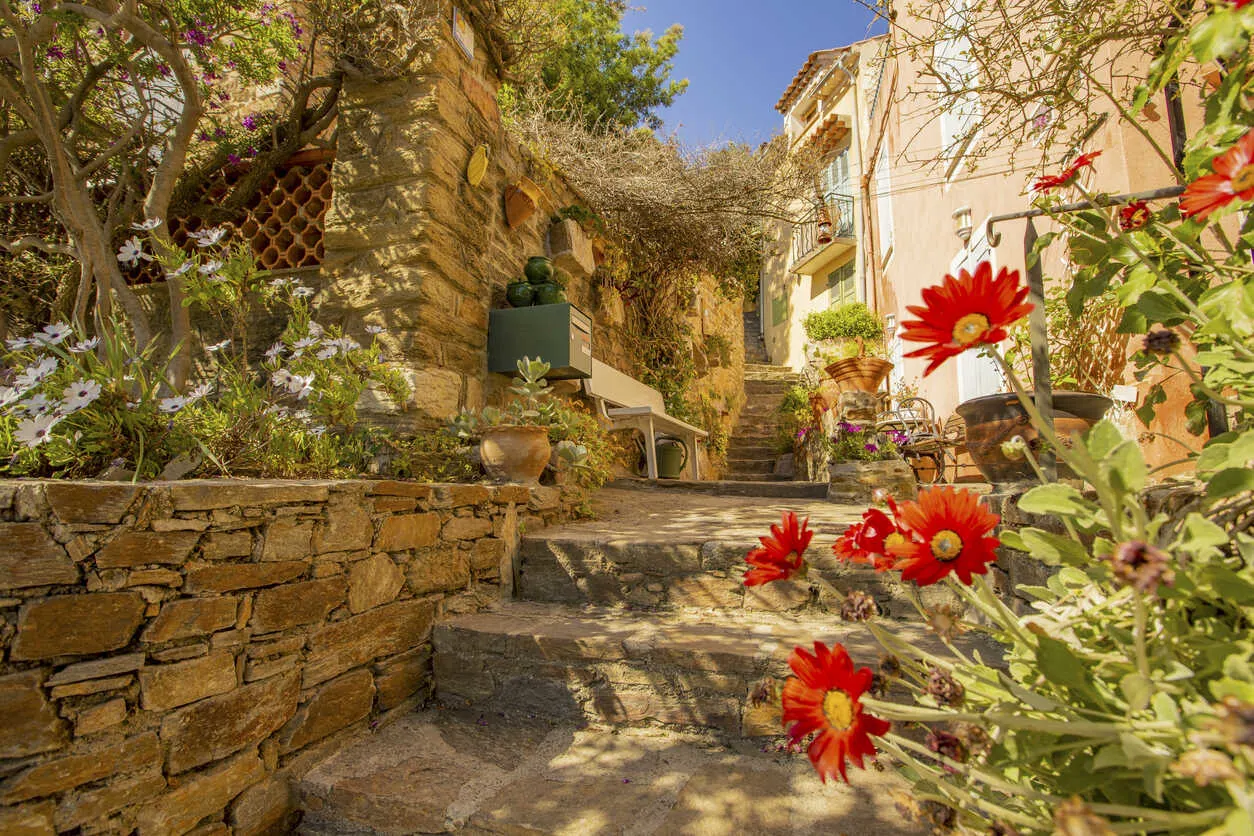
Flowers of every color and shape are everywhere. Bright pink and purple-hued bougainvillea cling to stone facades, mixed with climbing jasmine and bursts of geraniums, oleander, and laurel. Eucalyptus, palm trees, and hibiscus complete the backdrop, along with the town’s most famous inhabitant: the mimosa.
Mimosa trees were introduced from Australia in the 19th century and caught on like wildfire. While the name Bormes has been attributed to the Ligurian word borra (spring or water source), “les-Mimosas” was officially added to the town name in 1968 to highlight the abundance of the yellow blooms and promote Bormes as a tourist destination.
The trees bloom from January to March and can be found all around the region—on highways winding from the seaside to the historic center, along village backroads, and scattered around local vineyards.
The official “Route des Mimosas” is 81 miles long and includes many other villages around the French Riviera.
Every year, Bormes hosts a Mimosa Festival, which includes floats, mimosa products like artisanal soaps and perfumes, and several culinary events. It’s one of the most popular seasonal events in the Var.
In upper Bormes, along the terrace around Parc Gonzalez (botanic gardens), you’ll be treated to unparalleled views of the terracotta roofs of Provence, stretching all the way to the Mediterranean Sea. On a clear day, the coastal town of Le Lavandou is visible, as are the islands of the Var—the Îles d’Or (Golden Islands), Porquerolles, Port-Cros, and Levant.
At around 480 feet above sea level, the views from upper Bormes offer an exceptional panorama of the Varois coastline. While breathtaking, it’s also easy to understand the town’s strategic position. You’d be hard-pressed to miss a troop of marauding Saracens docking their boat from that height.
How to Get a European Passport in Three Months
... Getting Citizenship in as Little as 3 Months? (even if you don’t have a European parent or grandparent)
... How to Live in Europe Year-Round on an American Passport Alone (no visa or second citizenship required)
... Why 2026 May Be the Last Year for Easy European Passports for Americans
Life in Bormes-les-Mimosas
While the historic center of Bormes is quite spectacular, its medieval foothold doesn’t exactly invoke a California vibe—indeed, quite the opposite. If you want quintessential Provence in all its romantic splendor, stick to the cozy stone pathways of the historic center. You’ll find exquisite French dining (try Le Jardin and La Tonnelle) and quaint southern boutiques selling ceramics, handcrafted leather goods, and Provençal textiles, to name a few.
To be transported to the easy coastal lifestyle of flip-flops, toes in the sand, and a glass of rosé in hand, you’ll have to skip on over to the “other” Bormes—the part of the community that lies along the Mediterranean Sea.
It’s simply magnificent.
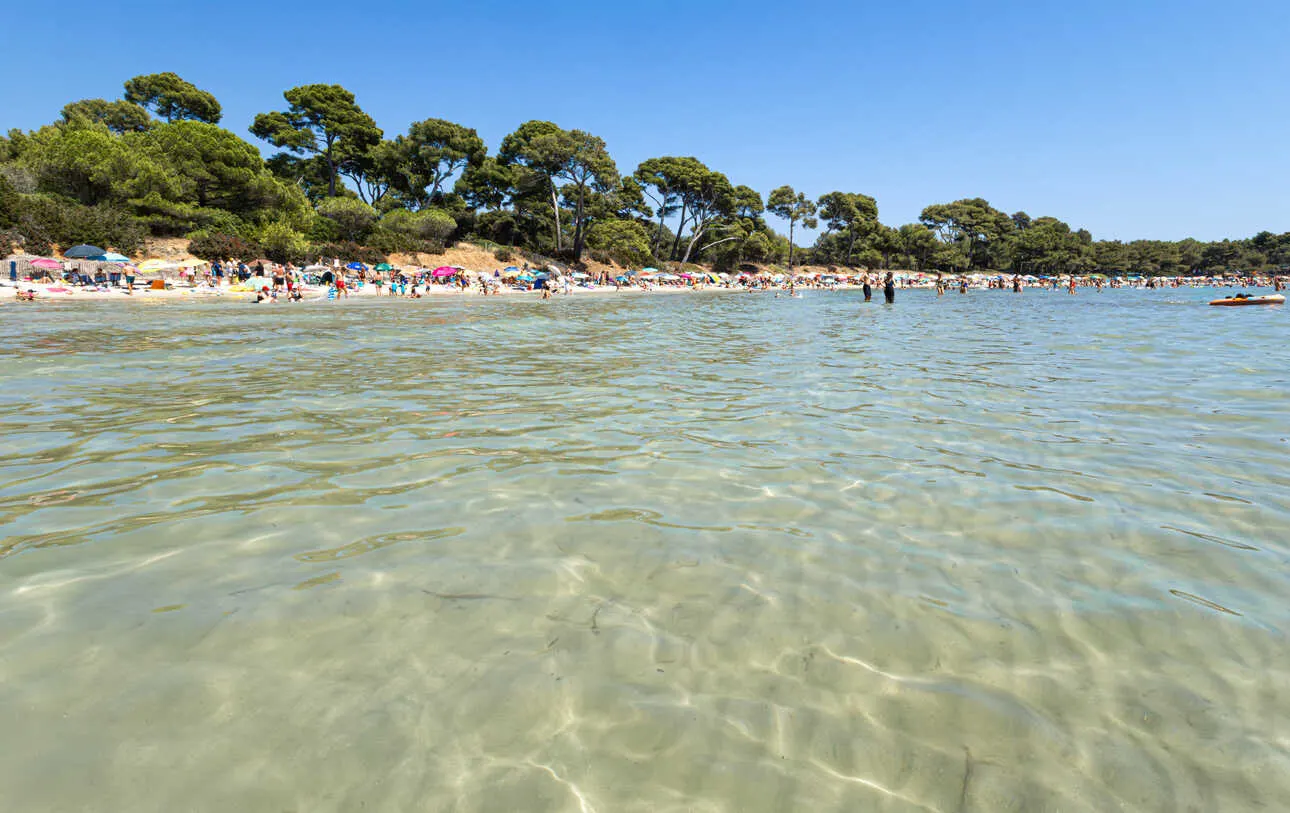
Bormes-les-Mimosas has roughly 14 miles of coastline, of which 3.5 miles are beachfront. Notable beaches include Cabasson, L’Estagnol, Pellegrin, and Plage de Léoube.
Léoube Beach is run by a winery of the same name, located a five-minute drive from the sandy shores. Visitors can picnic among the pine trees directly behind the beach or have lunch at Café Léoube—a dreamy restaurant with soft wood and white linen tables laid out between potted olive trees and laurel bushes.
If a beach-club vibe is more your thing, there is no shortage of lounge chairs and Aperol Spritz-ready locations. A few fun, stay-all-day locales include La Payotte Plage and L’Estagnol.
The beaches are connected by the scenic coastal walking trail (sentier du littoral), which is one of the best ways to discover the hidden coves and sparkling turquoise inlets of this stretch of the Mediterranean. It’s not uncommon to pass a yoga class in session along the beach, a paddleboard group, or folks jetting off to visit the Golden Islands for the day.
Besides sailing and other seaside activities, cycling the backcountry is another favorite pastime. Cyclists often travel in local clubs, pedaling through the vine-covered roads from village to village.
Bormes is full of world-class wineries. Some of our favorites include Château Léoube, Château Malherbe, Domaines Ott, and Domaine La Sanglière.
The combination of stone châteaux, rolling vineyards, and glimpses of the Mediterranean is pretty magical. Wine tasting is largely free in France, but you’ll certainly want to pick up a bottle or two of your favorite vintage. Almost all of the wineries export internationally.
Besides all the wonders of Bormes, the rest of the French Riviera is right at your doorstep. Taking the scenic road (D559) along the sea, you’ll pass southern favorites like Cavalaire-sur-Mer, La Croix-Valmer, and, with a slight detour, Saint-Tropez.
Cost of Living in Bormes-les-Mimosas
Living in Bormes is not the cheapest option in the south of France, but it is quite affordable if you compare prices with California or similar spots in the U.S. While the cost of utilities, groceries, and other staples will be on par with the rest of France, the price you pay for housing will be the biggest variable.
| Budget | $ U.S. |
|---|---|
| Rent | 900-1300 |
| Groceries (including wine) | 800 |
| Car (insurance and maintenance) | 80 |
| Gas (diesel or petrol for a car) | 128 |
| Gas (heating) | 70 |
| Electricity | 62 |
| Phone (landline) | 21 |
| Health Insurance Top Up | 100 |
| Internet | 50 |
| Cellphone Plan | 22 |
| Lunch Out (5x a month) | 200 |
| Misc. (coffee, croissants, etc.) | 80 |
| Movie Tickets | 16 |
| Total | $2,529 to $2,929 |
A furnished 650-square-foot one-bedroom apartment in Bormes-les-Mimosas rents for around €1,080 to €1,350 per month ($1,264 to $1,580). Cheaper options do exist, starting at €900 ($1,053), but they tend to be older or not as centrally located. For the same-size apartment to purchase, current prices are roughly €325,000 to €360,000 ($380,000 to $421,000). Near the seaside, prices increase because of demand: €380,000 to €450,000 or more ($445,000 to $526,500+).
How to Get to Bormes-les-Mimosas
For folks living in or traveling to Bormes-les-Mimosas, the easiest way to arrive is via Nice Airport. After that, you can rent a car, take a shuttle (Nice Airport Shuttle), grab an Uber, or take a train and bus to town—a drive of about 1 hour and 45 minutes.
Nearby Toulon-Hyères Airport is a small regional airport with fewer destinations, but it can be a good option for traveling around France and a few spots in Europe. Routes include Paris-Orly, Brest, Nantes, Lille, Bordeaux, London, Luxembourg, and Rotterdam. The drive from Bormes to Toulon-Hyères Airport takes around 30 minutes.
Get Your Free France Report Here
Get Your Free France Report Here
Learn more about France and other countries in our daily postcard e-letter. Simply enter your email address below and we’ll send you a FREE REPORT: A Taste of France: All the Ingredients for the Good Life.
By submitting your email address, you will receive a free subscription to IL Postcards, The Untourist Daily and special offers from International Living and our affiliates. You can unsubscribe at any time, and we encourage you to read more about our Privacy Policy.
Join Us in Europe in 2027!
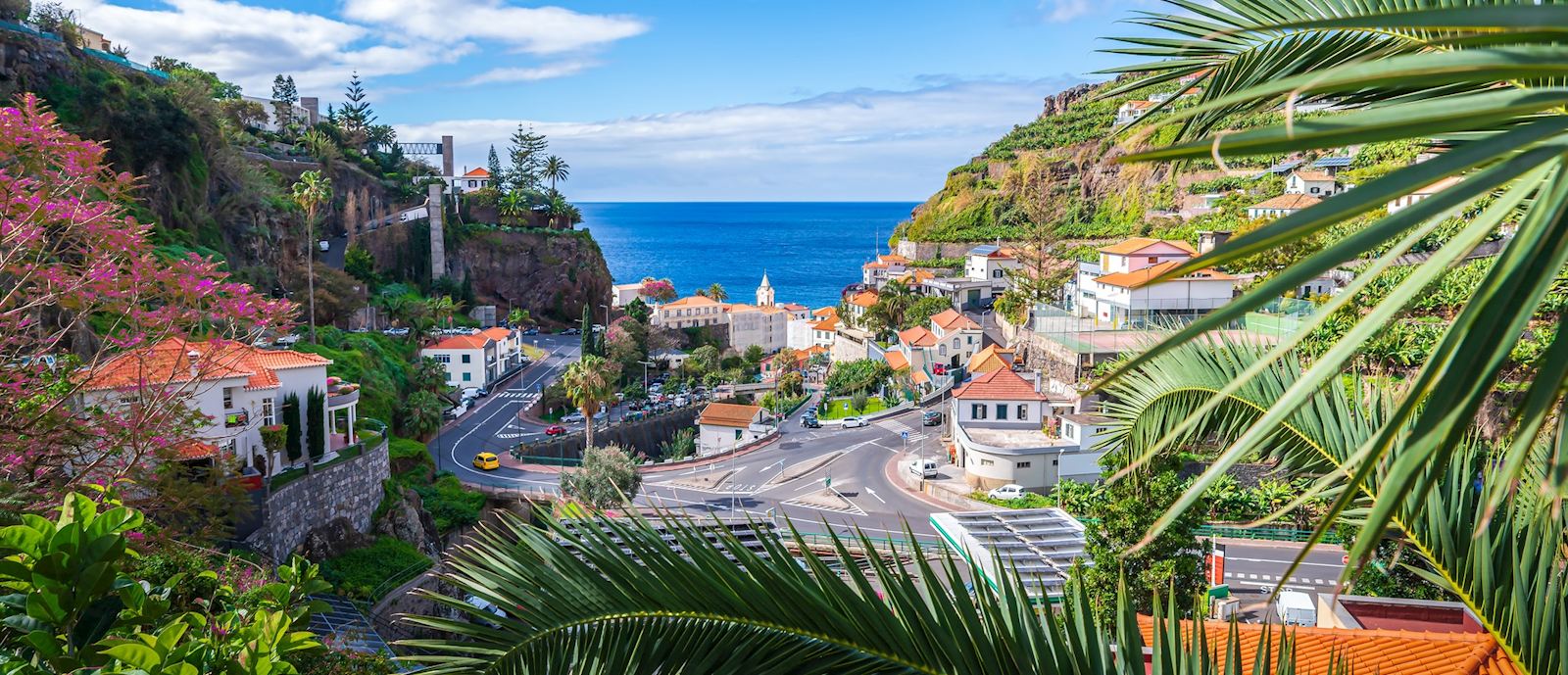
Portugal, Spain, Italy, France, Greece... You’ll find gorgeous, culturally rich cities and towns and beautiful sunny beaches. You can enjoy a high quality of life—yet a surprisingly low cost of living. Starting at $2,500 a month, a couple can live well. With more, you could live large.
If you’ve been dreaming of life in Europe, join us March 20-22, 2027, for International Living’s Fast Track Europe Conference. We’ll meet in Portugal’s sunny Algarve, and our focus will be on Europe’s best destinations to retire better, live well, and spend less.