For the first few years I lived in Greece, my focus outside of Athens was visiting the islands. I danced in Mykonos, beach-hopped in Milos, windsurfed in Paros, and explored the story of the Minotaur in Crete. All of those trips were amazing, but it took me years to realize that some of Greece’s greatest gems are hidden on the mainland. After climbing Mount Olympus for the first time, I discovered that some of the country’s best-kept secrets are tucked away in its mountains.
Below, I’m sharing four Greek mountain towns you might want to consider if you’re looking beyond Greece’s islands. To help you plan, this guide moves from north to south.
Get Your Free Greece Report Today!
Get Your Free Greece Report Today!
Learn more about a slower pace of life in Greece and other countries in our free daily postcard e-letter. Simply enter your email address below and we'll also send you a FREE REPORT — Retire in Greece—Find Your Dream Retirement in This European Archipelago.

By submitting your email address, you will receive a free subscription to IL Postcards, The Untourist Daily and special offers from International Living and our affiliates. You can unsubscribe at any time, and we encourage you to read more about our Privacy Policy.
Metsovo: A Small Town with Big Culture
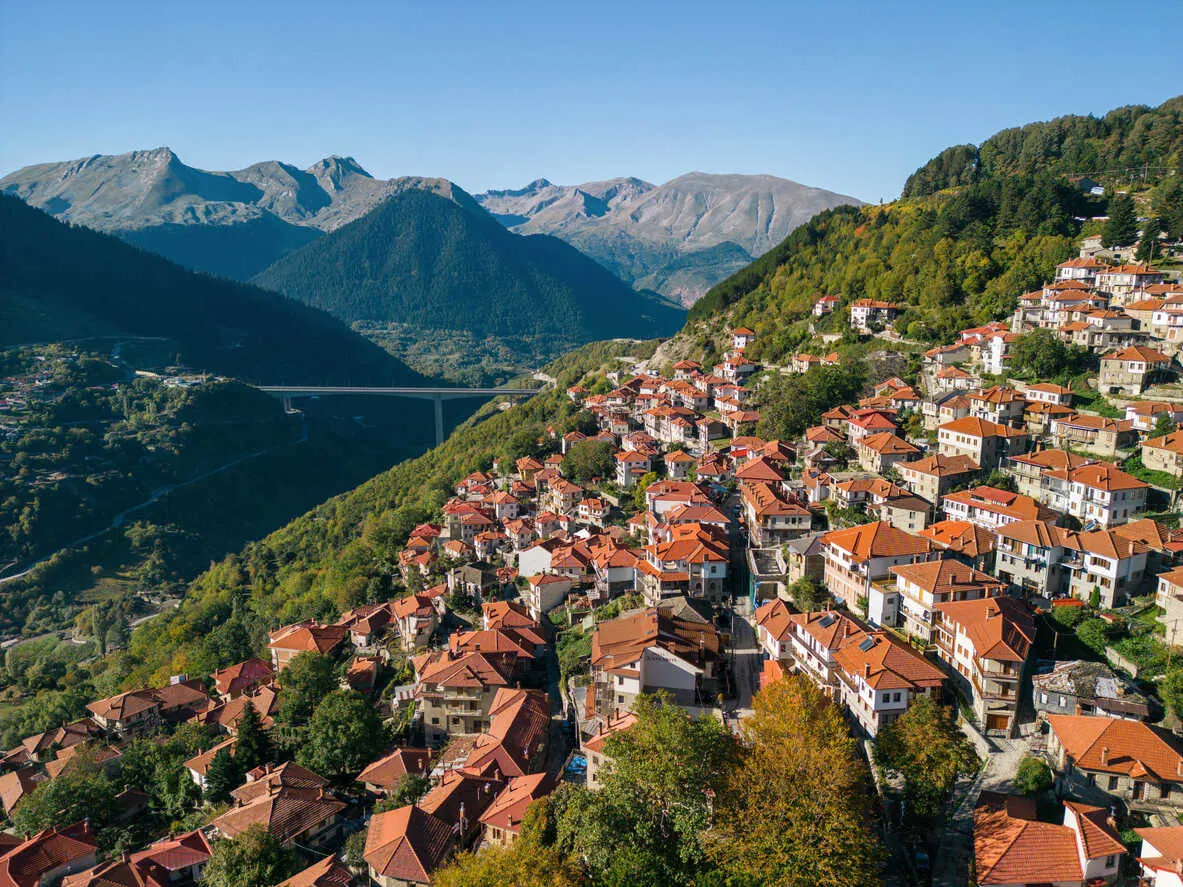
Metsovo sits high in the Pindus Mountains in northern Greece, near Ioannina. At an elevation of around 1,160 meters (3,800 feet), it has roughly 2,700 permanent residents, though the wider municipality counts closer to 6,000. The town is around 273 miles (440 kilometers) northwest of Athens and 125 miles (200 kilometers) west of Thessaloniki, both reachable via a national motorway.
Metsovo does not look like most people’s mental image of Greece. It has stone houses with slate roofs and dark wood balconies that cling to the hillside. Older residents still wear traditional dress on ordinary weekdays rather than only at festivals. The town sits along the Katara Pass, making it both isolated and connected—a mountain town that traded with the wider world without losing its character.
Metsovo’s character is anchored by a surprising cultural infrastructure for a town its size. The Averoff Museum of Modern Greek Art holds one of the finest collections of 19th- and 20th-century Greek painting outside Athens. A short drive from the center, the Katogi Averoff winery, founded in 1959, was the first in Greece to plant Cabernet Sauvignon and still runs tastings in its stone-vaulted cellars. The town is also known for its Metsovone PDO cheese and some of the best tsipouro in Greece. Just beyond the town, Pindus National Park is home to brown bears, wolves, and wild horses.
Getting there: Metsovo is located along the Egnatia Odos motorway, a modern highway that crosses northern Greece from Igoumenitsa in the west to the Turkish border in the east. From Athens, it’s roughly a 4.5-hour drive north on the A1 and then west onto the Egnatia highway. Thessaloniki is closer, taking around three hours by car. The nearest airport is Ioannina, a small regional airport about 40 miles (60 kilometers) west, though most international travelers fly into Thessaloniki or Athens. KTEL buses run daily from Athens and Thessaloniki.
Healthcare: The nearest full-service hospital is the University Hospital of Ioannina, about 37 miles (60 kilometers) west. Metsovo has a health center for routine care, but anything serious means the drive to Ioannina, which can be be slow in heavy winter weather.
Housing: Real estate remains affordable by Greek mountain town standards, but inventory is limited. For example, a quick search on Spitogatos.gr shows only nine properties for sale under 100,000 euros and two rentals available in the area. Property often comes onto the market when families who moved to Ioannina or Athens sell inherited homes.
Trade-offs: This is a small town where speaking Greek will get you further than English. Winters are cold, with regular snowfall, and the distance to Ioannina for medical care is not insignificant, especially in winter weather. In return, you get clean mountain air, one of the most walkable historic centers in Greece, and a surprisingly cultured town. Metsovo has two busy seasons: winter, when skiers arrive, and summer, when visitors escape the heat of the plains. The shoulder seasons are quieter and the best time to see what daily life feels like.
Litochoro: Home of the Gods
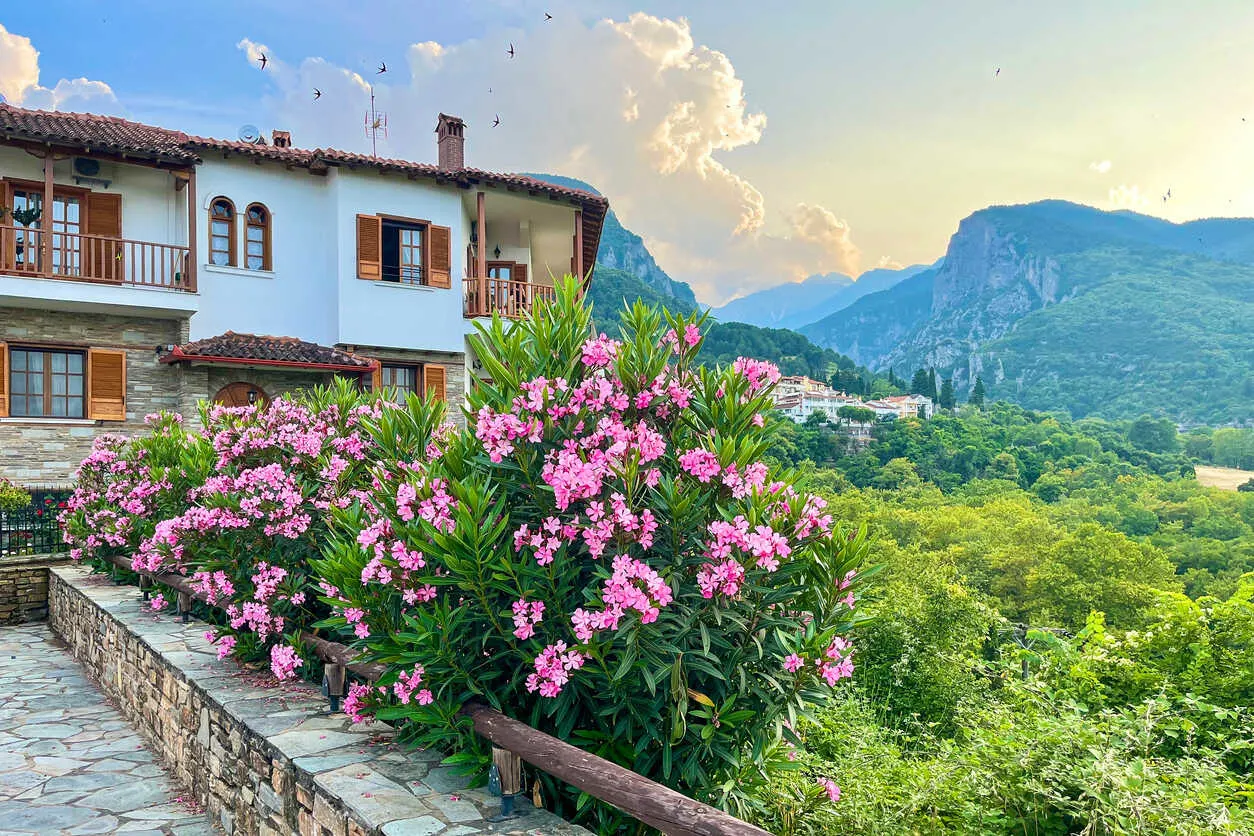
Located about 265 miles (430 kilometers) from Athens and about an hour’s drive from Thessaloniki, Litochoro rests in the foothills of Mount Olympus, Greece’s highest mountain. The town has about 7,000 full-time residents and, thanks to its proximity to Mount Olympus, attracts hikers, mountaineers, and nature lovers from around the world.
The beach at Plaka Litochorou is a 10-minute drive down the mountain, so you can enjoy the sea and mountain hiking in the same afternoon. The Enipeas Gorge trail begins at the edge of town and follows the river past waterfalls to the Agios Dionysios Monastery. The Prionia trailhead, the starting point for climbing Mount Olympus, is about 30 minutes above the town by car.
Getting there: Litochoro is reachable by rail on the main Athens–Thessaloniki line, with a station about four miles (six kilometers) from the town center. The train from Athens takes just under four and a half hours, while the journey from Thessaloniki takes around 45 minutes.
Healthcare: Most residents drive about an hour north to Thessaloniki, home to some of the largest teaching hospitals in northern Greece. Litochoro itself has a health center for basic needs, while Katerini General Hospital, about 14 miles (22 kilometers) north, handles emergencies.
Housing: Rentals in Litochoro run roughly 300 to 600 euros a month for a modest one-bedroom apartment, and multiple houses and apartments can be found for sale under 150,000 euros. Views and proximity to the main square push prices higher. Nearby towns such as Dion offer even lower prices if you want more space. Dion is also home to the archaeological site of ancient Dion.
Trade-offs: Winters are genuinely cold, and while the town fills with tourists from June through September, it quiets down significantly from November to April. Basic English is widely spoken thanks to tourism, but don’t expect everyone to be fully fluent. The payoff is easy access to both Mount Olympus and the Aegean coast, making Litochoro one of the few places in Greece where you can hike alpine trails in the morning and be at the beach by the afternoon.
How to Get a European Passport in Three Months

... Getting Citizenship in as Little as 3 Months? (even if you don’t have a European parent or grandparent)
... How to Live in Europe Year-Round on an American Passport Alone (no visa or second citizenship required)
... Why 2026 May Be the Last Year for Easy European Passports for Americans
Karpenisi: The Switzerland of Greece
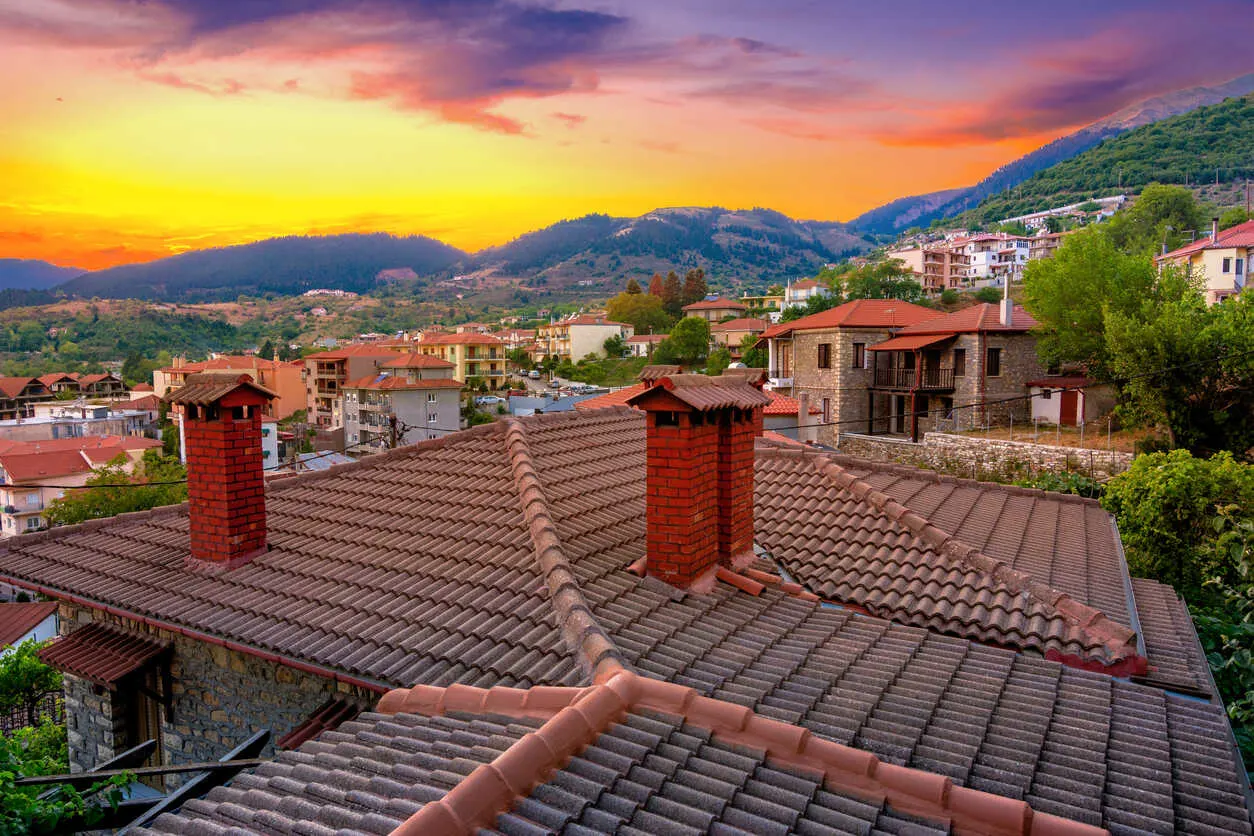
Located in the mountainous heart of central Greece, Karpenisi is the capital of Evrytania, one of the least densely populated regions in Europe. It can feel like Vermont. The town is about 180 miles (290 kilometers) northwest of Athens and sits at an elevation of about 960 meters (3,150 feet) on the slopes of Mount Velouchi.
Locals call the wider region the Greek Switzerland, and the description holds up. The countryside around Karpenisi is a patchwork of forested ravines, alpine meadows, and stone-built villages. The Velouchi Ski Center opens from December through March, while the surrounding trails and rivers draw hikers, rafters, and rock climbers the rest of the year. The town has about 7,000 full-time residents.
Getting there: There is no train station or nearby airport, so a car is almost essential. KTEL buses run daily from Athens and take around 4.5 to 5 hours.
Healthcare: Karpenisi has its own general hospital, providing emergency care, internal medicine, and basic surgery. For specialized treatment, Lamia General Hospital is about 55 miles (90 kilometers) east, while the University Hospital of Larissa is about another hour beyond that.
Housing: Real estate remains genuinely affordable. Small stone houses in central Karpenisi are listed from around 60,000 to 130,000 euros, and one-bedroom apartments can rent for under 300 euros a month. Prices drop even further in outlying villages such as Megalo Chorio, Mikro Chorio, and Koryschades, which many consider even prettier than the town itself and which often offer even better mountain views.
Trade-offs: This is a fairly remote town, and the drive from Athens can take four hours or more, depending on the weather. There is no train service or nearby airport. The full-time foreign community is very small, and daily life is conducted almost entirely in Greek. In return, you get affordable housing, a working hospital in town, a spectacular natural setting, and a stable year-round community that doesn’t empty out during the winter. Many consider the nearby stone villages among the country’s most beautiful.
Kalavryta: Where the River Styx Falls from the Mountain
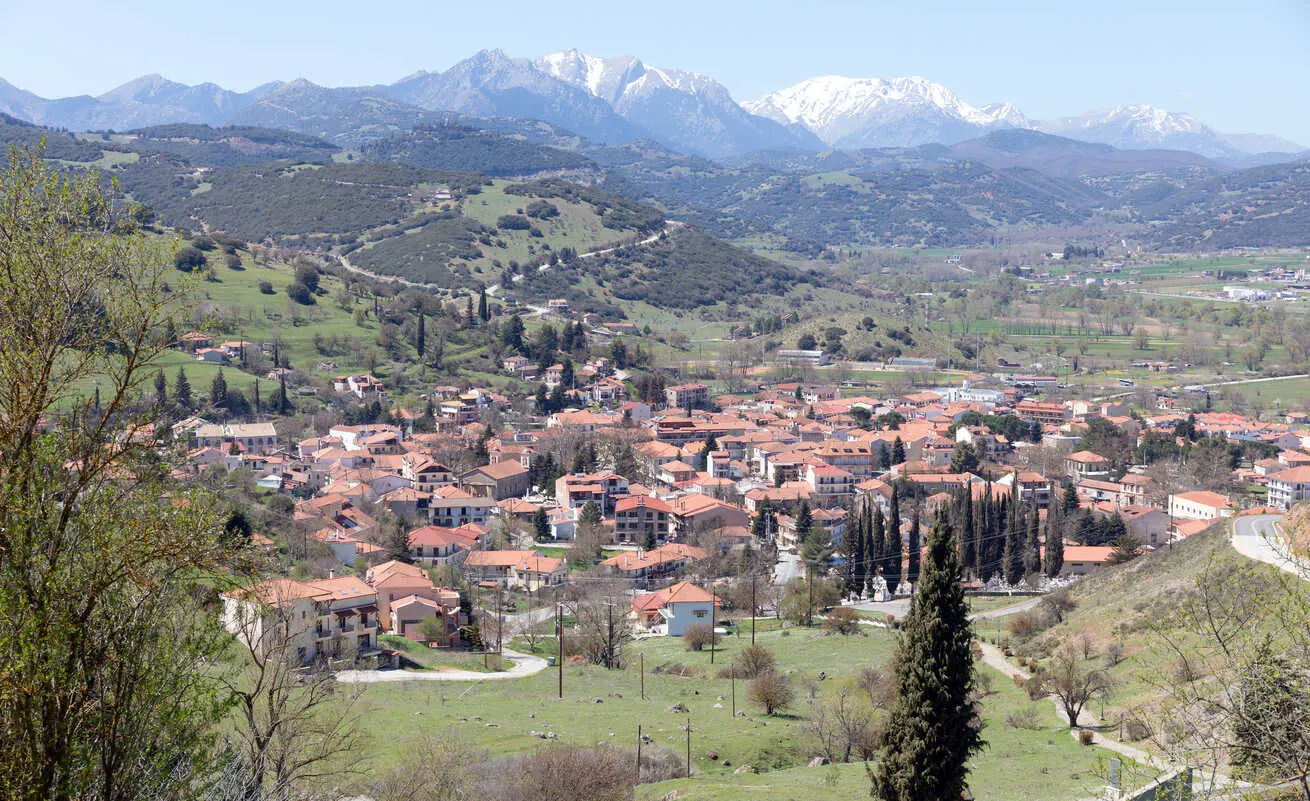
Kalavryta sits at 764 meters (2,507 feet) on the slopes of Mount Helmos, called Aroania by the ancients. About 1,700 people live in the town itself, with the wider municipality home to closer to 9,200. This is a genuine four-season destination, with a real ski season, warm but not sweltering summers, and colorful wildflowers blooming in spring.
The setting is what wins people over. The town sits in a green bowl of mountains, and within an hour’s drive you can reach some of the most dramatic landscapes in Greek mythology. On the north face of Mount Helmos, the Mavroneri (Black Water) waterfall plunges 200 meters and feeds the river ancient writers identified as the Styx, the mythological entrance to Hades. It is the second-highest waterfall in Greece, and the hike to reach it is spectacular. Nearby, the Cave of the Lakes stretches almost two kilometers into the mountain and features 13 tiered underground lakes.
Kalavryta also carries the weight of World War II history. On Dec. 13, 1943, Nazi occupying forces killed most of the town’s male population. In remembrance, the clock on the church tower is permanently stopped at 2:34, the time of the massacre, and the Kalavryta Holocaust Museum is one of the most affecting small museums in Greece.
Getting there: Kalavryta is about 125 miles (200 kilometers) west of Athens and 50 miles (80 kilometers) south of Patras. KTEL buses from Athens take about three hours. The closest airport is Araxos Airport, near Patras.
Healthcare: Healthcare is one of the town’s real advantages because Kalavryta has its own general hospital, covering emergencies, internal medicine, and basic surgery. For specialized care, the University Hospital of Patras is about 90 minutes away.
Housing: Interestingly, the town offers many properties for sale but significantly fewer for rent. Sale prices remain competitive, with more than 50 listings under 150,000 euros. Rentals range from 350-euro-per-month lofts to 2,000-euro-per-month maisonettes, though a quick search shows only nine rental listings. In smaller towns, housing is often found through word of mouth, so if you’re serious about living here, visiting the local kafenio and letting people know you’re looking can be more effective than relying solely on online listings.
Trade-offs: The ski season brings weekend crowds and higher taverna prices from December through March. Expect regular snowfall in winter, and the full-time foreign community is small. In return, you get a working hospital in town and a location that lets you be on the ski slopes in 30 minutes or at the Corinthian Gulf in under an hour.
In Closing
Living in the mountains means trading some things for others. Winters are colder than on the islands, the sea is farther away, and daily life is conducted more in Greek than in English. In return, you gain close-knit communities and a side of Greece that doesn’t empty out when the tourists leave.
If the islands taught me the magic of Greece, the mountains taught me its depth. Both are worth experiencing.
The best way to test any of these towns is to rent for a month during the shoulder season—October or April—when the tourist crowds have thinned and you can experience daily life much as full-time residents do.
Join Us in Europe in 2027!
Portugal, Spain, Italy, France, Greece... You’ll find gorgeous, culturally rich cities and towns and beautiful sunny beaches. You can enjoy a high quality of life—yet a surprisingly low cost of living. Starting at $2,500 a month, a couple can live well. With more, you could live large.
If you’ve been dreaming of life in Europe, join us March 20-22, 2027, for International Living’s Fast Track Europe Conference. We’ll meet in Portugal’s sunny Algarve, and our focus will be on Europe’s best destinations to retire better, live well, and spend less.