
Thailand is a big country, about the size of Spain or the combined states of California, Oregon, and Washington. From megacities to misty mountains to postcard-perfect beaches, expats who choose the Land of Smiles as their new home are spoiled for choice, and sometimes overwhelmed by it.
So it’s no surprise that many long-term expats in Thailand don’t stay put. In fact, relocation is almost a rite of passage. I started in Bangkok, moved to Phuket, spent a year in Chiang Mai, returned to Bangkok, and finally settled in Jomtien Beach on the Eastern Seaboard in 2009. Like many others, I didn’t find my “forever spot” on the first try.
The Top Five Reasons Expats Change Locations
1. A Place Is Too Busy
Most new arrivals in Thailand begin their journey in Bangkok. It’s a legendary world-class mega-city buzzing like a concrete beehive with energy, culture, and just enough chaos. Travel pundits often vote it the world’s most visited city.
But the difference between visiting Bangkok and residing there is like the difference between meeting a rock star and becoming their roommate. It’s big fun at first, then it can wear you out.
When I lived there, I thrived on the energy. I did renovation projects, took Thai language classes, taught at a university, and always had something to do. But once I slowed down, Bangkok just kept going, and going, and going. Without a daily purpose, I felt like I was a record playing at 33 RPMs while Bangkok spun at 45.
Your chance to retire overseas now
Your chance to retire overseas now
Learn more about Thailand and other destinations by signing up to our daily IL Postcards e-letter and we'll immediately send you a free report: 20 Countries Compared, Contrasted, Ranked, and Rated.
You don’t have to be rich to enjoy a pampered retirement, you just need to know where to go.
With our 35th Annual Global Retirement Index, our experts hand you a detailed roadmap. Details and a Special Offer Here!

By submitting your email address, you will receive a free subscription to IL Postcards, The Untourist Daily and special offers from International Living and our affiliates. You can unsubscribe at any time, and we encourage you to read more about our Privacy Policy.
I’ve met plenty of expats who had the same experience. Many eventually migrate north to Chiang Mai, where the pace is gentler, the climate cooler, and the expat community more tightly knit. It’s still lively, but you have a choice to engage or not. The serenity you came to Thailand for is much more accessible in the North.
Others prefer to keep Bangkok within reach without living in it full-time. Coastal cities like Hua Hin, Pattaya, and Rayong are all within a few hours’ drive and offer a more relaxed lifestyle, plus nice beaches and easy access to the capital when you feel like getting your city on.
2. A Place Is Too Sleepy
Then there’s the flip side.
Island life sounds like the dream, until you’ve dreamt it 90 nights in a row. Koh Chang, Koh Tao, and Koh Lanta are a paradise for divers and sailors. But even on larger islands like Koh Samui or Phuket, the “permanent vacation” lifestyle can become monotonous.
Expat communities on islands can also be transient, with people drifting in and out like the tide. It’s easy to end up bored and feeling isolated, with no social support network.
That’s when many expats relocate to coastal mainland cities like Krabi, Chumphon, Rayong, Pattaya, or Hua Hin. These places offer beach life with a bit more substance. Golf courses, marinas, established communities, and roads that don’t just loop and loop.
A similar pattern happens in Thailand’s northeast, Isaan. Many expats move there with Thai partners and settle into small family communities. While peaceful, safe, and incredibly affordable, the glacial pace is far too slow for some. And, without Thai language skills, daily life can make you feel like a permanent outsider.
Eventually, many move closer to hubs like Chiang Mai, Rayong, or Pattaya, places where English is more widely spoken, and social life is easier to build.
How to Get a European Passport in Three Months
... Getting Citizenship in as Little as 3 Months? (even if you don’t have a European parent or grandparent)
... How to Live in Europe Year-Round on an American Passport Alone (no visa or second citizenship required)
... Why 2026 May Be the Last Year for Easy European Passports for Americans
3. The Quest for a More Authentic Thailand
Naturally, some expats move for the exact opposite reason. They want more Thailand, not less.
If you start in places like Bangkok, Pattaya, or Phuket, it’s easy to forget you’re in a foreign country. English everywhere. There’s familiar food and Western-style accommodations. It’s easy living, but it’s not like you’re immersing yourself in Thai culture.
One long-time Pattaya resident put it perfectly: “There’s a Hooters on Beach Road. I might as well be in Fort Lauderdale.”
That realization sends many expats searching for something more authentic, so they head to quieter coastal areas in Rayong Province, where fishing boats outnumber jet skis and it’s easier to find a durian farm than a nightclub. And, as you might expect, authenticity comes with lower costs and better beaches.
Phuket residents often make a similar move to nearby Krabi, drawn by its eco-friendly tourism, slower pace, and dramatic natural beauty. Places like Ao Nang and Railay feel like Phuket before the crowds and inflated prices arrived.
Up north, Chiang Mai veterans sometimes relocate three hours North to Chiang Rai, chasing a less polished and more traditional version of Thailand. As Don, a 91-year-old American expat, told me, “It’s like Chiang Mai was 25 years ago. I moved here to recapture my youth.”
4. Lifestyle Changes Require a Move
Even if you love where you are, life has a way of changing the plan.
Families, for instance, often relocate when children reach school age. International schools become a priority, usually meaning a move to areas with established expat infrastructure.
Bangkok leads the pack, but savvy parents often look to places like Rayong, East Pattaya, and Sri Racha, where large industrial estates have quietly created thriving international communities over the years. Chonburi Province alone boasts 16 accredited international schools with English, French, and Mandarin curricula.
Healthcare is another factor. As expats age, access to first-rate, advanced medical services becomes more important. Thailand excels in this area, but the best facilities are concentrated in Bangkok, Chiang Mai, Pattaya, Phuket, and Rayong.
Predictably, these cities attract expats over 65. At a certain point, proximity to world-class healthcare outweighs proximity to a quiet beach.
5. A Place Gets Too Developed or Expensive
People change and so do places.
Many expats still love where they first settled, but they loved it more 10 or 20 years ago.
In the early 2000s, I lived in Nai Harn, a sleepy beach town on Phuket’s southern tip. Back then, it was a beachcomber’s dream: powdery sand, a Buddhist temple on a shimmering green lagoon, and one lonely reggae bar.
When I returned ten years after, I could barely recognize it. Construction cranes, condo developments, crowds. The charm was still there, but progress had buried the parts I enjoyed the most.
This is a common story in Thailand. And when it happens, expats don’t usually complain; they just relocate.
Chiang Mai enthusiasts head to Chiang Rai, Mae Hong Son, or Pai for a similar vibe from decades past. Phuket lovers move to Khao Lak or Takua Pa, where tourism is gentler, and nature is still the main attraction.
In Pattaya, rising costs and rapid development have pushed long-time residents further down the coast. Bang Sare, Sattahip, and beyond Rayong offer better beaches, fewer crowds, and significantly lower costs. Move just an hour away, and your monthly expenses can drop by 30% or more.
The Bottom Line
When you live in a Buddhist country, you can’t help but learn to embrace impermanence. People, places, and circumstances are constantly changing.
In Thailand, it’s easy to go with the flow. There’s always another charming town, another salty coastline, another version of the lifestyle you desire; and it’s all part of the living overseas adventure.
Expats don’t always agree on the best place to call home in Thailand, and they often change their minds. But one thing is for sure:nobody is leaving the Land of Smiles.
Your chance to retire overseas now
Your chance to retire overseas now
Learn more about Thailand and other destinations by signing up to our daily IL Postcards e-letter and we'll immediately send you a free report: 20 Countries Compared, Contrasted, Ranked, and Rated.
You don’t have to be rich to enjoy a pampered retirement, you just need to know where to go.
With our 35th Annual Global Retirement Index, our experts hand you a detailed roadmap. Details and a Special Offer Here!
By submitting your email address, you will receive a free subscription to IL Postcards, The Untourist Daily and special offers from International Living and our affiliates. You can unsubscribe at any time, and we encourage you to read more about our Privacy Policy.
Join Us in Europe in 2027!
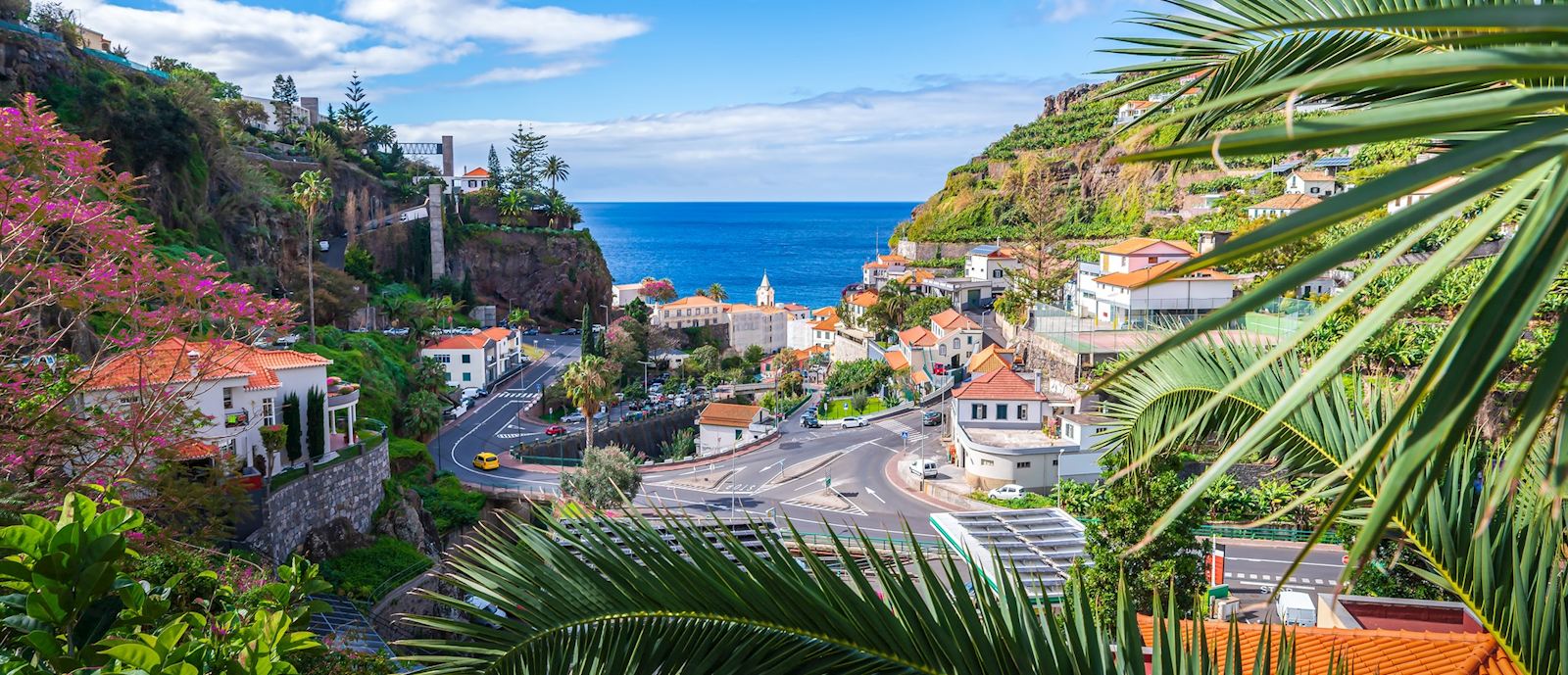
Portugal, Spain, Italy, France, Greece... You’ll find gorgeous, culturally rich cities and towns and beautiful sunny beaches. You can enjoy a high quality of life—yet a surprisingly low cost of living. Starting at $2,500 a month, a couple can live well. With more, you could live large.
If you’ve been dreaming of life in Europe, join us March 20-22, 2027, for International Living’s Fast Track Europe Conference. We’ll meet in Portugal’s sunny Algarve, and our focus will be on Europe’s best destinations to retire better, live well, and spend less.
