

It was the tail end of Covid, and my content agency was on its knees. Clients had slashed their marketing budgets during lockdown. I could feel the ground giving way under me.
I’d been in talks with a potential investor who was keen on breathing new life into the company. I worked on the business plan and the presentation for months.
And then, finally, I was in it. I was giving the presentation I’d prepared for so long.
Halfway through, there was a loud bang, some fizzing sounds, and the power went out.
I kept my face neutral. I powered on, praying my hotspot and the remaining battery on my laptop would be enough to get me through.
It wasn’t.
I had to cut the presentation short and reschedule for another time. It was a disruption at the exact moment I needed everything to run smoothly. I doubt the outage was the reason I didn’t get the investment, but I don’t think it helped. I ended up having to close the company shortly after.
Later, I found out what caused the outage.
A chicken ran into the electricity generator. It caused an island-wide electricity outage that lasted almost the entire day.
Because of a chicken.
Welcome to life in the “cheap” countries.
Yes, there is a relaxed pace of life. Yes, these places are often beautiful and sometimes beachside, like in my case. The weather can be better, and the cost of living can look, on paper, like a fraction of what we pay in the West.
But I’m here as someone who has lived in a “cheap” country for the last 16 years to tell you there are hidden costs that rarely make it into people’s equations when they’re deciding to move long term.
Now, I didn’t move to Thailand because it was cheap. I moved because I fell in love with the country.
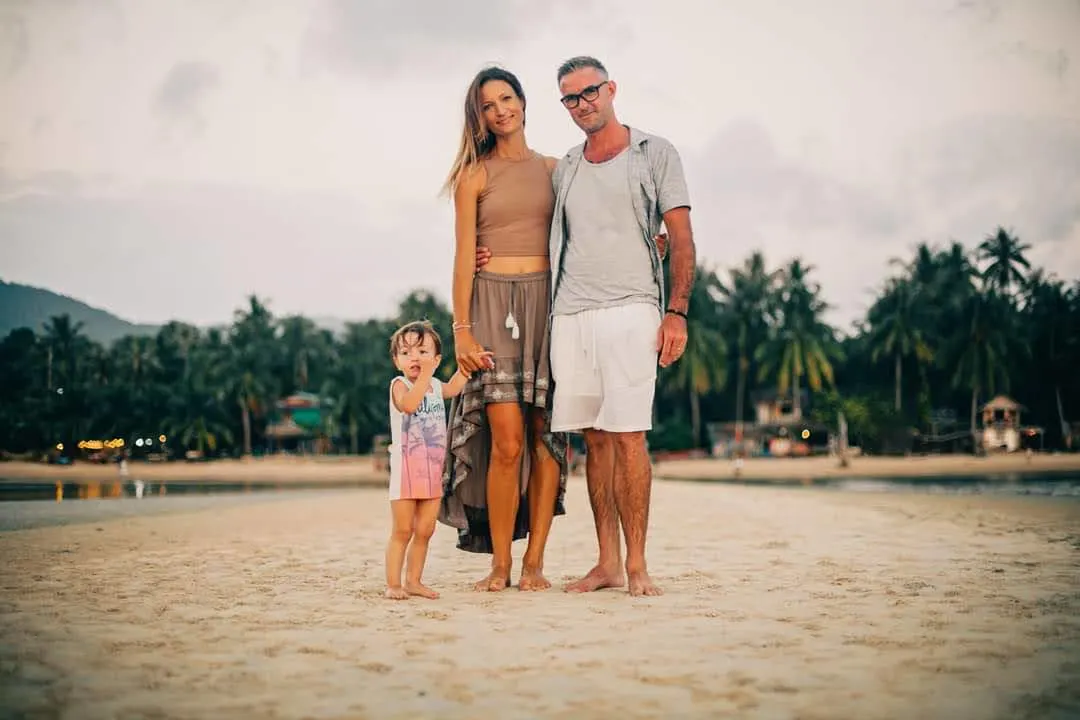
I fell in love with the beaches first, then the food, and then with everything else: the humid air that smells like rain and jasmine, the quiet steadiness of the Buddhist mindset, and the way the landscape can make you feel like you’ve stepped into someone else’s dream.
Affordability was a real part of the pull, and it’s a real part of what draws people into these types of places.
This is not a warning. I’m not trying to discourage anyone from exploring a lower cost of living. I understand the pull. I live in a place people daydream about.
This is an honest, experienced insider’s guide to the long-term equation beyond the headline numbers. Because affordability is not just what you pay. It’s what it costs you in time, energy, and peace of mind.
Your chance to retire overseas now
Your chance to retire overseas now
Learn more about Thailand and other destinations by signing up to our daily IL Postcards e-letter and we'll immediately send you a free report: 20 Countries Compared, Contrasted, Ranked, and Rated.
You don’t have to be rich to enjoy a pampered retirement, you just need to know where to go.
With our 34th Annual Global Retirement Index, our experts hand you a detailed roadmap. Details and a Special Offer Here!

By submitting your email address, you will receive a free subscription to IL Postcards, The Untourist Daily and special offers from International Living and our affiliates. You can unsubscribe at any time, and we encourage you to read more about our Privacy Policy.
When “Cheap” Stops Being Simple
When people talk about living somewhere inexpensive, they’re often picturing a very specific kind of life: fewer moving parts, fewer responsibilities, and a lot of flexibility.
But “cheap” looks very different once you have a family. Once you’re paying for an international school and trying to build a stable life.
Today, our monthly costs are significantly higher than what most people imagine when they picture island living. We spend around $6,000 a month, and that’s the months we don’t have to buy an international flight or pay visa costs.
That’s the first hidden cost of cheap countries: the gap between the lifestyle you imagined and the lifestyle you’re actually building once you’re living somewhere long-term.
Hidden Cost #1: A Thousand Tiny Interruptions
When systems don’t work consistently, you start paying in a currency most people never track: attention.
You spend your days managing small failures. You start holding contingency plans in your body.
For me, the hidden cost has often been mental health. It’s the cost of trying to do normal life in a place where normal life is harder than it needs to be.
Take Wi-Fi.
My Wi-Fi kept going down, so I asked my landlord for help. On the island, service providers tend to prioritize locals over foreigners, so having a Thai person involved changes how seriously your issue is taken.
A technician came to lay the cable, and as they were laying it, we could see it was only buried one or two inches under the ground. My husband told them they needed to bury it deeper, or it would keep happening. They nodded enthusiastically and did nothing.
So, of course, it kept happening.
My Wi-Fi kept going down every two weeks, and it took at least 48 hours to get a technician in each time. After a while, even reporting it became its own small humiliation. I went into the local provider office to report the outage again, and the woman behind the counter no longer believed me. It did sound unbelievable.
It was happening anyway.
Then there are the small logistical things that become exhausting when they repeat for years. In places like this, addresses aren’t always a real thing in the way you’re used to. So you get phone calls from the postman, again and again, because they can’t remember where your house is.
None of these issues are dramatic on their own. That’s the point. The hidden cost is the accumulation—the constant, low-grade vigilance of bracing for the next small breakdown.
If I were doing it again, I’d budget for convenience like it’s a utility. The cheapest protection in places like this is usually a second option: a hotspot, a coworking pass, a generator, or a person who can help you follow up in-language.

Hidden Cost #2: Living on Renewals
Another thing people don’t factor into the cheap country equation is the cost, financial and psychological, of staying legal.
Thailand is a good example. There are rules that require 4 Thai citizens for every foreign employee, which means it’s not straightforward to hire a foreigner. It also means that if you open your own company, you can be forced into staffing structures that don’t match what your business actually needs.
And this is where the hidden cost becomes emotional as much as practical. You can try to follow the laws as best you can, but there are so many overlapping rules that even professionals can struggle to navigate them cleanly. You end up living with a sense that your stability is conditional.
The cost of professional help is its own part of the equation. Down on smaller islands and in less formal regions, it can be notoriously difficult to find reliable legal professionals. After going through more than 10 different legal firms locally, my husband and I moved our legal services up to Bangkok, where the professionals are more reliable.
For years, I watched foreigners get advice that was treated like common knowledge: ways to set up a company that were described as normal, routine, and safe. Later, enforcement shifted, and some of those structures came under scrutiny.
That’s the hidden cost you don’t see in the glossy version of “move somewhere cheap.” Your risk is not just financial. It can feel existential.
And even if you’re not running a business, staying legal as an individual can be expensive and difficult. You have 90-day reports. You renew your visa once a year. With certain visa structures, you have to leave the country every couple of months for what people call border bounces.
On the surface, it’s just admin. In practice, it can mean sitting in a minivan for 16 hours to get to a border, while it barrels down the highway, tailgating and passing around corners and uphills, just to keep a stamp in your passport.
People talk about cheap countries like you can just arrive and exhale. Often, you can’t.
The way to mitigate this is to build systems around it. Choose legal help with long-term references, keep a calendar for every deadline, and build time buffers so nothing is last-minute. And financially, treat renewals and visa costs like a monthly expense, not a surprise.
Hidden Cost #3: The Day Your Body Stops Trusting the System
Healthcare is the hidden cost people most underestimate—until they need it.
On smaller islands and in less-resourced regions, you may not trust the local hospitals. You may dread the day you or your child needs real care. And sometimes you learn that the hard way.
Even in cities, there can be another hidden cost: the way healthcare can become a system that is difficult to navigate as a foreigner, especially when you’re scared and alone.
When I was 25, I was new in Bangkok and felt sick to my stomach. I messaged a local friend, and he suggested I go to the hospital. “It’s what Thais do when they’re sick,” he explained.
So I went.
I told them I had stomach pain. They felt my stomach and told me I might have an ulcer.
Or maybe stomach cancer.
It was said with such flippancy that it seemed like a common diagnosis.
I was 25 years old, new to Bangkok, on my own, and utterly terrified. I called my parents in Canada in tears, telling them what the doctors had said and asking them to pay the 20,000 THB medical bill for the X-rays I apparently needed.
My parents freaked out, too. They wired me the money instantly.
It turned out to be the flu.
And once you’ve had a moment like that, the fear sticks around. You start asking yourself what happens when it isn’t something minor.
I saw that question play out in real time when my brother-in-law came to Thailand for a 2-week holiday. A few days into the trip, he had a scooter accident and injured his knee. We took him to a private hospital that was considered one of the best options nearby. The doctors insisted he needed knee surgery.
He spent the rest of his holiday on crutches, plus several days in the hospital.
When he got back to Scotland, his GP looked at the situation and told him two things: first, that he’d been stitched up with a serious infection that could have become dangerous without proper treatment. And second, that the surgery was not necessary in the first place.
This is what I mean by hidden cost. It wasn’t just the money. It was the fear, and the way my nervous system learned a new lesson: in some places, navigating care can feel like trying to find solid ground in the middle of a storm.
And if you live abroad long-term, you make healthcare decisions constantly, even when you’re not actively sick. You buy the insurance. You research clinics. You plan “what if” routes to bigger cities. You hold the dread in the background.
That is a cost.
That said, there’s a lot you can do to mitigate that risk. Making sure you have the right health insurance is one way to breathe easier, and keeping your documents organized means you are not scrambling when you are scared. And if you are choosing a long-term base, choose it with hospital access in mind. Koh Phangan isn’t one of those places, but that doesn’t mean they don’t exist in Thailand—there are excellent hospitals on the mainland, for example.
The World’s Best Retirement Havens for 2026
The World’s Best Retirement Havens for 2026
24 Countries Compared, Contrasted, Ranked, and Rated. You don’t have to be rich to enjoy a pampered retirement, you just need to know where to go. With our 35th Annual Global Retirement Index, our experts hand you a detailed roadmap. Details—and a Special Offer—Here

By submitting your email address, you will receive a free subscription to IL Postcards, The Untourist Daily and special offers from International Living and our affiliates. You can unsubscribe at any time, and we encourage you to read more about our Privacy Policy.
Hidden Cost #4: The Risk That Follows You Home
Then there are the roads.
Road safety is another friction point that doesn’t show up in cost-of-living calculators, but it can shape your life in a thousand small ways.
Thailand has one of the highest road traffic death rates in the world.
On islands and in tourist-heavy areas, the risk can feel amplified. You have tourists who have never driven a scooter before renting one without experience. You have local drivers who ignore the rules of the road. You have bikes without working headlights or indicators. You have expats who start bending the rules because everyone else does. And you have construction trucks barreling down narrow roads, paid per load, passing uphill around corners like nothing matters.
I’ve known many people to die on the roads here. I’ve also heard stories that are so shocking they don’t leave you.
But the exact details of any incident aren’t the point.
The point is the feeling you live with: that leaving the house can involve a level of risk you never had to consider back home. And once that becomes real to you, you start living smaller. You avoid certain routes. You think twice about errands. You make choices based not on what you want to do, but on what feels survivable.
In places with looser enforcement, you can’t outsource safety to the system. The mitigation is personal rules you do not break: helmet quality, speed, daylight-only riding, and refusing to ride when you’re tired, rushed, or not fully alert. Upgrade your transport, too—for example, when we had a child, we bought a car, and he didn’t start going on the scooter until he was 5 years old (and even then, only sometimes).

Hidden Cost #5: One Step Forward, Two Steps Back
Another thing people romanticize about these low-cost countries is the affordability of hiring help.
And yes, labor can be much cheaper.
But the hidden cost in places with little professional accountability is that reliability becomes rare. If you hire someone, they might show up late. If at all. They might do the bare minimum. They might quit next week when they find a better opportunity.
Here’s the kind of story that sums up the rhythm.
An electrician came to fix a plug socket at my house. He fixed the plug socket, but now the light switch attached to it no longer turns on the light.
I’ve been trying to get him to come back and fix it for the last three weeks. He’s gone MIA.
This happens all the time. It’s one step forward and two steps back.
And once again, the real cost isn’t just the money you pay. It’s the follow-ups. It’s the waiting. It’s the rework. It’s the mental load of holding another unfinished task in your head.
To protect your bandwidth, expect to pay for reliability. Vet people slowly, keep a short list of the ones who show up, and assume you’ll sometimes pay more to avoid paying twice. Cheap labor isn’t cheap if it keeps reopening the same problem. We’ve just started paying double what we used to for our contractors, which means we are getting higher quality and more reliability.
The Real Affordability Equation
If you’re considering a move to a cheap country, don’t just ask, “How little can I live on?”
Ask the question that actually matters in the long run.
What will it cost me to live there well?
Because the hidden costs don’t always arrive as one dramatic crisis. Most of the time they show up as interruptions, delays, and the slow erosion of your bandwidth.
And every now and then, you get a day that sums it all up. The kind of day where you’ve done everything right, prepared properly, shown up fully—and then the entire plan collapses for a reason that would sound ridiculous anywhere else.
Like a fizzled chicken shutting down an entire island’s electricity.
That’s the long-term equation beyond the headline numbers.
A place can be cheaper on paper and still cost you dearly.
So if you’re going to choose a “cheap” country, choose it with your eyes open and budget for the parts of life that don’t fit neatly into a spreadsheet: the time you’ll spend chasing basic services, the stress of staying legal, the fear you carry around healthcare, and the risk you absorb just getting from one place to another.
That’s what it costs to live there well.
Yes, I would do it again—because Thailand has given me a life I could not have predicted from the outside. But I’d do it with more balance and more structure: I’d keep a base closer to home and return often enough to feel resourced. I’d stop “winging it” and build real contingency plans—for money, healthcare, admin, and the inevitable days when something small takes out your whole schedule. And I’d treat organization as part of the cost of living here: not a personality trait, but a form of self-protection. The magic is real. You just have to meet it with clear eyes.
Your chance to retire overseas now
Your chance to retire overseas now
Learn more about Thailand and other destinations by signing up to our daily IL Postcards e-letter and we'll immediately send you a free report: 20 Countries Compared, Contrasted, Ranked, and Rated.
You don’t have to be rich to enjoy a pampered retirement, you just need to know where to go.
With our 34th Annual Global Retirement Index, our experts hand you a detailed roadmap. Details and a Special Offer Here!
By submitting your email address, you will receive a free subscription to IL Postcards, The Untourist Daily and special offers from International Living and our affiliates. You can unsubscribe at any time, and we encourage you to read more about our Privacy Policy.