

I dig into my tortilla, a sort of potato, onion, and egg pie served in a large wedge with a piece of crusty bread. It’s the perfect treat for someone like me, who can eat breakfast any time of day. Adding a coffee brings my check to less than €4. It’s another delightful moment in a country in which I never thought I’d live: Spain.
My husband and I live in Navarre, the region of northern Spain that includes Pamplona, made famous by Hemingway and known for the Running of the Bulls. When we first arrived in the Baztán Valley, we marveled at the expanse of rolling green hills dotted with sheep. It was like being back in Ireland, one of my favorite places in the world. Each turn of the winding road revealed another flock, or a grouping of Basque Mountain Horses (Caballos de Monte del País Vasco), distinctive for their huge shaggy manes, or the Basque pony known as “pottok” that resembles the Shetland pony.
Basque Country truly is a country unto itself. We had traveled much of Spain over the years, visiting familiar locations like Madrid, Barcelona, and Marbella. But it didn’t take long to discover how different this area of the country really is.
Get Your Free Spain Report Today!
Get Your Free Spain Report Today!
Learn more about the lower cost of living in Spain and other countries in our free daily postcard e-letter. Simply enter your email address below and we'll also send you a FREE REPORT — Live the Good Life in Sunny, Affordable Spain.

By submitting your email address, you will receive a free subscription to IL Postcards, The Untourist Daily and special offers from International Living and our affiliates. You can unsubscribe at any time, and we encourage you to read more about our Privacy Policy.
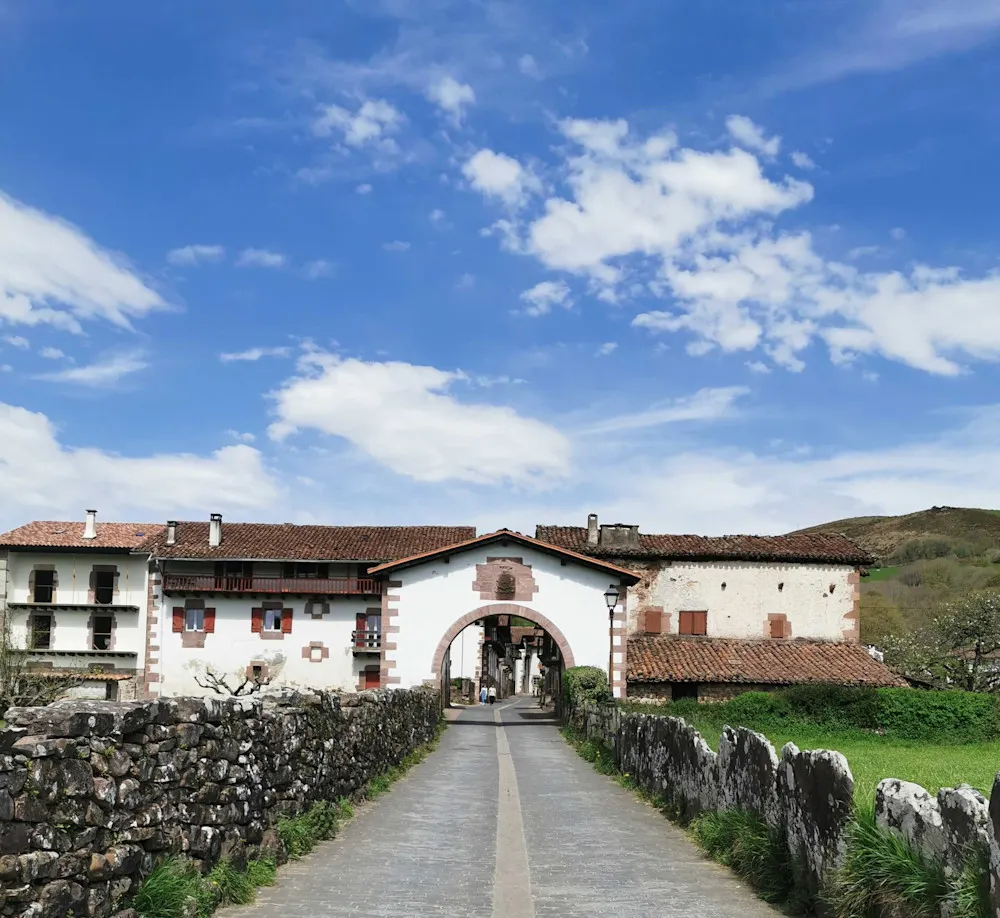
We live in the historic village of Amaiur-Maya, renowned for the ruins of its medieval fortress, which served as the last stronghold of the Kingdom of Navarre during the Castilian invasion of 1512 and the Battle of Amaiur in 1522. Its notoriety is evident every time I see huge buses parked at the base of the hill and tourists strolling under the iconic archway at the village entrance. Some visitors are Spanish schoolchildren, some are from across the border in France, and some are international pilgrims on the way to Santiago de Compostela, the capital of the autonomous region of Galicia.
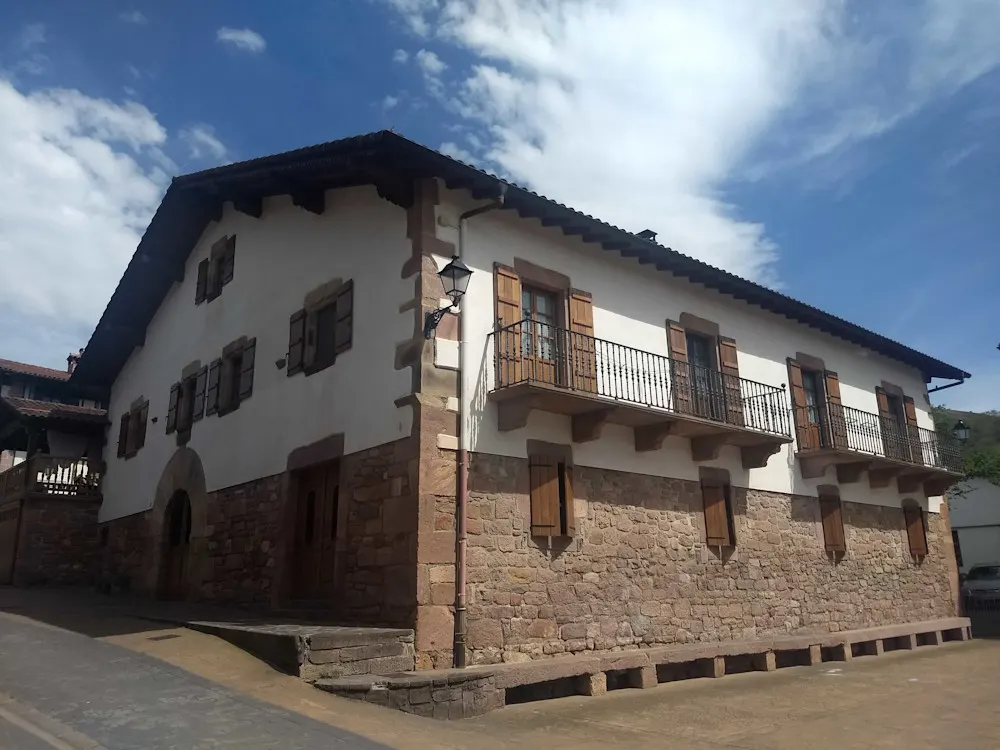
It’s not unusual for us to exit through the large wooden doors of our house and find someone snapping a photo of the engraving in stone on its lintel. Built in 1610, the structure is of typical Basque Country construction. Originally, these dwellings were designed to house a large family, animals on the ground level where a garage now stands, and a granary. Totally remodeled, today it consists of two separate six-bedroom apartments (one of which we occupy for the modest sum of €900 per month) and multiple storage spaces.
I admire the Basque people for the tight-knit nature of their families, for their courtesy, and polite, at-a-distance warmth. We are clearly “outsiders” here, but have been graciously grafted in. In fact, we are rather surrounded. Everyone here is of Basque heritage except for us. The elderly couple in our house is related to our landlord, whose son lives down the street. The wraparound balcony on one side of our living space overlooks a yard and a home where a daughter, son-in-law, and grandchildren live. The language we hear on the street is Basque, but we’ve mastered only a few words and phrases of this challenging tongue. So we get by on French and Spanish—and the ample use of charades.
The lifestyle here is relaxed. After morning coffee, my husband and I work on our respective projects: writing, editing, book design, and personal correspondence. We may do some household chores or make a grocery run to the nearest town, which is less than 10 minutes away. There are no stores in our village, but in town there are supermarkets as well as grocery stores, a butcher, a hardware store, and other stores. We might happen upon kiosks set up on the square where clothing and food items are for sale, or perhaps a folkloric group is singing and dancing, dressed in colorful Basque garb.
We may decide to travel to the border of France, just 15 minutes to the northeast, where there are supermarkets, gourmet specialty shops, restaurants, and clothing retail outlets. Or maybe it’s the day to finally visit the former home of King Louis XIV, less than an hour away in the seaside town of Saint-Jean-de-Luz in France.
Preferring to eat at home (lucky for me, my husband is a marvelous cook), it’s rare that we eat out except for the occasional snack like the one mentioned above. We spend about €600 a month on groceries, but that amount would be lower if we didn’t primarily choose organic foods. But to give you an idea, when we moved to Portugal in 2012, the lunchtime menu del día—soup, main course, a beverage (beer, wine, or bottled water), coffee, and dessert—cost €6 or €7. These days it’s more like €10 in Portugal, €15 in Spain, and €20 in France. That’s for one person at a mid-range restaurant. As for other expenses, amortized over the year, our electricity, hot water heater, and stove pellets in winter average €200 per month. We’re fortunate that water and internet are included in our monthly rent, and trash is simply deposited at a local collection center.
One difference we’ve noticed here is the absence of café culture. In Portugal, it figures prominently. Friends sit for hours over espresso or a glass of wine as they debate and solve the world's problems. There are no cafés as such in our village, although there is a hotel with a restaurant (for guests only). Their bar, which serves coffee, cake, and adult beverages, is open only three days a week (some weeks, anyway). At the base of the hill past the famous arch, there is a former mill converted into an eatery. Open several days a week, the limited menu consists of corn tortas (think tortillas) filled with ham, cheese, or chocolate, and a variety of beverages, including the quintessential Basque favorite, cider. Part of the fun is watching the tortas prepared on site on a comal, the traditional flat, round griddle. Just down from there is an artisanal craft brewery whose hours of operation, like those of the other places, are a challenge to figure out.
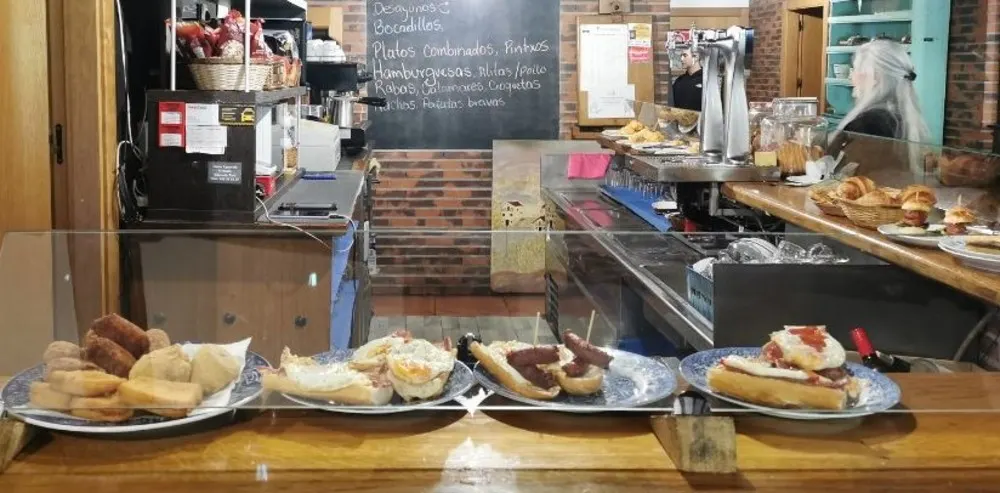
In town, there are a number of bar/restaurants, with long glass display cases of tapas and pintxos, small appetizers skewered with a toothpick. In our favorite one, when owner Claudia and her son Fernando greet us as though we are old friends, it opens the door to long conversations (in Spanish), with other patrons, often, interestingly, about world politics. We love this easy access to a snack and a chat. When we lived in Sweden, other than a bona fide restaurant, places to stop for a treat were primarily bakeries or upscale coffee houses in the Starbucks vein, and there was no personal connection with the barista or cashier.
If this area interests you, here are several pointers. First, unlike in Portugal, where long-term visa holders and permanent residents can make use of the public health service, in Spain, you need to have contributed to their Social Security program in order to gain free access to the public health system. To obtain a long-term visa, you must provide proof of private health insurance, which costs roughly €100 per person per month.
Second, unless you are a serious loner, I suggest moving here only if you bring a companion with you. Even then, joining some sort of group is helpful because, as mentioned, the Basque people tend to keep to themselves. Last year, we began attending church in the seaside resort community of Biarritz in France. We were thrilled to discover the added bonus of a bi-monthly English-speaking Bible Study led by an American from upstate New York. Other members hail from locations as diverse as France (naturally), Maryland, Virginia, Ghana, Kenya, Uganda, and Ireland.
Third, think twice about moving here if you are on a budget and want to visit family or friends in the States regularly, particularly if they live on the West Coast. The nearest international airport is in Madrid, five hours away, requiring a lengthy drive or a regional flight from Pamplona before continuing on to Atlanta and then to Los Angeles.
But here’s what you can expect: glorious hiking and biking opportunities, clean air, and fresh, simple food. Open grazing land, brilliant green valleys, lush forests, and majestic mountains. If things start to sound too quiet or boring, you need only to stop and listen to the sound of horses’ hooves clip-clopping on the cobblestones of Calle Mayor, donkeys braying, sheep bleating, birds singing, and church bells ringing.
And suddenly life will seem very, very rich.
Editor’s Note: Want to hear more about Tricia’s life in northern Spain? Watch our full conversation with her in the video below.
Get Your Free Spain Report Today!
Get Your Free Spain Report Today!
Learn more about the lower cost of living in Spain and other countries in our free daily postcard e-letter. Simply enter your email address below and we'll also send you a FREE REPORT — Live the Good Life in Sunny, Affordable Spain.
By submitting your email address, you will receive a free subscription to IL Postcards, The Untourist Daily and special offers from International Living and our affiliates. You can unsubscribe at any time, and we encourage you to read more about our Privacy Policy.