While the term “perfect climate” means something different for everyone, in International Living’s 2026 Annual Global Retirement Index, we’ve compiled a list of countries with the most varied weather systems to suit every preference.
In this category, we’ve considered specific criteria such as temperature, rainfall, humidity, and sunshine, as well as the personal experiences of expats and our boots-on-the-ground correspondents, to score the nations with the most livable climates.
Whether your idea of paradise is a sunny Mediterranean beach or the freshness of a high-altitude town, four seasons, or eternal spring, our climate category is designed to help you discover your ideal weather haven.
Read why the countries below made our top five list, and discover the 2026 titleholder of the best in climate category.
The World’s Best Retirement Havens for 2026
The World’s Best Retirement Havens for 2026
24 Countries Compared, Contrasted, Ranked, and Rated. You don’t have to be rich to enjoy a pampered retirement, you just need to know where to go. With our 35th Annual Global Retirement Index, our experts hand you a detailed roadmap. Details—and a Special Offer—Here

By submitting your email address, you will receive a free subscription to IL Postcards, The Untourist Daily and special offers from International Living and our affiliates. You can unsubscribe at any time, and we encourage you to read more about our Privacy Policy.
5. Mexico
By Bel Woodhouse
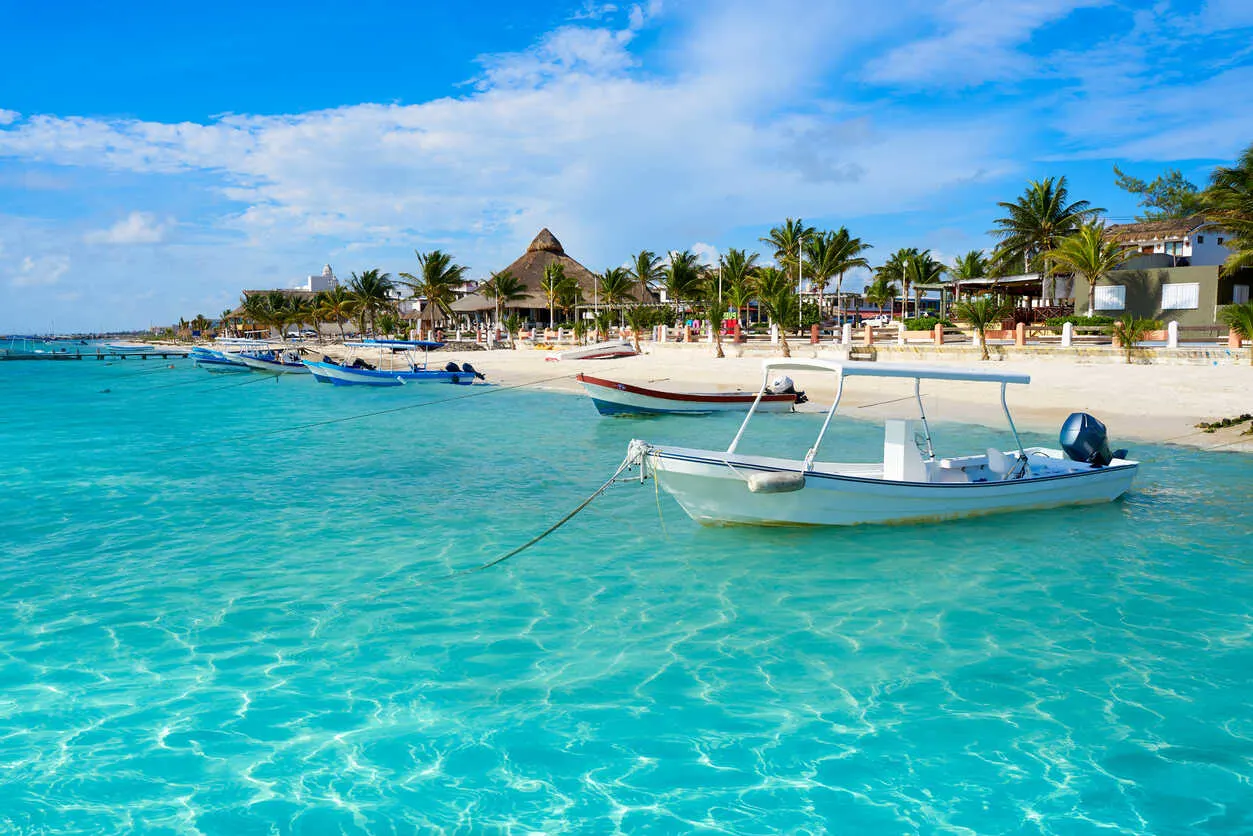
"No way, it snows in Mexico?" my friend Colleen asked, shaking her head when I told her I was visiting Puebla. Her vision of Mexico involved beachside tacos, deserts with tumbleweeds, or hot, sticky jungles like those she’s experienced during visits to the Riviera Maya.
This is one of my favorite misconceptions to correct. With 31 states and a stunning variety of geography, Mexico offers every kind of climate imaginable. From the temperate mountains of central Mexico to the arid deserts of the north, to the lush tropics of the coasts and south, there truly is something for everyone.
In fact, Mexico has it all: four-season regions where you’ll need a winter coat and gloves, areas with just two seasons, dry and rainy, and even microclimates with spring-like weather all year long. That’s what makes places like Lake Chapala so appealing. One couple I know there, Jorge and Mary, rave about the mild temperatures that encourage them to get out and walk every day. Jorge has even lost 60 pounds just by strolling with his dog in the ideal climate.
I live in the Riviera Maya, where the climate is tropical and humid. Summers regularly climb into the 90s F, and while some might find that too intense, I love it. I walk everywhere—it's a healthy lifestyle that doesn’t require a gym membership. With more than 330 days of sunshine a year, it’s easy to stay active and connected to nature. Most mornings, I walk to the beach. One side of the path is lined with jungle, the other opens to the sparkling Caribbean. It’s not unusual to spot parrotfish in dazzling blues, angelfish gliding by in pairs, or yellow-spotted rays drifting along the ocean floor.
Of course, no place is perfect. My friend likes the cool crisp mountain air on her morning walks. Stating that she would never live in a hurricane zone. And yes, in coastal regions like mine, hurricanes are possible. I’ve lived here for nine years and only experienced one worth noting, and even then, I binge-watched Netflix with a glass of wine and didn’t lose power or internet. Inland areas, especially those near mountain ranges formed by ancient tectonic activity, may experience the occasional earthquake. They aren’t common, but they can happen. That’s why I always advise people to do a little homework: look up a town’s average temperatures, rainfall, and history of natural disasters before deciding to settle down.
You can also find places with distinct dry seasons, such as San Miguel de Allende, where the climate is drier and ideal for those who prefer cooler nights and lots of sunshine. Mexico is large enough to let you chase your perfect weather, without giving up modern amenities or culture.
For me, warm sunshine, ocean swims, and flip-flops are the norm. For my friend, cool mountain air is a must. The beauty of Mexico? We can both get what we want.
For a more detailed look at the climate in Mexico, check out: Mexico Weather and Climate.
4. Colombia
By Erin Donaldson
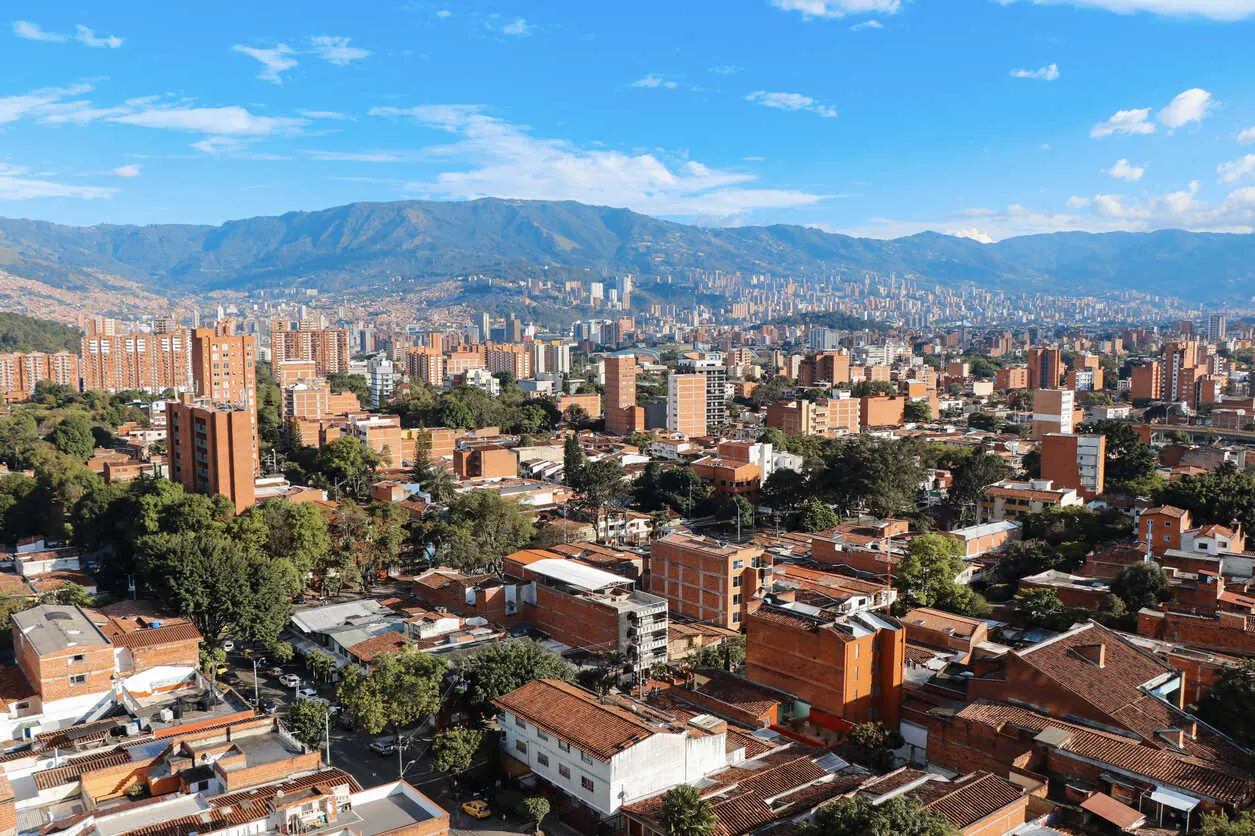
Colombia’s allure shines through its remarkable microclimates, with distinct pockets of weather shaped by the country’s varied altitudes and landscapes. In this equatorial nation, you don’t need to worry about summer or winter. Instead, you choose your climate based on elevation and terrain—wet or dry season, warm or cool—it’s all about what fits your vibe.
For me, that’s Manizales. I’ve made my home here because the temperature hovers around a comfortable 70°F (22–23°C), cool enough to wear a light jacket or scarf in the evening, but warm enough for pants and a T-shirt during the day. I can walk around without getting sweaty, and the weather stays remarkably consistent all year. Colombia’s lack of harsh seasonal changes is a major perk.
Manizales sits at 7,064 feet (2,153 meters) above sea level, lower than Bogotá’s 8,660 feet (2,640 meters), which means the air here feels easier to breathe. The surrounding forests, lush and abundant, seem to enhance the oxygen-rich atmosphere. I’m not a scientist, but there’s something about this greenery that softens the high-altitude effect you feel in more urbanized cities like Bogotá.
Of course, no place is perfect. Manizales has its quirks. One of them is the occasional ashfall from Nevado del Ruiz, the nearby active stratovolcano. It’s not a major threat, but it can be annoying. Still, the ash also makes the soil incredibly fertile. The hills are alive with coffee, avocado, and plantain farms, painting the region in vibrant green.
If you prefer a slightly warmer climate, neighboring cities offer great alternatives. Pereira, at 4,629 feet (1,411 meters), averages about 72°F (22°C), while Armenia, at 4,865 feet (1,483 meters), sits around 71°F (21.5°C). Both feel toastier than Manizales, whose annual average is a cool 64°F (18°C). These cities offer the same lush landscapes and relaxed pace but with a little more warmth.
Manizales is also one of the rainiest cities in the world, which comes with some practical challenges. Landslides, mudslides, and flooding can happen, particularly in rural areas. If you live outside the city, a four-wheel drive is essential. I always carry an umbrella or poncho just in case. That said, the climate is still a dream for daily outdoor living. The air is fresh, the nights are cool, and the days are ideal for walking, hiking, or just sitting outside with a cup of locally grown coffee.
In Colombia, climate is a lifestyle choice. Whether you’re drawn to the crisp air and green hills of Manizales, the warmth of Pereira, or the mellow vibe of Armenia, there’s a perfect fit for everyone. For me, the comfort, scenery, and charm of coffee country make Manizales feel like home.
For a more detailed look at the climate in Colombia, check out: Colombia Weather and Climate.
3. Ecuador
By Joel Kaplan
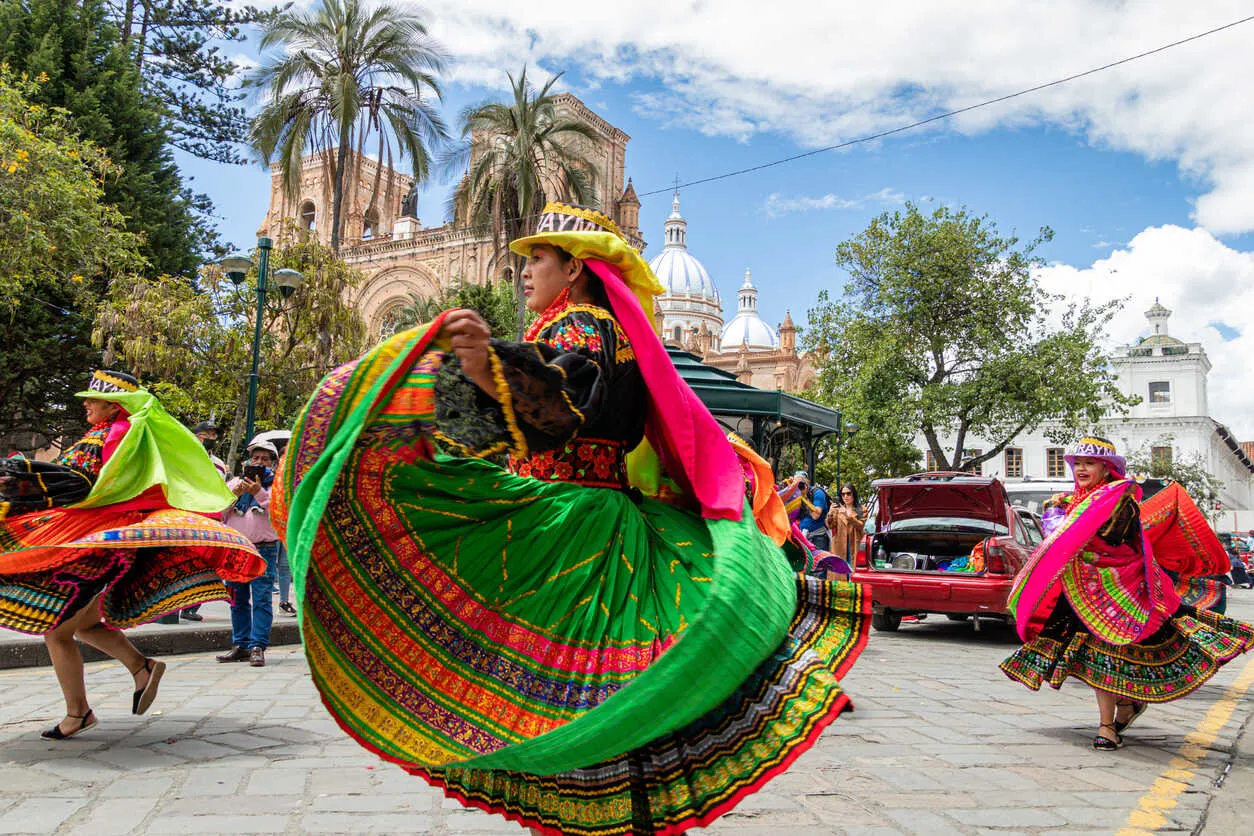
After decades of enduring Chicago winters and Las Vegas summers, we found a place that offers what we’d long dreamed of—perfect, spring-like weather year-round. Welcome to Cotacachi, a small town nestled in Ecuador’s northern Andes at around 8,000 feet elevation, just two hours north of Quito. It’s easy to see why the area is nicknamed “the Land of Eternal Spring”.
Here, the temperature stays remarkably consistent, ranging from a low of 45°F at night to a high of 75°F during the day. It’s the best weather we’ve experienced in our global travels. Every time we leave, we miss the climate of our mountain home.
Cotacachi has two main seasons: wet and dry. While the temperature doesn’t vary much between them, the precipitation does. The rainy season typically starts around November or December, often bringing afternoon showers and overnight rains. It can last five months or more, though the humidity remains mild to moderate—never “clammy.”
The dry season usually begins in April, May, or June, with little rain and increased winds. Back in 2011, when we moved here, the seasons were reliable, about six months each. These days, patterns have become harder to predict. One year we had a 10-month rainy season, and in another, a drought stretched well into the dry months. Still, we wouldn’t trade Cotacachi’s weather for anything. No more freezing winters or sweltering summers—just a steady, comfortable rhythm of life.
Air quality is generally rated “good to fair,” thanks in part to the region’s limited commercial industry and the protective geography of the northern Andes, which shields us from much of the pollution generated in major cities like Quito. The biggest local issue is smoke from open burning. Residents sometimes burn yard waste, and many homes use fireplaces, often more than one, for warmth, since central heating is rare.
Despite that, major weather services consistently rate the air quality as “satisfactory” or “acceptable,” safe for most people. That said, Cotacachi’s elevation might be a consideration for those with respiratory issues. At 8,000 feet, the air is thinner, and while we find it invigorating, others may need time to adjust.
Cotacachi is a walkable, outdoor-friendly town. Though I work indoors as a video producer and musician, we spend a lot of time outside, walking to restaurants or coffee shops, most of which are within a 10- to 15-minute stroll. Many have outdoor patios that we enjoy year-round.
Our 1.25-acre property, located at the edge of town, feels like a private park. With four dogs and stunning mountain views, we spend plenty of time in the yard soaking in the landscape and the climate that drew us here in the first place.
For a more detailed look at the climate in Ecuador, check out: Ecuador Weather and Climate.
The World’s Best Retirement Havens for 2026
The World’s Best Retirement Havens for 2026
24 Countries Compared, Contrasted, Ranked, and Rated. You don’t have to be rich to enjoy a pampered retirement, you just need to know where to go. With our 35th Annual Global Retirement Index, our experts hand you a detailed roadmap. Details—and a Special Offer—Here
By submitting your email address, you will receive a free subscription to IL Postcards, The Untourist Daily and special offers from International Living and our affiliates. You can unsubscribe at any time, and we encourage you to read more about our Privacy Policy.
2. Portugal
By Kimberly Anne
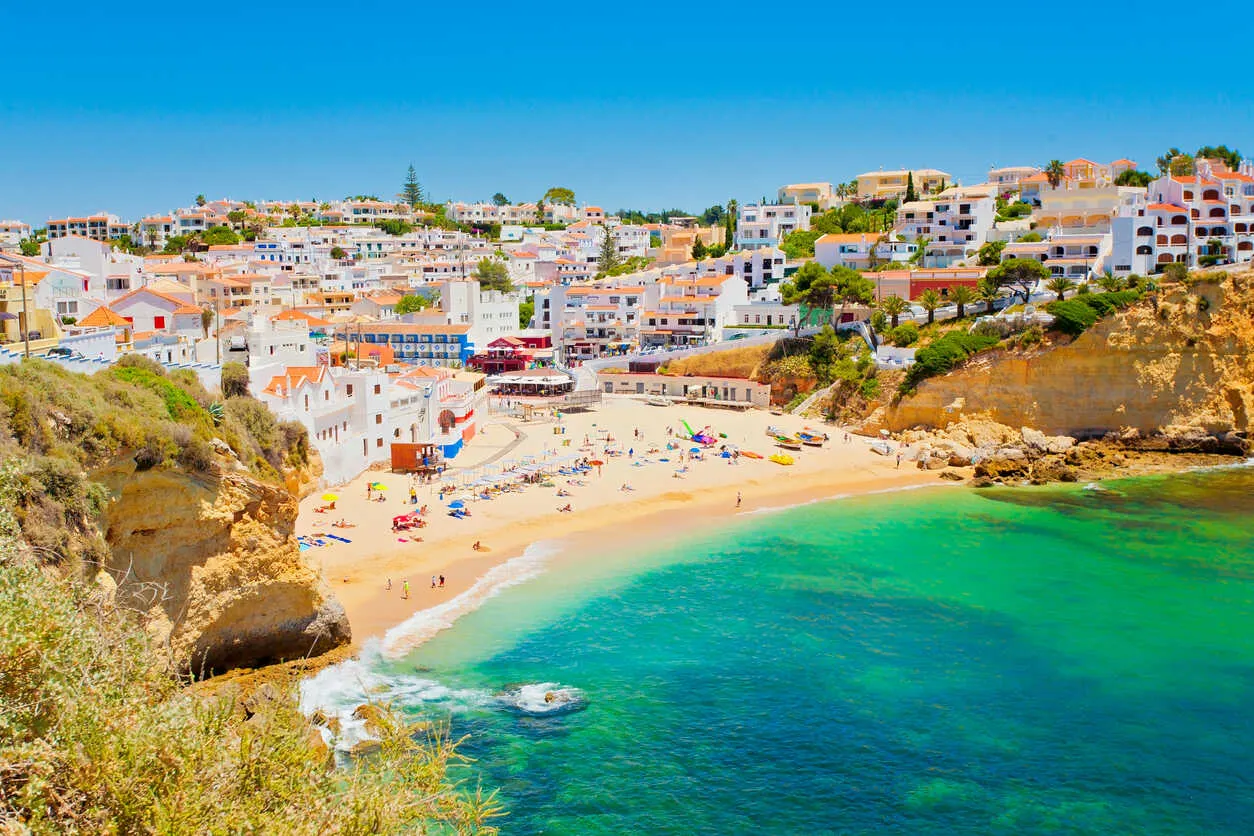
Before moving to Portugal, I knew I didn’t want to settle somewhere with scorching summers. That ruled out much of Lisbon and the Algarve. Instead, I chose Porto in the north, a city brimming with character, cooler temperatures, and the kind of slow-living pace I was craving. What I didn’t know then is how very different northern Portugal’s climate can feel, especially when you’re used to California.
Winters here feel colder than I expected, and summers hotter. I now prefer the humidity, but I still struggle with Porto’s damp winters, especially in my older apartment that has neither heat nor A/C. Newer buildings often come with climate control, and a friend who lives nearby doesn’t need to use heat at all during the winter.
That said, Portugal offers a climate for every preference, depending on where you settle. The Algarve, for instance, enjoys over 300 days of sunshine a year, mild winters that hover in the low 60s F, and dry, breezy summers cooled by the Atlantic. Rainfall there is minimal and mostly confined to a few winter months. Lisbon, with its Mediterranean climate, features long summers and short, mild winters. Central Portugal offers a mix of the two, warmer and drier than the north, but less hot than the southern coast. Meanwhile, Porto’s greener landscapes and cooler air bring a very different rhythm of life that many find refreshing.
Spring, summer, and autumn are the best times to be here. It does get hot in summer, but heatwaves usually last just a week. Since moving here in 2022, I’ve experienced about two per summer. People adapt by walking on the shady side of the street and enjoying warm days before the rain returns.
Without A/C, I manage the heat by using built-in exterior blinds to block the sun during the day and opening my large door windows at night with a fan and earplugs (I live on a noisy street). The seasonal contrast is real: 2025 stayed cold through March and into April, but summer lingered well into September.
Porto slows down in winter but comes alive in the summer with weekly festivals and vibrant street life. I spend much of my time walking and hiking, especially in spring and autumn, which offer the most comfortable weather.
Yes, the winters are wet, and the cold gets into your bones. But with the right clothing, a space heater, and a sense of humor, Porto becomes more than livable, it becomes lovable. It’s walkable, affordable, rich in culture, and well-connected to northern Spain. For anyone looking for a temperate European climate with charm and character, Porto might just be your place.
For a more detailed look at the climate in Portugal, check out: Portugal Weather and Climate.
1. Costa Rica
By Bekah Bottone
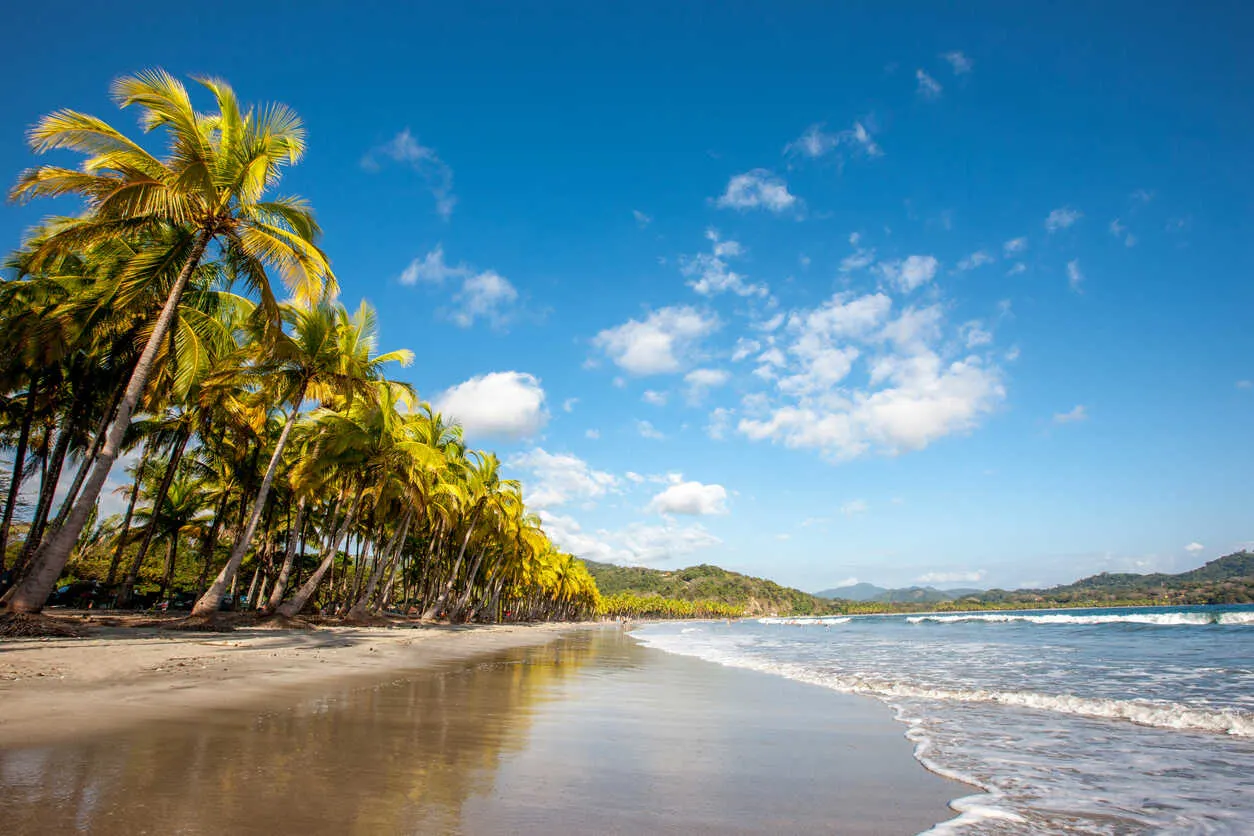
I’ve always been a tropical beach girl at heart, even though I grew up in Connecticut. In high school, I already knew I wanted to live under the coconut trees. So, when it came time to choose where to live in Costa Rica, it was easy: I had to be by the beach. There are so many wonderful places to enjoy in Costa Rica, but for me, Guanacaste was the obvious choice .
Guanacaste’s temperatures remain consistently between 80 and 90°F all year. But once you live here, you start to notice the seasonal shifts. The blue skies and strong winds—what we call vientos navideños—mark the start of summer and the Christmas season. February brings the most powerful of these Papagayo winds. As dry season settles in, the landscape turns dusty and leaves dry up, but then golden and pink trumpet trees bloom, bursting with color across the countryside. Seeing those trees while driving fills me with joy—they’re stunning.
Here, we enjoy two clear seasons: a dry season that lasts about six months with virtually no rain, and a rainy season that spans the other six. Most rainy season days begin sunny, with showers arriving later in the day, much like a Florida summer. From September to November, tropical storms and the occasional hurricane can bring several consecutive days of heavy rain, so it’s important to make sure your home isn’t in a flood-prone area. Fortunately, my community has excellent drainage.
For some people, Guanacaste’s heat and dryness might be too much. Others gravitate toward the Central or South Pacific coast, where rain is more frequent and the landscape stays lush year-round. Those who prefer cooler weather may head to the Central Valley or Lake Arenal region, where higher elevations bring spring-like conditions and comfortable temperatures.
Air quality in Costa Rica is generally excellent. San José typically rates in the “good” category, and along the coasts, ocean breezes make it even better. Occasionally, air quality dips during volcanic activity or forest fires, but this is usually temporary.
As for natural disasters, earthquakes are common, though most are so mild I don’t even feel them. Still, I recently experienced a stronger one while sitting in my living room. The whole house shook—and rather than being afraid, I was struck by how well the building was constructed. It gave me confidence in local building standards.
For me, life in Costa Rica is about living outside. I start most mornings on my front porch, barefoot in the grass. I spend time at the beach or pool, and it’s easy to connect with others when you can enjoy a few hours of sunshine together. Even during the rainy season, mornings are usually clear, giving you time to enjoy the outdoors before the rain rolls in.
If you’re not looking for snow or freezing temperatures, you can find your perfect climate here. Costa Rica lets you choose the kind of warmth and rhythm that suits your lifestyle—and lets you enjoy it year-round.
For a more detailed look at the climate in Costa Rica, check out: Costa Rica Weather and Climate.
The World’s Best Retirement Havens for 2026
The World’s Best Retirement Havens for 2026
24 Countries Compared, Contrasted, Ranked, and Rated. You don’t have to be rich to enjoy a pampered retirement, you just need to know where to go. With our 35th Annual Global Retirement Index, our experts hand you a detailed roadmap. Details—and a Special Offer—Here
By submitting your email address, you will receive a free subscription to IL Postcards, The Untourist Daily and special offers from International Living and our affiliates. You can unsubscribe at any time, and we encourage you to read more about our Privacy Policy.