I had been living in Greece for less than a year when I started hearing about Pelion.
“You’re a yoga teacher? You should do a retreat there. The combination of sea and mountains is amazing.”
At first, I didn’t pay much attention. Greece is full of beautiful places, and Pelion wasn’t high on my list. But people kept bringing it up. The same promise surfaced again and again: traditional mountain villages, thick forests, and some of the country’s most pristine beaches, all in one place.
It took me another three years to actually go.
They were absolutely right.
The Pelion Peninsula, located approximately 205 miles (330 kilometers) from Athens and 134 miles (215 kilometers) from Thessaloniki, stretches from the city of Volos into the Aegean Sea. Combining mountain villages, dense forests, and Aegean beaches, Pelion is known for its natural beauty, traditional architecture, and relaxed pace of life.
According to legend, the peninsula was the summer retreat of the Olympian gods when they grew tired of Mount Olympus. Mount Pelion is called the Mountain of the Centaurs, as it was also the mythological home of these half-man, half-horse creatures. The most famous centaur was Chiron, renowned for his knowledge of the region’s medicinal herbs and his role as tutor to many of Greece’s greatest heroes, including Achilles and Jason of the Argonauts.
Get Your Free Greece Report Today!
Get Your Free Greece Report Today!
Learn more about a slower pace of life in Greece and other countries in our free daily postcard e-letter. Simply enter your email address below and we'll also send you a FREE REPORT — Retire in Greece—Find Your Dream Retirement in This European Archipelago.

By submitting your email address, you will receive a free subscription to IL Postcards, The Untourist Daily and special offers from International Living and our affiliates. You can unsubscribe at any time, and we encourage you to read more about our Privacy Policy.
Stone Villages, Beaches, and a Steam Train
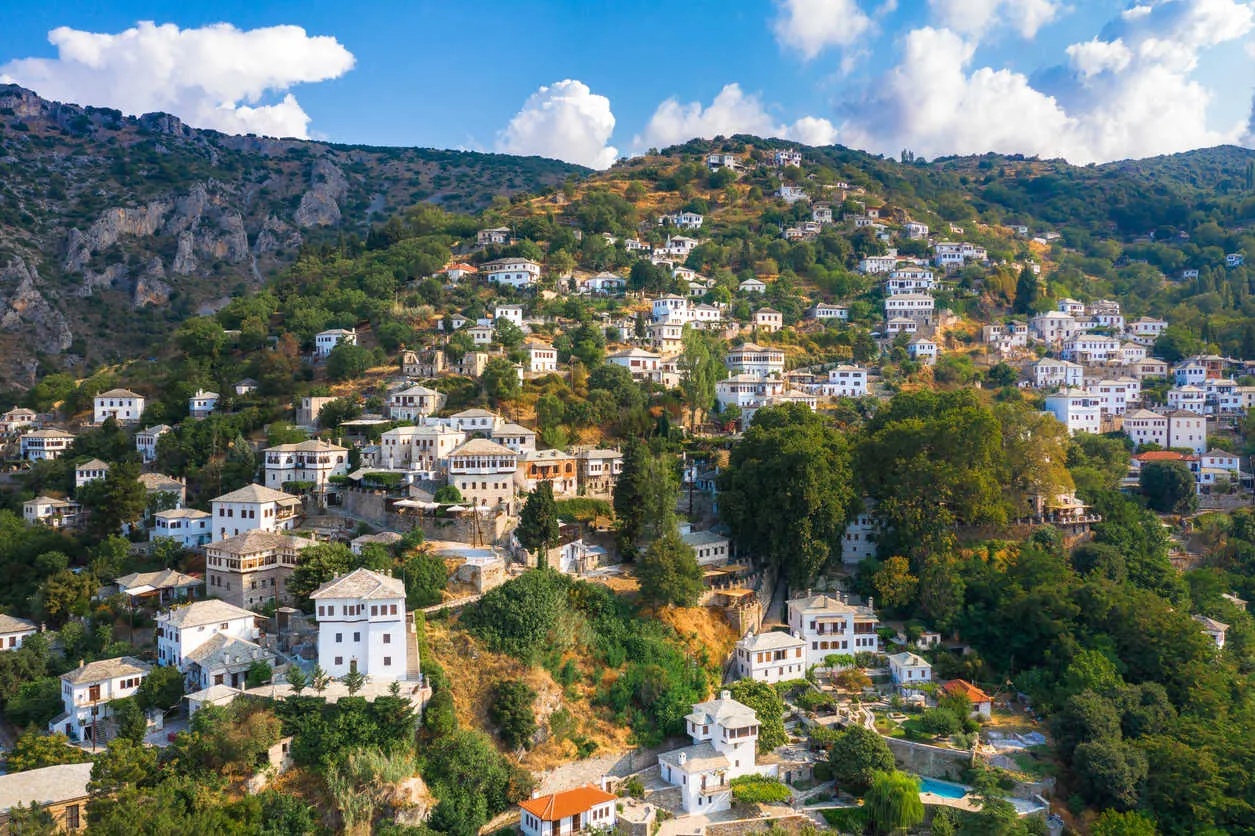
Pelion is known for its charming stone-built villages, with more than 70 scattered throughout the peninsula. While the distances between villages may appear short on a map, the winding mountain roads can make travel slower than expected, so allow plenty of time if you plan to village-hop.
Milies makes a wonderful destination as it offers a historic library of rare manuscripts and a folklore museum. This tiny town of fewer than 1,000 full-time residents is also the departure point for the Moutzouris, a picturesque steam train that takes a 9-mile (15-kilometer) route down the mountain to Ano Lechonia, a village near Volos. The trip takes around 90 minutes, with a stop midway at the village of Ano Gatzea, and runs on one of the narrowest railway tracks in the world, at just 60 centimeters wide. It is a journey worth taking for its own sake.
Located about 20 miles (32 kilometers) north of Milies, the village of Makrinitsa earns its nickname as the balcony of Pelion because it is perched on the mountain slopes above Volos, with sweeping views over the Pagasetic Gulf. Spend an afternoon exploring Makrinitsa’s small museums before settling into a mountainside taverna overlooking the Pagasetic Gulf.
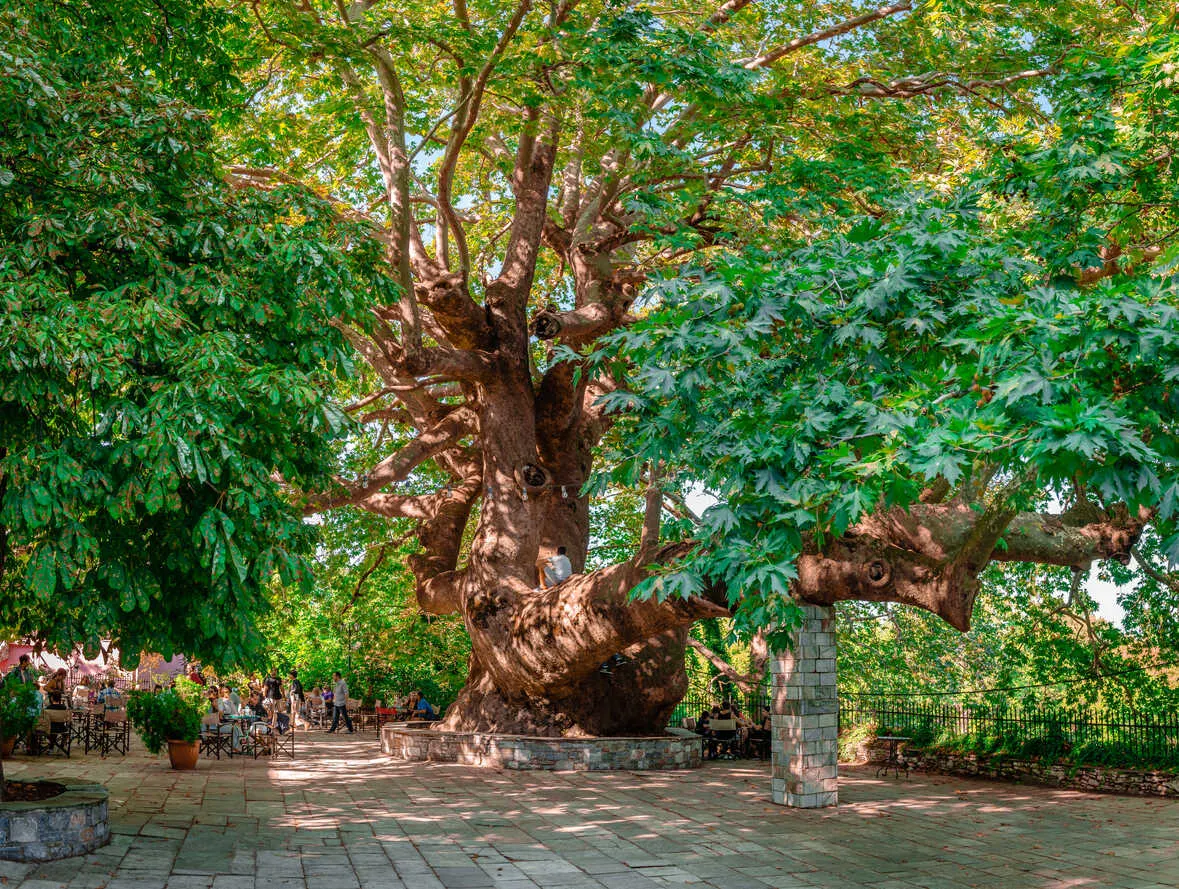
To see the greener, more rugged side of Pelion, head to Tsagarada, a village distinguished by elegant 17th- and 18th-century mansions and a remarkable thousand-year-old plane tree in its central square, one of the oldest in Europe.
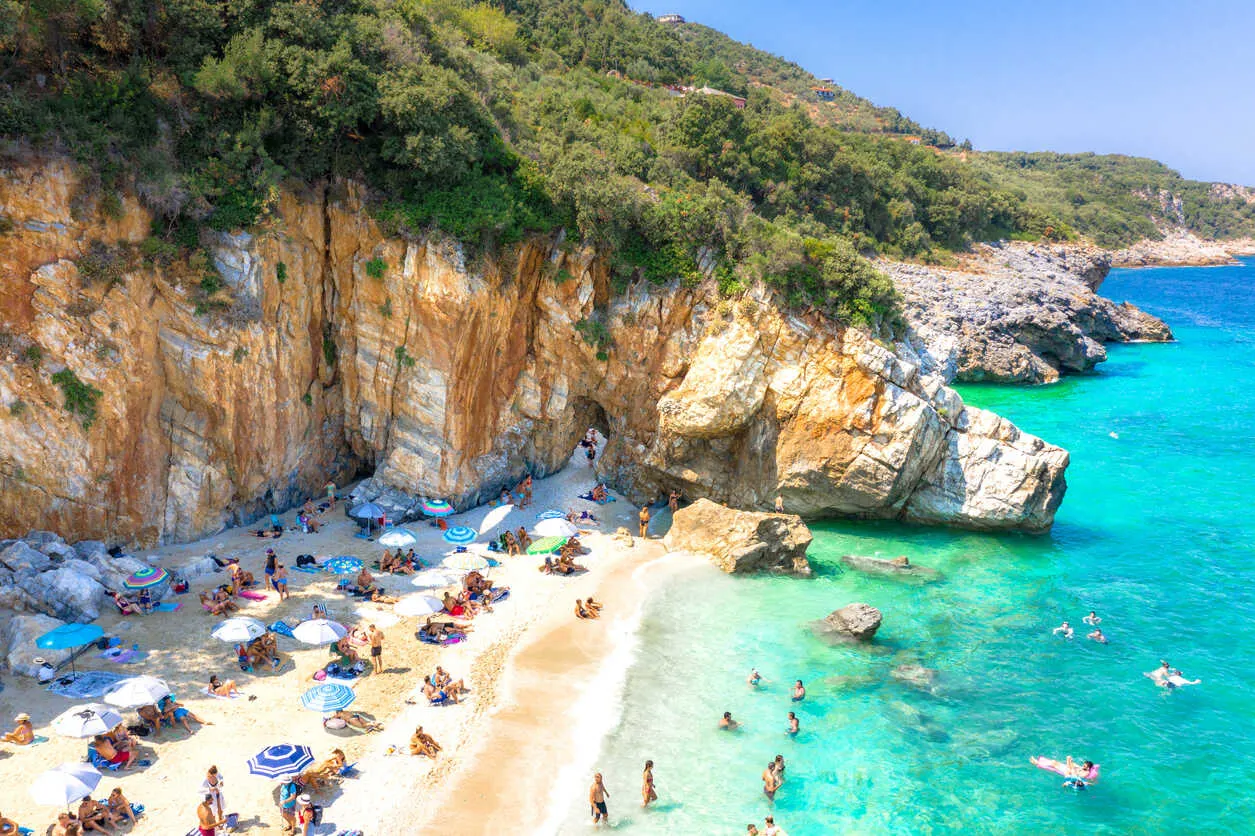
For hidden beaches, head to Fakistra, a tiny cove below Tsagarada. This stunning spot features white sand fringed by turquoise water and sprayed by a waterfall in spring. It is reachable only by a short hike, which keeps it refreshingly uncrowded.
For a more accessible option, be sure to stop at Mylopotamos, one of the peninsula’s most visited beaches. This photogenic spot features a dramatic natural rock arch that divides the sea into two distinct coves: one with tavernas and facilities, and one left beautifully wild.
If you think Pelion is just for the summer, think again. In winter, a small ski center at Agriolefkes operates at 1,400 meters (about 4,600 feet), with snow from January through March and views down to the sea.
How to Get a European Passport in Three Months

... Getting Citizenship in as Little as 3 Months? (even if you don’t have a European parent or grandparent)
... How to Live in Europe Year-Round on an American Passport Alone (no visa or second citizenship required)
... Why 2026 May Be the Last Year for Easy European Passports for Americans
Could You Actually Live Here?
As you can see, there is plenty to see and do in Pelion, but who is it a match for as a permanent home base?
Like most rural mountain regions, life in Pelion moves at a slower, more seasonal rhythm than some of Greece’s more tourist-focused destinations. For nature lovers who appreciate the four seasons, this area can be a wonderful match.
The nearest city is Volos, a working port with a lively waterfront, good restaurants, and the full infrastructure of urban Greek life, including hospitals, government offices, supermarkets, and transport links.
From a cost-of-living perspective, Pelion compares favorably with higher-profile Greek destinations like Athens or Thessaloniki. Property prices in the villages vary significantly depending on whether a home needs restoration or is move-in ready, but traditional stone houses with character are still available at prices that would be difficult to find in comparable European rural settings.
That said, Pelion is not for everyone, and it is worth being clear about the trade-offs. English is not widely spoken in the villages, and newcomers without any Greek can find daily tasks more challenging than expected. Many restaurants, shops, and services shut down for winter, leaving smaller communities feeling very quiet in the off-season, and stone houses can feel cold and damp without adequate heating and dehumidification. Healthcare for anything beyond routine care means a trip to Volos or beyond. The mountain roads, while beautiful, are winding and narrow, and a car is essential. Anyone expecting the established expat infrastructure of Crete or Corfu will find Pelion more raw and independent.
Go See for Yourself
I love to visit Pelion, and I think you will too. The mythology feels woven into the region, the forests are calming and genuinely ancient, and there are few better ways to spend a day than swimming in the Aegean in the morning and hiking through peaceful forest in the afternoon.
But living there full-time is a different question, and one only you can answer. The villages are beautiful, but the winters are quiet, the roads are demanding, and daily life might be challenging without a good command of the Greek language. If I were a new expat relocating, I would pick Volos over a stone village, close enough to visit Pelion whenever I wanted, with actual city infrastructure the rest of the time. But that is just me. Go and see it for yourself, spend a few days, and make up your own mind.
Get Your Free Greece Report Today!
Get Your Free Greece Report Today!
Learn more about a slower pace of life in Greece and other countries in our free daily postcard e-letter. Simply enter your email address below and we'll also send you a FREE REPORT — Retire in Greece—Find Your Dream Retirement in This European Archipelago.
By submitting your email address, you will receive a free subscription to IL Postcards, The Untourist Daily and special offers from International Living and our affiliates. You can unsubscribe at any time, and we encourage you to read more about our Privacy Policy.
Join Us in Europe in 2027!
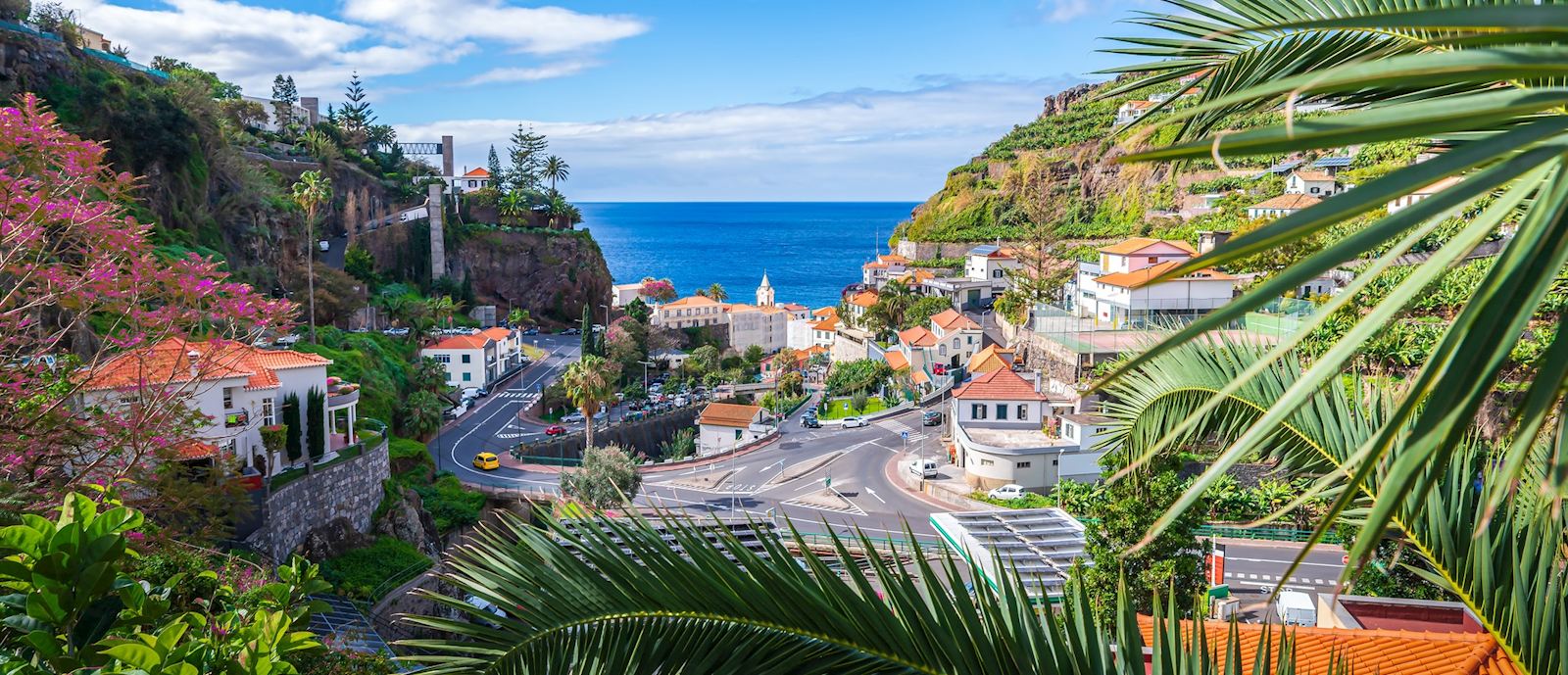
Portugal, Spain, Italy, France, Greece... You’ll find gorgeous, culturally rich cities and towns and beautiful sunny beaches. You can enjoy a high quality of life—yet a surprisingly low cost of living. Starting at $2,500 a month, a couple can live well. With more, you could live large.
If you’ve been dreaming of life in Europe, join us March 20-22, 2027, for International Living’s Fast Track Europe Conference. We’ll meet in Portugal’s sunny Algarve, and our focus will be on Europe’s best destinations to retire better, live well, and spend less.