

Two years ago, I landed in Lima, Peru, just after midnight on a Friday night. My first stop in Cusco was intended to be a one-month exploration on my way down to Buenos Aires, Argentina. But the energy of the Andes Mountains, the simplicity, history, and natural beauty of Cusco kept me there for an entire season. As fate would have it, it was there that I met my beautiful partner, a Peruvian art professor from Lima.
I never made it to Buenos Aires and soon found myself visiting, then living in Lima.
Such is how many great love stories begin.
I’m now beginning my third year in Peru, living in the capital city of Lima, and continuing to discover why it’s a hidden gem that more expats are choosing as a permanent destination. While Peru was never meant to be my final stop, it has become home for the foreseeable future—a transformational proving ground for living simply, inexpensively, and immersing in a rich and diverse culture of culinary delights, people, and experiences.

Peru has remained under the radar as an ideal expat destination while offering many, if not all, of the boxes many expats are seeking to check in their search for the ideal retirement destination.
I’ve now been traveling the globe with one bag for the past six years, living as an expat in five different countries. This unfolding adventure has introduced me to cultures and experiences that continue to expand my perspective on people, adaptability, communication, and living simply. It’s helped distill my essential priorities for the kind of environment I want to live in.
My journey began six years ago, when I landed in Kyoto, Japan, with a suitcase in hand and zero Japanese fluency. I lived in a tiny, traditional wooden Japanese house (machiya) for a year. I would have stayed for life had it not been for the pandemic.
Afterward, my search for an ideal home took me to Costa Rica, where I lived in solitude for a rainy season along the Guanacaste Coast, and later for almost two years in the lush mountains and vibrant nature of the Central Valley. I spent the better part of another year in picturesque Boquete, Panama, living simply among my Indigenous neighbors in a mountaintop cabin, growing and processing my own coffee.
Each of these experiences was a progressive stripping away of the non-essentials. Each place helped me better understand the elements of living that mattered most.
Although my initial arrival in Lima was a somewhat abrupt assault on the senses, after years of peaceful beaches and mountaintop living, it was the connecting descent into Cusco, and the immediate shift in energy there, that kept me for nearly half a year.
Now, after two years of discovery, Peru continues to reveal itself as a beautiful and diverse country, rich in culture and natural splendor. It offers contrasting locations like Cusco, Arequipa, and Trujillo for those seeking a quieter, simpler life…and vibrant districts in Lima, such as Miraflores, Barranco, and San Isidro, for those who want the offerings of a major South American city: a world-class food scene, nightlife, and modern amenities at a fraction of the cost of first-world countries where affordability and quality of life have grown increasingly out of reach.
Over these past six years of travel, I’ve distilled what matters most to me in a living environment, and Peru has surprisingly met many of those criteria. My list is personal, but perhaps it will serve as a lens for your own consideration.
If you’re considering a new place to call home, here’s what makes Peru worth a closer look.
The World’s Best Retirement Havens for 2026
The World’s Best Retirement Havens for 2026
24 Countries Compared, Contrasted, Ranked, and Rated. You don’t have to be rich to enjoy a pampered retirement, you just need to know where to go. With our 35th Annual Global Retirement Index, our experts hand you a detailed roadmap. Details—and a Special Offer—Here

By submitting your email address, you will receive a free subscription to IL Postcards, The Untourist Daily and special offers from International Living and our affiliates. You can unsubscribe at any time, and we encourage you to read more about our Privacy Policy.
Live Well on Under $1,000 a Month
In Peru, many expats discover that it’s genuinely possible to live well on under $1,000 a month. This is a realistic range for vagabonds like myself, focused on a simple, uncluttered lifestyle. Lima offers several safe but affordable districts that rarely get mentioned in podcasts or YouTube videos—places like Surquillo, Pueblo Libre, or parts of Barranco. Monthly rent for a studio or one-bedroom apartment typically ranges from about $350 to $800. In quieter inland cities such as Arequipa or Cusco, the range often drops to $200 to $500 for a similar unit.
I’ve now lived in Cusco, Barranco, and Surquillo—all for less than $450 a month. In Cusco, that included cleaning service and fresh towels three times a week. I was extremely fortunate to find a gem of a studio in Surquillo with a terrace overlooking a park, directly across the street from my partner. I pay about $425 per month, depending on the exchange rate. In many U.S. cities today, a comparable small apartment easily rents for $1,500 to $2,500, or more, and prices are spiraling upward with no end in sight, even in secondary markets.
Utilities in Peru are extremely low compared to what you might pay in the U.S. (typically 150 to 300 soles per month, or $40 to $80). Reliable, high-speed internet runs 80 to 150 soles per month (about $20 to $40). I pay around $23. I teach business English in Japan and have had no issues or interruptions to my work.
This cost structure means that, unlike in the U.S., where housing often consumes the bulk of your income, you can allocate more of your monthly budget to experiences: walking, meals, travel… rather than survival expenses. In Peru, affordability creates a sense of freedom, not compromise.

Eat Well for Less in Peru
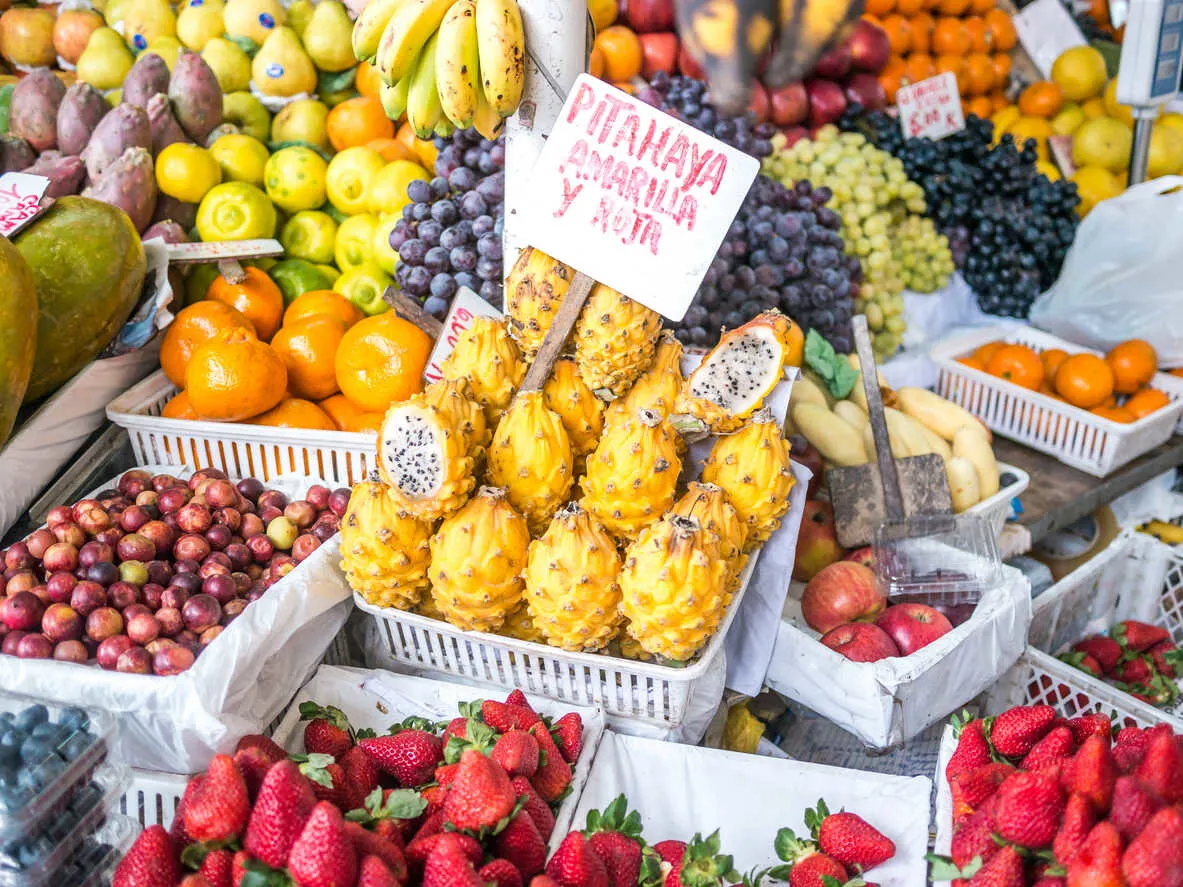
Peru is known worldwide for its food culture, with Lima famously hailed as the food capital of South America. In recent years, several of the world’s top-rated restaurants have been located here. Groceries and fresh produce are also remarkably inexpensive—especially at local markets, where fruits, vegetables, and staples can make up the majority of a monthly food budget.
On an average week, my grocery cost runs about $50 to $70 in Lima. That typically includes a trip to the grocery store plus a weekend visit to the local market.
Eating out is a cornerstone of life in Peru, and it’s also far more affordable than in the U.S. A typical daily lunch menu (menú del día) offers a full meal for just S/.10 to S/.18 (roughly $2.50 to $5). Coffee shops, bakeries, and small cafés are abundant and easily walkable within most neighborhoods.
On a recent visit back to the U.S., I was shocked to find that a simple lunch often cost $10 to $20 or more, and that the average grocery bill for one person exceeded what I pay to rent a beautiful apartment overlooking a lush park. In Peru, the availability of healthy produce and affordable prepared meals makes it easy to eat well while keeping food costs surprisingly low. Just this morning, I spent about 50 soles ($15) at the park market and came home with a week’s worth of fruits, vegetables, nuts, and coffee.
Why I Walk Everywhere in Peru
For the past five years, I’ve lived without a car, and discovered that to truly experience a place like Kyoto, Costa Rica, Panama, or Peru, you need to explore it on foot.
Over that time, I’ve averaged 1.5 miles per day, every day, adding up to more than 500 miles of walking in each country I’ve lived. This simple habit has greatly benefited my physical health, mental clarity, and sense of connection to place.
In Lima, my top-floor apartment overlooks a large park, and everything I need—markets, the gym, the cinema, cafés, and restaurants—is within two miles of home. That walkability brings enormous benefits, not just to my health and budget, but to the environment. I love knowing I’m reducing my impact on air quality and traffic by living my life mostly on foot.
When I do need to go farther, Uber and taxi rides average just $2 to $3. Lima also offers reliable buses and metro trains as affordable alternatives.
The World’s Best Retirement Havens for 2026
The World’s Best Retirement Havens for 2026
24 Countries Compared, Contrasted, Ranked, and Rated. You don’t have to be rich to enjoy a pampered retirement, you just need to know where to go. With our 35th Annual Global Retirement Index, our experts hand you a detailed roadmap. Details—and a Special Offer—Here
By submitting your email address, you will receive a free subscription to IL Postcards, The Untourist Daily and special offers from International Living and our affiliates. You can unsubscribe at any time, and we encourage you to read more about our Privacy Policy.
A Country of Many Climates
One of Peru’s most compelling attributes is that the climate and landscape shift dramatically across the country. You can choose your location based on your personal climate preferences, or move with the seasons. It’s important to note that Peru has only two seasons: summer and winter. These run opposite to the U.S. and much of the world. I’m still getting used to this.
Some of the most attractive cities for expats include:
Lima has mild year-round temperatures typically ranging from 60°F to 78°F (16°C to 26°C). Summers (December to April) bring sun and warmth, while winters (June to September) are cool and overcast with little rainfall. The city receives almost no rain but sees persistent coastal fog (garúa) in winter. Tip: Winter in Lima is not for everyone.
Cusco offers cooler mountain conditions, averaging 45°F to 68°F (7°C to 20°C). The dry season from May to September brings sunny days and crisp nights, while the rainy season (November to March) delivers lush landscapes and afternoon showers. Alternating between Cusco and Lima is a great option if it fits your budget.
Arequipa enjoys springlike weather year-round, averaging 55°F to 75°F (13°C to 24°C), while Trujillo has a subtropical desert climate with average highs in the upper 60s to low 70s °F, dry conditions, and sun nearly 300 days a year, making it one of Peru’s most climate-stable cities.
Pucallpa, located in the Amazon basin, experiences a tropical monsoon climate with year-round heat and abundant rainfall, ideal for those drawn to lush, jungle environments.
This wide range of climates, from coastal deserts to high mountain towns to rainforest cities, gives expats the chance to find a setting that matches their rhythm: crisp mountain air, ocean breezes, or sun-soaked valleys, often just a short flight or bus ride away.
Quality Healthcare That Won’t Break the Bank
Healthcare in Peru is another area where the contrast with the U.S. is stark and appealing. Private care is widely available, high-quality, and affordable. A typical doctor’s visit costs $20 to $40. Specialist consultations often fall between $30 and $60. Dental cleanings run about $25 to $40. Many routine procedures cost a fraction of what they would in the U.S.
Private health insurance for expats typically ranges from $50 to $150 per month, depending on age and coverage. However, many expats opt to pay out of pocket for routine care due to the low costs. Compared to U.S. premiums, deductibles, and surprise billing, healthcare here feels refreshingly accessible.
Residency Options for Every Lifestyle
Peru offers several options for long-term residency. Tourist stays typically allow between 90 and 183 days per year. For extended stays, there are pathways including the Rentista visa (for those with passive income), investor visas, family reunification visas, and professional work permits.
In 2023, Peru announced a digital nomad visa, though it has yet to be implemented, as is often the case in South America, things move slowly. In the meantime, many expats maintain legal residency through income-based or retirement programs.
Creating a Simpler Life—Even in the City
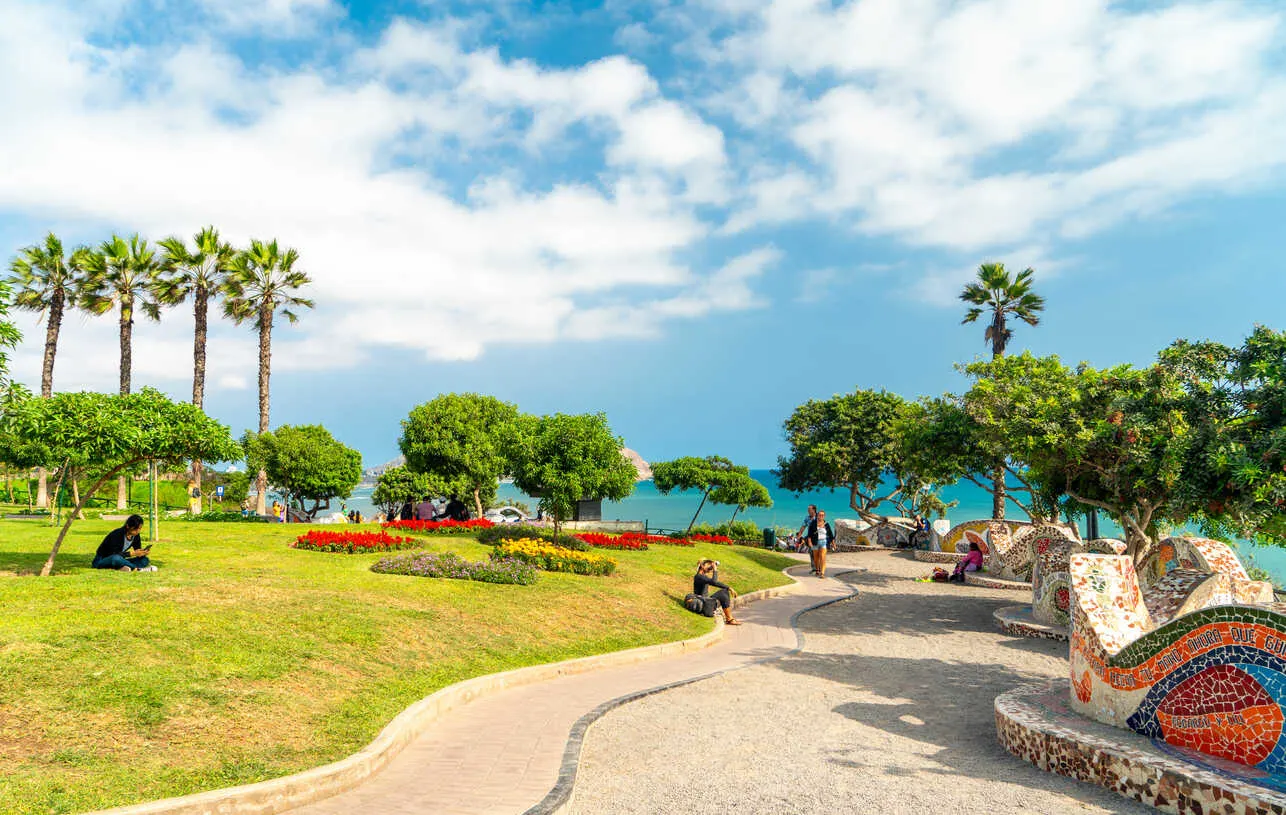
It would be hard to claim that Peru—or Lima, in particular—naturally offers a slower pace of life. Lima is a sprawling, bustling city of over 11 million people. It’s not for the faint of heart, especially if a large metropolis isn’t what you’re seeking.
But here’s what I’ve learned from my travels: there is no perfect location, and a slower pace of life can’t be found—it must be created. Even in Lima.
Amazingly, what I have learned from all my past travels and cultural experiences is that there is no perfect location and that a slower pace of life can only be created on your own terms, even in a place like Lima. Lima offers all of the above attractive points for expats; more significantly, it is the launchpad for these other epic destinations in Peru. Whether a slower pace of life in Peru is within your grasp is up to you, based on your personal preferences.
In the U.S., it would be impossible to live a simple yet abundant life with access to high-quality food, comfortable housing, affordable healthcare, rich history and culture, and natural beauty on a $ 1,000-per-month budget.
In Peru, my monthly spending comfortably falls between $900 and $1,100, including rent, food, healthcare, transportation, and modest leisure.
Peru may still be underrated as an expat destination. But if you’re looking for a simpler, richer life on a modest budget, it might just be worth exploring.
The World’s Best Retirement Havens for 2026
The World’s Best Retirement Havens for 2026
24 Countries Compared, Contrasted, Ranked, and Rated. You don’t have to be rich to enjoy a pampered retirement, you just need to know where to go. With our 35th Annual Global Retirement Index, our experts hand you a detailed roadmap. Details—and a Special Offer—Here
By submitting your email address, you will receive a free subscription to IL Postcards, The Untourist Daily and special offers from International Living and our affiliates. You can unsubscribe at any time, and we encourage you to read more about our Privacy Policy.