It's a strange feeling, when you’re living in Thailand, to walk into a café and hear exclusively throaty Hebrew. As is finding yourself later in a sauna full of Russians, sweating through the silence together. Particularly after the time I've spent learning the language, trying to fit in, and to feel more a part of the culture.
When I first moved to a magnetic tropical island in southern Thailand, it was mostly Thai fishing families, with a handful of expats who'd discovered it while backpacking and simply never left.
But since COVID, something has shifted. The island no longer feels Thai. It feels instead like a collection of insular foreign communities living alongside one another, with Thais increasingly in the background of a place that used to be entirely theirs.
It’s a bit disorienting.
The World’s Best Retirement Havens for 2026
The World’s Best Retirement Havens for 2026
24 Countries Compared, Contrasted, Ranked, and Rated. You don’t have to be rich to enjoy a pampered retirement, you just need to know where to go. With our 35th Annual Global Retirement Index, our experts hand you a detailed roadmap. Details—and a Special Offer—Here

By submitting your email address, you will receive a free subscription to IL Postcards, The Untourist Daily and special offers from International Living and our affiliates. You can unsubscribe at any time, and we encourage you to read more about our Privacy Policy.
A Foreigner Amongst Foreigners
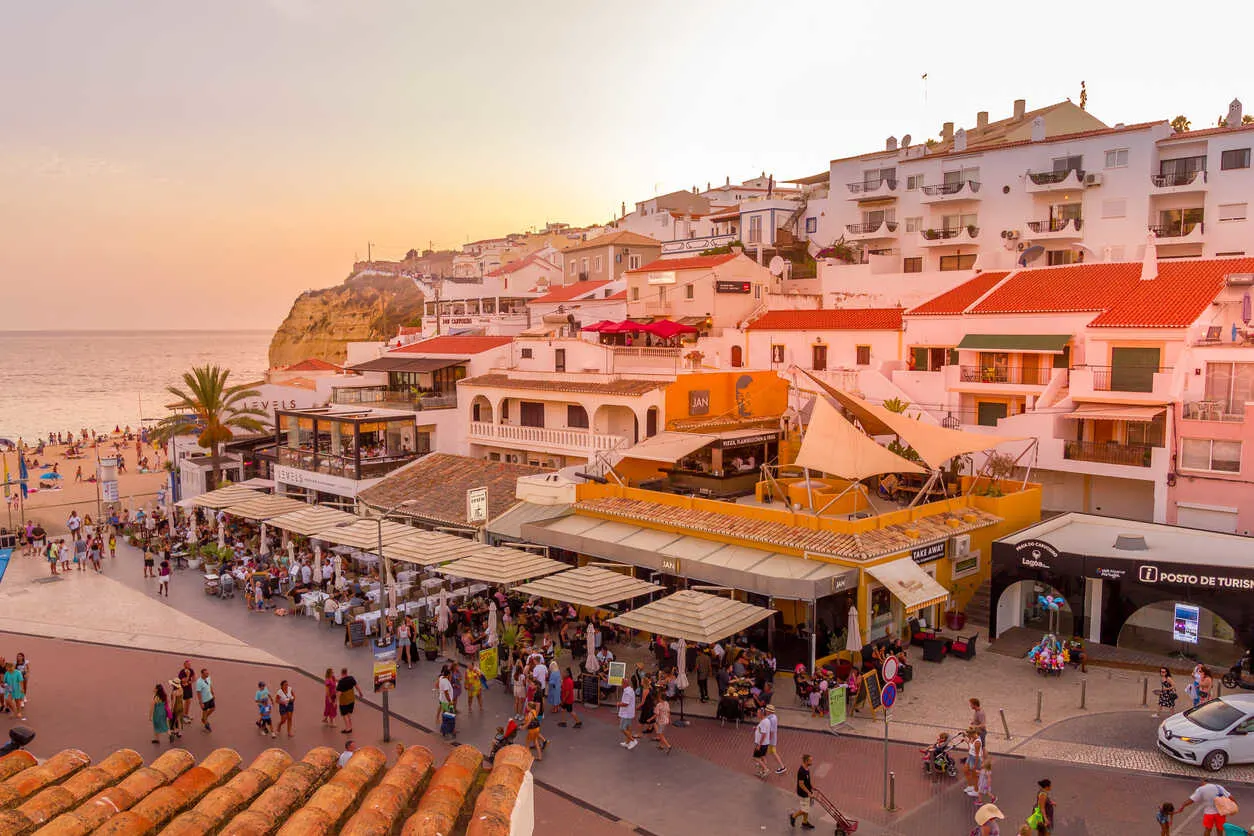
But the more time I spend talking to people living abroad and exploring new places to move to myself, the more I realize this is far from an isolated phenomenon. A few weeks ago, I was on a call with a man living in Moraira, a small town on the Spanish coast. He told me he often feels out of place there. Not because he isn't Spanish, but because he isn't Dutch. The Dutch, apparently, have taken over. He's part Swiss, part Danish, and finds himself on the outside of the dominant culture in a town that is technically in Spain. His Spanish abilities, it should be noted, remain a mystery.
The same pattern plays out across the world. Ubud, Bali, has become so saturated with Western wellness seekers that it can feel more like a spiritual retreat in California than a Balinese village. In places like Portugal's Algarve and Lake Chapala, Mexico, foreign residents have built replicas of home so convincing that some residents go weeks without speaking the local tongue. That's not a criticism. For many people, it's exactly the point.
The Difference Between a Circle and a Bubble
And I get it. Sometimes you just need to get out, whether for safety, freedom, or the simple desire to rebuild your life somewhere new. But here's the thing nobody tells you: there's no neutral territory. Every place you land already has people, a language, and a culture that existed long before you arrived. When the friction of that feels like too much, it's natural to turn toward the familiar — the people who speak your language, share your references, understand your jokes. Enclaves don't form out of clannishness. They form out of exhaustion. The problem isn't that they exist. It's what happens when they become the whole world.
Living inside an expat bubble is a strange thing. For me, it produces a low-grade guilt, a sense of disconnection from the place I've chosen to call home. Belonging matters to me. And from the conversations I have regularly with people navigating life abroad, I don't think I'm alone in that.
To be clear: there is nothing inherently wrong with expat circles. They are, in fact, an essential lifeline. They give you people who understand the particular disorientation of living far from home, who can commiserate about visa changes, recommend a doctor who speaks your language, and remind you that the strange feeling you're carrying is completely normal. The problem isn't the circle. It's when the circle becomes a bubble. When it stops being a support system and starts being a substitute for actually being somewhere.
The bubble isn't uncomfortable. That's precisely the problem. It's easy, warm, and familiar — and it slowly costs you the thing you actually came for.
The good news is that breaking out doesn't require a dramatic overhaul. You don't need to abandon your expat friends or move to a remote village. You just need a few small, deliberate points of contact with the place you've chosen to live.
Your chance to retire overseas now
Your chance to retire overseas now
Learn more about Thailand and other destinations by signing up to our daily IL Postcards e-letter and we'll immediately send you a free report: 20 Countries Compared, Contrasted, Ranked, and Rated.
You don’t have to be rich to enjoy a pampered retirement, you just need to know where to go.
With our 35th Annual Global Retirement Index, our experts hand you a detailed roadmap. Details and a Special Offer Here!

By submitting your email address, you will receive a free subscription to IL Postcards, The Untourist Daily and special offers from International Living and our affiliates. You can unsubscribe at any time, and we encourage you to read more about our Privacy Policy.
How to Break Out Gently
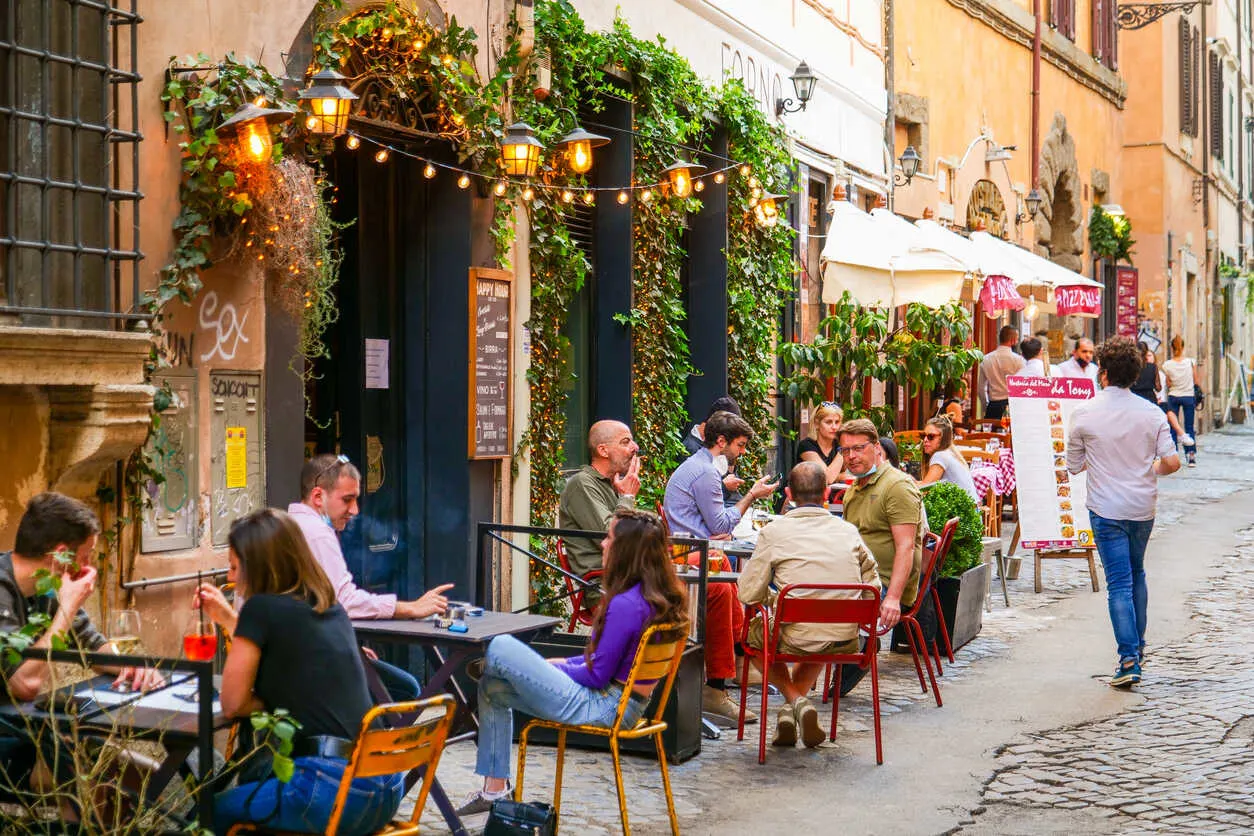
Make At Least One Real Local Friend
Not an acquaintance, a genuine connection. Someone who has lived where you live for most or all of their life, speaks the language, and knows the place the way only locals do. They're the ones who'll point you to the café with the best matcha, the parking spot nobody else knows about, the right school for your kids. More importantly, they're the ones who will show up for you when something goes wrong — who can advocate for you, translate for you, and bring you into the culture at moments you'd never find on your own.
My Thai friend Gam is like a sister to me. I was there when her son was born, and she made me his godmother. When I go places with her, I notice the difference immediately. She introduces me in that role, pulls me into conversations in Thai with a cheerful expectation that I'll understand every word, then gives me a friendly nudge, reminding me to practice more, which is exactly what I need to hear. When she drags me on stage at a local festival or shoves a spoonful of something unidentified, but usually insanely delicious, into my mouth, it's uncomfortable in the best possible way. Mesmerizing. Thrilling. She keeps me grounded in the reality that I don't get to live here the way I'd live in Canada. And I love her for it. Language exchanges, local charity work, and neighborhood events are good places to start.
Learn More Than Just Taxi-Level Language Basics
Most expats have a handful of phrases, enough to order food and flag down a tuk-tuk. It's not enough. You don't need fluency. You need enough to signal a genuine effort to show the people around you that you take their language seriously enough to try. My Thai is still terrible. But I try, visibly and consistently, at roughly the pace of a tortoise with a hangover.
I aim for one new word a week. It's not much, but I practice each one actively with locals, and the warmth it generates is disproportionate to the effort. A few giggles along the way, but that too has become part of the texture of being here. And locals notice. That, it turns out, is often enough.
Spend a Little Time Each Week in the Local World
It might look like taking a cooking class in a local home rather than a tourist school. Attending a temple ceremony or festival. Joining a neighborhood gym instead of the expat-run CrossFit box. Volunteering with a local organization. Shopping at the market where locals actually shop, not the one designed for visitors. It doesn't need to be grand or uncomfortable. It just needs to be consistent — a small, regular act of showing up for the place that's showing up for you.
Create One Weekly Ritual Rooted in Local Life
If you have the flexibility to choose where you live within your new home, choosing a neighborhood with genuine local foot traffic gives you a head start. But geography isn't everything. Even from inside a gated community, you can build a real local thread: the same family-run restaurant every Sunday, a weekly massage at a local shop rather than the resort spa, a regular table at a café where the owner knows your name and your order. Rituals create relationships. Relationships create roots. One consistent point of contact with local life, done faithfully, changes how a place feels over time — and how you feel inside it.
When you get that balance right, something shifts. The place you live stops being a backdrop and starts being a home, not in the way your original home was, but in a way that's entirely its own. You stop feeling like a guest and start feeling like someone who genuinely belongs somewhere, which, if you've moved abroad, is probably exactly what you were looking for in the first place.
You have your people: the ones who understand the visa anxiety, the time zone maths, the complicated feelings about home. And you also have this place: its rhythms, its festivals, its language finding its way into your mouth one word at a time. You become, in the best possible way, a person of two worlds. Not caught between them, but lucky enough to enjoy the best of both.
Editor's note: Enjoyed this story? Explore more of Kaila’s insights on life abroad and finding your place in the world:
When ‘Paradise’ Isn’t Enough: Why I’m Leaving Thailand After 15 Years
What “Cheap” Living Really Cost Me After 16 Years in Thailand
The World’s Best Retirement Havens for 2026
The World’s Best Retirement Havens for 2026
24 Countries Compared, Contrasted, Ranked, and Rated. You don’t have to be rich to enjoy a pampered retirement, you just need to know where to go. With our 35th Annual Global Retirement Index, our experts hand you a detailed roadmap. Details—and a Special Offer—Here
By submitting your email address, you will receive a free subscription to IL Postcards, The Untourist Daily and special offers from International Living and our affiliates. You can unsubscribe at any time, and we encourage you to read more about our Privacy Policy.