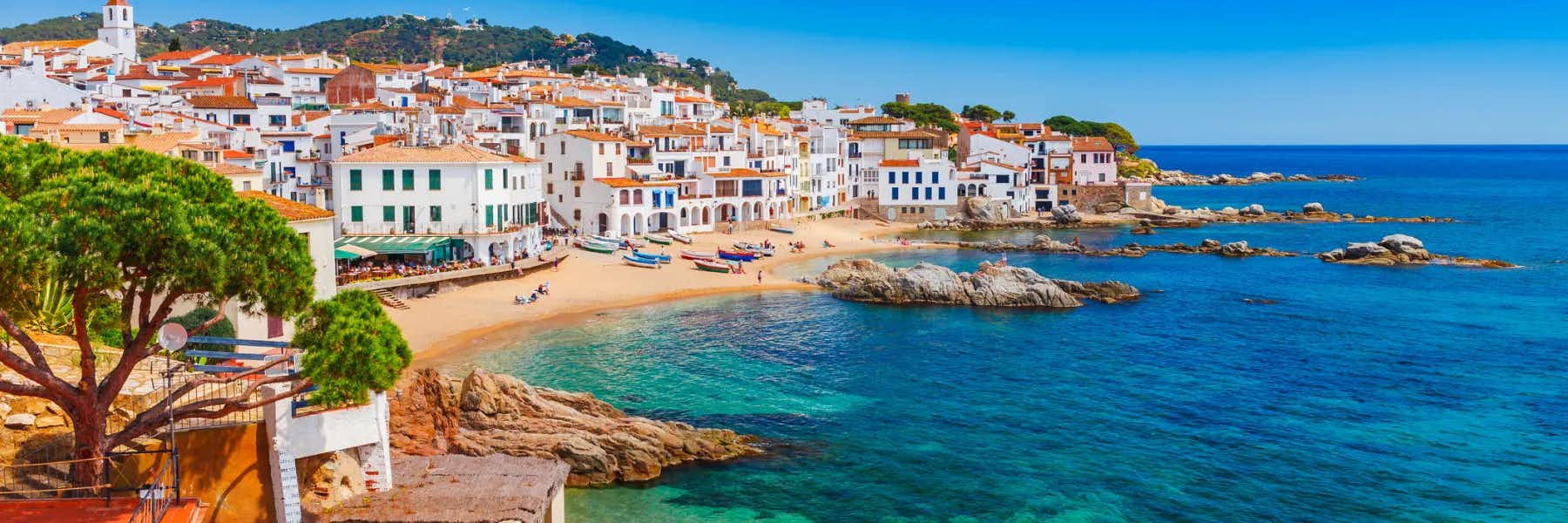
Spain’s Mediterranean coast has long attracted British, Dutch, and Scandinavian tourists, as well as those seeking a permanent move abroad.
Now, growing numbers of North Americans are discovering the same appeal: abundant sunshine, first-world amenities, an easygoing lifestyle, and a reputation as one of Europe’s safest countries.
While well-known expat hubs like Málaga, Alicante, Valencia, Barcelona, and Madrid continue to draw attention, there are plenty of smaller, lesser-known places worth considering for a relaxed retirement. Here are five appealing alternatives—along with two locations you may want to approach with caution.
Get Your Free Spain Report Today!
Get Your Free Spain Report Today!
Learn more about the lower cost of living in Spain and other countries in our free daily postcard e-letter. Simply enter your email address below and we'll also send you a FREE REPORT — Live the Good Life in Sunny, Affordable Spain.

By submitting your email address, you will receive a free subscription to IL Postcards, The Untourist Daily and special offers from International Living and our affiliates. You can unsubscribe at any time, and we encourage you to read more about our Privacy Policy.
Where to Live in Spain:
1. Benalmádena

Sandwiched between lively Málaga and luxurious Marbella on the Costa del Sol, Benalmádena is a quiet, family-friendly coastal city with a population of 78,338. Historically popular with European holidaymakers, it offers attractions such as Tivoli World amusement park, a butterfly park, two aquariums, a dolphin and penguin exhibit, a casino, a cable car, and one of the largest marinas in Andalusia. Benalmádena is also home to a Buddhist stupa.
Today, it’s populated with expats with children due to the selection of international schools. Three main areas to consider are Benalmádena itself, a lively, right-on-the-beach town; Benalmádena Pueblo, a charming, laid-back, white-washed town located 6 miles inland; and, in between the two, Arroyo de la Miel, a bustling town with easy access to the sea and mountains. A convenient suburban train connects Benalmádena to Málaga’s airport, train station, and bus depot, all just a 12-mile ride away.
2. Mijas Pueblo
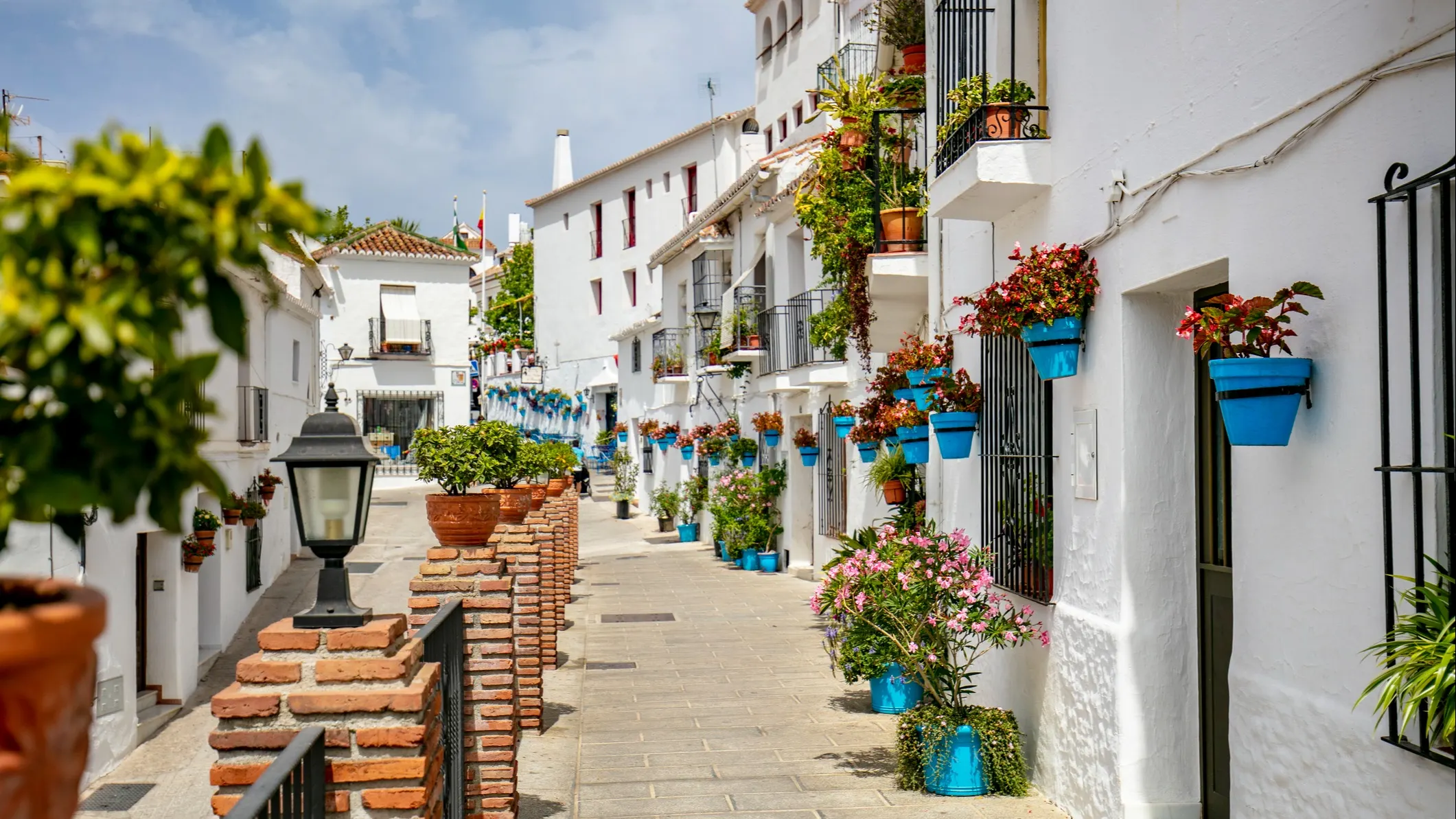
About five miles inland from the Costa del Sol sits the hilltop pueblo of Mijas. Considered one of the most beautiful white-washed Andalusian towns, it attracts people from all over the world. It’s also the gateway to the Costa del Sol’s “golf valley.” Twenty-seven golf courses lie within a seven-mile radius of Mijas Pueblo. With beautiful weather year-round and reasonable greens fees, this location is a golfer’s paradise. Mijas Pueblo is a seductive destination in itself, even without the allure of golf heaven.
How to Get a European Passport in Three Months
... Getting Citizenship in as Little as 3 Months? (even if you don’t have a European parent or grandparent)
... How to Live in Europe Year-Round on an American Passport Alone (no visa or second citizenship required)
... Why 2026 May Be the Last Year for Easy European Passports for Americans
Narrow cobblestone streets wind like white passageways between hidden plazas and warrens of shops filled with Spanish arts and crafts. Bright red geraniums spill from blue flower pots attached to stone walls. Beside the large plaza, quaint carts pulled by adorable burros wait to taxi tourists to the many restaurants, bars, and churches. The permanent population is just 7,500 and nearly doubles in the summer months. However, Mijas boasts the highest percentage of international expats of any city on the Costa del Sol, at over 36%.
3. Almuñécar
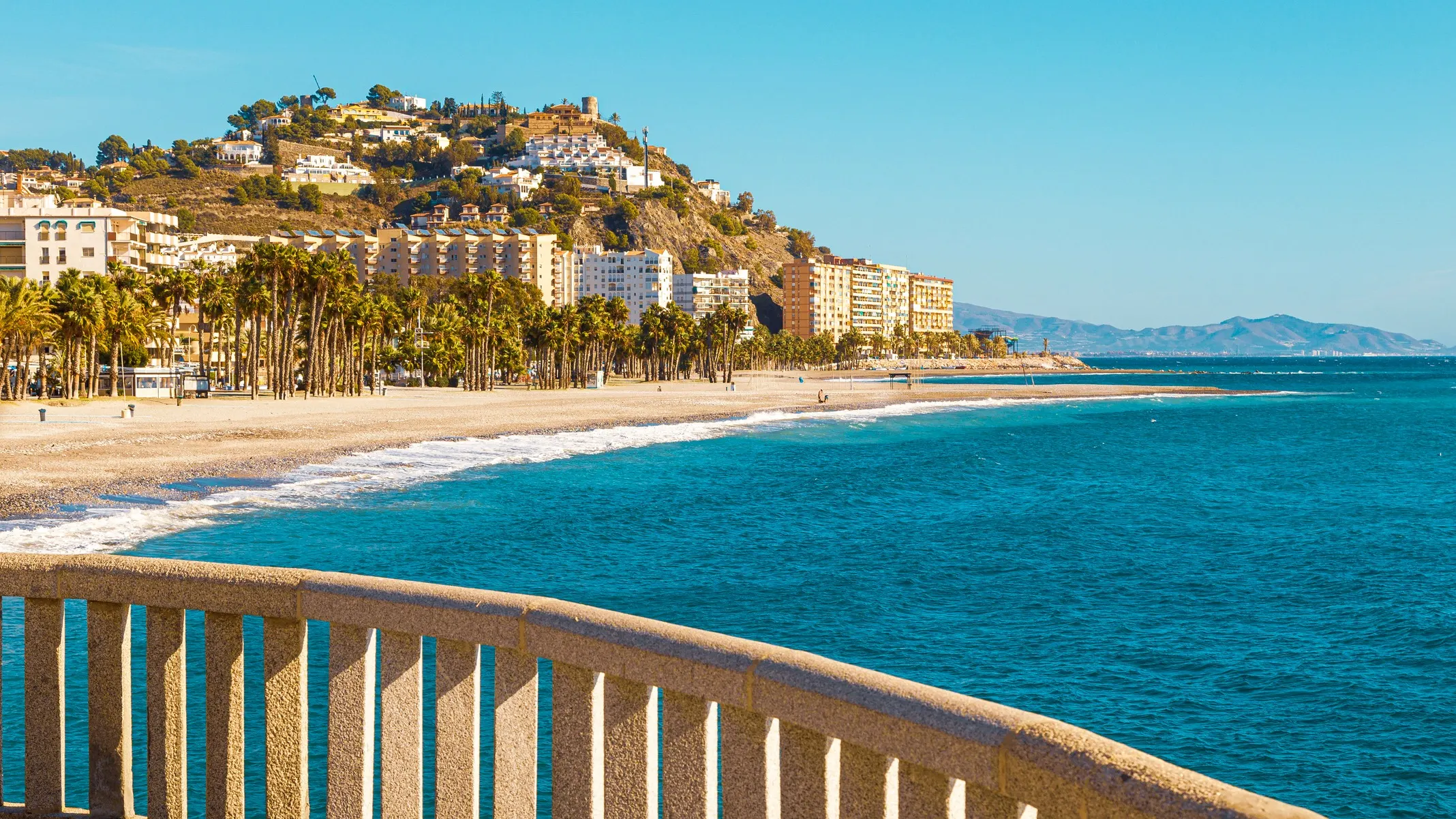
Originally founded by the Phoenicians, Almuñécar attracts both expats and tourists with 20 beaches and 340 days of sunshine a year. Located on the Mediterranean coast in the province of Granada, where the Costa del Sol meets the Costa Tropical, this seaside town of 28,000 permanent residents increases to triple that in the summer months. It offers a traditional Spanish way of life, along with swimming, scuba diving, golf, hiking, paragliding, the Aqua Tropic Water Park, and the Bonsai Garden Museum.
It has a public health center open 24/7. Nearby orchards produce subtropical fruits like avocados and mangos. It’s a good fit for those seeking a tranquil coastal lifestyle.
4. Sitges

Known as “the Fire Island of Europe,” the Mediterranean resort town of Sitges sits just 22 miles south of Barcelona. A popular holiday destination since the 19th century and a hotbed of artistic and alternative lifestyles, Sitges today shines as an LGBTQ+ paradise. Its 17 beaches are surrounded by the dramatic Garraf Natural Park. Its permanent population of 32,690 is made up of 35% Northern European expats.
Sitges has also been called “Ibiza in miniature” for its wild nightlife and the “Saint-Tropez of Spain” for its pricey real estate. In July and August, it becomes one continuous beach party. Its Carnival celebration in February/March is legendary throughout Europe. Its Pride Party is off the charts. Its International Fantastic Film Festival in October attracts cinema celebrities and sci-fi and fantasy film fans alike.
5. Miraflores de la Sierra
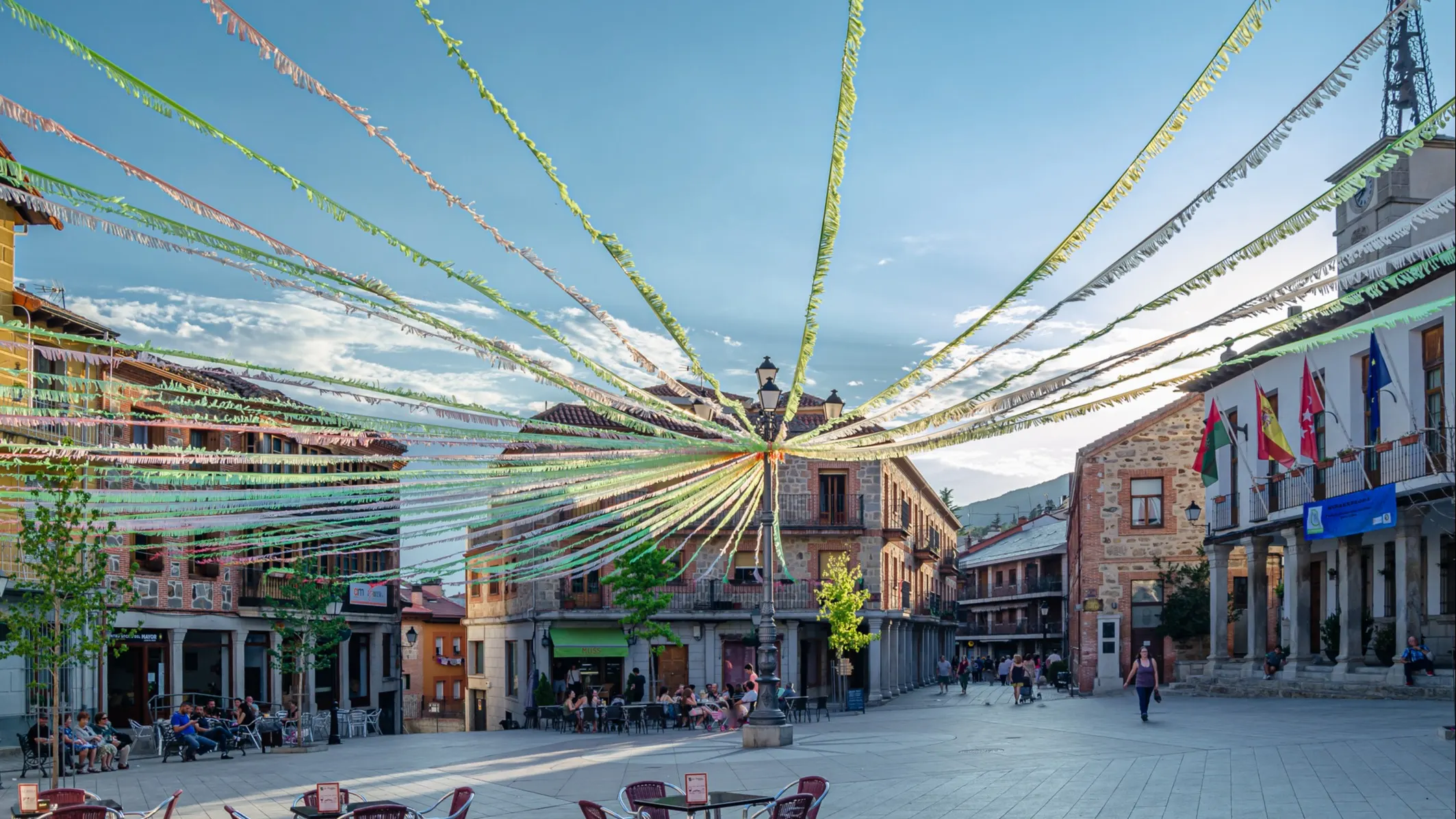
If you’d like to settle in a quiet little mountain town just a stone’s throw from a glittering city, consider Miraflores de la Sierra. This tiny medieval village (population 6,000) is nestled between peaks just a little over 30 miles from Madrid. Known for its many natural spring-fed fountains, it’s the perfect hideaway for those who appreciate cooler summer weather and a dusting of snow in winter.
Hiking enthusiasts and rock climbers find it a perfect fit for their outdoor lifestyle. If you need a break from all the tranquility, you can jump on a bus and be in metropolitan Madrid in less than an hour.
Bonus Option: Cádiz

If you’re looking for a lesser-known destination that hasn’t been overrun by expats, look to the Atlantic coast and the city of Cádiz. Rich in history and framed by long stretches of golden sand, this coastal city offers an easygoing pace of life that feels far removed from Spain’s more crowded seaside cities. Built on a narrow peninsula and almost entirely surrounded by water, Cádiz is a flat, walkable city that’s easy to get around on foot.
Home to roughly 110,000 residents, Cádiz has an aging population, as many younger locals have left in search of job opportunities, and about a quarter of residents are over 65. Because of this, the city tends to appeal more to retirees and digital nomads than to families.
Reaching Cádiz takes a little more effort than coastal cities like Málaga, Valencia, or Barcelona, but this is what keeps the crowds away. Trains run regularly to Seville and then on to Madrid, and buses offer additional options for traveling to nearby destinations.
Get Your Free Spain Report Today!
Get Your Free Spain Report Today!
Learn more about the lower cost of living in Spain and other countries in our free daily postcard e-letter. Simply enter your email address below and we'll also send you a FREE REPORT — Live the Good Life in Sunny, Affordable Spain.
By submitting your email address, you will receive a free subscription to IL Postcards, The Untourist Daily and special offers from International Living and our affiliates. You can unsubscribe at any time, and we encourage you to read more about our Privacy Policy.
Where to Avoid in Spain:
1. El Mar Menor
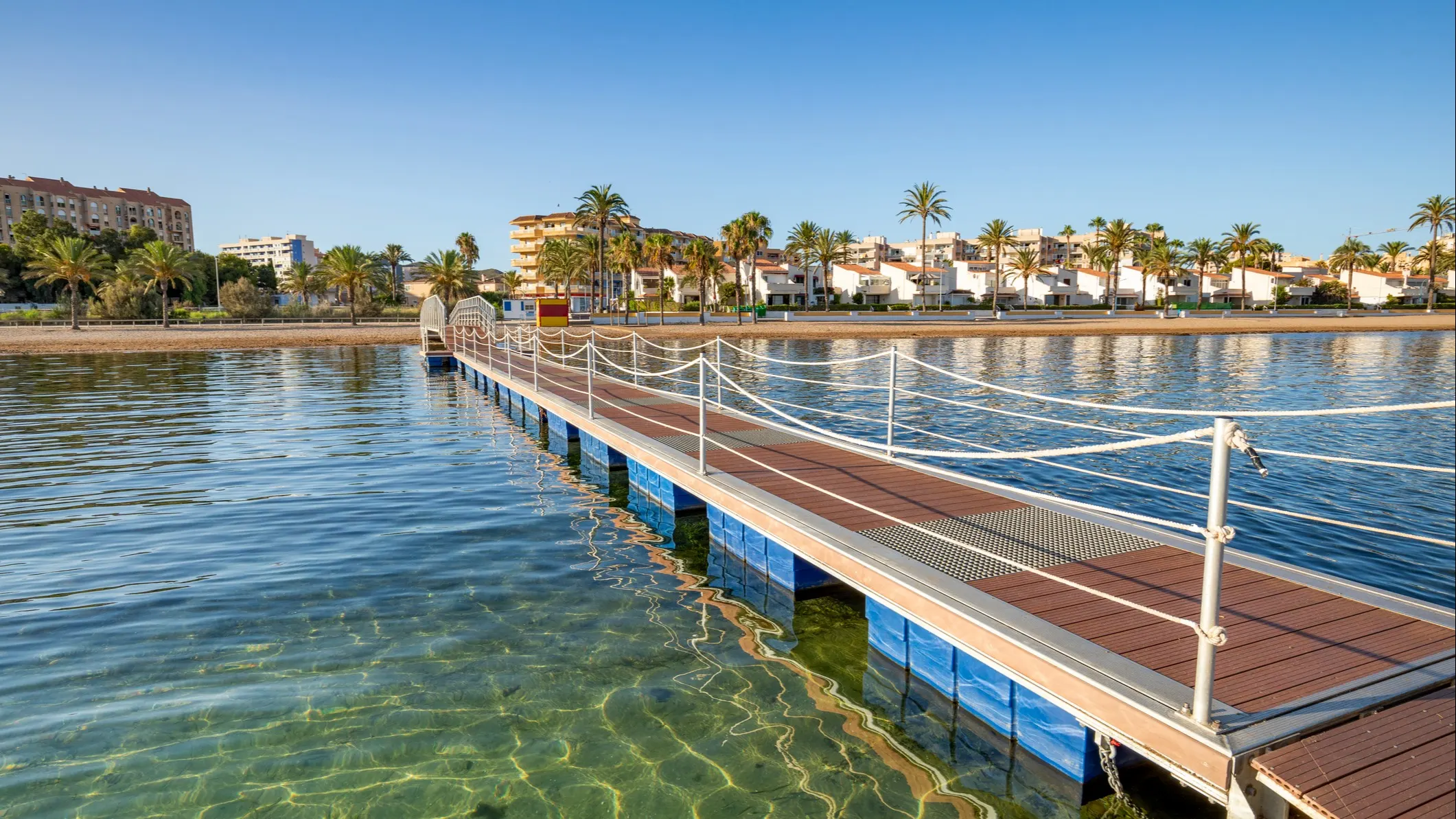
El Mar Menor is a saltwater lagoon in the community of Murcia, near the city of Cartagena, on Spain’s Mediterranean coast. Its warm, clear water with high salinity makes it ideal for all kinds of water sports. Tourist infrastructure is well-developed. At the northern end of the lagoon is a national park where there are salt flats that include an important wetland and bird sanctuary. The problem is that in 2016, despite 18 years of warnings from environmentalists, pollution from the many hotels built on the narrow peninsula caused an ecological collapse of marine life in the lagoon. In May 2017, all the beaches lost their Blue Flag designation due to high contamination of the lagoon waters. In September 2019, heavy rains caused floods to dump more pollution into the lagoon, causing thousands of dead fish to wash up on the beaches. Spaniards who bought vacation homes there cannot sell them due to the continuing contamination. Don’t swim there, and don’t buy property in the immediate area.
2. Gibraltar Border Towns
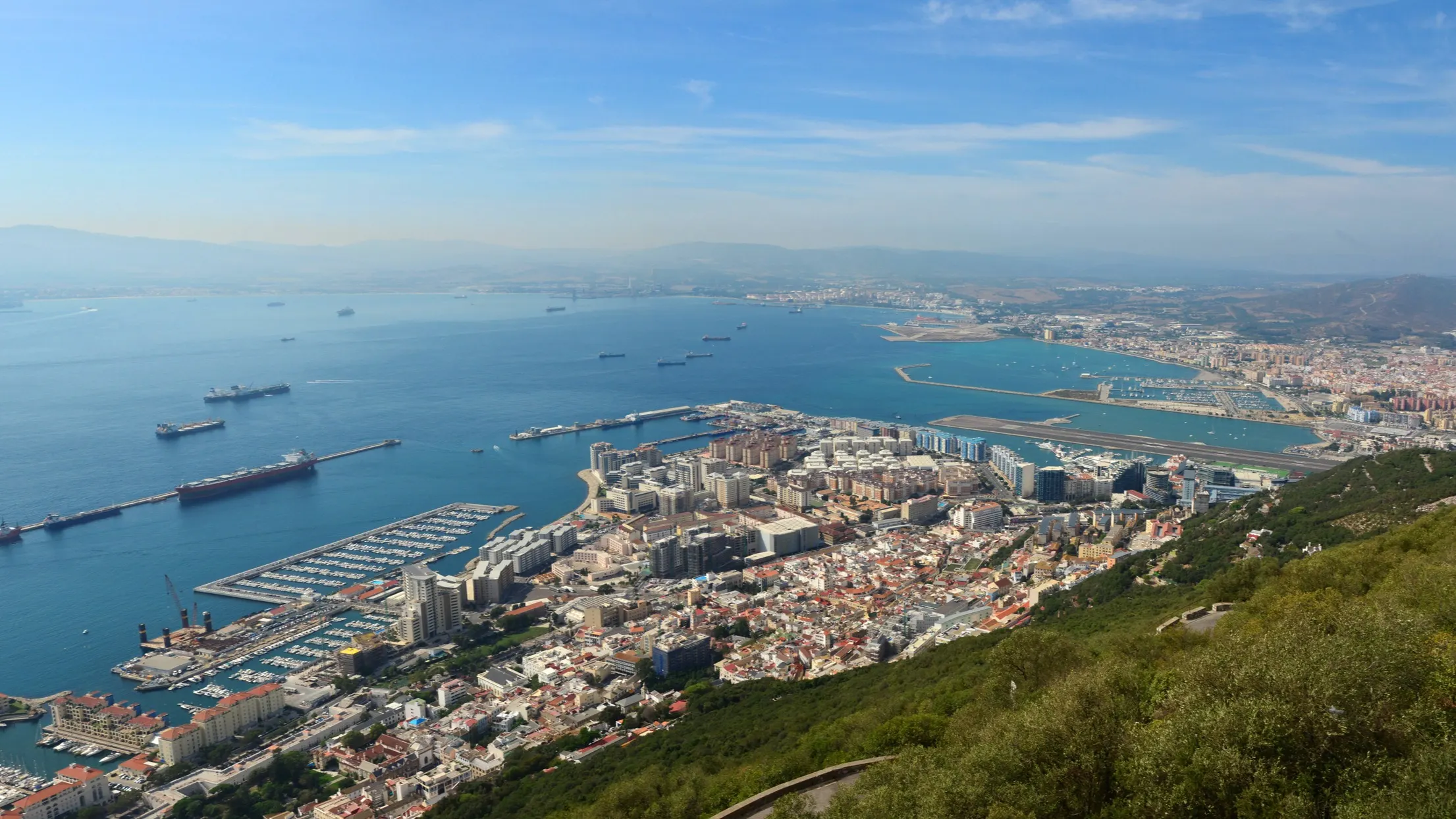
Gibraltar is well known as the British Overseas Territory carved out of Spain at the mouth of the Mediterranean. This popular tourist destination and sales-tax-free shopping haven can be delightful to visit. However, the cities on the Spanish side of the frontier have the flavor of border towns everywhere. The largest of them, Algeciras, is the 16th-busiest port in the world. From there, ferries cross the strait to and from Tangiers in Morocco, as well as the Spanish enclaves of Ceuta and Melilla in Africa. Travel on these ferries is perfectly safe. However, the fact that Africa is just 65 miles from Algeciras encourages traffic in many types of contraband, such as drugs, and undocumented migration from Northern and Sub-Saharan Africa.
Gibraltar’s commercial focus on online gambling and banking that offers international tax shelters adds to a somewhat unsavory atmosphere. As a tourist destination, these elements do not pose a problem, but you might not want to live there. Although, as an expat, you probably would not be involved in anything questionable, almost any other destination in Spain would be completely worry-free.
— written by Marsha Scarbrough (Updated by Cepee Tabibian)
Get Your Free Spain Report Today!
Get Your Free Spain Report Today!
Learn more about the lower cost of living in Spain and other countries in our free daily postcard e-letter. Simply enter your email address below and we'll also send you a FREE REPORT — Live the Good Life in Sunny, Affordable Spain.
By submitting your email address, you will receive a free subscription to IL Postcards, The Untourist Daily and special offers from International Living and our affiliates. You can unsubscribe at any time, and we encourage you to read more about our Privacy Policy.
Join Us in Europe in 2027!
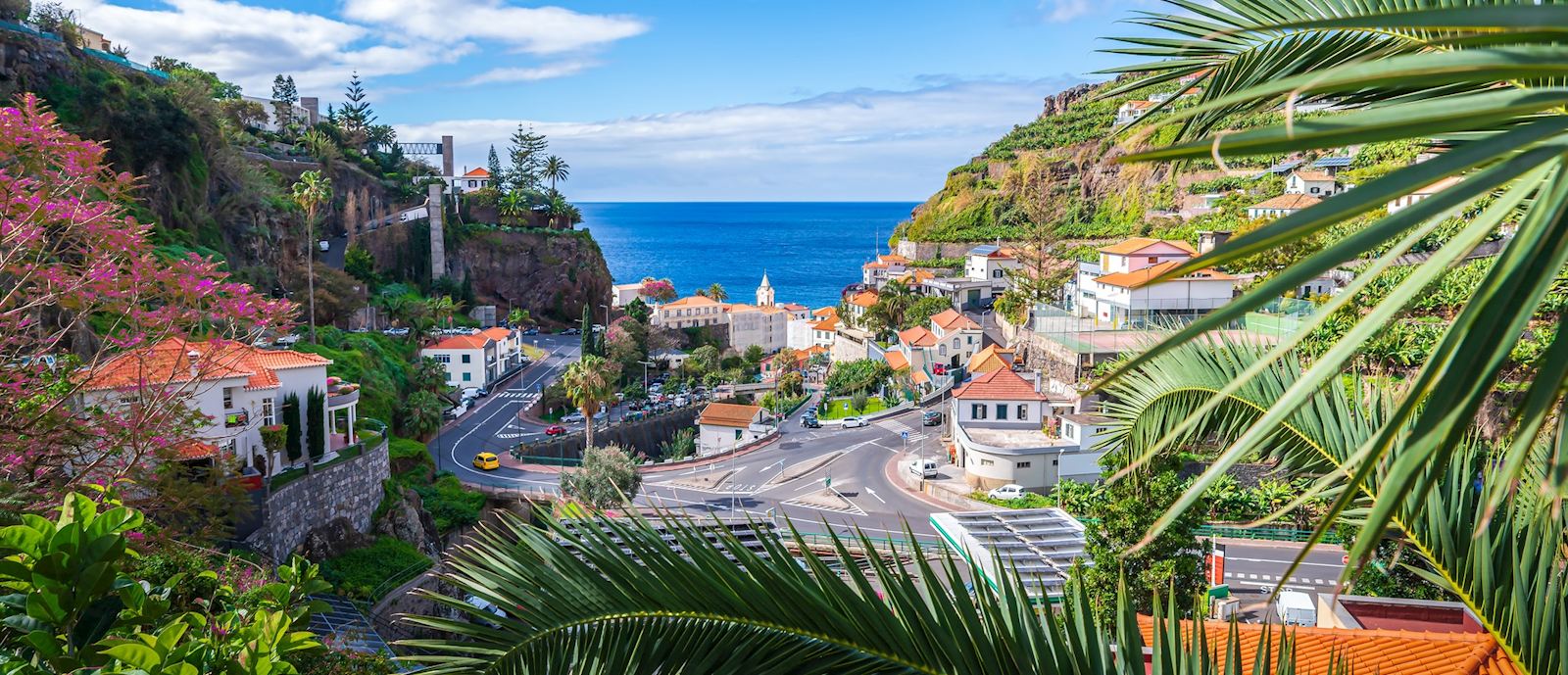
Portugal, Spain, Italy, France, Greece... You’ll find gorgeous, culturally rich cities and towns and beautiful sunny beaches. You can enjoy a high quality of life—yet a surprisingly low cost of living. Starting at $2,500 a month, a couple can live well. With more, you could live large.
If you’ve been dreaming of life in Europe, join us March 20-22, 2027, for International Living’s Fast Track Europe Conference. We’ll meet in Portugal’s sunny Algarve, and our focus will be on Europe’s best destinations to retire better, live well, and spend less.