For those looking for the mystique and romance of lavender-filled Provence, without the bustling crowds and eye-watering price tags, look no further than Occitanie, Provence’s kissing cousin, with all the allure of southern France at a more affordable cost.
Housing prices, while not rock bottom, are about a third lower than in popular expat hubs like Aix-en-Provence and Nice.
Far from hidden, enclaves of Brits and Americans have been settling in the region, formerly known as the Languedoc, for decades. Still, it’s growing in popularity as more people seek budget-friendly options in the south.
Most importantly, lower prices don’t mean a lower standard of living—quite the opposite. Many would argue, myself included, that Occitanie is the Provence of 10 to 15 years ago: authentic, unspoiled, and still under the radar.
Here, you’ll find the best of Mediterranean living: charming stone villages, plane tree-lined roads, sun-washed vineyards, and miles of olive orchards. And you’re never far from the sandy beaches of the south.
Home to the Pont du Gard and ancient Roman sites, most notably in Nîmes, the region is rich in history and steeped in time-honored traditions.
From farmers' markets to local festivals, life moves at the same rhythm as it has for hundreds of years. Slow, purposeful, and with a zest for fine-living.
Get Your Free France Report Here
Get Your Free France Report Here
Learn more about France and other countries in our daily postcard e-letter. Simply enter your email address below and we’ll send you a FREE REPORT: A Taste of France: All the Ingredients for the Good Life.

By submitting your email address, you will receive a free subscription to IL Postcards, The Untourist Daily and special offers from International Living and our affiliates. You can unsubscribe at any time, and we encourage you to read more about our Privacy Policy.
Uzès: In the Footsteps of History
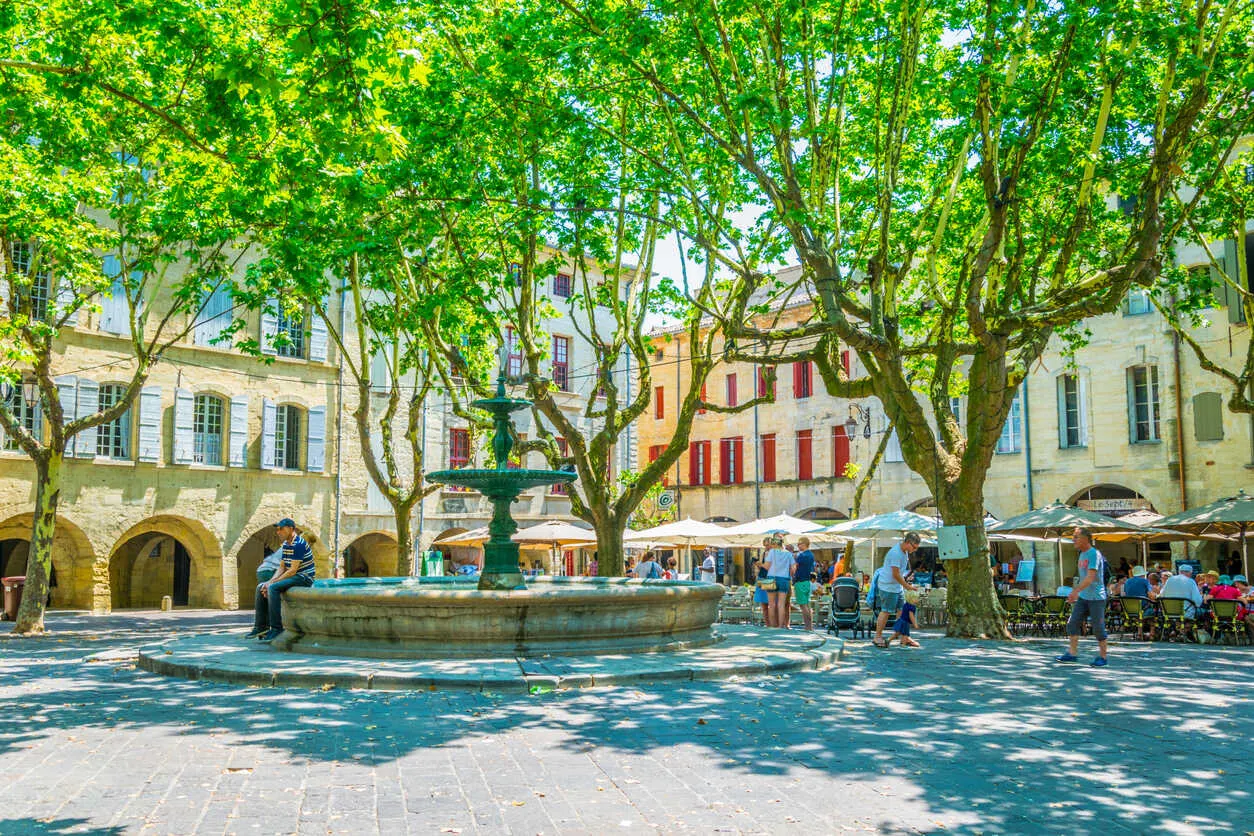
So, where exactly is this would-be paradise, and how do you get there as a potential resident?
France is divided into 13 mainland regions, which are further split into smaller administrative areas known as départements.
Most of Provence lies within the Provence-Alpes-Côte d’Azur region, with some cultural and geographic overlap into Auvergne-Rhône-Alpes and parts of western Occitanie along the lower Rhône Valley.
While Occitanie isn’t officially part of Provence, it shares many of the same lifestyle draws and natural beauty.
One such slow-paced, easy-living town that will knock your socks off is Uzès, the jewel of Occitanie.
Situated in the Gard département, this almost perfectly intact medieval town of roughly 8,500 people enjoys an enviable position in southern France. Located within easy reach of Alès (20 miles northwest), Avignon (25 miles east), and Nîmes (16 miles south), Uzès is a fairytale-like hideaway that blends Old-World charm with a refined sense of savoir-vivre.
Deborah Bine, an American retiree who has lived in Uzès for 13 years, says it was the town’s sense of history that first drew her in.
“I love the history. The buildings have been here for centuries.”
Uzès’ origin story and rise to prominence set it apart from neighboring towns, thanks to one defining feature: its royal connection.
The Duchy of Uzès has one of the longest continuous histories in France.
The town’s ascent began in the Middle Ages, when the lords of Uzès first appeared in the 11th century. In 1528, it became a duchy under King Francis I, with the title granted to the Crussol family, who still hold it today.
Following the French Revolution, feudal titles were abolished, and the duchy lost its official status, though many of its social traditions remained. In the 19th century, noble titles were once again recognized, restoring Uzès’ royal distinction.
Today, even if the title is largely symbolic, the town still feels steeped in history and quiet grandeur.
You can hardly take a step without catching sight of the Duke’s castle, the Château Ducal. Much of it, built in the 12th century, remains intact, including its most prominent tower, the Tour Bermonde.
A silent sentinel overlooking the town, the tower is both striking and atmospheric. Climb the 135 steps to the top for a 360° panorama of Uzès and the surrounding vineyards, olive groves, and rugged garrigue, the Mediterranean scrubland of the south.
Within a compact area, the historic center can be crossed in 10 to 15 minutes. The château is just one of several landmarks that contribute to the town’s medieval charm. As Deborah puts it, you’re truly living in the middle of history.
Uzès is home to 42 historic monuments, eight of which hold protected “classé” status, including the château and the Saint-Théodorit Cathedral with its Tour Fenestrelle, often compared to the Leaning Tower of Pisa, without the signature lean.
Like Deborah, many are drawn to Uzès for the beauty of its historic center. I’ve visited twice myself and found it increasingly hard to leave.
Stone walkways and ivy-covered hôtels particuliers (stone mansions of yesteryear) open onto lively squares like Place aux Herbes. Shaded by plane trees and lined with cafés, boutiques, and restaurants, it’s the social heart of town and home to a vibrant farmers market on Wednesdays and Saturdays.
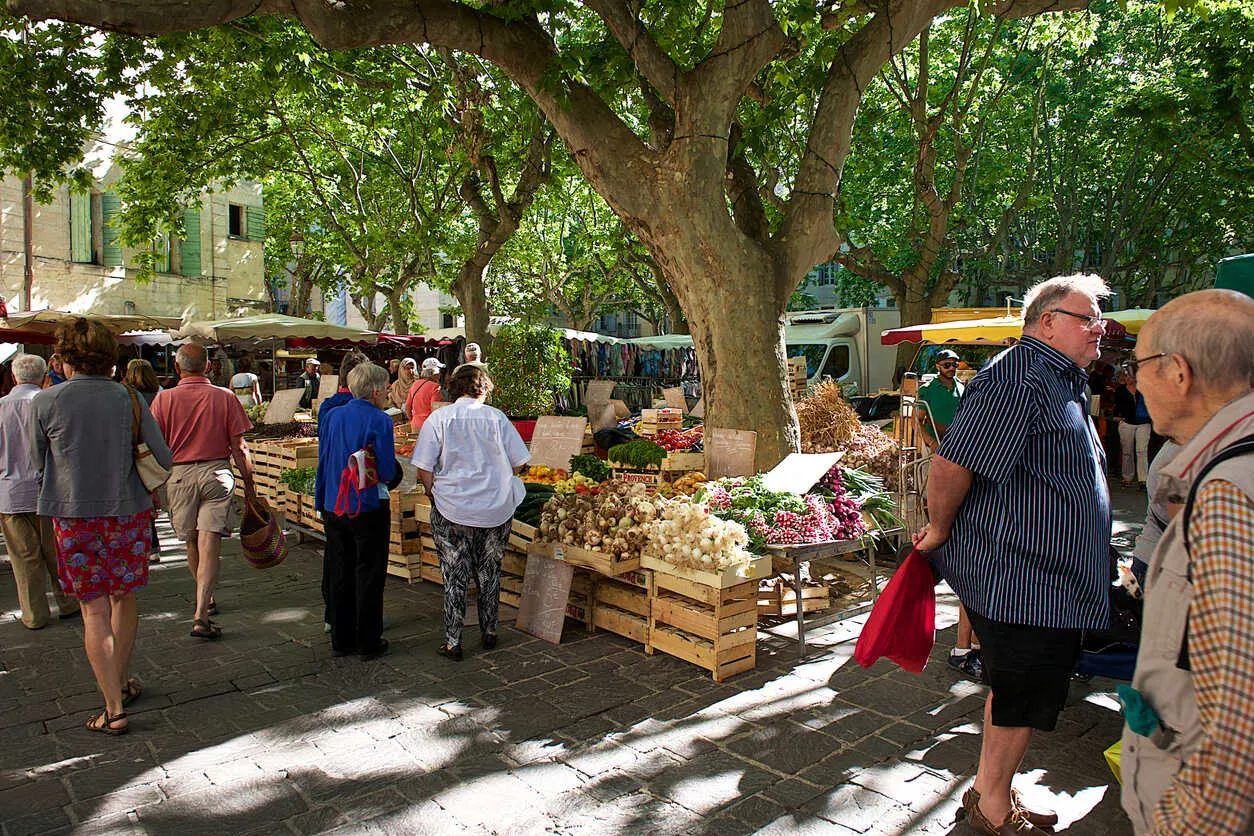
Wander off in any direction, and you’re sure to catch a glimpse of the castle or the Fenestrelle Tower. At sunset, the light hits the golden stones as friends and family gather for apéro hour or tumble out of shops with dinner provisions in hand. While one could certainly spend a lifetime exploring the historic monuments, there’s also a good amount of French gourmet living to tackle. Visit any of the bakeries, cheese shops, or wine caves to get a real feel for the rhythms of local life.
How to Get a European Passport in Three Months
... Getting Citizenship in as Little as 3 Months? (even if you don’t have a European parent or grandparent)
... How to Live in Europe Year-Round on an American Passport Alone (no visa or second citizenship required)
... Why 2026 May Be the Last Year for Easy European Passports for Americans
Life in Uzès
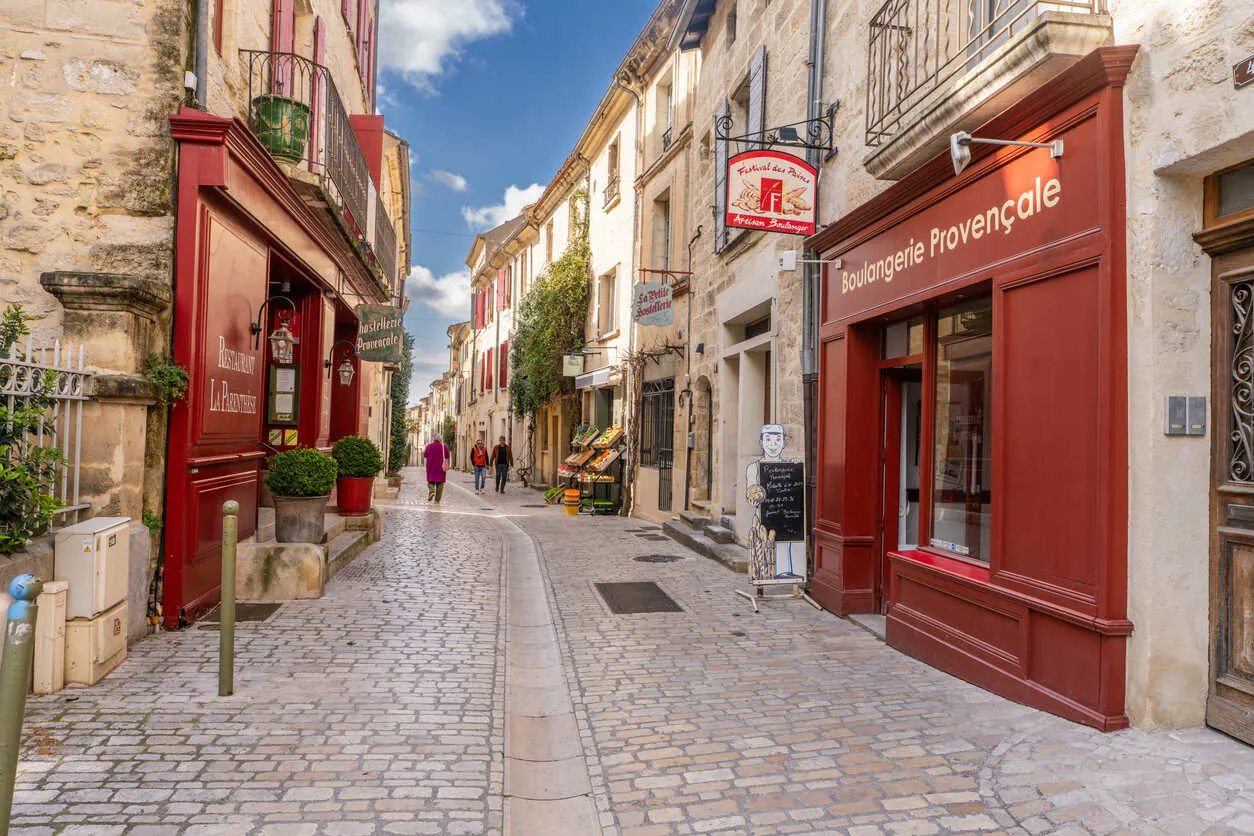
At 80, Deborah Bine leads a very active and colorful life. She takes part in a thriving expat scene while also traveling extensively around France. Uzès is about a three-hour train ride from both Nice and Paris, two cities Deborah knows well.
An avid writer and promoter of France, she shares her life in Uzès and her travels on her website, The Barefoot Blogger. When asked about social life in town, Deborah was full of enthusiasm.
“There’s a lot of entertaining,” she said. “Expats host at home and eat out often. There’s always something going on in the streets—fairs, festivals, performances. We just had the olive festival this past weekend.”
The duchy hosts summer concerts in the castle courtyard, and a full calendar of events keeps Deborah and her friends busy, from truffle festivals to music concerts and even tango nights.
Impromptu coffee meet-ups and farmers’ market rendezvous round out the social scene, along with events in nearby villages like Saint-Quentin-la-Poterie, the pottery capital of the south.
While there’s plenty to do in spring, summer, and fall, Deborah says things slow down in late fall and winter, with a festive uptick in December thanks to holiday events and Christmas markets. Many retirees use this quieter time to travel or host more gatherings at home.
Cost of Living in Uzès
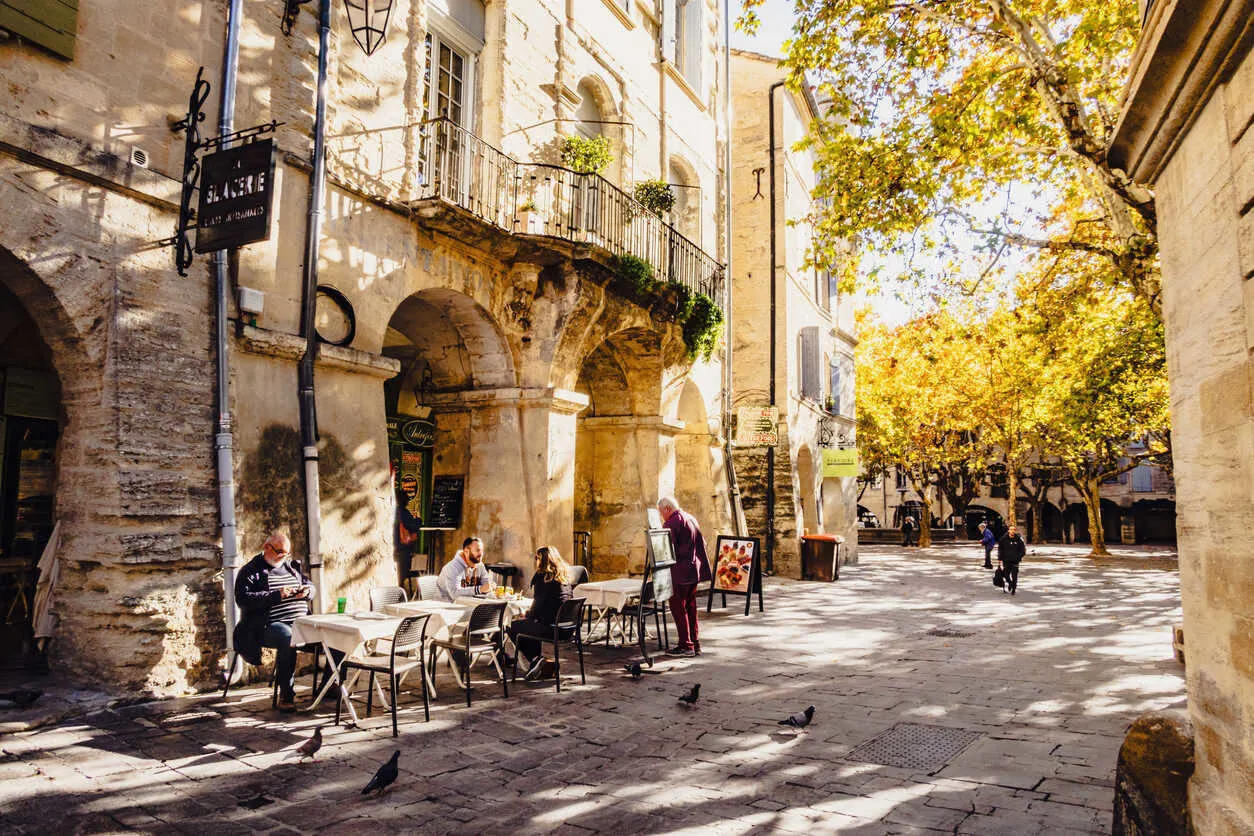
Picking up steam in popularity, Uzès has seen a recent increase in expat arrivals, beyond retirees and those lucky enough to own second homes in this beautiful town. Deborah says she’s noticed more younger singles moving in, though she cautions that finding employment can be challenging without a business already in place.
While transportation costs will vary depending on how much you travel or whether you own a car, everyday expenses in Uzès—utilities, phone service, groceries—are in line with the rest of France. Housing, as in much of the South, is likely to be your biggest expense.
Apartments in the historic center tend to be on the smaller side. A furnished, 650-square-foot, one-bedroom rental typically runs between €1,000 and €1,400 ($1,174 to $1,643). Lower-priced options do exist, but they’re rare and often require some work. To buy a similar apartment in the town center, prices start around €250,000 ($293,526), with premium properties reaching €300,000 ($352,230) or more.
| Budget | $ (U.S) |
|---|---|
| Rent | 900 - 1,300 |
| Groceries (Including wine) | 800 |
| Car (Insurance and Maintenance) | 80 |
| Gas (Diesel or Petrol) | 128 |
| Gas (Heating) | 70 |
| Electricity | 62 |
| Phone (Landline) | 21 |
| Health Insurance Top Up | 100 |
| Internet | 50 |
| Cellphone Plan | 22 |
| Lunch (5x month) | 200 |
| Misc. (Coffee, Croissants, etc.) | 80 |
| Move Tickets | 16 |
| Total | $2,529 to $2,929 |
If housing costs are a concern, there are alternatives.
“You don’t have to live in Uzès to enjoy Uzès,” Deborah says, noting that nearby villages like Saint-Quentin-la-Poterie offer more affordable options, as does renting outside the historic center, where limited supply drives up prices.
How to Get to Uzès
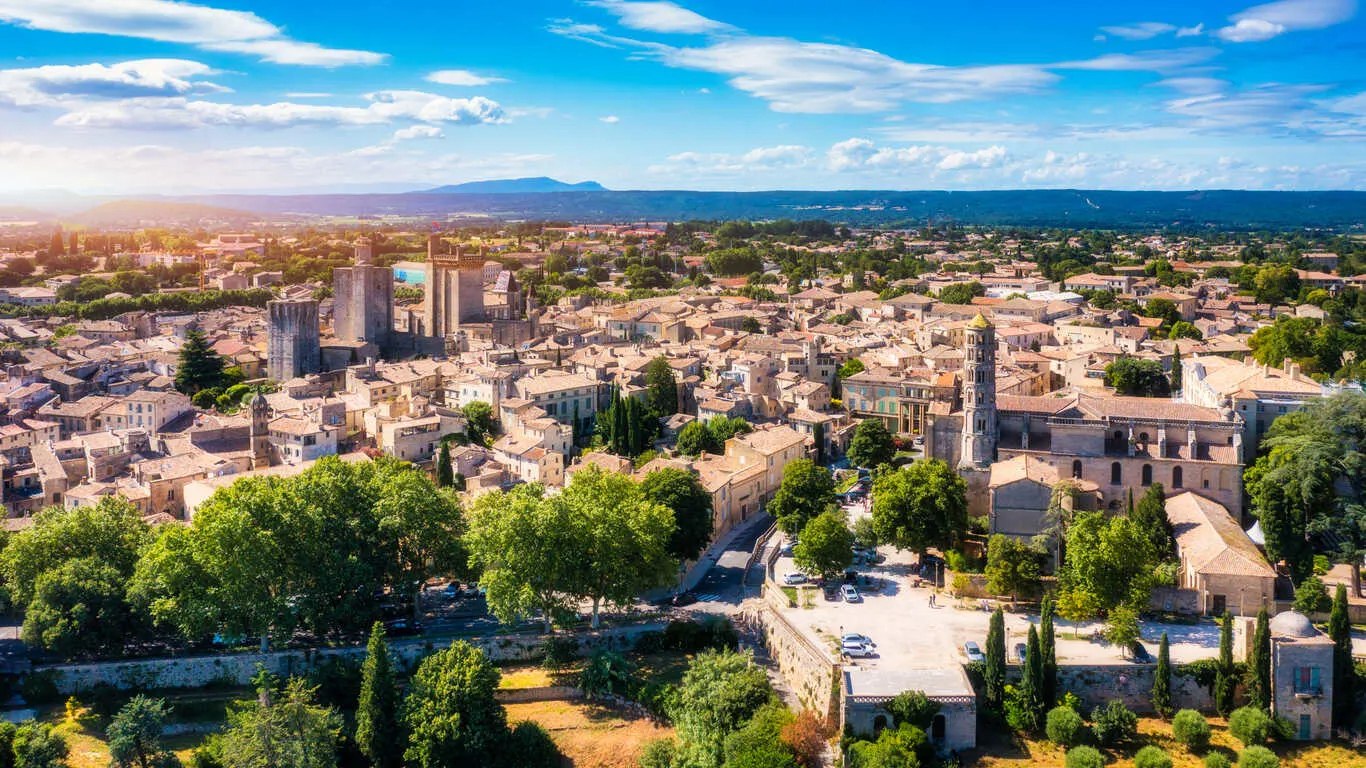
While Deborah currently leases a car, she also relies on rail service, which is easy and affordable. She can take a taxi or bus to the Avignon or Nîmes train stations, the closest options for Uzès, for travel around France.
If arriving from the U.S., the easiest option is to fly into Marseille Provence Airport and then rent a car or take a train or bus via Nîmes to Uzès, about a 1.5-hour drive. The airport also offers connections from Paris.
Another option is Montpellier–Méditerranée Airport, which is closer to town but has fewer connecting flights.
Lastly, many opt for a more creative solution: fly into Paris Charles de Gaulle Airport and then take the TGV high-speed train to Nîmes, about a three-hour journey.
However you arrive, Uzès rewards the effort with a lifestyle that blends history, community, and everyday pleasures.
Get Your Free France Report Here
Get Your Free France Report Here
Learn more about France and other countries in our daily postcard e-letter. Simply enter your email address below and we’ll send you a FREE REPORT: A Taste of France: All the Ingredients for the Good Life.
By submitting your email address, you will receive a free subscription to IL Postcards, The Untourist Daily and special offers from International Living and our affiliates. You can unsubscribe at any time, and we encourage you to read more about our Privacy Policy.
Join Us in Europe in 2027!
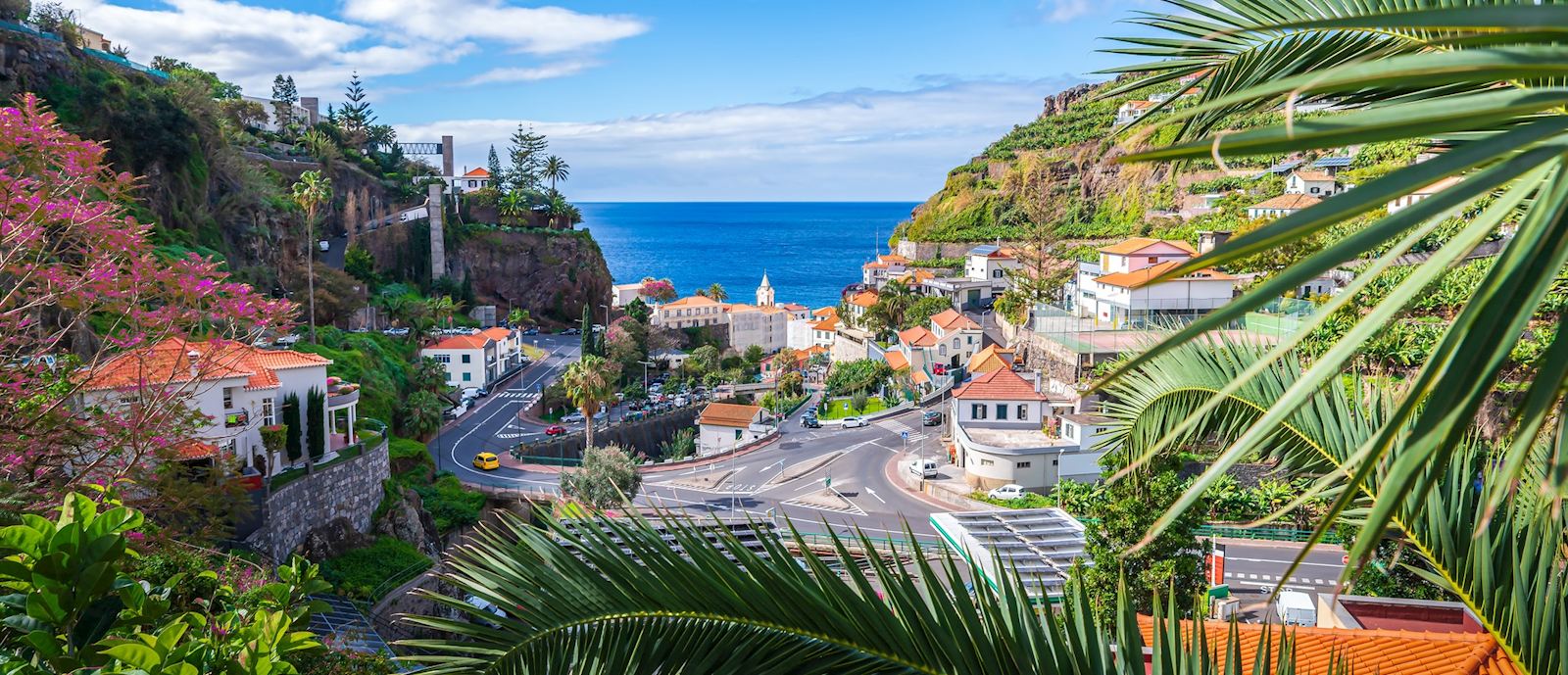
Portugal, Spain, Italy, France, Greece... You’ll find gorgeous, culturally rich cities and towns and beautiful sunny beaches. You can enjoy a high quality of life—yet a surprisingly low cost of living. Starting at $2,500 a month, a couple can live well. With more, you could live large.
If you’ve been dreaming of life in Europe, join us March 20-22, 2027, for International Living’s Fast Track Europe Conference. We’ll meet in Portugal’s sunny Algarve, and our focus will be on Europe’s best destinations to retire better, live well, and spend less.