Portugal casts a spell on those who wander its cobbled lanes. Towering castles crown hilltop villages. Blue-and-white azulejos cling to the facades of whitewashed homes. Terraced vineyards produce world-famous wines that still sell for just a few dollars a bottle.
But beyond the beauty, Portugal remains one of the safest and most affordable places to live in Western Europe. In the right inland towns, a couple can still live comfortably on less than $30,000 a year. Enjoy lunches out for under $10, add a glass of wine for $3, and finish with an espresso and a pastry for just a few dollars more.
Healthcare is affordable, too. An appointment with an English-speaking doctor at a private clinic costs around $55, while specialist visits average about $100 without insurance. Public healthcare is even less expensive, with doctor visits often costing less than a typical copay back in the U.S.
In the following locations, apartments can still be rented for $400 to $600 per month. Plan on roughly another $100 for utilities; $40 for water; $400 for groceries; $200 for dining out; $65 for a Wi-Fi/phone package; and about $400 per couple for health insurance.
Get Your Free Portugal Report Today!
Get Your Free Portugal Report Today!
Discover why we love a slower pace of life in Portugal and info on other European countries in our daily postcard e-letter. Simply enter your email address below and we’ll send you a FREE REPORT – Explore the Old World in Laidback Portugal.

By submitting your email address, you will receive a free subscription to IL Postcards, The Untourist Daily and special offers from International Living and our affiliates. You can unsubscribe at any time, and we encourage you to read more about our Privacy Policy.
Vila Real
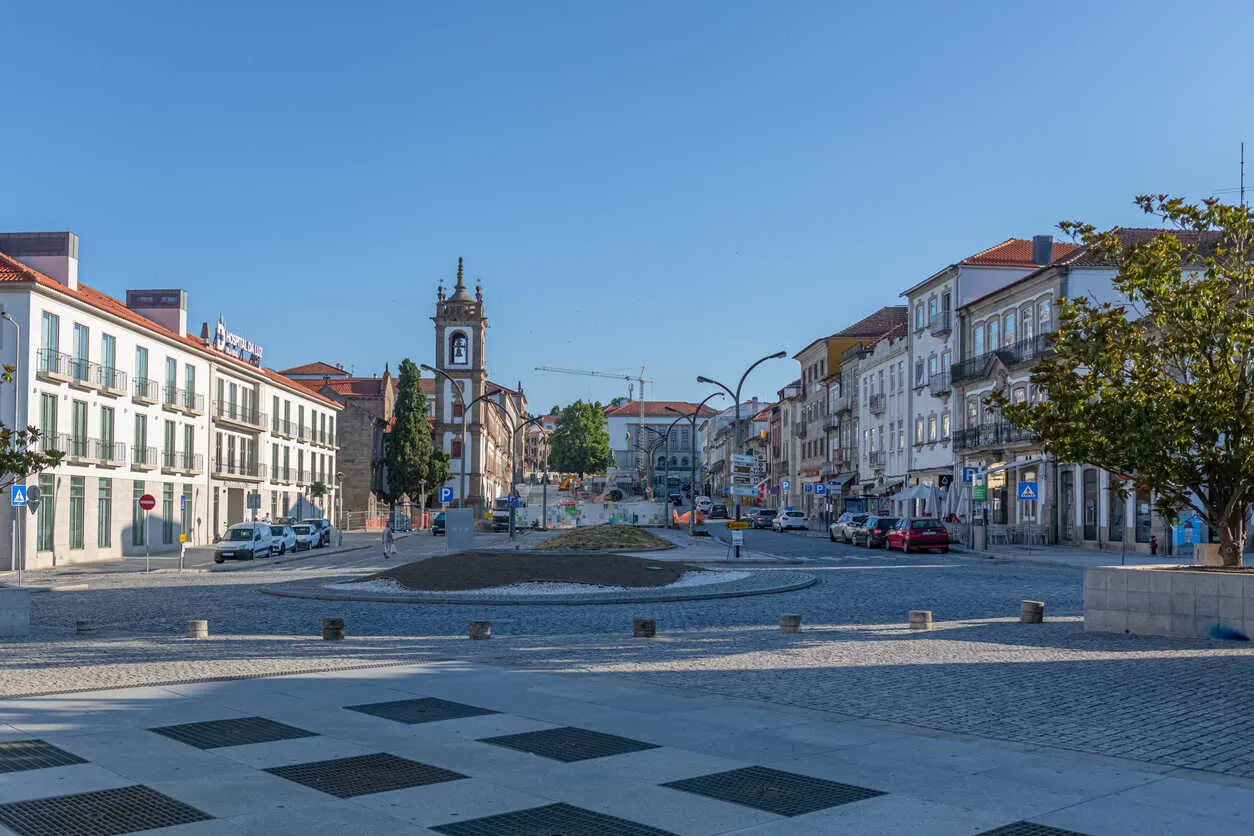
The town of Vila Real is situated in the historic Trás-os-Montes and Alto Douro province, a one-hour drive from Porto. Founded in 1289 by King Dinis, the city hosted more members of royalty than any other city in the Middle Ages except Lisbon, earning it the title of “Royal City” (Vila Real in Portuguese).
Surrounded by the Marão and Alvão mountains, the city stretches along the Corgo River, with green spaces and paths ideal for walking, biking, or running. The young at heart will appreciate the presence of UTAD (Universidade de Trás-os-Montes and Alto Douro), which gives the town a youthful vibe.
Winters in Vila Real are cold and wet, with temperatures averaging 32 F to 41 F and occasional snowfall, while summers are hot and dry, with highs of 90 F. Nature lovers will be delighted by Alvão Natural Park, just a short distance from the city, with natural swimming pools and waterfalls to cool off in summer. The mountains of Serra do Marão offer hiking trails that lead to spectacular panoramic views year-round for active retirees.
Vila Real has a modern shopping center, a traditional mercado, large grocery stores, gyms, and a private and public hospital. The city has a bus station with connections to major cities and frequent service to Porto. Nearby Régua has a train station for further travel. The closest airport is just over one hour away in Porto, making it easy to connect with the rest of the world.
A small but established expat community exists in Vila Real, and connections can be made on social media platforms like Facebook.
Dining out is affordable, where a hearty prato do dia of cabrito—roasted young goat—can be had for under $10. Rental prices in Vila Real start around $350 for a cozy one-bedroom apartment or $550 for a modern furnished two-bedroom.
It is possible to live in Vila Real on a budget of $1,900 to $2,000 per month, including rent, food, occasional dining out, utilities, a Wi-Fi/phone package, and basic health insurance.
While the district of Vila Real has a population of around 50,000, the town proper has fewer than 20,000 residents, giving it that small-town feel.
Bragança
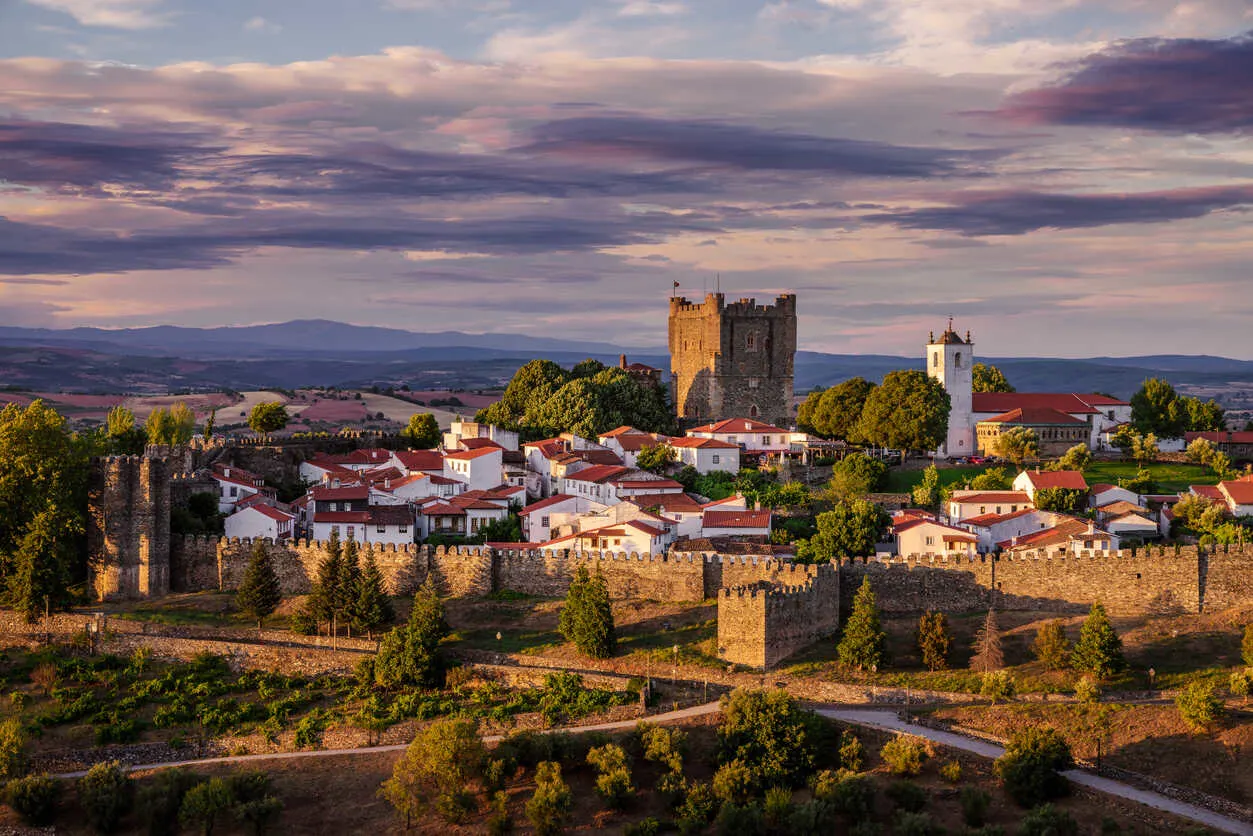
Often called “the forgotten capital,” the ancient city of Bragança (bra-gan-SA) sits on the Spanish border in northeastern Portugal in the remote Trás-os-Montes (“behind the hills”) region. The medieval citadel, or walled old town, is where a 12th-century castle that once protected the border stands tall, its 108-foot tower still intact.
The ancient roots of Bragança date back to Celtic times, when it was officially granted a charter in 1187 by King Sancho I and later rose to power as the seat of Braganza in 1442.
Nestled among majestic mountains and natural parks, the city of 35,000 offers affordable living, where rentals can still be found for $550 to $600 a month. Modern amenities include a public and private hospital, gyms, a modern shopping center, grocery stores, and plenty of eateries. Bus service moves residents around the city, and long-distance routes offer further options.
Keeping active is easy in nearby Montesinho Natural Park, an expansive area of heather-clad rolling hills, grassy plains, dense oak forests, and river beaches called praias fluviais.
With close proximity to Spain, residents have a choice of two airports, one in Salamanca, Spain, and the other in Porto, both a two-hour commute away.
Throughout the year, Bragança comes alive with festivals like the Medieval Fair, cultural celebrations, and religious holidays. Dining out is affordable, with daily lunch specials starting at $ 8 and mid-range eateries at $15 and up.
Bragança has a continental climate, with hot, dry summers reaching 86 F and cold, wet winters, where temperatures can dip to freezing with occasional snow.
Rentals in the city start at $525 per month, while lunch out can be found for $9 and includes soup, the main course, coffee, and even dessert. With a budget of $2,000, it is possible to live in Bragança, including rent, utilities, a Wi-Fi/phone package, basic health insurance, food, and occasional dining out.
Guarda
The city of Guarda boasts the title of Portugal’s highest location, with an elevation of 3,464 feet, sitting at the base of the Serra da Estrela mountains, where Portugal’s only ski resort can be found. With a population of 42,000, it serves as the capital of the district with the same name.
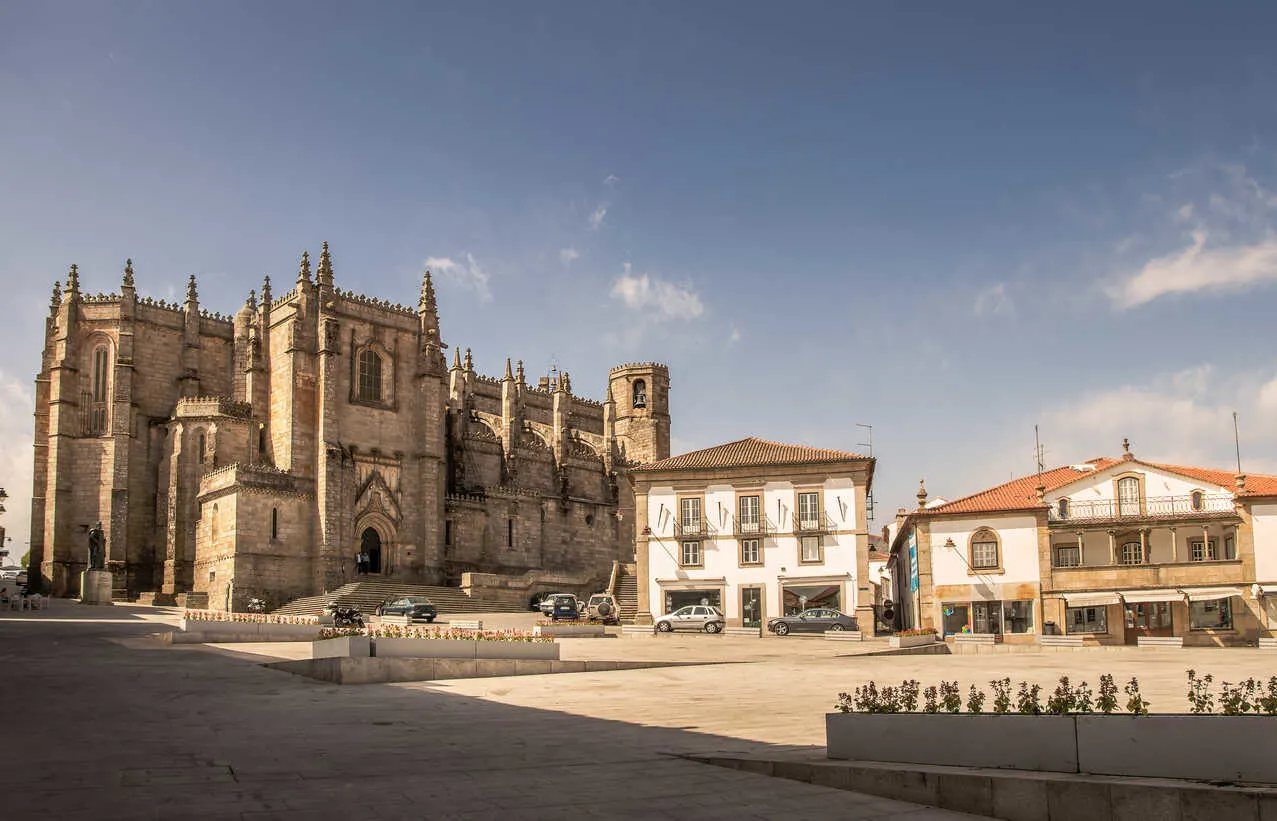
In the middle of the old town at Praça Luís de Camões, named for the famed Portuguese poet, stands an imposing granite cathedral that dominates the skyline. Construction began in 1390 during the reign of King John I and continued over the next 150 years. Its dark facade resembles a fortress and is a blend of Manueline and Gothic architecture.
Winter in Guarda transforms the city into a snow-dusted sanctuary. Nestled above the fertile Mondego Valley, Guarda features dramatic scenery, crisp mountain air, along with a slow-paced, authentic Portuguese lifestyle.
The nearest private hospital to Guarda is a 30-minute commute away in the town of Covilhã, and a public hospital is close by with emergency services. La Vie, a multilevel shopping center, presents an array of specialty shops, a medical clinic, a gym, a sizeable food court, and a large grocery store.
Trains connect Guarda to major cities like Lisbon (four hours), Porto (three hours and 45 minutes), and Coimbra (two hours). The nearest airport is in Porto for international travel.
Apartments in Guarda can be rented for as little as $400 per month. Enjoy dinner with wine for two, along with appetizers of olives, bread, and even desserts, for less than $50. A couple can live simply in the city with a budget of $1,900 to $2,000 per month, including rent, utilities, a Wi-Fi/phone package, food, occasional dining out, and basic health insurance.
Covilhã
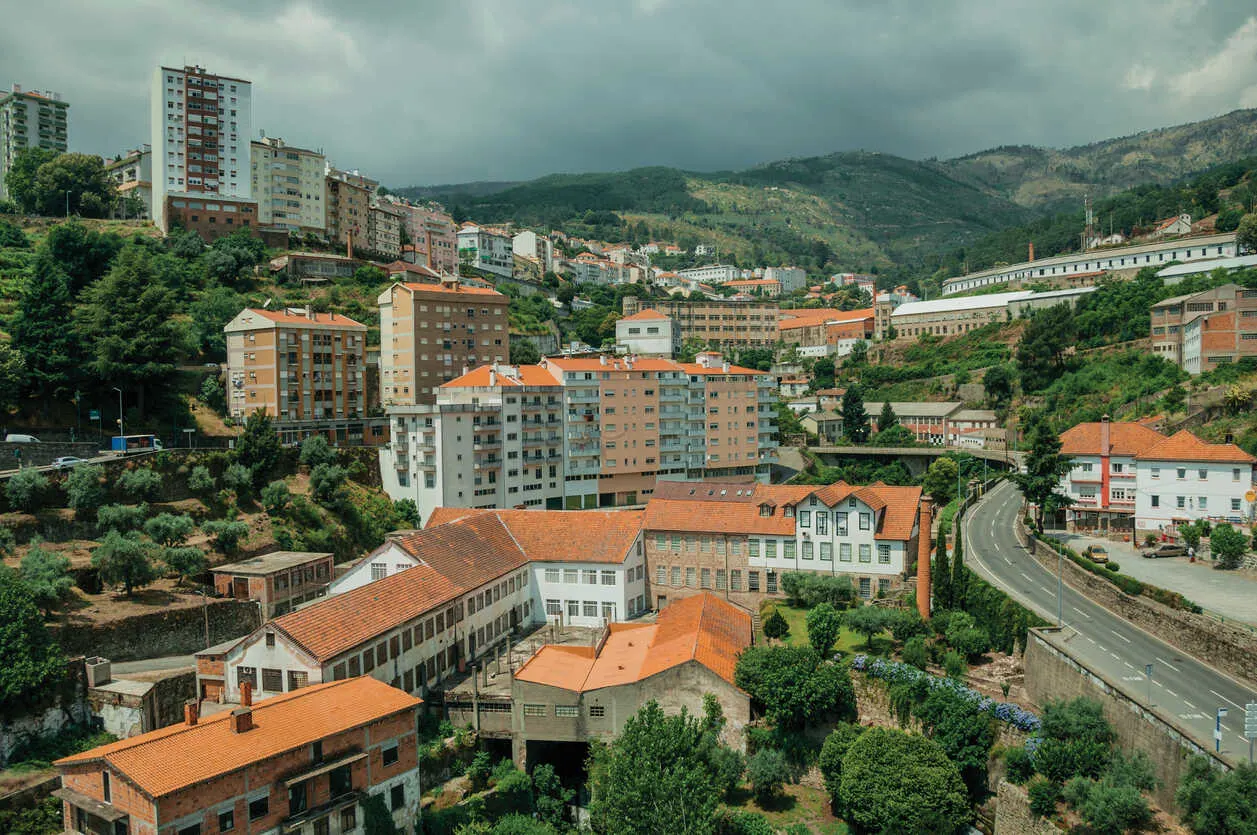
The city and municipality of Covilhã (Cu-vil-YA), nestled in the mountains of central Portugal, serves as the gateway to hiking and skiing in the country’s highest mountain range, the Serra da Estrela. Often called “the city of wool,” this former textile hub was given a youthful vibe by the presence of the University of Beira.
About 15 companies still remain and produce high-quality wool fabrics and textiles for the global market. During the reign of Dom João V in the 1700s, the factories crafted uniforms for the Portuguese army. Later, the city received a boost when the Marquis of Pombal established the Royal Cloth Factory and officially designated it a city in 1870.
Its charming old town features a medieval Judiaria (Jewish Quarter), remnants of former wool factories, and historic churches. In contrast, the city's urban area is the epicenter of street art, with a self-guided tour to learn about its creators.
Another claim to fame of the city is the cherovia, or parsnip, a root vegetable shaped like a carrot with the color of a turnip. Parsnips are rich in fiber, potassium, calcium, iron, and vitamins. Pop into a family-run restaurant to try a dish that includes cherovia, baked, roasted, or fried, for around $8.
Foreigners who retire to Covilhã can live an affordable life, surrounded by nature and mountainous terrain, fully immersed in Portuguese culture and language.
Modern amenities include a private hospital, shopping centers, gyms, medical and dental clinics, and traditional food and wine.
Cozy apartment rentals can be found for $400 a month, while more spacious dwellings go for $500 and up. Winters in Covilhã are cold with snow, while summers are short and warm. The city is serviced by buses and trains for easy commutes to larger cities or the airport in Porto. With a budget of $1,900 and up, a couple can enjoy a simple life, including rent, utilities, a Wi-Fi/phone package, food, occasional dining out, and basic health insurance.
Elvas
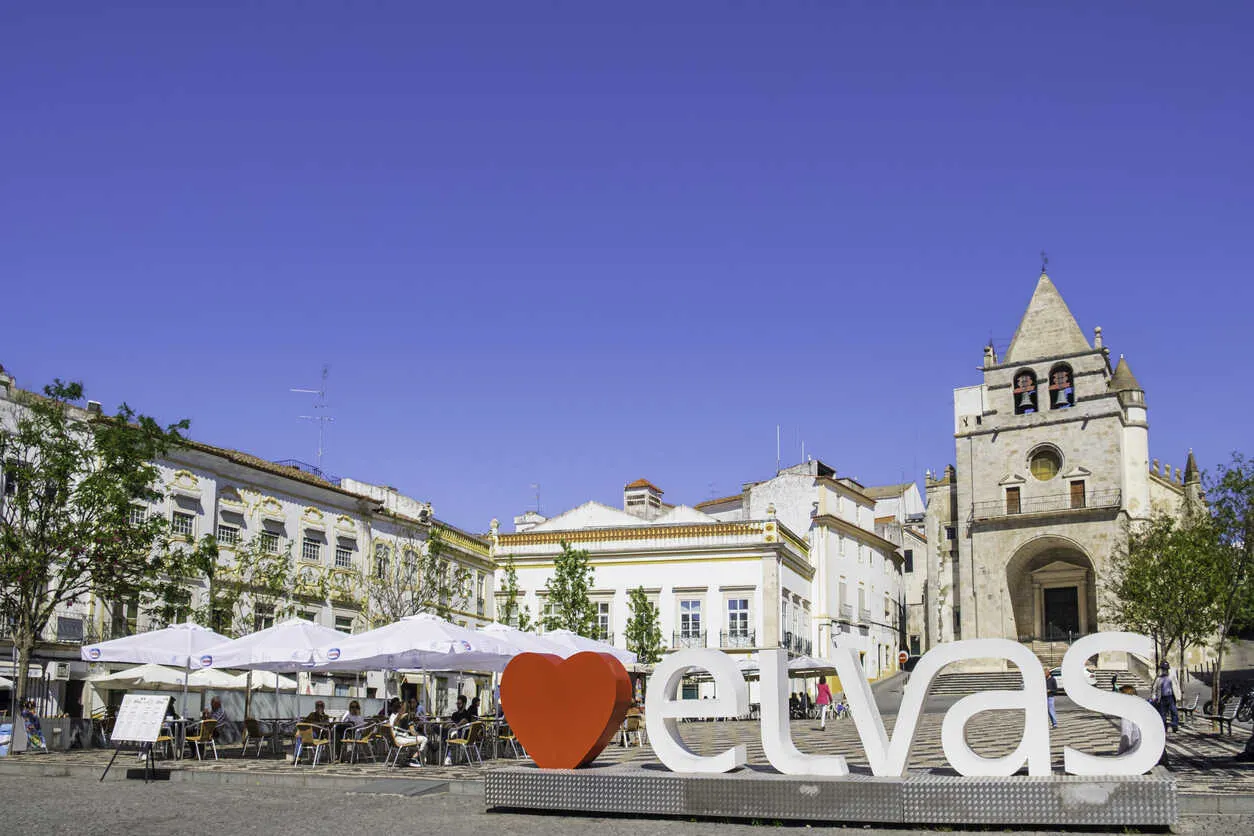
Imagine living in a fortress less than 10 miles from the Spanish border, hugged by medieval walls, ramparts, and bastions. This is Elvas (El-veSH). The old town is encased in a seven-pointed star that kept out invaders for more than 150 years. It was later recognized by UNESCO as the best example of military engineering in the world.
The Alentejo (Alen-te-Joe) is the largest region in Portugal, covering more than one-third of the land mass, yet only about 7% of the population lives there. The vast landscape is characterized by rolling plains, ancient cork oak forests, hilltop villages, and prehistoric stone circles. Foreigners who settle here are looking for room to spread out in a slow-paced, rural setting.
Summers are scorching hot, sunny, and dry, with temperatures reaching 104 F or more, while winters are cold, dipping down to the 40s.
The city is serviced by a public hospital, with a private hospital in Beja about a one-hour commute away for more specialized services.
Although regional buses can be found, due to the rural nature of the area, owning a car is recommended. A short jaunt from the old town are modern shopping centers, small specialty stores, gyms, cafes, and restaurants.
Hearty, traditional Alentejo cuisine like Carne de Porco à Alentejana, a popular mix of fried pork heavy with coriander, olive oil, and garlic, is a favorite among locals. Sericaia, a dessert made with eggs, sugar, milk, and cinnamon, is typically baked in clay pots and paired with Elvas plums called ameixa, which are preserved with sugar.
Life in the Alentejo is simple and unhurried. Tractors rumble through fields, old-timers huddle at cafes to share gossip and coffee, and the aroma of fresh baked goods seeps out of corner cafes.
Furnished apartments in Elvas can be found for $500 and up, while lunch specials can be enjoyed for $8. Plan on a budget of $2,000 and up to enjoy life in Elvas, including rent, utilities, a Wi-Fi/phone package, food, dining out, and basic health insurance..
Get Your Free Portugal Report Today!
Get Your Free Portugal Report Today!
Discover why we love a slower pace of life in Portugal and info on other European countries in our daily postcard e-letter. Simply enter your email address below and we’ll send you a FREE REPORT – Explore the Old World in Laidback Portugal.
By submitting your email address, you will receive a free subscription to IL Postcards, The Untourist Daily and special offers from International Living and our affiliates. You can unsubscribe at any time, and we encourage you to read more about our Privacy Policy.
Viseu
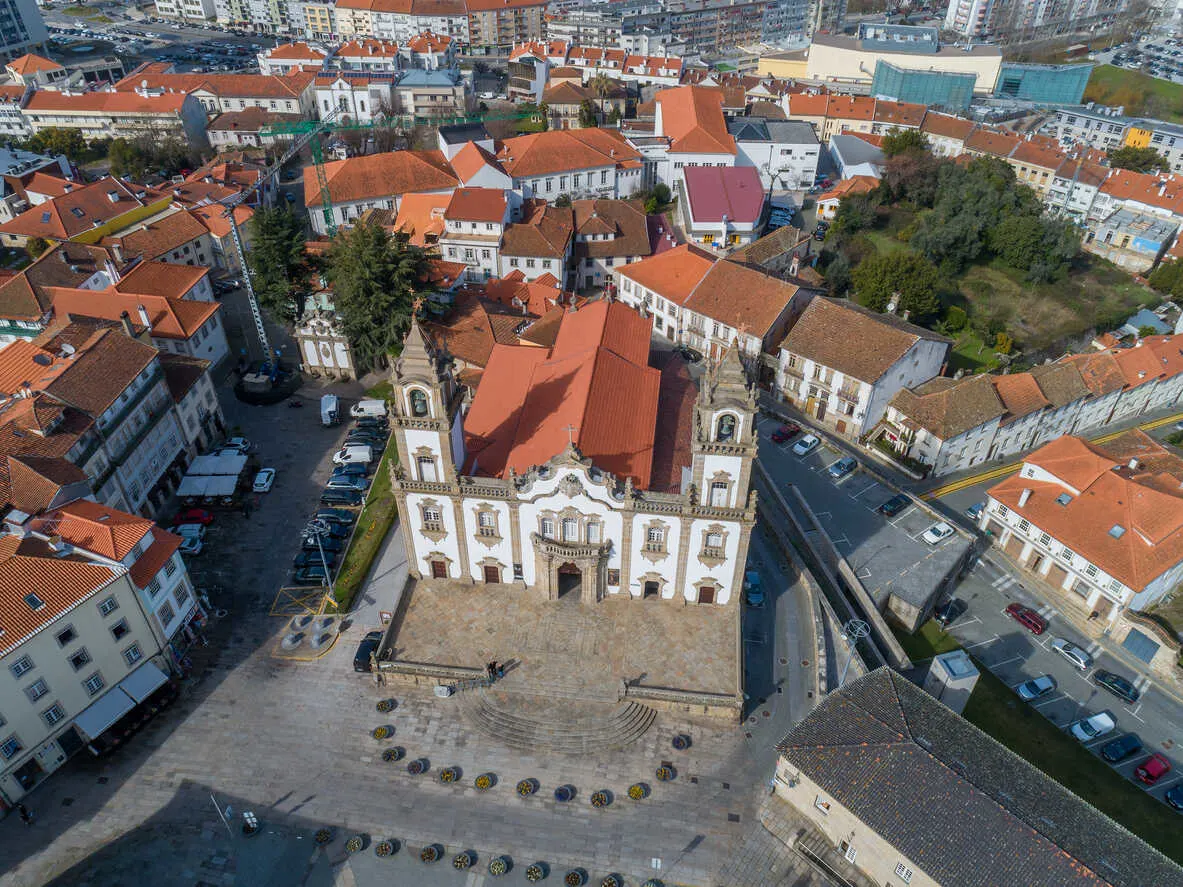
Quietly touted as one of the , the historic city of Viseu (Vee-Ze-ou) is nestled between mountains and the famed Dão (D-Ow) wine region. Located in central Portugal’s Beira Alta region, it offers an authentic Portuguese lifestyle away from the coastal crowds. The slowly growing expat community includes retirees, digital nomads, and families with children looking for an affordable, slower pace of life.
Viseu’s old quarter is a mix of narrow lanes lined with dark granite homes intricately decorated with gargoyles, Gothic windows, and medieval touches. The dazzling cathedral sits in the middle of Adro da Sé, a traditional tiled plaza. Nearby is the baroque Igreja da Misericórdia church, and the Três Escalões Palace, now the Museum of Grão Vasco (Vasco Fernandes), a renowned Renaissance painter who lived in the city during the 16th century.
The city boasts a chic, sophisticated shopping center called Palácio do Gelo that houses over 100 shops, a cinema that shows movies in their original languages, often English, and a year-round ice-skating rink.
Residents who call this livable city of 100,000 home are well cared for with a public and private hospital, clinics, and gyms. Nicknamed “the garden city” because of its many parks, including Fontelo Park with swimming pools, tennis courts, a fitness circuit, and gardens, it’s the ideal spot to meet up with a walking group of friends to exercise before going out to a delicious lunch. The signature dish of Viseu is Vitela de Lafões, veal slow-roasted in a wood-fired oven, served with potatoes in a white wine sauce with onion, garlic, and plenty of wine. Prices for this specialty start at $18, while budget-friendly lunches can be found for $7 to $10.
The climate of the city is Mediterranean, with winter temperatures dipping down to the 40s with some rain, while summers are pleasant with highs only in the 70s. Living without a car in Viseu is doable with a bus system that covers the city and surrounding areas. Long-distance bus carriers Rede Expressos and FlixBus are readily available for longer jaunts.
Apartments in the city can be found for under $450. Add utilities, food, a Wi-Fi/phone package, dining out, and basic health insurance for a budget of $1,900 and up per month.
Two hours away in Porto is the closest international airport for getaways to Europe, the U.S., and the rest of the world.
Castelo Branco
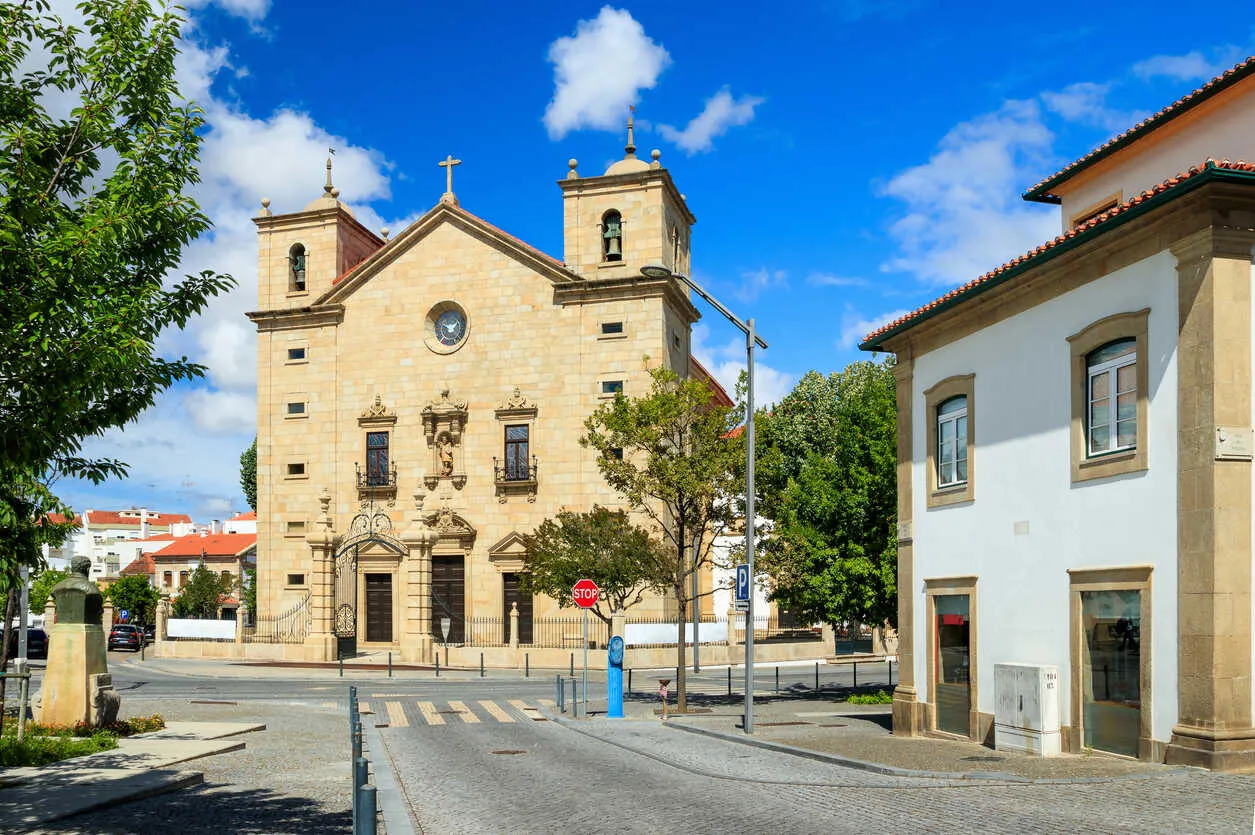
Situated in east-central Portugal near the Spanish border, the city of Castelo Branco (Cah-es-telu Bran-cu), or “white castle,” blends its historic roots with modern development. With a small-town feel, the city of 50,000 is the capital of the district with the same name.
Above the historic old town stand the ramparts and remnants of the castle, a silent guardian and testament to the Templars. It was built in Romanesque style upon order of King Afonso II in 1214.
The Jardim do Paço Episcopal is an alluring baroque garden of elaborate statuary, manicured green spaces, ponds, fountains, giant staircases, and play spaces. Stroll the paths, sit awhile to relax, take a nap, or people-watch as the hours pass by.
History comes to life in the Colchas de Castelo Branco, spectacular hand-embroidered silk-on-linen bedspreads or quilts that date back to the 17th century. The spreads were originally used as high-end bedding or given as wedding presents. The designs depict flowers and trees that represent family connections, or love birds facing each other to symbolize love.
An array of modern shopping can be found in Castelo Branco, from small specialty shops to modern multilevel shopping centers with movie theaters. Healthcare is covered with dental and medical clinics, a public hospital, and a nearby private hospital.
Winters in the city bring ample rainfall and cold temperatures that dip down to the low 40s, while summers are warm and dry.
Getting around the city can be done on public buses for those who wish to live without a car. The closest airport is in Lisbon, about a two-hour commute away for international travel and visits back to the U.S.
The Polytechnic Institute brings a youthful vibe and plenty of affordable housing options that start at $400 a month and increase with size and comforts. Feed your hunger with a hearty prato do dia (meal of the day) for lunch that includes soup, main course, drinks, and coffee for $8 to $15.
With a budget of $1,800, a couple could live in Castelo Branco, including rent, utilities, a Wi-Fi/phone package, food, dining out, and basic health insurance.
The Takeaway
Portugal’s inland towns may not offer the year-round sunshine or large English-speaking communities found along the coast, but the tradeoff is a more authentic and affordable lifestyle. Learning some Portuguese will make daily life easier, and winters can be cold and damp, especially in the mountain regions. Lower-priced rentals are also often “typically Portuguese,” meaning they may lack central heating, elevators, or furniture.
Still, locals throughout Portugal continue to live comfortably on modest incomes, proving that a slower, lower-cost lifestyle is possible here. With realistic expectations, some flexibility, and a willingness to look beyond the popular hotspots, living in Europe for less than $30,000 a year may be far more attainable than you think.
The World’s Best Retirement Havens for 2026
The World’s Best Retirement Havens for 2026
24 Countries Compared, Contrasted, Ranked, and Rated. You don’t have to be rich to enjoy a pampered retirement, you just need to know where to go. With our 35th Annual Global Retirement Index, our experts hand you a detailed roadmap. Details—and a Special Offer—Here

By submitting your email address, you will receive a free subscription to IL Postcards, The Untourist Daily and special offers from International Living and our affiliates. You can unsubscribe at any time, and we encourage you to read more about our Privacy Policy.