

Choosing a retirement destination isn’t just about the weather, cost of living, or lifestyle perks—it’s also about knowing you’ll be well cared for if health issues arise. For many expats, access to reliable, high-quality healthcare is a non-negotiable. In IL’s 2026 Annual Global Retirement Index, the top countries for expat healthcare shine by offering excellent medical services that are both affordable and accessible, whether through public systems or private providers.
From France’s renowned universal coverage to Costa Rica’s expanding private clinics and wellness hubs, each of these destinations offers healthcare options that cater to the needs and budgets of retirees.
In the sections ahead, we explore how each country stands out in terms of quality, affordability, ease of access, and overall expat satisfaction.
The World’s Best Retirement Havens for 2026
The World’s Best Retirement Havens for 2026
24 Countries Compared, Contrasted, Ranked, and Rated. You don’t have to be rich to enjoy a pampered retirement, you just need to know where to go. With our 35th Annual Global Retirement Index, our experts hand you a detailed roadmap. Details—and a Special Offer—Here

By submitting your email address, you will receive a free subscription to IL Postcards, The Untourist Daily and special offers from International Living and our affiliates. You can unsubscribe at any time, and we encourage you to read more about our Privacy Policy.
5. Costa Rica
By Bekah Bottone

Dental and medical tourism are popular in Costa Rica for a reason—treatments and procedures here cost a fraction of what they do in the U.S., and recovery can happen in paradise.
I’ve appreciated the flexibility of Costa Rica’s dual public-private system since I first received care here in 2001. When I had a staph infection and needed hospitalization, I stayed for a week at Clínica Bíblica in San José. Thanks to travel insurance, there was no financial stress, and the care was excellent.
The best healthcare is still centered in the Central Valley, but things are changing fast. More and more people are moving to the coast, and with that has come greater access to specialists. Many now rotate into rural clinics monthly. My orthodontist, for example, visits my dentist’s office near the beach once a month.
When I was pregnant with twins in 2011, I lived in the Central Valley and delivered at Hospital Calderón Guardia, a public hospital. My doctor worked in both systems, so I saw him at both his private clinic and the hospital. My children were born prematurely and spent 12 days in the neonatal unit. The facilities were basic, folding chairs instead of comfy recliners, but the medical care was thorough and compassionate. Nurses patiently taught me how to breastfeed both babies at once. After discharge, we received home checkups and access to early stimulation programs for the twins.
Now we live near the beach, where the closest hospital is an hour away. But there are many 24-hour clinics nearby for emergencies. In February 2021, both of my children were hospitalized within weeks of each other for unrelated infections—my son’s in his knee, my daughter’s in her lungs. In both cases, the doctors and nurses were caring, thorough, and kind.
To help manage costs, I use MediSmart, a discount medical service. I pay around $14 a month, which reduces a specialist appointment from about $100 to $50. Even without discounts, healthcare here is highly affordable. For example, I’ve paid $75 for a dental cleaning, $45 for a general doctor visit, $350 for a colonoscopy, $400 for cryotherapy for dysplasia, $20 for cryotherapy for sun spots (plus the cost of the appointment), $60 to $80 for sessions with a psychologist, and $120 for a psychiatrist consultation.
Private insurance is also available, and as I get older, I plan to purchase a private policy for broader coverage. For now, I value the choices I have, and the peace of mind that comes with knowing quality, affordable care is always within reach.
For a more detailed look at healthcare in Costa Rica, check out Healthcare in Costa Rica.
4. Panama
By Jess Ramesch

Back when I was still living in the States, healthcare stressed me out. Even once I got a job with great coverage, my stress didn’t go away. What if I got fired… or wanted to quit?
When I moved to Panama, only then did my worries finally fall away. The cost of healthcare was so low that I knew I would be OK, no matter what. I had the freedom to breathe… to quit a job that didn’t feel right and chase happiness instead of money .
Though I’ve been in Panama for 20 years, I continue to be amazed by my doctors here. They don’t rush through appointments. They give me time to talk through any concerns and get all my questions answered. And guess what? They give me their cell phone numbers so I can message them via WhatsApp if I need to. This actually saves us both time, no going in for unnecessary consults.
“Hello! You need to take vitamin D!” That’s what my doctor messaged me after my last appointment. I didn’t have to go in for results. They were emailed to me promptly after my visit to the lab. She just told me exactly what to buy, and I went to the pharmacy to get it. (By the way, most pharmacies in Panama offer discounts certain days of the week, so I usually get 20% off.)
Between them, expats Jim Gault and his wife Abbe have had kidney stones removed, a heart stent, and hand, cosmetic, knee, and Afib surgeries. Most of these procedures took place at Pacífica Salud, a Johns Hopkins International affiliate. “Thanks to the exceptional healthcare at a fraction of U.S. prices, we are able to take a 12-day Mediterranean cruise followed by several days in Italy,” Jim says.
Like most expats in Panama, I use both public and private services.
In smaller towns, public clinics or centros de salud are often the only option. They’re free or highly subsidized, charging as little as $2 for a doctor’s appointment. If you need something simple—stitches, a flu jab, or a script for antibiotics—the local centro de salud should do just fine.
There are public hospitals in Panama City and other hub towns, but most expats prefer not to use them. Those facilities often come with longer wait times, so it’s best to leave available slots for low-income Panamanians who can’t afford private care.
Top-notch hospitals like Paitilla, San Fernando, and Pacífica Salud are affordable, modern, and incredibly efficient. Many are affiliated with distinguished organizations like Joint Commission International or Cleveland Clinic. So many Panamanian doctors study abroad and speak English that this is a very comfortable place to land, even if you don’t speak Spanish.
That applies to dentists and specialists as well as general MDs. Here in Panama, I recently opted to replace a crown and paid $580. A crown in the States can cost $1,000 to $3,500. (And yes, my dentist speaks English.)
For a more detailed look at healthcare in Panama, check out Healthcare in Panama.
The World’s Best Retirement Havens for 2026
The World’s Best Retirement Havens for 2026
24 Countries Compared, Contrasted, Ranked, and Rated. You don’t have to be rich to enjoy a pampered retirement, you just need to know where to go. With our 35th Annual Global Retirement Index, our experts hand you a detailed roadmap. Details—and a Special Offer—Here
By submitting your email address, you will receive a free subscription to IL Postcards, The Untourist Daily and special offers from International Living and our affiliates. You can unsubscribe at any time, and we encourage you to read more about our Privacy Policy.
3. Spain
By Cepee Tabibian

After 10 years in Spain, I’ve had the chance to use both the public and private healthcare systems, and I can honestly say it’s one of the biggest reasons why I would never move back to the U.S.
The public system is excellent, but access depends on your residency status. Not every visa gives you immediate access, so most Americans start off using private insurance for their visa application. After a few months to a year, depending on the visa, you may become eligible to use the public system.
I use private healthcare the most, and it’s completely changed the way I manage my health. In the U.S., I avoided going to the doctor because of the stress: finding a physician, dealing with scheduling, and always bracing for unexpected bills. Here in Spain, it’s the opposite. Healthcare is straightforward, affordable, and transparent.
With private insurance, I can see specialists directly—no referral needed. Over the years, I’ve had appointments with a pulmonologist, cardiologist, neurologist, and endocrinologist—not because I was sick, but because preventive care is so accessible. If something feels off, I get it checked. Making an appointment is as simple as opening my insurance app and choosing a time. I can see doctors in person or over video calls. For example, I still consult with my endocrinologist in Madrid every six months, even though I now live in Málaga. We just video-chatted to review my bloodwork.
Costs are remarkably low. My private insurance costs about $75 per month. As a healthy 45-year-old, that covers nearly everything with no copay. Pricing depends on age, plan, and pre-existing conditions, but most routine and specialist care is included. Occasionally, I’ll pay an extra €5 to €30 for specific lab work or tests.
Even paying out of pocket is manageable. In Málaga, when I needed to see a dermatologist quickly and couldn’t find one in-network, I paid €100 for the consultation and €400 for treatment, with an English-speaking doctor.
That brings up one difference between cities: availability. In Madrid, I could usually book a specialist fairly quickly. In Málaga, I sometimes wait up to a month or need to travel to the next town, especially for dermatology. Still, even with the occasional inconvenience, the system here is far better than anything I experienced in the U.S.
English-speaking doctors are not guaranteed, but they’re more common in the private system and in areas with large expat populations—Madrid, Barcelona, Málaga, and along the Costa del Sol. My doctors are Spanish-speaking, and while it’s helpful to have some language basics, navigating the system is still relatively easy.
In short, healthcare in Spain offers peace of mind: it’s accessible, affordable, and doesn’t come with the stress so many of us are used to.
For a more detailed look at healthcare in Spain, check out Healthcare in Spain.
2. Portugal
By Kimberly Anne

When I moved to Portugal in 2022, I enrolled in both public and private healthcare systems. Through my bank, I enrolled in Médis private insurance for €130 a month, with a €19 copay. I also added dental for another €10. At the same time, I registered with the public system, which provides universal healthcare that’s free or very low-cost for most services.
Both systems have their pros and cons. Wait times can be long in either, partly because doctors take more time with patients here, and consults aren’t rushed. Most of the doctors I’ve seen speak English, especially in the private sector, and the quality of care is outstanding. On my very first visits, doctors ordered tests I’d never heard of, and others I’d been requesting for years back in the U.S.
I was finally given a colonoscopy, denied to me in the U.S. despite being in my mid-fifties, and a DEXA scan that revealed severe osteoporosis. I was prescribed medication that costs €250 every six months without the national healthcare, but just €60 with it. I also received a stress test, multiple ultrasounds, a mammogram, full blood panels, and more. It was the most thorough workup I’ve ever had. Imaging is provided in hard copy and also accessible through a patient portal, and doctors take the time to explain the results clearly in English.
When I needed an MRI for an old hip injury, I simply asked and was scheduled right away. The cost? Just my copay. It was that simple.
Portugal’s mix of universal cradle-to-grave care, affordable private insurance, attentive physicians, and access to real diagnostics has been a clear upgrade from what I experienced in the U.S. If you want thorough, compassionate care without American price tags, Portugal delivers.
For a more detailed look at healthcare in Portugal, check out Healthcare in Portugal.
1. France
By Tuula Rampont
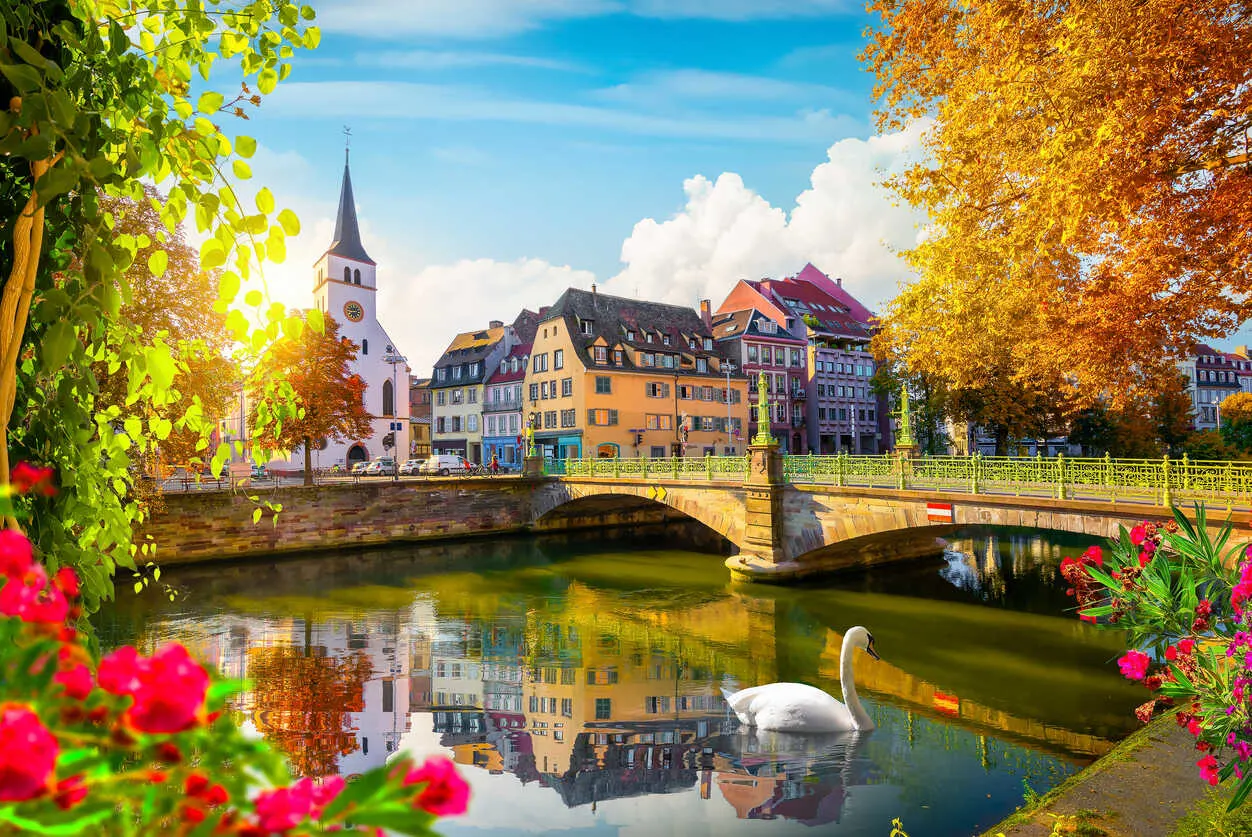
Even after 15 years in France, I’m still regularly amazed by the quality, accessibility, and affordability of the healthcare system. When I first arrived in 2010, I had no idea how it worked. I wasn’t sure how to find a doctor, how to communicate, or whether the standard of care would match what I was used to in the U.S.
But three months in, I became eligible for French healthcare. (North Americans only need a long-stay visa to qualify.) My first visit was for an annual check-up at a local clinic, recommended by a friend. No one mentioned private healthcare, about 90% of French citizens use the public system, which I’ve relied on ever since.
That first visit cost €25 (about $29), and with my healthcare card, I was reimbursed 70%—so it only cost me €7, or about $10. That price has remained unchanged for over a decade. I can walk into any doctor’s office, clinic, or hospital in the country and pay the same. Blood tests typically run €17 to €25, and MRIs vary from €69 to €300, all reimbursed at 70%. Specialist visits are €50, and even those are partially reimbursed directly to your bank account. A dental exam with X-rays costs about €30.
Every two years, I’m entitled to update my eyeglasses. This year, I splurged on a designer brand and, with my “top-up” insurance (which covers what the national system doesn’t), paid just €90 for bifocals. Without coverage, the cost would’ve been €595. I even added a second pair of glasses and prescription sunglasses, each frame only cost €10.
Now that I’ve passed 50, I receive notifications in the mail for free preventative screenings. This year, I had a free mammogram and am scheduled for a pre-screening that could lead to a free colonoscopy.
Prescription drug prices are also incredibly low, covered 70% to 100%. Once, I forgot my healthcare card on a trip to the U.S. and had to pay full price for my prescription. It cost €4.20, and the pharmacist apologized for the inconvenience.
One of the most impressive parts of the French system is how it handles chronic illnesses. If you’re diagnosed with conditions like diabetes, cancer, heart disease, Parkinson’s, or dementia, your treatment is covered 100%. There are no age limits or exclusions for pre-existing conditions; everyone is welcome.
With our family “top-up” plan costing €100 per month for three people, we haven’t paid out of pocket for prescriptions or hospital stays. I once stayed five days in the hospital after giving birth and never saw a bill.
Language isn’t the barrier it once was, either. Apps like Doctolib allow you to search for doctors, specialists, or therapists by location and language. You can book appointments directly online.
French healthcare isn’t just affordable. It’s proactive, transparent, and reliable. It still amazes me.
For a more detailed look at healthcare in France, check out Healthcare in Fance
The World’s Best Retirement Havens for 2026
The World’s Best Retirement Havens for 2026
24 Countries Compared, Contrasted, Ranked, and Rated. You don’t have to be rich to enjoy a pampered retirement, you just need to know where to go. With our 35th Annual Global Retirement Index, our experts hand you a detailed roadmap. Details—and a Special Offer—Here
By submitting your email address, you will receive a free subscription to IL Postcards, The Untourist Daily and special offers from International Living and our affiliates. You can unsubscribe at any time, and we encourage you to read more about our Privacy Policy.