

For many people dreaming about life overseas, the spotlight naturally falls on big cities... Paris, Lisbon, Panama City, Bangkok.
But ask seasoned expats where they’ve found the best quality of life, and the best value, and you’ll often hear a different answer: Small towns.
Places where neighbors greet you by name at the morning market… where café owners remember your coffee order… and where the pace of life encourages you to slow down and savor each day.
Across the globe, International Living correspondents have discovered towns that combine charm, affordability, and a quality of life that larger cities often can’t match. Some sit in rolling wine country. Others overlook lakes, mountains, or historic plazas that have been the heart of local life for centuries.
These towns may not make international headlines, but for expats who have found them, they offer something even better: a chance to live well, spend less, connect with community, and enjoy everyday life in a place that still feels authentic.
Here are some of the most underrated small towns around the world, according to our correspondents.
The World’s Best Retirement Havens for 2026
The World’s Best Retirement Havens for 2026
24 Countries Compared, Contrasted, Ranked, and Rated. You don’t have to be rich to enjoy a pampered retirement, you just need to know where to go. With our 35th Annual Global Retirement Index, our experts hand you a detailed roadmap. Details—and a Special Offer—Here

By submitting your email address, you will receive a free subscription to IL Postcards, The Untourist Daily and special offers from International Living and our affiliates. You can unsubscribe at any time, and we encourage you to read more about our Privacy Policy.
Europe
Europe’s small towns reveal a slower, more grounded way of life—without sacrificing culture, history, or comfort. Whether tucked into the mountains or set along the sea, these places offer timeless beauty, strong infrastructure, and a lifestyle that feels both rich and manageable.
Bormes-les-Mimosas, France

This somewhat sleepy, under-the-radar favorite of the Varois—residents of the Var department in southern France—is a beautiful Provençal town with an enviable location. Bormes proper is split into two equally stunning spots: a medieval hilltop village and a seaside shoreline dotted with coastal vineyards.
Sound interesting? Well, it gets even a tad better… While the Mediterranean part of town has some of the south’s most spectacular beaches—including Plage du Pellegrin, owned by the chic Léoube winery—the road leading from the village to the beach is dotted with rows and rows of an iconic southern France native: the mimosa tree.
Along the 3 miles that separate turquoise waters from cobblestoned walkways, you’ll find the Route du Mimosa—the mimosa route. Making fans of young and old alike, the trees bloom during the winter months and add a colorful boost to what can often be a chilly, frosty period—even in the south of France.
Bormes-les-Mimosas is just one of the towns, albeit the best-known, along the mimosa route, which extends for some 80 miles. The town celebrates its most famous “son” every year with a mimosa festival/party called the Corso Fleuri. Events include a parade with floats covered in the yellow blossoms, a market with mimosa products (perfumes, candles, cookies), and crafting workshops. The whole madcap, joyful event ends with a “flower battle.” The floats are dismantled, flower by flower, by participants who throw the stems into the happy crowd, who depart with bushels of mimosas to decorate their homes.
The event takes place in the village center, which is a swoon-worthy collection of charming French boutiques, art galleries, and gourmet restaurants.
Don’t miss a visit to La Sangliere winery, a family-owned producer near Pellegrin Beach. Not only will you receive a warm Provençal welcome, but you will also be treated to some exquisite wine tasting (gratuit, free, no less) on their beautiful estate, which holds outdoor jazz concerts in the summer. Artisanal tapenades and jams are for sale as well.
A couple renting a modest two-bedroom apartment (650 square feet) in Bormes-les-Mimosas can expect an average monthly budget of €2,900 ($3,374). While other costs—utilities, healthcare, groceries—will be largely the same across the towns, the biggest variable will be rent, although a good 20–30% less than in larger cities in France.
Lorgues, France

Another overlooked favorite of residents of the Var is Lorgues, in the region of Provence Verte (Green Provence). With both a town and village vibe, there’s a lot to love about this southern getaway, which mixes down-home hospitality and gourmet, high-brow tastes.
About an hour’s drive from the Mediterranean Sea, and accessible via a single-lane highway, Lorgues is definitely a destination spot—and locals are happy to keep it that way.
Although we’d heard of Lorgues before, it really caught our attention due to two important, very French elements: wine and truffles. Just outside the town’s borders, Château de Berne is a prominent Provençal winery known for the beauty of its grounds (with an actual château/five-star hotel on the premises) and its crisp local rosé and white wines. On a property taken from a movie set—think distressed stone walls, bubbling fountains, and deep green vineyards as far as the eye can see—Château de Berne hosts several events that attract both regular folks and a well-heeled clientele. Grape harvests, truffle hunting and pairing dinners, themed Christmas markets (the Provençal one is my favorite), and a summer jazz festival (Festival Jazz à Berne) are a few of the crowd-pleasers.
In Lorgues proper, you’ll find another ode to truffles, which are endemic to the region and the focus of many gastronomic tables. At Chez Bruno, the chef proposes a five-course meal centered on truffles for €98 ($115). In a definite “splash-out” moment, patrons come from miles around to celebrate special occasions or just to experience one of the most famous restaurants in the Var department.
If truffles aren’t your thing, or you’re searching for a different price point, there are many warm and cozy bistros in Lorgues. Walk past the pastel-hued village homes on the town’s main road, Boulevard de la République, and you’ll discover Le Grillon restaurant and Bistro Chez Ludo—both local fixtures full of Provençal flair. Dishes start at €14 ($16.50), and you can get a starter-plus-main-dish special menu price of €22 ($26) at Le Grillon. The friendly owners gave us each a shot of limoncello as an “after-lunch” drink with our bill.
Lorgues is also a popular expat hideaway, and a short walk from Le Grillon will take you to La Grange, a coffee shop and events space owned by an Australian transplant.
Although a day spent sipping rosé on a local terrace might be one of the best things about Lorgues, there are many nearby outdoor activities like the Barbaroux golf course, the waterfalls at Sillans-la-Cascade, or beautiful Sainte-Croix Lake.
A couple renting a modest two-bedroom apartment (650 square feet) in Lorgues can expect an average monthly budget of €2,100 ($2,444).
Isle-sur-la-Sorgue, France

Skipping over to the Vaucluse department—still in southern France and home to other notables like Avignon, Châteauneuf-du-Pape, and picturesque Vaison-la-Romaine—we stumble upon one of Provence’s finest small towns: L’Isle-sur-la-Sorgue.
This small hamlet, about an hour’s drive from Marseille International Airport, is an oasis of calm and tranquility. The Sorgue River runs straight through the middle of town, offering a romantic backdrop to the restaurants, cafés, and bistros that line the waterway. You can dine, or sip a café latte, on an elegant terrace quite literally on top of the river—listening to the town’s oft-photographed waterwheel (Roue à Aube de la Porte d’Avignon) as the Sorgue splashes through its paddles.
Built in 1530 and today covered with a hefty layer of moss, the waterwheel is one of the symbols of the town and part of a walking tour (Parcours des Roues), which features other “wheels” in the Isle-sur-la-Sorgue canal system.
Besides the beauty of the river contrasted with the honey-colored village homes in the town center, L’Isle-sur-la-Sorgue’s real claim to fame is antiques… and lots of them. Known as the antique capital of France, you’ll find the Sunday antique market (brocante) on the road-facing (Avenue des Quatre Otages) side of the river. Even if you don’t plan to buy, spending time browsing and conversing with local sellers is a fun way to spend a relaxing Sunday morning. Everything from lamps to linens, vintage plaques, and varnished settees is on display.
If you didn’t find your bonheur (happiness) at the brocante, you can cross over the street to visit the antique boutiques. A mix of old and modern curiosities, the boutiques are a popular way to outfit local Provençal homes.
The town also hosts an international antiques fair over Easter weekend and, on August 15, a religious holiday (Assumption) in France.
For a truly inspiring French Sunday, combine a visit to the brocante with a walk through the farmers market, which runs every Thursday and Sunday from 7 a.m. to 1 p.m. Colorful stalls of local fruits and vegetables mingle with lavender sachets and hanging silk scarves along the river's pedestrian side. One of the highlights of living in Isle-sur-la-Sorgue is making sure to arrive early to beat the crowds.
We like to start with petit déjeuner (breakfast) at Au Chineur restaurant, which also has lunch specials (starter + main dish) for €19 ($22).
A couple renting a modest two-bedroom apartment (650 square feet) in Isle-sur-la-Sorgue can count on an average budget of €2,500 ($2,909) a month.
Aigues-Mortes, France

Traveling yet further southeast toward the border with Spain, we come across the wondrous area of the Camargue wetlands—with its pink flamingos, wild white horses, and salt flats—and the ideal small town of Aigues-Mortes.
Thousands of miles from my home state of California, the town always reminds me of the beloved coastal city of Santa Barbara. It has a great mix of sunshine, laid-back beach culture, and understated chic.
On any visit to the town, you’re as likely to enjoy a gardianne de taureau stew (a chunky dish made with locally raised beef) and a glass of table wine (the local vin de sable rosé is my favorite) as pop into a fancy boutique and fill up on the latest summer fashions.
White linen, for men and women, is a big deal in town, as are the Panama-style hats sold at the popular L’Atelier d’Inès—a perfect complement to the slow vibes of the Camargue.
Due in part to Aigues-Mortes’ small size, the perimeter of the ramparts is about 1 mile, homes in the historic center are not the cheapest (starting at €200,000 ($233,000) for 430 square feet), but are perhaps the most charming of all the towns mentioned. Think again of that classic California modern aesthetic: loads of white stone, large bay windows filled with cushions, and bright red bougainvillea climbing up the walls.
Besides having a gardianne de taureau stew (€16 or $18) at Le XIII restaurant, or ordering a pot of mussels and fries (€17 or $19) at Le Café du Commerce on Saint Louis Square, our favorite thing to do in town is just flâner, or stroll around.
Founded in the 13th century by King Louis IX of France as a fortified port, shifting silt meant that Aigues-Mortes later became isolated from the sea but was left with perfectly preserved medieval ramparts and towers. Along with the pink-toned salt flats visible over the town walls, the views are pretty spectacular.
A couple renting a modest two-bedroom apartment (650 square feet) in Aigues-Mortes can count on an average budget of €1,900–€2,200 ($2,210–$2,600) a month. The town is a bit cheaper outside the ramparts, in part because it’s located in Occitanie and less sought-after than Provence.
Get Your Free France Report Here
Get Your Free France Report Here
Learn more about France and other countries in our daily postcard e-letter. Simply enter your email address below and we’ll send you a FREE REPORT: A Taste of France: All the Ingredients for the Good Life.

By submitting your email address, you will receive a free subscription to IL Postcards, The Untourist Daily and special offers from International Living and our affiliates. You can unsubscribe at any time, and we encourage you to read more about our Privacy Policy.
Lousã, Portugal

Lousã is one of central Portugal’s best-kept secrets, tucked away in the Coimbra district. Best of all, it’s just an easy 35-minute drive southeast of Coimbra. It perfectly balances an outdoor lover’s dream with year-round modern infrastructure, including large supermarkets, local frutarias (fruit stands), health clinics, and banks.
When you step into Lousã, you immediately feel the beauty of its history layered into the dramatic mountainous terrain. The town center offers everything you need to thrive, while just outside, the landscape rises into the Serra da Lousã. Here, human footprints date back to the Roman occupation, with ancient roadways and old coins unearthed in the surrounding valleys.
Today, Lousã has grown into a serious draw for hikers and nature lovers. From town, you can hike up to the Castle of Lousã, a striking 11th-century medieval fortress that once guarded the region during the Christian Reconquest. Beyond the castle, the municipality is home to five incredible Schist Villages. These are ancient stone settlements that are slightly Hobbitesque in charm. In the area, Talasnal is the most visited and picturesque. However, Piódão, about an hour and a half to the east, is the most famous of all Portugal’s Schist Villages and absolutely the cat’s meow.
Unlike purely seasonal coastal towns, Lousã maintains a steady, vibrant community of around 17,000 residents. It offers a welcoming environment for expats seeking a quieter, outdoorsy lifestyle without sacrificing daily conveniences.
Real estate here offers excellent value compared to Portugal’s coastal hotspots. Move-in-ready two- and three-bedroom apartments or traditional homes near the town center sell for around $100,000 to $250,000. A two- or three-bedroom rental is currently $700 to $1,000 per month. Just outside of town, you can find houses for $100,000 and rural renovation projects for under $100,000. There are even renovation (ruin) projects in the picturesque schist village of Talasnal for $50,000.
Someone who owns their home and has a car can live comfortably in Lousã for about $2,000 per month. This budget remains low thanks to affordable local produce, inexpensive traditional dining, and a lifestyle centered around free outdoor recreation.
Amarante, Portugal

Amarante is a wonderfully picturesque small town located in the Tâmega e Sousa subregion of northern Portugal, just about an hour’s drive east of Porto. Straddling the beautiful Tâmega River, this historic municipality has a population of about 54,000 and boasts roots dating all the way back to the fourth century B.C.
You won’t find massive big-box stores or sprawling shopping malls here. Instead, this is a town where the pace of life is intentionally slower, allowing you to truly experience the traditional, relaxed “calma” lifestyle of Portugal. Because it is further inland, less English is spoken by the locals, though the charming downtown still attracts tourists from all over Europe, especially during the warm summer months. Perhaps not surprisingly, Amarante contains top-notch traditional restaurants, as well as plentiful local fruit stands and historic bread shops famous for their regional pastries.
As you move just a little away from the town center, you will discover large, sprawling houses and lush farms available for incredibly affordable prices. Real estate here varies because the historic town center is quite small. Move-in-ready modern one-bedroom apartments can be found for $150,000, while a three-bedroom detached house runs $300,000 and up.
For rentals, a two- or three-bedroom apartment costs about $1,000 a month right in the historic city center. Just outside of town, you can find completely renovated four-bedroom houses or a beautiful farm with two and a half acres for $400,000. Meanwhile, a three-bedroom countryside house in need of renovation runs about $150,000.
Someone who owns their home and has a car can live comfortably in Amarante for about $2,000 per month. This budget remains low thanks to the abundance of low-cost local agriculture, inexpensive traditional dining, lower costs for local services, and completely avoiding those notoriously high coastal expat price premiums.
Castelo Branco, Portugal

Tucked away in central-eastern Portugal, Castelo Branco offers a completely different vibe. Situated about 140 miles northeast of Lisbon and just 30 miles from the Spanish border, the name refers to both a bustling historic city and a massive, sprawling rural district.
Visually, the city is a striking mix of old and new. Wide, tree-lined avenues give way to a steep historic center filled with narrow cobblestone streets and traditional whitewashed houses. I love that you can still feel the ancient, mystical history woven into these streets. History buffs will enjoy exploring the hilltop 13th-century fortress built by the Knights Templar or strolling through the maze-like Baroque gardens of the Episcopal Palace and the lush, expansive Parque da Cidade (City Park), where you can happily walk your dog.
Despite its ancient roots, the city center has all the modern amenities expats crave, including a large public hospital, private clinics, major supermarkets, and a modern shopping mall with big-box stores.
Meanwhile, out in the wider district, expats are buying up affordable farmhouses in the quiet countryside, knowing they are still only 20 minutes away from these city conveniences.
Because Castelo Branco is off the beaten path, real estate is an absolute bargain. Rentals for one-bedroom apartments can be found for as low as $550 a month. To buy, a four-bedroom flat runs $170,000 and up. You can find a large detached house for $500,000, or a sprawling farm for $400,000.
A solo person or a couple who owns their home and has a car can live comfortably here for about $2,000 per month. Your money stretches further because this is a working regional capital built for locals, not tourists. You’ll save significantly by tapping into the famous Beira Baixa agricultural scene for low-cost, locally produced olive oil and cheese while paying true local rates for everyday services.
Kavala, Greece

By Leena Horner
Nestled on a sweeping bay, Kavala blends the conveniences of city life with the relaxed atmosphere of a seaside town. Affordable dining, stunning sea views, and a welcoming spirit make this Greek city a hidden gem for people seeking a peaceful yet vibrant place to call home. Compared to larger urban centers like Athens or Thessaloniki, Kavala offers a balance between access to amenities and a more tranquil daily lifestyle, which is often missing in more densely populated cities.
In Panagia, the old town, a castle and ancient aqueduct watch over winding stone lanes. Mornings here might start with a slow walk, with sea views peeking between old Ottoman houses with their iron balconies. By lunchtime, the waterfront fills with locals sharing small plates and strong coffee, laughter drifting out from the cafés and bakeries. The town center has everything you need, and the bay is always close by for a swim. As evening falls, the harbor glows with lantern light, and people stroll the promenade or linger over dinner, listening to the hush of the sea.
Kavala is practical for foreigners because it’s a real city. It has a hospital, good shopping, reliable services, and an airport nearby. Thessaloniki is less than two hours away if you want more culture or museums.
The expat community is small but growing, and locals are friendly. Many people speak English in daily life, making it easier for newcomers to settle in.
One of the best things about Kavala is how far your money goes. You can rent a long-term apartment for €300 to €600 a month, sometimes with a sea view. What you’d pay for a tiny studio in San Francisco could cover several months’ rent here. Eating out is easy on the wallet, fresh produce is everywhere, and a single person can live comfortably on €1,000 to €1,600 a month. It’s a place where comfort and freedom feel possible.
Kavala is beautiful but not showy. It’s a place where you can walk the seafront in the stillness around dawn, and a local fisherman gestures to you with a welcoming smile, offering his freshest catch of the day. It’s in these simple moments that your life transforms.
Litochoro, Greece

By Leena Horner
Imagine standing at the edge of a mountain trail, morning light glinting off the peaks of Mount Olympus. You lace up your shoes, step onto the rocky path, and feel the mountain’s quiet power all around you. Here, hiking toward Zeus’s Throne is more than a walk—it’s a way to step into the stories. Every turn brings a new view, and you start to feel like you’re part of the myth yourself.
This traditional village sits at the base of Mount Olympus and is only ten minutes from the Aegean Sea. It features hiking trails, waterfalls, and forests. The nearby Enipeas Gorge offers shaded paths and crystal-clear pools.
Life here is simple and grounded. Mornings might begin with a stroll to the main square, the day unfolding slowly. Afternoons are for hiking, swimming, or just watching clouds drift over Mount Olympus. The community is close, and traditions matter. When I visited, I watched young people learning the Sirtaki in the park, laughter and music filling the air.
Litochoro is ideal for people who love nature, work remotely, or want a quieter, healthier life. Housing costs are modest, with rentals usually between €300 and €600 per month. Living expenses for a single person average €1,000 to €1,500 per month. The village has basic medical services, but Thessaloniki is only 90 minutes away for more specialized care. The local community is close-knit and often helps each other, especially during the quieter winter months, which creates a reassuring sense of belonging.
This isn’t the place for nightlife or shopping malls. It’s where you come to breathe fresh air, listen to owls hoot in the night, and remember what it feels like to be surrounded by nature.
Nafpaktos, Greece

By Leena Horner
Nafpaktos has one of the most inviting little harbors in all of Greece.
The old Venetian port, with its stone towers and castle on the hill, glows at sunset like a stage set. But beyond the postcard views, this is a place where daily life unfolds—slow, steady, and real.
Located on the Gulf of Corinth and connected to the Peloponnese by a bridge, Nafpaktos offers easy access to the much larger city of Patras while still keeping a casual, small-town feel.
Life here moves slowly, or siga siga as the Greeks say. A typical day might start with a morning beach walk, then lunch with a friend in the square, and finally twilight strolls around the harbor as families gather and children play. Unlike many island villages, this town remains active year-round, with a large local population and seasonal festivals.
Housing costs remain reasonable, with rentals typically between €350 and €700 per month. Monthly expenses for a single resident average €1,100 to €1,500.
Nafpaktos is a place where the scenery draws you in, but the way of life makes you want to stay.
Get Your Free Greece Report Today!
Get Your Free Greece Report Today!
Learn more about a slower pace of life in Greece and other countries in our free daily postcard e-letter. Simply enter your email address below and we'll also send you a FREE REPORT — Retire in Greece—Find Your Dream Retirement in This European Archipelago.

By submitting your email address, you will receive a free subscription to IL Postcards, The Untourist Daily and special offers from International Living and our affiliates. You can unsubscribe at any time, and we encourage you to read more about our Privacy Policy.
Latin America
From mountain towns to coastal villages, Latin America offers some of the best-value lifestyles in the world. Beyond the big cities, you’ll find places where your money stretches further, daily life feels more relaxed, and community is part of the rhythm of everyday living.
Valladolid, Mexico
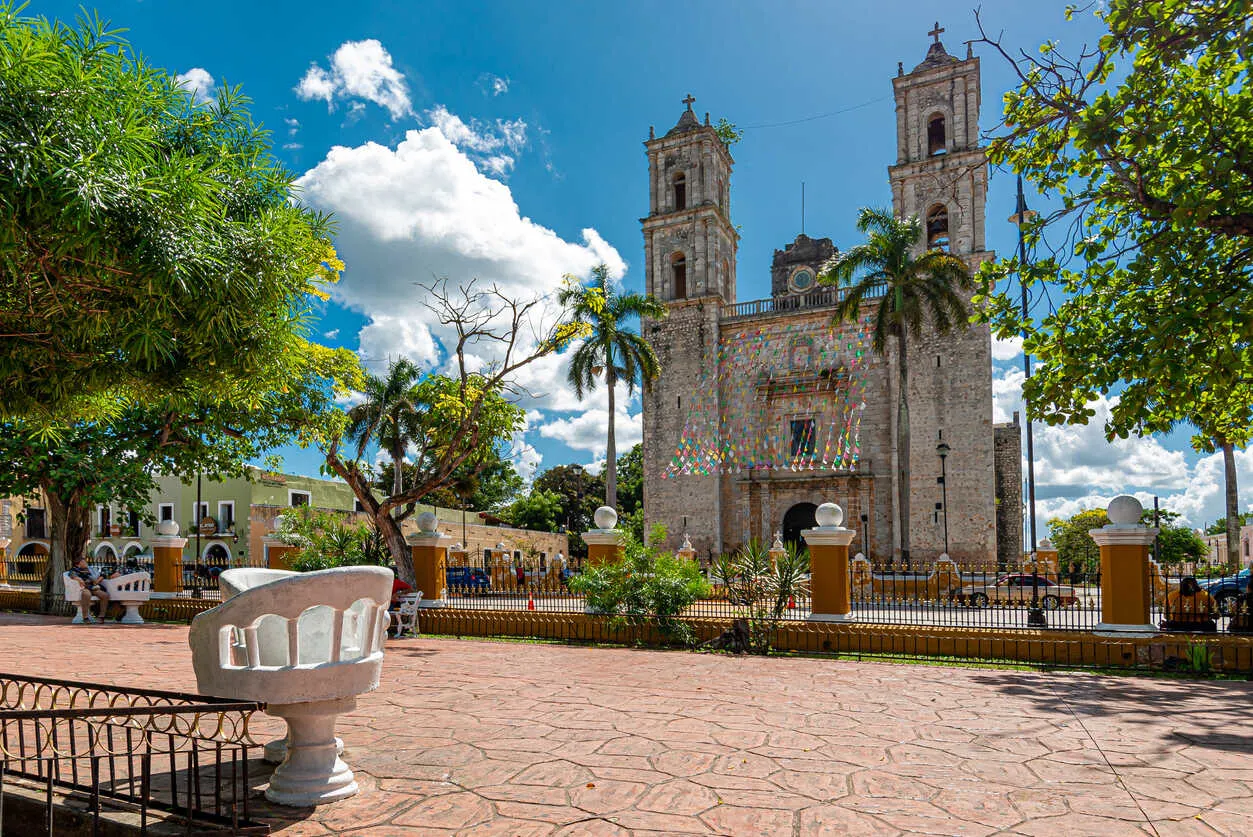
Valladolid is one of the Yucatan Peninsula’s most charming and safe Pueblo Mágicos (Magical Towns). It’s a beautiful mix of colonial architecture and atmosphere, rich history, and nearby archeologically significant sites like Chichen Itza and Ek Balam.
Considered one of the Yucatan and Mexico’s safest cities, with exceptionally low crime rates, its famous colorful streets, especially along the Calzada de los Frailes (Friar’s Causeway), and 16th-century Spanish colonial architecture make it a beautiful town.
Welcoming locals and being away from major tourist hotspots provide a more authentic Mexican experience. One thing I love is that, with its small population of around 56,000, it is quieter than the bustling major tourist attractions along the coast. Making it a great base for exploring the surrounding cenotes, rich Maya heritage, which is what the region is famous for, and offers a real taste of Mexico. It also means you’d need to learn a little Spanish for day-to-day living.
Big local markets provide a wealth of fruits and vegetables, meats, cheeses, and artisan locally grown products. Very affordable crafts, textiles, and local tradesmen and artisans can create or make anything you want, and property is more affordable than along the coastline, making it definitely worth a look for those wanting a quieter, less stressful life. Huge, luxurious four-bed, four-bath colonial houses can be rented for $1,900 a month, or a smaller two-bed, two-bath for around $1,000. There are new two-bed, two-bath homes for sale priced from $180,000 to $240,000. A couple can live comfortably on under $2,000 a month, that’s with a maid.
Major cities like Merida are only a couple of hours away, and luxurious, large ADO buses with reclining seats and movies playing for the two-hour-and-twenty-minute drive run almost hourly from town, costing about $22.
Local Yucatan cuisine is a bit of a drawcard as well. Known for delicious regional specialties like lomitos de Valladolid (pork in tomato sauce), a mouthwateringly good smoked sausage called longaniza de Valladolid, and pan de espelón, a type of large, rustic, and flattened tamale mixed with espelón, a native black-eyed pea-like bean and pork.
Izamal, Mexico

The golden city of Izamal is one of my all-time favorite places in Mexico. Shining a cheery sunflower yellow under the midday sun and glowing a deep golden amber under night lights, it’s a gorgeous Pueblo Magico, a magic town.
For years, I’ve thought it’s been overlooked, especially now that the new Maya Train is making it more accessible. But it’s not just that the entire historical center is painted yellow with white trim, making it visually stunning and relaxing.
Its unique history, known as the City of Three Cultures, adds a fascinating mix of ancient Maya, Spanish colonial, and modern Yucatan life. This blending of history, architecture, and belief adds an unmistakable charm to the area. A guide told me the vibrant yellow streets are dedicated to the Mayan gods Itzamńa, lord of the heavens, and Kinich Kakmo, the sun-eyed fire god, which was a lovely reminder of the ancient Maya and their beliefs.
It’s close to an international airport, about an hour away in Merida, which also provides great shopping, dining out, and is a major destination being the capital city of Yucatan State. Then there are the local buses, which are laughable in price, with the hour-long trip costing 27 pesos, around $1.50.
Real estate is very affordable, with newer two-bed, two-bath homes for $ 180,000, and if you want to renovate and make it your own, I just saw a four-bed, four-bath home for $140,000. Rentals are very affordable, with a four-bed home under $1,000 and a 1-bed studio in the city centre for $300 a month.
It’s a quieter pace of life, the kind of place where you can settle in luxury for a very reasonable price. Pick up a big four-bed, three-bath, 3315 sq ft house with pool and pool house for $450,000. So if you’d prefer to be away from tourists, Izamal is full of warm, welcoming locals and very affordable living.
Izamal's slightly removed location means it's very comfortable, with a low cost of living. When we spent time there a couple of months ago, a half-litre bottle of fresh-squeezed juice was less than $2 in the town square. A local maid who comes twice a week costs about $25 per week, and that includes some light cooking as well. So a couple can live comfortably for $1,500 a month if they own their home. $2,000 a month with maid and gardener.
San Ramón, Costa Rica
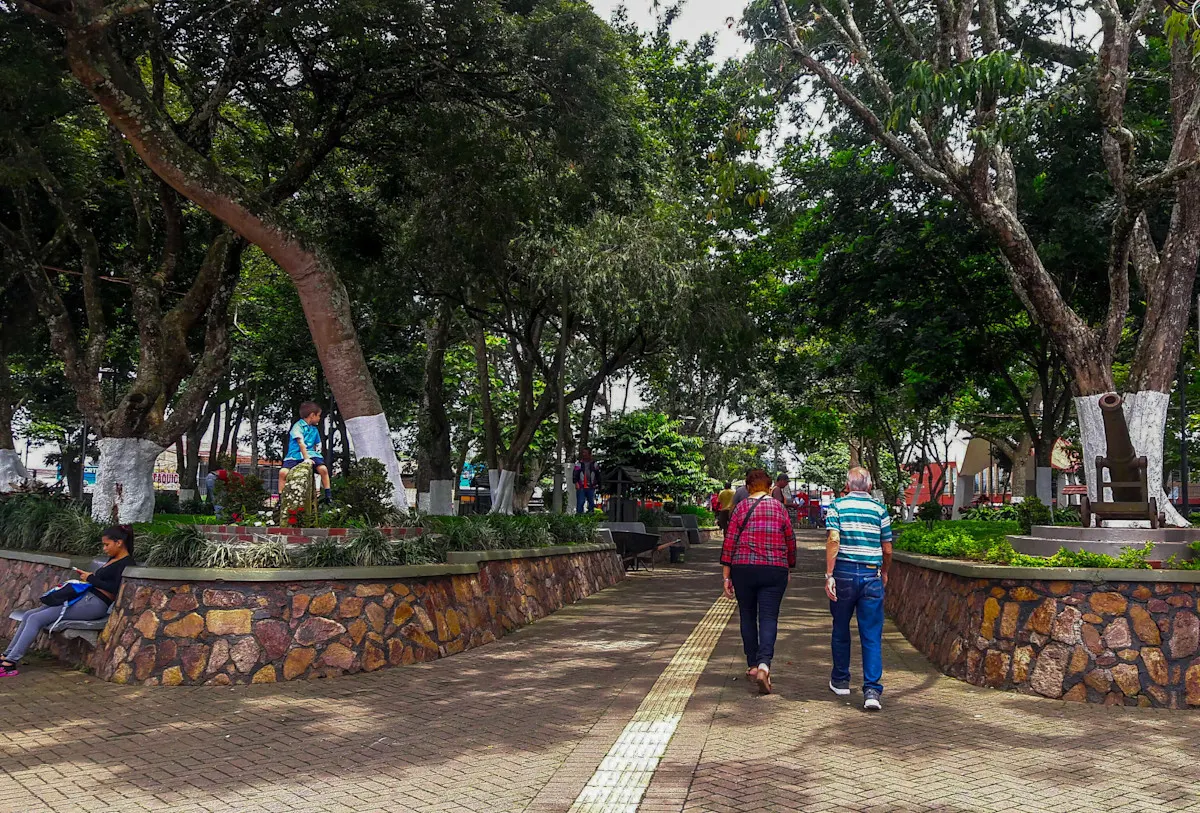
If you want Costa Rica’s greenery and calm without giving up convenience, consider San Ramón for Central Valley living. One expat couple has lived there for about eight years and describes their home and land as a “little slice of heaven”—total silence surrounded by rolling hills, yet only about 10 minutes from major grocery stores and a gourmet shop. That mix is what makes San Ramón stand out: you’re not stuck in the mountains, but you’re also not in the traffic of a bigger city.
With Atenas and Grecia becoming increasingly crowded, San Ramón is another option to consider, close to medical care and everyday conveniences, yet it remains somewhat under the radar for expats. It takes about 90 minutes to get to the SJO airport from San Ramón.
Practical life is surprisingly easy. For healthcare, residents use Caja and often join the MediSmart discount program (available around the country), heading into San José when they want MediSmart doctors. There are also local options: two clinics in town with specialists, a lab for bloodwork, and an emergency walk-in clinic.
Community-wise, expats are mixed into daily life. I talked with residents in one gated neighborhood, and they shared that their neighbors are from Bulgaria, Canada, the U.S., Austria, and Costa Rica. Instead of a formal HOA, residents pay annual dues to maintain internal roads, repair the gate, and hire a gardener to keep the shared areas beautifully manicured.
For lifestyle, San Ramón delivers more than people expect: a lively restaurant scene, occasional concerts at the José Figueres Cultural Center, karaoke nights, and easy access to nature, including nearby rivers, a public swimming pool, a waterfall, ziplining, and trails.
San Ramón has options for many budgets. Homes can still be found under $150,000, while larger, updated properties and rural estates typically range from $300,000 to $700,000 or more, depending on the neighborhood and lot size.
Cost depends on your choices. One couple estimates their own spending at around $6,000 a month (including travel and household help), but they say a couple can live comfortably on $2,000 with a simpler lifestyle.
In San Ramón, the real luxury is peaceful, scenic living—close to everything you need.
Tronadora, Costa Rica

Located on the southern shore of Lake Arenal, the small town of Tronadora is where I met several expats who say they feel deeply content with daily life here—more relaxed than ever. While nearby Nuevo Arenal and La Fortuna tend to draw more attention, Tronadora offers the same breathtaking lake and volcano views with a slower pace and a more local feel.
The landscape here is stunning—rolling green hills, steady lake breezes, and views toward Arenal Volcano. Because of microclimates, Tronadora is windier than some neighboring towns and often receives significantly less rainfall than Nuevo Arenal. Homes here don’t use air conditioning or heating.
Daily life happens outdoors—sailing, paddleboarding, birdwatching, or just relaxing in a hammock. One of my favorite moments was during my stay at The Cove, when the owner took me to feed the horses he visits in town. It was so cool to see the horses run to the fence as soon as they saw his car, he always brings them a carrot or apple treat.
People know each other here and prioritize spending time together. For example, Thursday night dinners out and Sunday meetups to play cards and relax by the pool are part of the weekly schedule. Small restaurants and pickleball courts are popular places for community connection in town.
Tronadora’s convenient location draws people in. Liberia’s international airport, major shopping options, and beaches are just over an hour away, making it easy to stock up on supplies, catch a flight, and enjoy beach life.
Cost of living remains one of Tronadora’s biggest draws, especially for those comfortable with a simple lifestyle. One retiree reports a monthly budget of around $1,500, including rent, utilities, and food, while others spend more depending on travel and dining out. Rental deals can still be found, with smaller homes sometimes priced at $500–$650 per month and utilities often under $50.
Real estate is still relatively accessible compared with many coastal regions. Most properties are between $170,000 and $350,000, depending on views and land size. Building lots typically start around $70,000–$90,000, with lake-view lots often $120,000–$200,000 or more.
For those looking for lake living, cooler air, and a sense of being surrounded by nature, Tronadora remains one of the most underrated places to explore around Lake Arenal.
Get Your Free Costa Rica Report Here
Get Your Free Costa Rica Report Here
Learn more about Costa Rica and other countries in our daily postcard e-letter. Simply enter your email address below and we’ll send you a FREE REPORT - Explore the Old World in Laidback Costa Rica.

By submitting your email address, you will receive a free subscription to IL Postcards, The Untourist Daily and special offers from International Living and our affiliates. You can unsubscribe at any time, and we encourage you to read more about our Privacy Policy.
Venao, Panama

By Jess Ramesch
If you’re looking to settle in a small, safe, and friendly town, you could scarcely do better than the Azuero Peninsula. It’s a region known for folksy festivals, colonial towns, uncrowded beaches… and the lowest cost of living in Panama.
Here, one special little village has morphed into a wellness hub with everything you need to live a fitness-focused life: Venao. Once known only to locals and a small cadre of surfers, it’s now a hotspot for yoga, jiu-jitsu, and all manner of holistic treatments.
Best of all, expats here say it’s the kind of close-knit community you can only dream of. Kimber Hardick and husband Ron Robare have found meaningful friendships here and say it’s even made their own relationship stronger and more fulfilling. They live on the outer edge of Venao in a modern, airy home with a terrace and pool boasting a dramatic, up-close view of the tropical Pacific—but they go into town and socialize often.
“This community is ageless,” says Kimber. “Some of our dearest friends are in their 20s. They see us as wise elders, and they show us respect, but they don’t treat us like old people.”
“We don’t talk about politics or religion or the weather,” she adds. “It’s more about deep connections and check-ins.”
Live in Venao for as little as $2,950 a month, including rent. Or make a wise investment in a home and land just outside Venao and live on as little as $2,000 a month.
Volcán, Panama
By Jess Ramesch
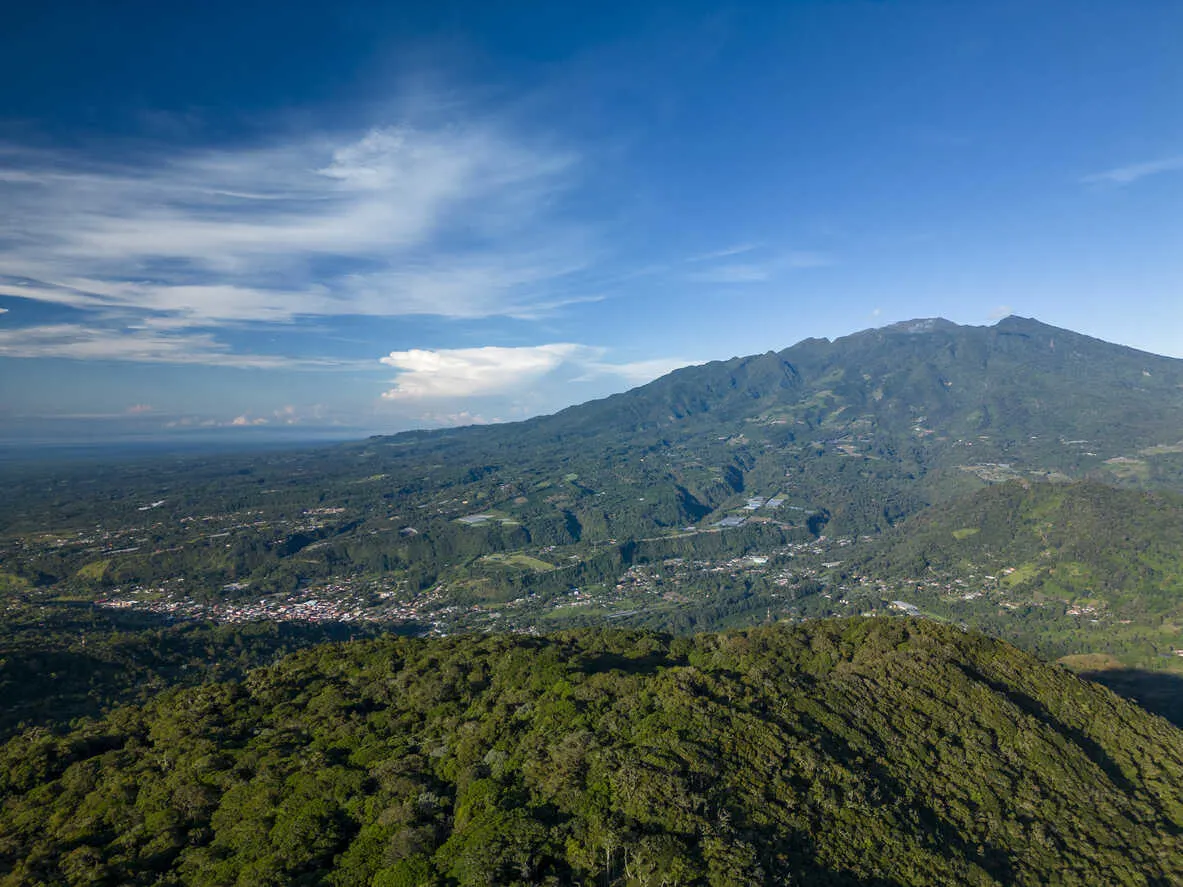
My favorite mountain town, Volcán, offers the absolute best of safe, small-town Panamanian living, with sweet A-frame cottages and dramatic mountain views that call to mind the Swiss Alps. Here you’ll still see locals on horses and teenagers chatting on swings at the park (no big malls or crazy concerts for them here).
Hemming in the town is Volcán Barú—Panama’s tallest peak and only volcano (long slumbering)—and its surrounding national park. Farming, gardening, hiking… this is the place to do it. Though it’s “cool” for Panama (temperatures can drop to the upper 50s F at night) with abundant rainfall, Volcán is a town where life is lived outdoors. (No need for heating or air conditioning, either!)
Expats have a nice little grapevine and community going here, but they tend to melt into the local population more than in more popular destinations like nearby Boquete (one of the world’s top retirement destinations).
Come here to enjoy the mountain streams, hot springs, and cloud forest hikes… marvel at thoroughbred horses, vampire orchids, and resplendent quetzals… and eat the freshest produce this country has to offer. Some 80% of Panama’s fruits and vegetables are grown in this region of Chiriquí Province, so you’ll have easy, cheap access to luscious strawberries and different varieties of mushrooms, not to mention Panamanian chicken and pork (celebrated for their “real” flavor and “from-the-farm freshness” compared to U.S. supermarket equivalents).
Time is spent in community service, meetups at the Friday market or Mana restaurant, and enjoying live music played by locals and expats. If you want to learn Spanish by immersion, let a local family “adopt” you in Volcán. A couple could live a very nice life here on $1,700 a month… and perhaps spend $500 to $1,000 a year on little jaunts to Boquete, the Chiriquí coast, and beyond.
Portobelo, Panama

By Jess Ramesch
Follow the Panama Canal from Panama City to the province of Colón, bypass the notorious “black sheep” city of the same name, and discover the rainforest paradise of Portobelo. Located in a historically Black region of Panama, with rich Afro-Caribeño culture and traditions, this is one of the most underappreciated corners of the Caribbean. With little islets just offshore, colorful wildlife, hidden beaches, and picturesque historic ruins, it’s a photographer’s dream.
The few expats who’ve found their way here tend to be boaters who either live in the marina (Linton Bay) or who became landlubbers and bought or built homes. It’s a shorts-and-tank-tops kind of place; do not come here to be flashy, and it's still a pioneer lifestyle in many ways. There’s better internet now, but you learn to “live slow” and embrace the power and water outages… or buy a good generator. Some choose simple digs, living on around $2,100 a month… while others have built little inns or businesses to serve the tiny trickle of tourists that pass through.
It’s a close-knit town where “everyone helps everyone”… but a retiree community it is not. There are folks of all ages, including families who enjoy swimming, snorkeling, and making sandcastles on off-the-beaten-path beaches.
Buy vegetables and seafood directly from growers and fishermen, no big supermarkets here, and when you’re not in the mood to cook, head out to a fonda (a local roadside eatery) or the marina for a cheap, filling meal and some jolly company. And remember, you can visit bustling Panama City anytime, for fun or perhaps to stock up on your favorite foods (it’s about a two-hour drive).
Avoid buying untitled land (at least until you’ve been here long enough to understand why it’s such a gamble), greet everyone you meet with a kind word, and learn some Spanish to fit in and live like a colonense in Portobelo, one of the planet’s last unspoiled Caribbean havens.
Maya Beach, Belize

Tucked along both sides of the Placencia Peninsula, just north of Seine Bight and Placencia Village, lies the laid-back Maya Beach. This part of the peninsula is known for its pristine stretch of sandy beaches and palm trees, as well as the gorgeous views of the Maya Mountains. There is the Caribbean on one side and the lagoon on the other, giving visitors a true taste of life on the peninsula. You may find yourself swinging in a hammock over the water one moment or taking a long, leisurely stroll up the beach. But whichever you choose, the coastal beauty will have you wondering how you can make this country home.
This tranquil bit of paradise, though, is often overlooked in favor of the busier atmosphere of Placencia Village, which offers numerous restaurants, vegetable stands, and grocery stores. However, as tourism has rebounded since COVID, prices in the village have risen, making it a bit more difficult for some to find an affordable place to live. For others, a quieter atmosphere without the sometimes loud tourist crowd is preferable, and Maya Beach offers relief on both counts.
Only a 10-minute drive from the heart of Placencia Village, Maya Beach may not have as many amenities, but it does offer lower rent for those who need it. For instance, a one-bedroom cottage averages around $800 a month, or a two-bedroom around $1,400 a month. If cost isn’t a problem, there are numerous places with luxury accommodations, both on the seaside and lagoon side of Maya Beach. Maya Beach also boasts one of the peninsula’s favorite restaurants, Maya Bistro. This area remains one of the best beach areas of Belize. Come for a stay, but know you may never leave.
Your chance to retire overseas now
Your chance to retire overseas now
Learn more about Thailand and other destinations by signing up to our daily IL Postcards e-letter and we'll immediately send you a free report: 20 Countries Compared, Contrasted, Ranked, and Rated.
You don’t have to be rich to enjoy a pampered retirement, you just need to know where to go.
With our 34th Annual Global Retirement Index, our experts hand you a detailed roadmap. Details and a Special Offer Here!

By submitting your email address, you will receive a free subscription to IL Postcards, The Untourist Daily and special offers from International Living and our affiliates. You can unsubscribe at any time, and we encourage you to read more about our Privacy Policy.
Southeast Asia
In Southeast Asia, small towns offer an appealing mix of affordability, warmth, and adventure. Life moves at an easier pace here, with vibrant local culture, incredible food, and a cost of living that makes it possible to enjoy more while spending less.
Chanthaburi, Thailand

Relaxed and often overlooked, Chanthaburi is located in eastern Thailand, about four hours south of Bangkok, roughly two hours east of Pattaya, and just inland from the Cambodian border. The provincial capital wraps around the winding Chanthaburi River and lies only 30 kilometers from the Gulf of Thailand. With capes, bays, mangroves, and river mouths nearby, the whole province feels lush, green, and quietly beautiful—like one vast estuary.
Chanthaburi is a seafood hub, but it’s known for much more. It’s often called the “Fruit Bowl of Thailand,” famous for orchards and durian, and it has a long-running gem-trading tradition. If you want a genuinely unique souvenir, the local gem market—known for rubies and sapphires—is a must.
Culturally, Chanthaburi has one of Thailand’s most unexpected legacies: the country’s largest and oldest Catholic congregation, founded more than 300 years ago by Vietnamese religious refugees. The Cathedral of the Immaculate Conception is striking, photogenic, and completely surprising in a provincial Thai city.
Tourism is mostly domestic, which keeps the vibe grounded and local. There’s a small, under-the-radar expat community—Westerners who want traditional Thai living, low costs, and easy access to beaches, mountains, and waterfalls (with Cambodia close for quick getaways). It’s not a plug-and-play expat hub, so rentals often come through Facebook groups and local connections.
Housing is the shocker: townhouses can rent for under $300 per month, and even a three-bedroom pool villa with a garden can sometimes be found for around $600. Food is a highlight, try the regional specialty mu cha muang, and don’t leave without the soft-shell crab burger at Lollipop Café. Chanthaburi is for seasoned Thailand lovers who want a calmer, cheaper, and more authentically Thai experience.
Si Racha, Thailand

Less than two hours south of Bangkok, Si Racha is a laid-back coastal town with a surprisingly international pulse. It’s famously linked to Sriracha hot sauce, but its real identity comes from its role as home to Thailand’s largest Japanese community, driven by the nearby port at Laem Chabang and surrounding industrial estates.
Si Racha proper is small, but the broader area is much larger and more dynamic. The result is a town that feels like “old Thailand” with an unexpected Japanese layer: excellent izakayas, Japanese restaurants that would hold their own in big cities, and daily life shaped by both Thai families and working expats. It’s often nicknamed “Little Osaka,” and for once, the label fits.
For expats who are tired of Bangkok’s traffic, or who’ve outgrown Pattaya’s intensity, Si Racha hits a sweet spot. It’s cleaner, calmer, and less stressful, yet still loaded with conveniences most towns this size don’t have. Thanks to the large professional expat population, secondary infrastructure is unusually strong: international schools, world-class hospitals, and deep shopping options are already in place.
It’s also a sleeper base for golfers. You’re within an hour of more than 20 excellent courses—rare in Thailand without paying premium “resort zone” prices.
The cost of living is a major draw: many residents find it notably cheaper than Bangkok and slightly cheaper than Pattaya (only 30 minutes away). A furnished one-bedroom apartment near town often runs $350–$500 per month, while a luxury pool villa can come in at around $1,000.
Si Racha is one of those rare places that deliver the “best of both worlds”: authentic Thai energy plus modern, expat-friendly ease.
Pai, Thailand

If you live in Chiang Mai, the escape hatch is Pai. This tiny bohemian town in Mae Hong Son Province sits about four hours northwest of Chiang Mai, not far from the Myanmar border, at roughly 1,700 feet above sea level. Winters are crisp and cool; summers are steamy and rain-soaked. Either way, the pace slows down the moment you arrive.
Thailand has several yoga-hippie enclaves, but Pai may be the most authentic. It’s a magnet for backpackers, creatives, and nature-first travelers—yet it draws a surprisingly wide age range. People come for the mountains and canyons, hot springs and waterfalls, green valleys, and the surrounding hill-tribe communities that give the region its soul. Pai is what many people picture when they imagine a slower, more communal version of Thailand.
This town has long been a backpacker favorite thanks to cheap eats, lively night markets, and affordable accommodation. A small expat community has naturally formed, too—digital nomads, slow travelers, and “I’ll stay a week” people who wake up three months later still ordering mango sticky rice.
Life here revolves around hiking, soaking in hot springs, chasing waterfalls, and road-tripping the Mae Hong Son Loop—a famous 600-kilometer route known for its 1,864 curves that runs through Pai and often becomes visitors’ first introduction to the town.
True to its vibe, Pai also has quirky cafés roasting some of Northern Thailand’s most flavorful coffee, plus genuinely creative vegan food. If you’ve ever been tempted by yoga, ecstatic dance, a kung fu retreat, or open-mic poetry, Pai is the place where you’ll actually try it.
Costs stay refreshingly low. A small house or nice apartment can often be found for under $300 per month; a larger place with a garden may run around $500. A couple can live comfortably for under $2,000 per month. The classic move is living in Chiang Mai and escaping to Pai—until you realize more and more people are flipping it, living in Pai full-time and “escaping” to Chiang Mai when they need city life.
Why These Hidden Gems Are Worth Discovering
One of the great discoveries of living overseas is that the most rewarding places aren’t always the ones that appear in travel brochures.
Often, they’re the towns that quietly offer exactly what many people are searching for: community, character, natural beauty, and a lifestyle that feels both rich and relaxed.
In these smaller places, life unfolds differently. You walk more. You linger longer over meals. You discover local traditions that make each season feel special.
And while the world continues to move faster, towns like these remind us that sometimes the best life is found by stepping off the main road—and seeing where the smaller one leads.
The World’s Best Retirement Havens for 2026
The World’s Best Retirement Havens for 2026
24 Countries Compared, Contrasted, Ranked, and Rated. You don’t have to be rich to enjoy a pampered retirement, you just need to know where to go. With our 35th Annual Global Retirement Index, our experts hand you a detailed roadmap. Details—and a Special Offer—Here
By submitting your email address, you will receive a free subscription to IL Postcards, The Untourist Daily and special offers from International Living and our affiliates. You can unsubscribe at any time, and we encourage you to read more about our Privacy Policy.