

Retiring overseas is more than a dream; it’s a life-changing decision. But choosing where to go can feel overwhelming. That’s where we come in.
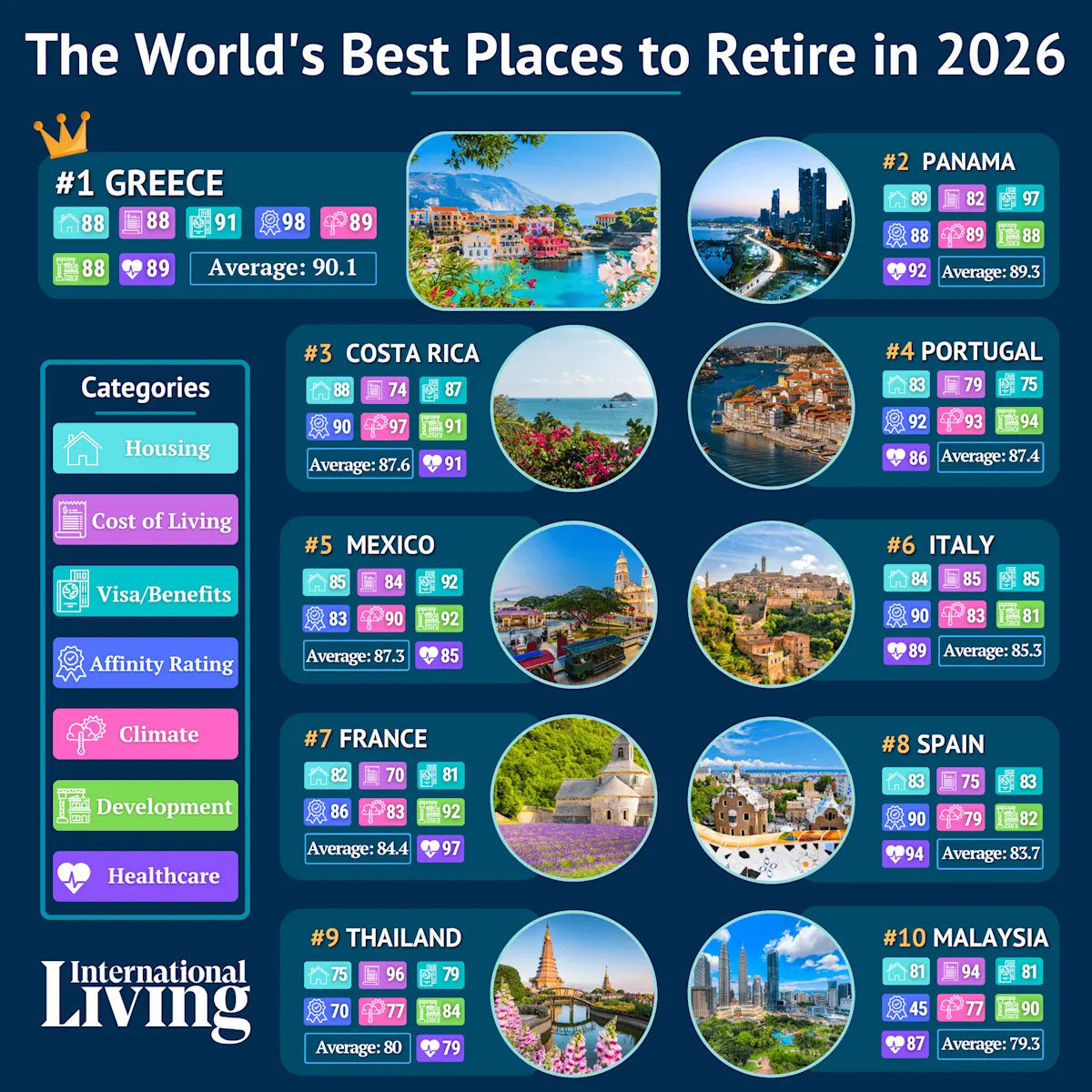
The 2026 Annual Global Retirement Index is your essential tool for cutting through the clutter and zeroing in on the places that offer the best lifestyle, value, and ease of transition abroad. Based on more than 40 years of on-the-ground experience and in-depth reporting from our trusted network of expats and correspondents, this Index is built to help you take action.
And here’s the thing: the world is changing—fast. Cost of living, visa rules, healthcare access, and even climate patterns are evolving. That’s why our team has re-evaluated and recalculated everything for 2026. We’ve surveyed our experts on the ground and leveraged real-time data to pinpoint where your dollars stretch further, where you can thrive year-round, and where you’ll find a warm welcome.
Our Index isn’t just a list; it’s a decision-making framework. We score destinations across multiple categories: climate, healthcare, cost of living, housing, visas, and more. But we also bring a human touch. Our correspondents are living the life you want to live. Their insights are candid, personal, and practical.
Whether you’re dreaming of a coastal village, a colonial city, or a rugged mountain retreat, we’re here to help you find a location that matches your lifestyle, priorities, and budget.
This isn’t just about moving abroad. It’s about building the best possible life overseas—on your terms.
So, where should you retire in 2026? Let’s find out…
The World’s Best Retirement Havens for 2026
The World’s Best Retirement Havens for 2026
24 Countries Compared, Contrasted, Ranked, and Rated. You don’t have to be rich to enjoy a pampered retirement, you just need to know where to go. With our 35th Annual Global Retirement Index, our experts hand you a detailed roadmap. Details—and a Special Offer—Here

By submitting your email address, you will receive a free subscription to IL Postcards, Overseas Dream Home, The Untourist Daily and special offers from International Living and our affiliates. You can unsubscribe at any time, and we encourage you to read more about our Privacy Policy.
10. Malaysia
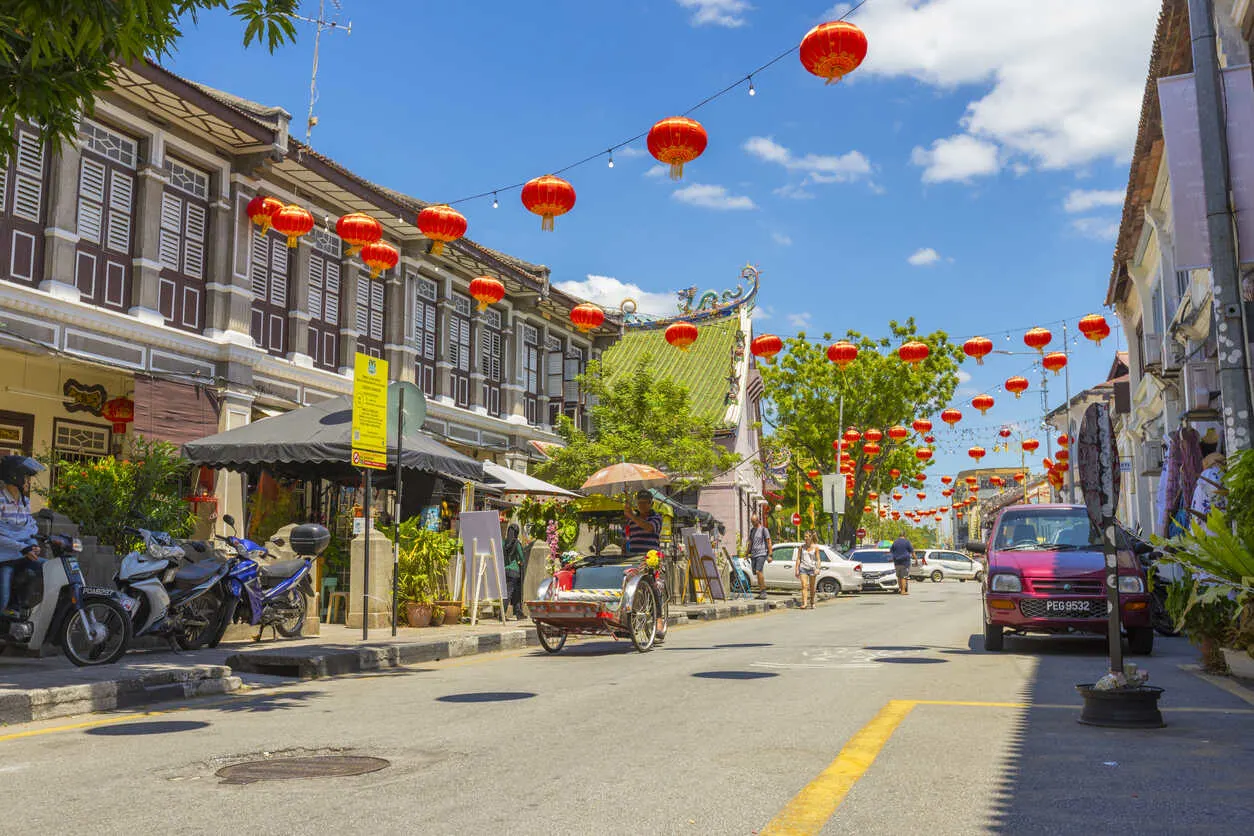
Mornings in Penang have their own rhythm. Some days, I wake up to the soft ring of a trishaw bell passing by. Other days, it is the smell of nasi lemak drifting up from the stall across the street. Either way, it always feels familiar.
By the time the sun starts climbing, the neighborhood comes to life. Malay uncles in sarongs gather at the local coffee shop, flipping through The Star while exchanging comments in a mix of English, Malay, and Hokkien. Shopkeepers sweep their storefronts, and the air hangs heavy with heat and friendliness.
Here, time feels slower in the best possible way.
In Penang, people take their time. They stop to ask how you are, where you’re from, or whether you have eaten. Strangers will help you carry groceries. Neighbors wave from across the road. After dinner, you can walk home without feeling tense or unsafe.
There’s something rare about that combination of calm, safety, and warmth. Most cities lost it long ago.
When I tell people back home what I spend to live here, they don’t believe me. I rent a four-bedroom apartment in Tanjung Bungah, a modern apartment with marble floors and 12-foot-high ceilings. The rent is 4,500 ringgit each month, which is around 900 US dollars. It’s bright, full of character, and feels like home.
Even with regular use of air conditioning, my utility bills rarely go above 250 ringgits.
Eating out is both affordable and excellent. A plate of char kway teow or mee goreng from my favorite stall costs less than 10 ringgit. The food here isn’t just cheap, it’s amazing, cooked by people who care. I could eat hawker food every day and still spend less than 500 ringgit per month on meals.
I’m not frugal. I eat out often, take weekend trips, and buy decent groceries. I buy wine, which isn’t cheap in Malaysia. Even then, my monthly expenses stay around 10,000 ringgit, or about 2,200 US dollars.
Penang offers a wide range of housing. You can rent a modern apartment with a pool and ocean view if that is your style. Or you can choose a restored heritage townhouse with high ceilings, wooden floors, and a mango tree in the back.
Rental prices vary depending on location and style. In places like Pulau Tikus, Tanjong Tokong, or George Town, monthly rent usually falls between 1,500 and 3,500 ringgit.
Foreigners can buy property too. As long as the home is priced above the state-set minimum, in Penang, around 1 million ringgit, the process is pretty straightforward. Property taxes are low, and freehold titles are available.
I still remember my first visit to a clinic in Penang. I was expecting a long wait. Instead, I was called in within 10 minutes. The doctor spoke clearly, took time to listen, and spent half an hour going over my health concerns. The bill was just 120 ringgit, about 25 US dollars.
Healthcare here is reliable and affordable. Private hospitals such as Island, Gleneagles, and Adventist are modern and well-equipped. Doctors are often trained in the United Kingdom or Australia. A specialist consultation usually costs between 100 and 250 ringgit. Even minor procedures are manageable without insurance.
Many expats carry international insurance plans, but quite a few pay out of pocket. It’s that reasonable.
Penang’s charm isn’t only in its food or architecture. It’s in its people. The expat community isn’t closed off. It is part of the bigger picture. You’ll meet locals and foreigners volunteering together, playing sports, joining book clubs, or chatting at the market.
English is widely spoken, but even when it’s not, people are welcoming and willing to connect. You might not speak Malay or Hokkien, but a smile and a shared meal go a long way.
You won’t struggle to make friends here. Whether through hobby groups, neighborhood events, or casual chats at hawker stalls, connections form naturally.
Malaysia My Second Home is a popular option for people who want to stay long-term. While the national program has seen changes, the version offered by the state of Sarawak remains more relaxed and easier to navigate. These visas allow for multiple entries, the ability to own property, and to bring in a car without too much bureaucracy.
For digital nomads, the DE Rantau Pass allows remote workers to stay for one year and renew if needed. It is becoming a favorite among freelancers and entrepreneurs.
The weather is consistent year-round. It’s hot, often humid, with bursts of afternoon rain that cool everything down. Most locals don’t even pause when the rain starts. You adjust quickly, run errands in the morning, take a break during the heat, and enjoy long walks in the evening.
Penang’s not loud or showy. It doesn’t try to sell you a dream. It simply offers a way of life that feels steady and generous.
It’s not perfect. No place is. But it feels real. You are not just passing through; you are part of something. You begin to recognize faces, routines, and small daily kindnesses. The kopi guy starts your drink before you even order. A neighbor brings you soup when you are sick. There is no need to impress anyone here.
People ask me why I stayed. My answer is always the same. This place gives more than it takes. In a world that asks for too much, that kind of balance is rare, and it’s worth everything.
9. Thailand
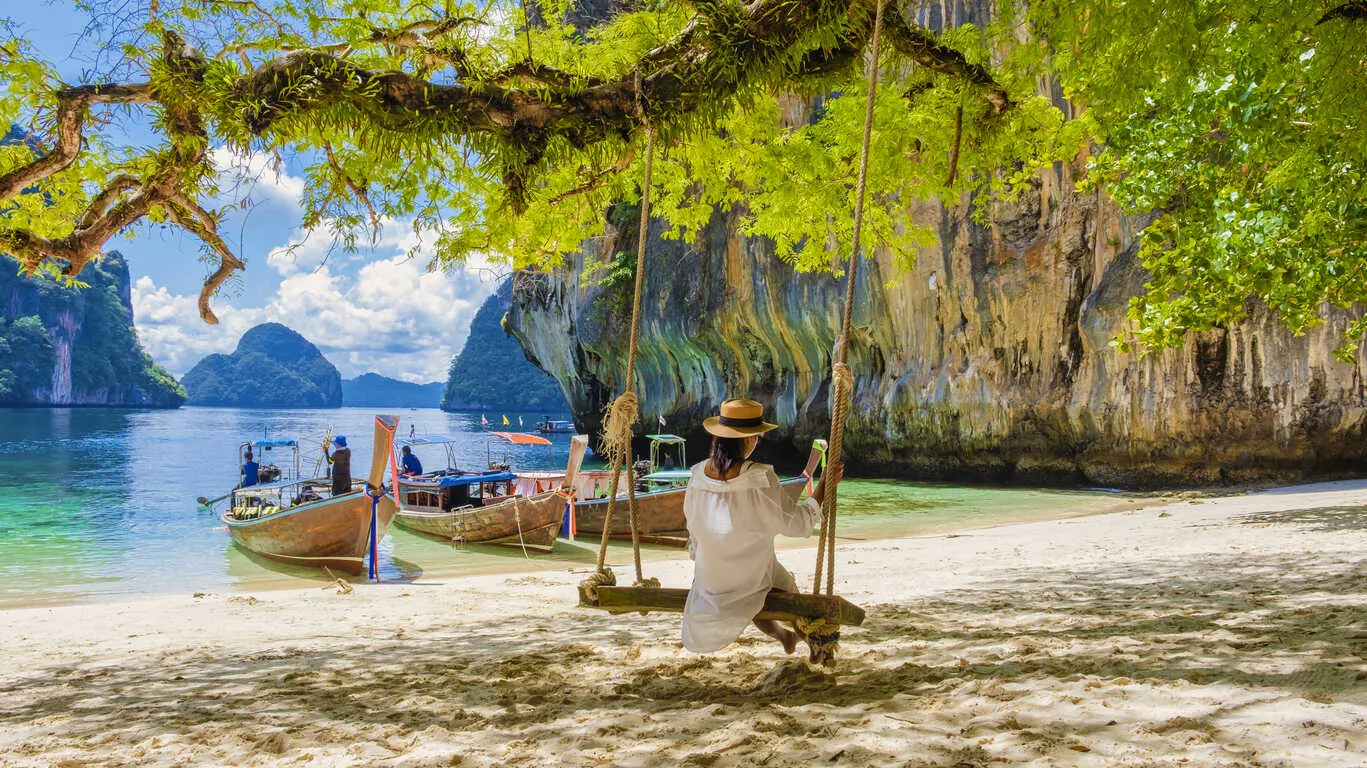
The word “thai” in the Thai language means “freedom,” so “Thailand” literally means “The Land of the Free.” I can’t think of a better name. In Thailand, I revel in the pleasure of living my life free of unnecessary noise, red tape, and hassle.
When people ask, “What’s it like to live over there?” I can answer in one word: easy.
My life runs on simplicity. I have one key for my door, two cards in my wallet—my ID and ATM—and my phone handles the rest. With the Grab app, I can order taxis, groceries, or dinner with a few taps. I can scan to pay for anything, from street food to motorbike rides. Cash is nearly obsolete.
My high-speed internet clocks nearly one gigabit per second for under $20 a month. My weekly maid service costs $15. A two-hour deep-tissue massage runs about $12, and a manicure-pedicure with a cappuccino is $22. If I need a dentist or doctor, I can book online in the morning and be seen that afternoon.
I don’t fill out forms. I don’t wait in lines. I’m never on hold. Thailand is an aggravation-free zone, a tropical dreamscape that’s fully wired, modern, and astonishingly convenient.
Thailand spans two distinct climate zones, subtropical and tropical, offering something for every taste. If, like me, you’re a beach-loving salamander who craves sunny days and warm breezy nights, the southern half of the country is heaven: coconut trees, monkeys, and endless golden beaches. Prefer cooler air and mountain views? The north, with its jungle-encrusted mountains and spectacular waterfalls, offers a laid-back version of paradise in Chiang Mai or Chiang Rai. From mountains to mangroves, Thailand’s natural diversity guarantees you’ll find a setting that suits your rhythm.
From the pathologically frugal to the conspicuously affluent, Thailand can fit nearly any budget. A single retiree living on $1,200 a month can enjoy a $300 studio in Chiang Mai, dine on Thai food for $10 a day, and still have money for a few $2 Beer Changs at happy hour. A couple living on two average Social Security checks, around $3,800 a month, can live luxuriously: a beachside two-bedroom bungalow in Pattaya or Hua Hin for under $1,000, groceries for $300–$400, and meals out whenever the mood strikes.
Electricity is relatively inexpensive; even if you run air conditioning 24/7, it’s hard to exceed $150 a month. You could drive a car or motorcycle, but you don’t have to. My transportation costs rarely exceed $100 a month. In Bangkok, the Skytrain and subway whisk you across the city for pocket change, while smaller towns and cities rely on tuk-tuks, baht buses, ride-hailing apps, and motorbike taxis.
Private health insurance is a fraction of U.S. costs, and Thailand’s hospitals are world-class. From dental cleanings to cancer care, you’ll pay roughly one-third of what you would back home. It’s no wonder that Thailand ranks among the top medical tourism destinations in the world. Overall, my comfortable lifestyle in Jomtien Beach costs less than half of what it would in my home state of Florida.
Variety is the name of the housing game in Thailand. Do you like high-rise city living? Bangkok and Pattaya have that in spades. Are you more of a pool villa person? Phuket, Hua Hin, Koh Samui, and Rayong may be for you. Maybe you want to consider purchasing land and building your dream home in paradise? If that’s the case, Thailand has several ways to facilitate land ownership, and the cost to build is a fraction of what it would be in the U.S.
If you had a budget of $100,000, you could own a swanky studio in Bangkok’s city center, a spacious one-bedroom condo near the beach in any of Thailand’s seaside resort towns, or pick up a cozy two-bedroom bungalow in a gated community in Rayong, Hua Hin, or Chiang Mai. Double your budget to $200,000, and now we’re talking about a stylish townhouse in an upscale Bangkok neighborhood, a family-style pool villa in East Pattaya, or a luxurious seaview condo in Phuket.
Thailand’s state-of-the-art healthcare facilities are well documented as world-class, but Thailand also makes staying healthy effortless. Gyms, yoga studios, lush city walking parks, and expansive seaside footpaths encourage daily movement. Each morning, I get my 10,000 steps strolling along Jomtien Beach, smiling at the sunrise yoga class where locals and expats stretch, breathe, and start the day feeling good. That’s the secret here: wellness woven naturally into daily life.
Thailand welcomes expats with flexible visa options. There’s the standard retirement visa, the new 10-year Long-Term Resident (LTR) visa for higher-income retirees or investors, and a Digital Nomad visa for remote workers. Immigration laws are constantly evolving, but typically in favor of long-term expatriates.
One of my most treasured features of living in Thailand is that I can be as socially engaged as I choose. I can keep to myself, and no one feels obligated to bother me. Or, I could go full social butterfly and be hip-deep in clubs, organizations, and sports leagues. The friendliness and warm smiles of Thai people are legendary, but the expat communities here are underappreciated. I’ve become friends with people from all walks of life and from all over the world. Americans are a severe minority in the expat communities here, and I consider that a positive contributing factor in the expansion of my social network.
As an older expat, I appreciate the fact that Thai society places a tremendous amount of emphasis on watching out for me and making my life easy. Expat organizations, such as the VFW and Rotary Club, as well as dozens of charitable organizations, operate throughout Thailand. Building social networks and support systems is definitely another part of life that Thailand makes easy.
I don’t drive. I don’t watch the news. I don’t wear socks or own a single pair of long pants. If I were an engineer, I’d say moving to Thailand has dramatically reduced my drag. Living the good life should be easy. Here, in the Land of the Free, it truly is.
The World’s Best Retirement Havens for 2026
The World’s Best Retirement Havens for 2026
24 Countries Compared, Contrasted, Ranked, and Rated. You don’t have to be rich to enjoy a pampered retirement, you just need to know where to go. With our 35th Annual Global Retirement Index, our experts hand you a detailed roadmap. Details—and a Special Offer—Here
By submitting your email address, you will receive a free subscription to IL Postcards, Overseas Dream Home, The Untourist Daily and special offers from International Living and our affiliates. You can unsubscribe at any time, and we encourage you to read more about our Privacy Policy.
8. Spain
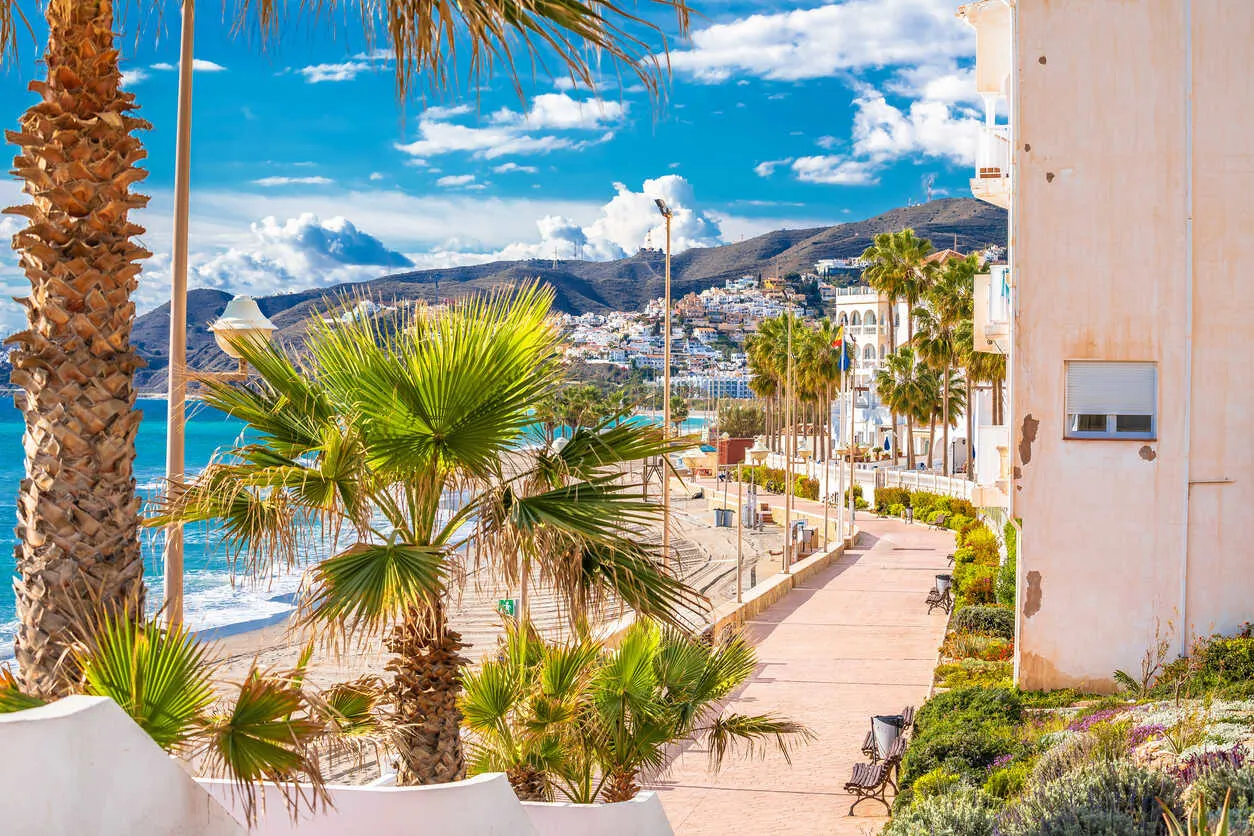
Most mornings, I get up at 8:15 a.m. and head down the hill from my home in Málaga for a brisk walk along the Mediterranean. Sea views and seaside cafés are a big change from life in Houston. On my walks, I’m reminded that I traded hustle and bustle for an unhurried life, and by the time I’ve hit my 12,000 steps, the neighborhood is slowly waking up—and it’s almost 10:00 a.m.!
I’ve lived in both Madrid and now Málaga, and my slow mornings are one of the many reasons I moved from Texas to Spain 10 years ago. I’ve built the life I dreamed of, one that feels lighter, safer, and brings me peace. And it’s one I can enjoy for a fraction of what it would cost me to live in the U.S.
Spain may not be as affordable as it was a few years ago, but a comfortable life for a single person or couple is still possible on a modest budget. Rents have increased since I arrived in Málaga in 2020, when a one-bedroom near the coast cost about €500. Today, you’ll likely pay around €1,000 to €1,300 for a furnished, modern one-bedroom near the beach.
Other expenses are more reasonable. Groceries cost between €240–€450 per month for a couple. Utilities run about €70–€140. My bundled internet and phone plan with 25 GB of data is €42 a month. Public transportation is well-connected and frequent. A monthly pass ranges from €0 to €45 depending on the city, your age, and zone.
Healthcare is one of my favorite things about living in Spain. As a healthy 45-year-old, I pay €65 per month for comprehensive private coverage with minimal co-pays. Retirees will pay more depending on age and provider. My friend Marsha, 77, pays €217 a month with Sanitas, Spain’s largest insurer. A healthy couple in their early 60s might expect to pay around €297 per month total. Prescription prices are also low: 30 doses of blood pressure medication cost €1.50, and a thyroid prescription runs €4.
A comfortable lifestyle in Málaga can start at €1,800 to €2,300 per month for one person. Other towns in the interior or along less-touristy coasts—like Cádiz or Alicante—are more budget-friendly. Expect to pay €850–€1,300 for a one-bedroom in a desirable area. Lower rents can be found in older buildings, inland towns, and by word-of-mouth.
For buyers, prices vary. Málaga averages €3,701 per square meter, while Madrid and Barcelona range from €4,000–€4,300. The most expensive real estate is in San Sebastián and the Balearic Islands, exceeding €5,700 per square meter. Foreigners can buy property freely, and closing costs typically run 10–12% of the purchase price.
Spain’s healthcare system consistently ranks among the world’s best. Public care is available to legal residents after a year for a monthly fee—€60 under age 65, and €157 over 65. Many locals use both public and private systems.
Spain’s non-lucrative visa is the top option for retirees who can show passive income or savings. Requirements currently sit at €28,800 for the main applicant. Remote workers can apply for a digital nomad visa. The Golden Visa program ended in 2025.
Spain has a long-established expat community, especially in coastal towns and major cities. Plenty of English-speaking groups exist, but learning Spanish truly opens doors. While many Spaniards speak basic English, speaking Spanish deepens connection and understanding.
With many regions getting over 300 days of sunshine a year, Spain’s climate shapes its culture—outdoor living, late-night socializing, and a strong sense of community. Those are the things that have kept me here.
7. France
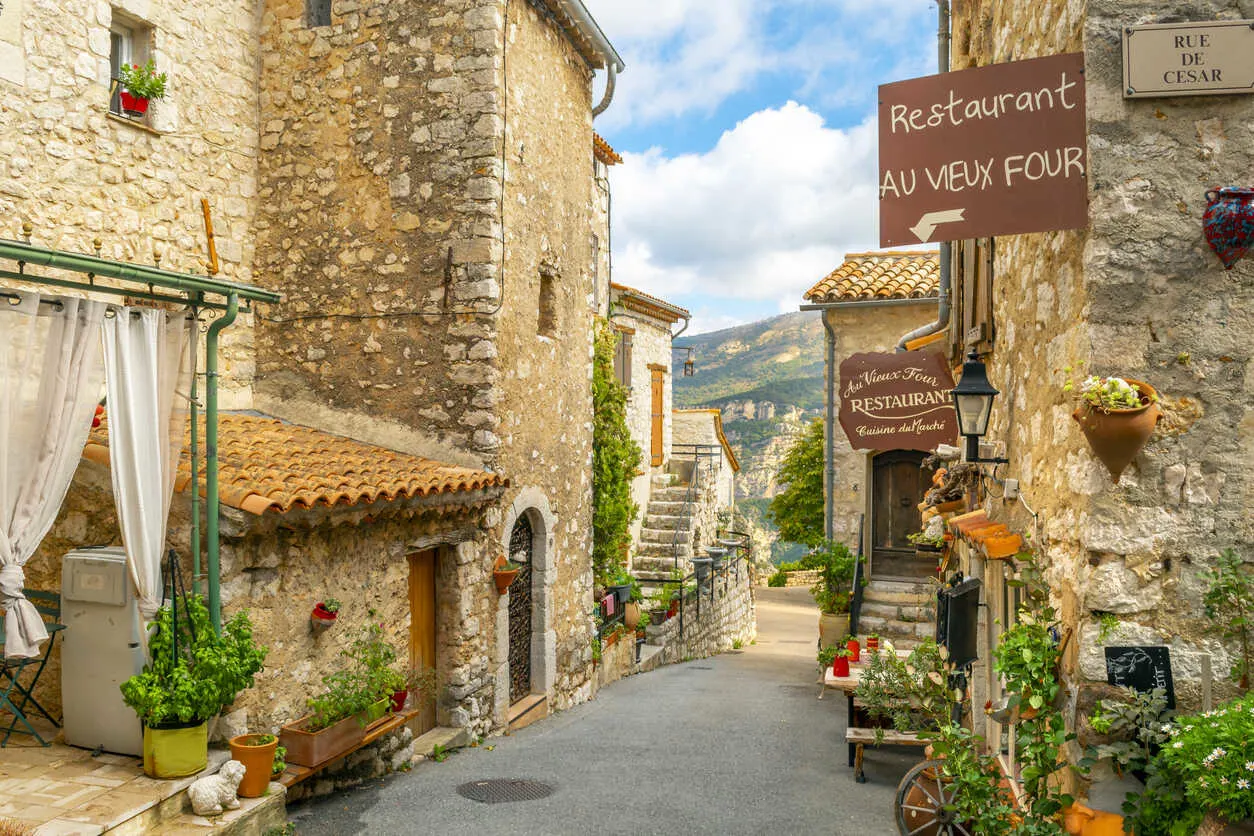
I’ve spent the last 15 years living in the south of France, and it’s been a dream come true.
In 2010, I traded in a two-hour commute on the 101 Freeway (Los Angeles) for a lifestyle that prioritizes family, health, and leisure. The folks who gave us a mandated 35-hour work week, a minimum of five weeks of vacation a year, and a superb healthcare system that takes care of all residents—no matter your age, income, or health status—are surely doing something right.
In short, those cliché images of expats enjoying café au laits and croissants along a cobblestoned backdrop in some fairytale Provençal village are true—minus the berets.
My life in France is carefree, more affordable than back home, and, above all, healthy and inclusive.
Your budget in France will depend largely on where you choose to live. Expats in regions like the Dordogne, Limoges, and certain parts of the northwest and northeast can get by on considerably less than in larger cities or in the south. While day-to-day costs such as utilities, gas, and groceries are fairly consistent, housing is the biggest variable. A furnished two-bedroom, one-bath apartment in a “budget” region can run between €800 and €1,000. In the south, the same apartment can cost twice as much, still considerably less than many U.S. rentals.
Basic utilities for a 915-square-foot apartment average €145 per month. A couple can expect to spend €600 to €800 on groceries. A gourmet lunch out will run around €26 per person (without wine), with dinners costing more. A mobile phone plan is €17 per month, and high-speed internet with cable TV is €29. Car insurance and maintenance average €100 monthly, and top-up health insurance costs €80 to €100. Public transport passes run around €30.
A couple could live in France for around €2,121 per month ($2,459), though the range stretches from €2,021 to €3,200 ($2,459–$3,711), depending on location and lifestyle.
Outside major cities, rental prices are nearly 50% less than in the U.S., and purchase prices are about 30% lower. In Toulon, you can find a two-bedroom apartment in the city center for under $200,000. In Nice, that figure climbs to $320,000. In Sarlat-la-Canada, a two-bedroom in the historic center might cost €119,000 ($138,000). Homes at that price point can be found further afield.
Buying property is straightforward. After an initial agreement and 10-day cooling-off period, both parties work with notaries, and the process usually wraps up in three months. Mortgages are possible, though harder to obtain after age 60 due to costly insurance.
North Americans with a Long Stay Visa are eligible for public healthcare after three months. There are no age limits or pre-existing condition exclusions. Expats may pay around $2,300 annually into the system, granting access to €9 doctor visits, €17 specialist appointments, and deeply discounted prescriptions.
With Doctolib, an online portal, you can easily book appointments and filter for English-speaking doctors. Emergency room visits have been efficient, and private care is rarely necessary. An added bonus is the high quality of fresh produce and supermarket food, contributing to noticeable improvements in personal health.
France offers a transparent path to residency. The Long Stay Visa requires proof of €1,400 ($1,623) in monthly income, three months of housing, and one year of Schengen health insurance coverage. Applicants must state their intention to retire and not work in France, although remote work for non-French entities is permitted.
Though French can be difficult to learn, I found that making an effort was enough. People were warm and welcoming once I tried. One of our first friends came from an invitation to the annual neighbor’s party (Fête des voisins), which takes place every May or June.
We live just outside a village where I can shop at the farmers market, butcher, cheese shop, bakery, and wine cave. Cafés are filled with locals swapping stories, recipes, and sports gossip. Festivals like the olive festival—complete with parades, food competitions, concerts, and communal meals—bring the whole town together.
Expat groups are plentiful and provide community, holiday celebrations from home, and help navigate life in France. It’s also very safe here. Violent crime is rare, and some of our neighbors don’t even lock their doors. I’m not there yet, but it’s a comfort to live in a place that offers both peace of mind and quality of life.
6. Italy
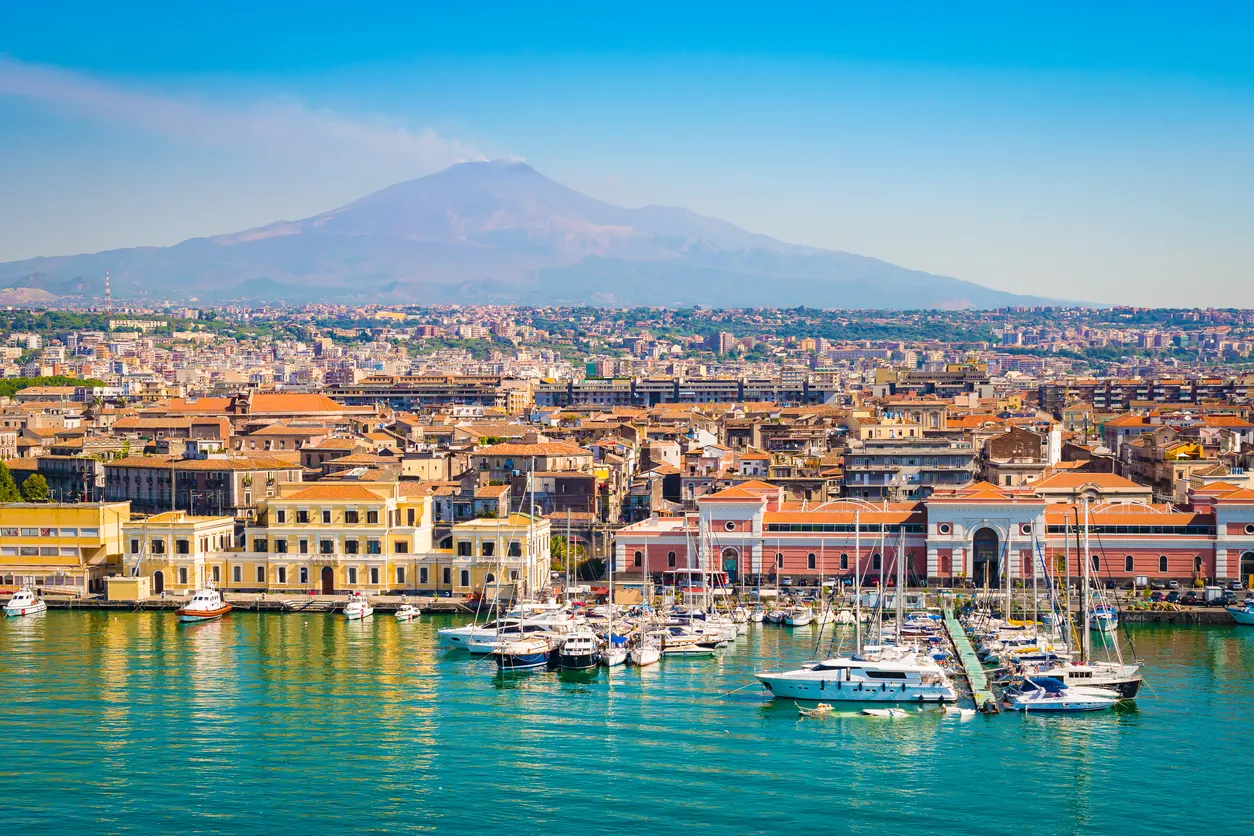
Waking up to a warm sea breeze that billows the sheer curtains on the 12-foot-tall French doors to my bedroom balcony, as the sound of traditional Italian music wafts up from the accordion player on the street corner below, is a perfect way to start the day here in Palermo, Sicily. I brew a moka pot of coffee using freshly ground beans from my favorite café to sip on the balcony as I watch the city awaken. Ahhh la dolce vita.
Italy is one of the Top Ten Places to Retire in 2026, and for good reason. With delicious food, exceptional wines, miles and miles of stunning coastline along the Tyrrhenian, Adriatic, and Mediterranean Seas—dotted with over 400 Italian islands—picture-postcard mountain ranges in the north, rolling hills covered with iconic cypress trees and vineyards, bustling historic cities filled with ornate cathedrals, welcoming piazzas, ancient ruins, romantic canals, and world-class art… Italy is second to none.
You can find tropical weather, complete with palm trees, in the south, with hundreds of sunny days. Looking for a cooler climate? Try Turin or a town in the Dolomites. Something more temperate? Check out Parma or Verona. Dreaming of life on a lake? Lago Maggiore or Trasimeno might be your spot. Though roughly the size of California, Italy offers a range of climates to suit everyone.
I’ve experienced many areas of Italy—living for a time in a medieval hilltop village in the Umbrian hills, in the magical city of Florence, as a caretaker of a 15th-century Tuscan villa, and now in the gorgeous, chaotic mess that is Palermo.
Living in the south of Italy, the cost of living is so affordable. My beautiful one-bedroom 1,200-square-foot apartment in Politeama (arguably the best neighborhood in Palermo) features three balconies, soaring 14-foot ceilings, terrazzo flooring, a huge kitchen, and floods of natural light. I pay $925 (800 euros) a month, plus condominium fees and utilities. Small villages and towns throughout Italy offer one-bedroom apartments—often fully furnished—for as little as $400 per month. The Umbrian town I once lived in had 600-square-foot apartments for sale for as little as $35,000. You’ll pay more in Rome, Milan, or Venice, but nearby towns often offer more affordable options.
I broke my foot here in Italy, and the care I received was top-notch, inexpensive, and easy to navigate. Today I had a video-chat appointment with an English-speaking doctor for a $40 prescription refill. In-person doctor visits are free, but I was pressed for time. Hospitals in northern Italy are generally better managed than those in the south, but I’ve heard both positive and negative reviews from fellow expats in Palermo.
For long-term stays, many expats opt for the Elective Residency Visa (ERV), which requires proof of passive income ($31,000 for a single person or $38,000 for a couple), a lease or property ownership, health insurance, and a few other documents. The ERV is valid for one year and renewable annually. Residents may need to pay about $2,300 annually to access Italy’s healthcare system. Once registered, however, care is free.
Living in a major city means I don’t need a car—public buses in Palermo cost just $1.60. I walk nearly everywhere. The grocery store is beneath my apartment, and my favorite produce stand is a 10-minute walk away. I buy eggplant, tomatoes, fennel, olives, and seasonal fruit like kaki meli (persimmons) regularly.
Italy’s cuisine is world-famous for good reason. Beyond pizza and pasta, you’ll find fresh seafood, steak, wild boar, truffles, sausage, and couscous. A dinner for two in a modest trattoria might cost $50, including water, pasta, tiramisu, and wine.
Other costs are pleasantly low: $11/month for a mobile plan, $25 for home internet, $20 for a manicure, and $8 to repair jeans. I spend around $50/week on groceries for myself.
Italy’s expat communities are vibrant. Most towns and cities host MeetUps, Facebook groups, and events like book clubs, yoga, and outings to archaeological sites. In Palermo, I’ve met people from all over the world through WhatsApp groups organizing weekly activities.
Italians are friendly and eager to help. Speaking some basic Italian opens doors—literally and figuratively. Before moving, you’ll want to research visas, talk to a tax expert, and start learning the language. Italy’s bureaucracy can test your patience, but this is la dolce vita after all.
Take a deep breath. It’s all worth it in the end. Because once Italy gets hold of your soul, it doesn’t let go.
The World’s Best Retirement Havens for 2026
The World’s Best Retirement Havens for 2026
24 Countries Compared, Contrasted, Ranked, and Rated. You don’t have to be rich to enjoy a pampered retirement, you just need to know where to go. With our 35th Annual Global Retirement Index, our experts hand you a detailed roadmap. Details—and a Special Offer—Here
By submitting your email address, you will receive a free subscription to IL Postcards, Overseas Dream Home, The Untourist Daily and special offers from International Living and our affiliates. You can unsubscribe at any time, and we encourage you to read more about our Privacy Policy.
5. Mexico
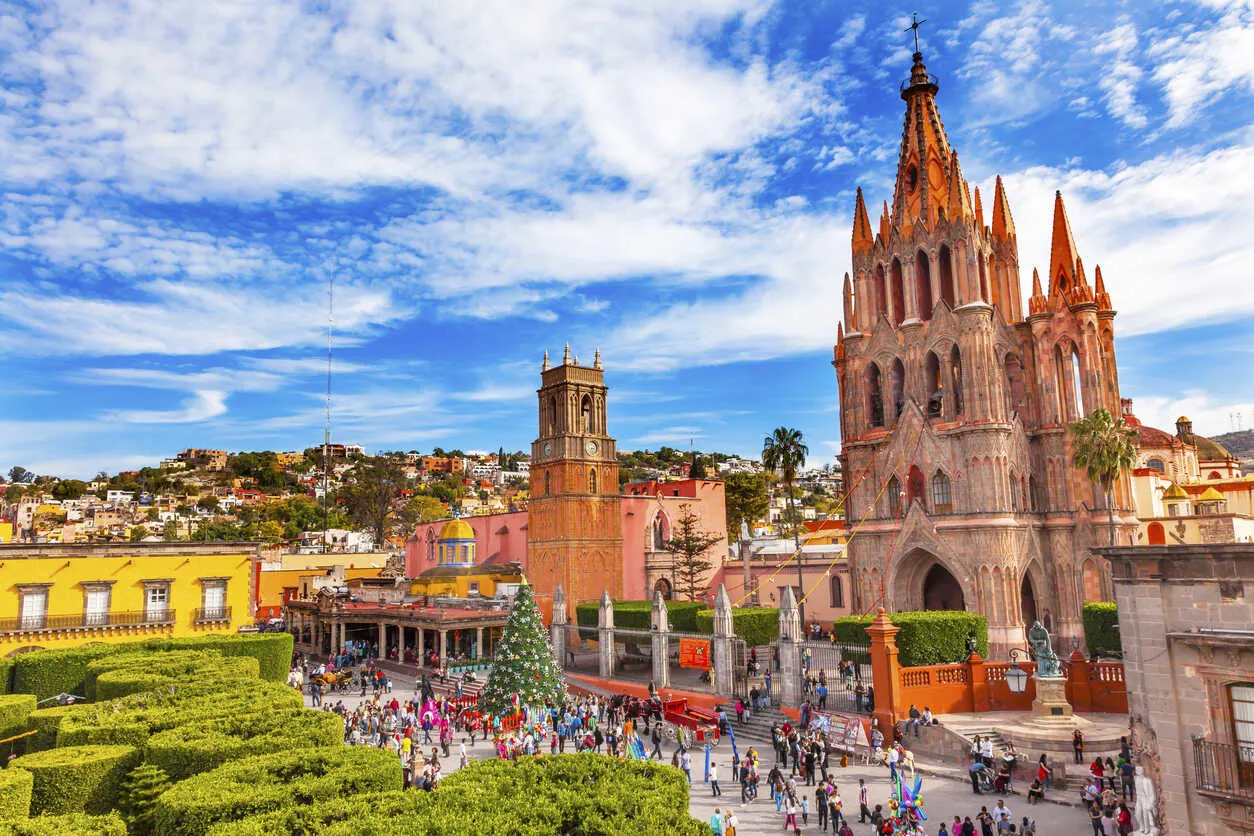
“Don’t forget your camera,” is the first thing I say when people come to Mexico. Not just because my area, the Riviera Maya, with its 75 miles of sugary white sand beaches, is postcard-perfect. But because the welcoming culture, vibrant color, warm people, amazing food, and stunning architecture have you reaching for your camera.
With close proximity to the U.S., abundant, cheap flights under $100 to most major destinations make Mexico a top choice for a lot of North Americans. Easy to visit on scouting trips, holidays, or to live for half the year. Entering automatically gives you up to 180 days in the country with no visa required—making it popular with digital nomads and snowbirds.
After nine years of living in the tropics on Cozumel island, a half-hour ferry ride across the strait from Playa del Carmen, every part of Mexico thrills me. From the cooler central highlands and lakes, to laid-back seaside towns, smaller villages, and islands. One of the most biodiverse countries on Earth, its jungles and rolling hills, snowy peaks (yes, it does snow in Mexico), and arid landscapes offer an astounding range of environments.
You can enjoy winter woolies and the romance of big jackets, scarves, and boots roaming cobblestone streets through ochre Spanish colonial architecture in San Miguel de Allende. Or flip flops and board shorts surrounded by lush tropical foliage and the mesmerizing blues of the Caribbean in Tulum, Puerto Morelos, and Playa del Carmen. Whatever environment, climate, or lifestyle you’re looking for—you’ll find it.
The lower cost of living is one of the biggest perks. I live comfortably on $1,200 a month and like a king on $3,000. Flights across the country are cheap too—$30 to San Cristobal de las Casas to visit a friend and her newborn.
A walkable city was important to me. On Cozumel, I don’t need a car. It’s warm and sunny year-round, perfect for walking daily. Of course, with gas at $3 a gallon, most people do drive. Even on the island we have SAMS Club, major supermarkets, movie theaters, and hospitals.
Creature comforts abound. Costco, Walmart, Starbucks… they’re all here. Coffee is excellent and affordable—high-quality, conflict-free cappuccinos cost less than $4 at a fancy café. Breakfast and juice might run you $15.
I pay $500 a month for a one-bedroom apartment. In the morning, I walk two blocks to the waterfront for a stroll or swim. Sea fans, tropical fish, little yellow rays, and a spotted eel keep me company. The local swimmers welcomed me instantly, and encouraged me so much I entered Oceanman, completing a big ocean swim within a month.
Groceries are inexpensive. Grapefruits for $1.50/kg, herbs for $0.40, mangos for $2/kg. Many expats find they need fewer medications thanks to the fresh food. When they do, it’s affordable. A friend’s insulin is $45 here—it was $300 in the U.S.
Healthcare is professional, caring, and fast. Appointments are usually available within 24 hours. My friend collapsed on a trip—we rushed her to the ER. Five hours later, she was back to normal, and the bill was $500.
Many expats skip private insurance. Those who get it pay $1,500–$4,000/year, depending on the provider. English-speaking doctors, dentists, and specialists are common in expat hubs, along with real estate agents to help you settle in.
A friend in Tulum pays $106/year in property taxes for his 2-bed, 3-bath townhouse—after a discount for paying early. In the U.S., he paid $10,000.
Mexican residency offers discounts for Temporary and Permanent Residents: $4 movie tickets, free entry to museums, and 50–100% off transport and services with an INAPAM card for retirees. These aren’t guaranteed, so check locally or with an expat group.
With its healthier lifestyle, vibrant culture, affordable healthcare, and large expat community, Mexico will always be one of the best places to live.
4. Portugal
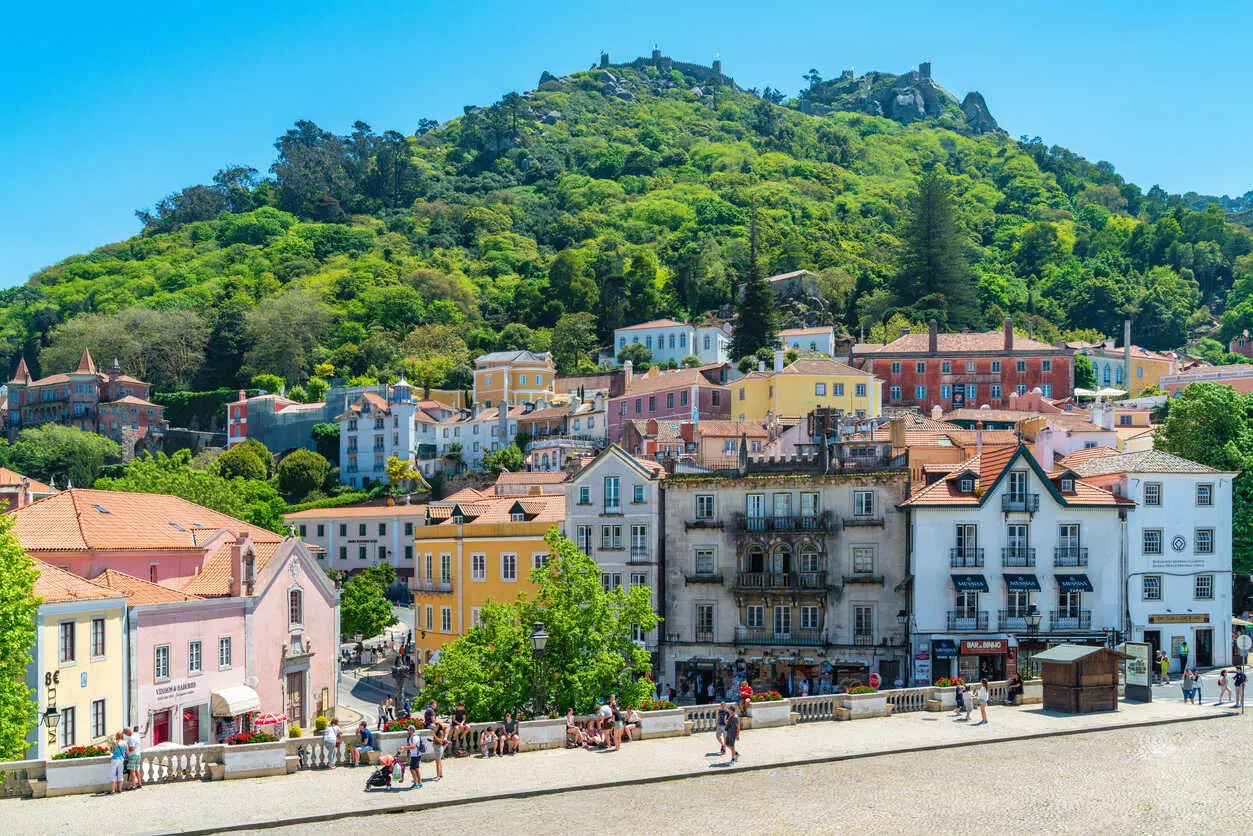
Portugal consistently ranks as one of the top places to retire, and the reasons why are clear. Its stunning environmental diversity is one of its greatest assets, offering the geographic variety of a country five times its size. Combine this with fresh, affordable food, universal healthcare, a compact footprint, and kind neighbors. Add a climate that ranges from sun-drenched coasts to rolling green hills, and you have a recipe for an exceptional quality of life.
Portugal boasts mountainous terrain, natural forests with miles of hiking, and the Douro wine region. This stunning landscape is the canvas for a country richly steeped in culture. History isn’t confined to museums; it’s visible in ancient fishing villages, historical castles, and the iconic azulejo facades that decorate buildings everywhere. Every step in Portugal truly feels like a step through time.
The climate in Portugal is varied. The Algarve, in the south, is warmer year-round, offering a life on and off the Atlantic Ocean. While it may be too cold to swim in the winter, it’s temperate enough to revel in the sun and surf during summer. As you move north, temperatures drop. Lisbon, for example, is warmer and significantly less rainy than Porto. If you’re craving cooler temperatures and Pacific Northwest–level greenery, northern Portugal could be your ticket. Perhaps you’re aching for island life. From Madeira in the south, with perfect weather all year round, to the wild Azores in the west, Portugal’s got you covered. In the Azores, you can sip coffee or tea on your rustic cabin porch and hike to your heart’s content.
What continually strikes me about life here is the effortless warmth of the people—a genuine kindness that translates into a deep sense of safety. One of my favorite things about living here is the community. While expat groups often cater to couples, as a solo person, I found my community by participating in activities with shared interests. These include a vegan group, fitness classes, hiking groups, and even dog walking.
While prices have increased in the past few years, they’re still quite low compared to cities in the U.S. like Seattle, New York, Chicago, and Denver. The cost of living in Canada and the U.K. remains significantly higher.
A one-bedroom apartment outside Lisbon proper currently runs about €1,500/month. Rents in Porto are comparable, though at the edge of the city you can still find a two-bedroom for around €1,200. When I moved here in 2022, a one-bedroom apartment inside the city of Porto could be purchased for €150,000, but now runs €300,000. There are a few important caveats if you’re purchasing through a bank loan: you must pay off your mortgage by age 75, and if you’re not a citizen you’re required to put at least 20% down.
One of the many perks of living in Portugal is the abundance of fresh fruits and vegetables. Groceries typically average €400 to €500 a month, depending on your diet. Utilities depend on the size of your apartment and whether or not you have built-in A/C and heat. I live in a three-bedroom, two-bath apartment (without heat or A/C). My average water bill is €16 a month. Electricity is around €50/month in the summer and can go up to €130/month in the winter. A significant difference is the ability to choose between utility companies. While the main provider, EDP, costs more, it offers reliable English-speaking customer service—a benefit smaller, cheaper competitors may not provide.
Transportation options are abundant. Uber costs about €3 to €5 to travel across the city of Porto one way. A monthly bus pass is €30 for three zones or €40 for all zones. If you choose to travel by car, you spend about €40 a month to fill up your Smart ForFour.
Portugal truly shines with its universal healthcare offering cradle-to-grave coverage. There are two options: public or private insurance. I have both and am glad I opted for the €130/month private plan.
Things are changing rapidly in terms of visas and residency, but the D7 (passive income visa) is a great option. You can legally work on this visa if needed. The D8 is the newer digital nomad visa. Both require €10,500 in a Portuguese savings account until you are approved for your residency card, which usually takes up to four months after arrival—though it has been known to take as long as nine months in extreme cases. To qualify for the D7, you must show a passive income of $1,000/month from a pension, rental property, dividends, interest, or royalties. Employment income cannot be used for the D7, but it can for the D8, which requires a monthly income of €3,500.
For retirees seeking culture, safety, accessible healthcare, manageable costs, and varied landscapes, Portugal offers a day-to-day quality of life that’s hard to match.
The World’s Best Retirement Havens for 2026
The World’s Best Retirement Havens for 2026
24 Countries Compared, Contrasted, Ranked, and Rated. You don’t have to be rich to enjoy a pampered retirement, you just need to know where to go. With our 35th Annual Global Retirement Index, our experts hand you a detailed roadmap. Details—and a Special Offer—Here
By submitting your email address, you will receive a free subscription to IL Postcards, Overseas Dream Home, The Untourist Daily and special offers from International Living and our affiliates. You can unsubscribe at any time, and we encourage you to read more about our Privacy Policy.
3. Costa Rica
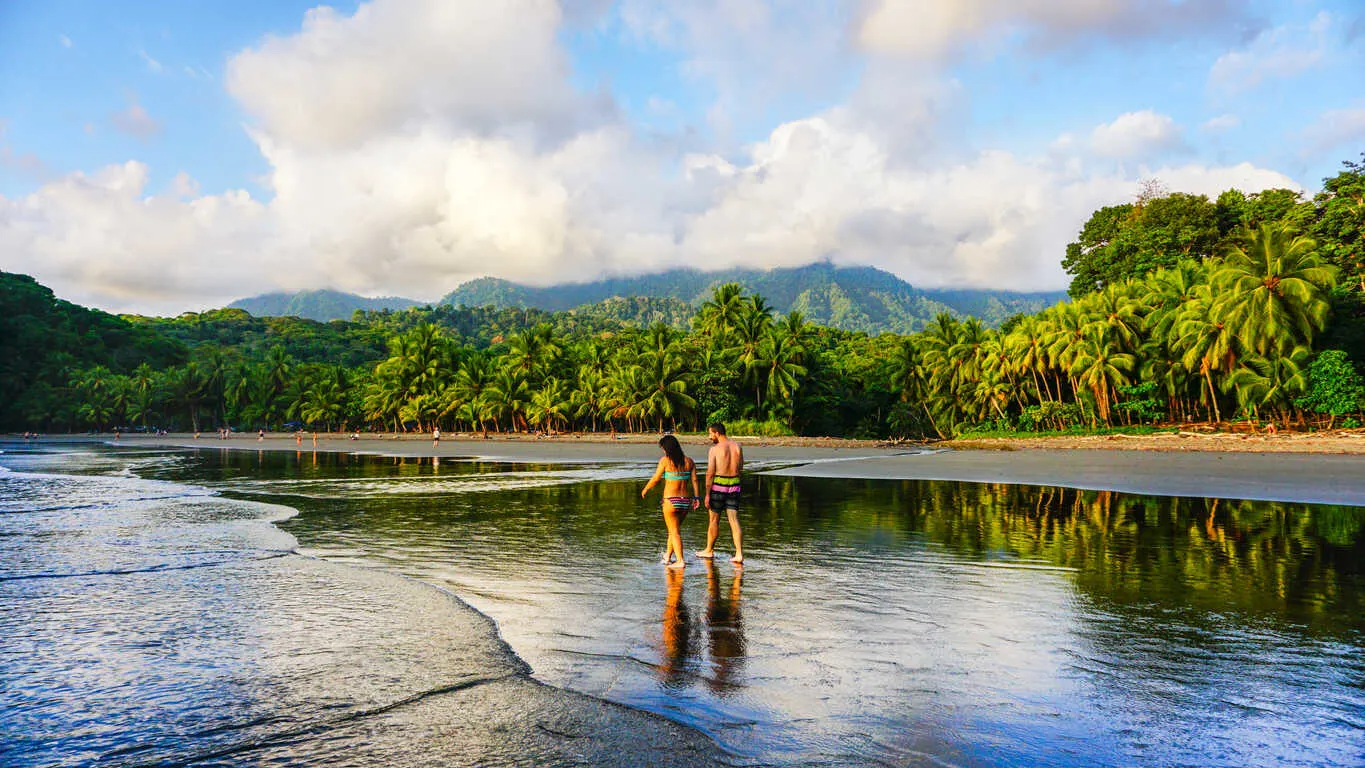
I sit on my porch with my feet in the grass, dark roast Costa Rican coffee in hand, watching my plumeria and banana trees sway near the pool and listening to the birds chirping while my cat and dog nuzzle beside me. It’s these small moments that remind me why I chose Costa Rica—life slows down, and nature reminds me to breathe every morning.
And just as I start my day grounded, I love to end it reflecting on the beach at sunset with friends. As I enjoy the beauty painted across the sky each evening, I sit in a colorful Adirondack chair at Noguis and order a 2-for-1 Imperial Silver during happy hour. I thought people were crazy at first for putting ice in their beer—but now I do it because it’s hot on the beach!
I’ve met single people who live on about $1,500 a month, as well as couples who spend over $4,000 a month—the cost of living is so subjective. As a parent, my biggest expense is private school in Guanacaste—over $1,800 a month for two children. Everyone I talk to says the same thing: eat local food—forgo the imported brands—and you can eat relatively inexpensively. Go to the local feria and buy fresh fruit at the stands on the side of the road. Sweet, juicy watermelon and pineapple are my favorites.
Eating out prices depend on where you are. For example, when I visited my family in Tres Ríos, we went to a beautiful restaurant, surrounded by rolling green hills. I ordered a pozole soup for lunch, which was under $6. And the beers were $2.25.
This couple’s monthly expenses in Sámara give a good idea of what’s possible once you settle in: $50 for property tax, $400 for food and groceries, $250 for entertainment and dining out, $100 for transport, $80 for public healthcare, $275 for electricity, $18 for water, $80 for internet, $48 for two phones, and another $205 total for cleaning, gardening, and pool maintenance. They own their home and spend around $1,593 a month in total.
I bought my property in Tamarindo in 2011 and took out a mortgage to build my house. I love its location—just six minutes from the beach. Rental prices vary by area. For example, I met someone who pays $600 for a studio in Puerto Viejo, and another person pays the same for a two-bedroom home in Grecia. The best way to find a great deal is to spend time in the area you’re interested in, chat with locals, and see what’s available. In my neighborhood, new three-bedroom homes near Playa Tamarindo run around $348,000, while two-bedroom condos list for about $280,000.
Property taxes are low—only 0.25% of the purchase price or assessed value. If your property qualifies as a luxury home, it’s subject to a higher rate.
I’ve used both the Caja, Costa Rica’s public healthcare system, and private care. Although wait times for non-emergency appointments at the Caja can be long, private appointments are easy to schedule and much more affordable than in the U.S. My kids and I have all spent nights in the public hospital and were treated well. I use MediSmart, a discount program that lets me get a mammogram and a dermatologist appointment for around $50 each. Dental care is also affordable—I recently got a cleaning and checkup for $70.
U.S. and Canadian citizens can stay for up to 180 days visa-free, with proof of onward travel. Residency is easy to obtain but takes time—typically six to 18 months. Pensionado applicants need $1,000/month in pension income. Rentistas must deposit $60,000 and transfer $2,500/month for two years. Inversionistas invest $150,000 in real estate or other approved options. Speaking Spanish helps, but using a lawyer simplifies the process.
My Costa Rican adventure began in 1997 as an exchange student. Feeling part of a Tico friend group made me fall in love with the country. Fast forward 28 years, and my community is what helps me get through life’s ups and downs.
Facebook groups help me meet new people in different areas. I post in expat and town-specific groups and meet people eager to share stories. When I have questions, I turn to a Guanacaste women’s group for advice. Last Friday at sunset, friends and I were laughing over Imperial beers when a new family joined us—hanging out on the beach makes it easy to meet people.
Located in Central America, Costa Rica offers easy access from the U.S. with flights to Liberia or San José. I always fly from Liberia to JFK and pay between $300 and $500 per ticket. You can find your perfect climate here—as long as you aren’t looking for snow. I’ve come to really love rainy days—relaxing on my patio, mesmerized by the bright green leaves and cooler air.
Costa Rica’s tropical beaches are mostly hot and humid. Guanacaste is the driest region, with no rain for about five months. The Nicoya Peninsula and Central and Southern Pacific coasts are lush, where jungle meets the sea. The Caribbean coast has great weather in September and October, when the rest of the country is at its rainiest. The Central Valley and Arenal area offer a consistent spring-like climate.
The most important part of choosing where to retire is finding a place that truly feels like home. Everyone I’ve met says the same thing—there’s just this feeling when you’re in the right place. Trust your intuition, and let your journey begin.
2. Panama
By Jess Ramesch
When I turn up for our monthly potluck, my friend Ann spots me from across the pool deck, calls out “Jessica!” and throws out her arms for a hug. Her smile and happiness to see me are lovely and genuine. I go around the table, smooching my hellos—starting with the group of friends I now call my “First Ladies.”
This is the crew that welcomed me to the building before I’d even moved in, answering all my questions, coming over to my apartment for dinner when it was filled with boxes, eating cannelloni served on a wobbly card table, and pronouncing it an excellent night.
We do lunches and happy hours, dinners and potlucks… little field trips to different beaches along our coastline. We sit on rooftops or dig our toes in the sand… enjoy the balmy salt air, marvel at our views of Campana mountain and the warm tropical waters beyond, gossip a tiny bit, drink only a little… and constantly express our gratitude for this sunny, palm tree-filled, coconut-scented existence.
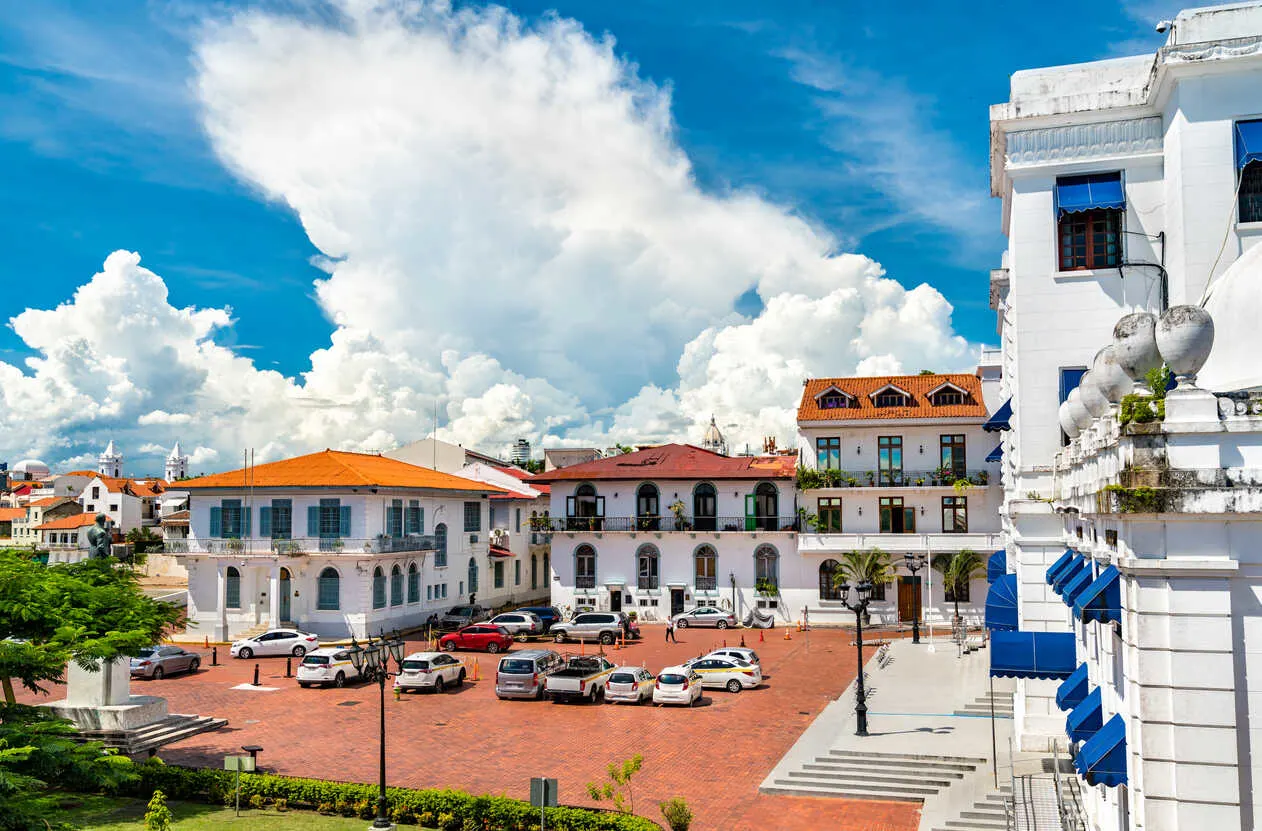
This is my life in Panama. A place where I’ve found not only fast friends but also my dream home. In the modern, convenient beach hub of Coronado, a town filled with active expats from the U.S., Canada, and just about everywhere else, I snagged an apartment of just over 1,000 square feet for $155,000.
I’m on a golf course, with the kind of beach and ocean views you get in Hawaii… in a luxury building. Pools, gym, sauna, game room, party space… I am spoiled with all our beautifully maintained communal areas.
Everything is bright, a delight for the eyes. This part of the world is all greens and blues in party hues, with splotches of magenta, fuchsia, firebrick… every color, every tropical bloom.
It was already quite high… but my well-being has shot through the roof living here. Before Coronado, I lived in buzzy, cosmopolitan Panama City, the only world capital of its kind, on a wide-arcing bay, with a futuristic skyline you have to see to believe.
Now, in my dream condo in Coronado, I keep my curtains open so I can wake to good old Sol, the fiery orb rising from the baby blue waters, blasting me in the face, impossibly close… Out of bed, sleepyhead.
My morning view makes me feel like a millionaire.
There are plenty of good-value homes available today. In a string of townships all along this coast (and beyond), I’m still seeing attractive apartments listed in the $150,000 to $250,000 range.
Foreigners who buy here are accorded practically the same property rights as citizens. And this is a stable, well-governed country, with plenty of titled, well-built homes. Property taxes are low (as little as 0.5% for most non-luxury homes), and sales tax is just 7% on most non-essential goods and 10% for luxuries like imported wines (which we get at great prices from all over—France, Portugal, South Africa… and yes, the U.S. too).
If you’re from the U.S. or Canada, you can live here for six months and give it a whirl—no visa needed. Panama has top-notch internet, uses the U.S. dollar, and is home to one of the world’s most stable international banking centers. It’s known as the Hub of the Americas, thanks to its award-winning international airport.
But in the world of International Living, Panama’s real claim to fame is its Pensionado Program, our number one pick for ease and special benefits. Retiree residents in Panama get specific, government-mandated discounts that cover nearly every major aspect of life. Imagine 25% off your power bill, 50% off movie and show tickets, 20% off medical consultations, and much more.
The basic requirement is simple: your pension must be at least $1,000 a month (or $1,250 pooled between you and your spouse). Acceptance rates are high, wait times are low (as little as three months)… and once you’re in, you’re in.
Panama has a stellar track record, welcoming folks from all over since the 1940s, and never kicking them out. Not every country can say the same. If the requirements change, you don’t have to worry.
And if you don’t have a pension? Cero estrés, as Panamanians say. From the Friendly Nations Visa to a new telework plan for digital nomads, there are a variety of options.
I’m single, and I live a “jet-setter” lifestyle on $2,900 a month, including my mortgage. But if you’re not quite as extravagant as me—you can live a fun, social lifestyle on $2,400 a month, including rent.
Choose the cool, springlike climate of Highland towns like Boquete or Volcán… the bohemian surfer haven of Venao or Caribbean Bocas del Toro… or abundant farmlands, rural outposts, rainforests, or cloud forests. A tiny, complete universe awaits… in the little green wonder that is Panama.
Intrigued? Come and rent for a while. There are great-value options for short- and long-term stays. Condos with views like mine rent for $1,200 to $1,500 a month, but across Panama, there are tons of desirable options from $550 to $1,000.
Panama’s overall value can’t be beat. With big savings on healthcare, taxes, and property (and, for me, wine), you can smile while you splurge… on the little luxuries that help make a good life great.
And you can learn to live like Panamanians do… with cero estrés.
1. Greece
By Leena Horner
Four years in, I see why this country has become such a compelling choice for retirement.
When I heard that Greece had jumped from number seven to number one on this year’s Retirement Index, initially, I was surprised. Not because it didn’t deserve the recognition, but because it seems to be off the radar for most aspiring expats.
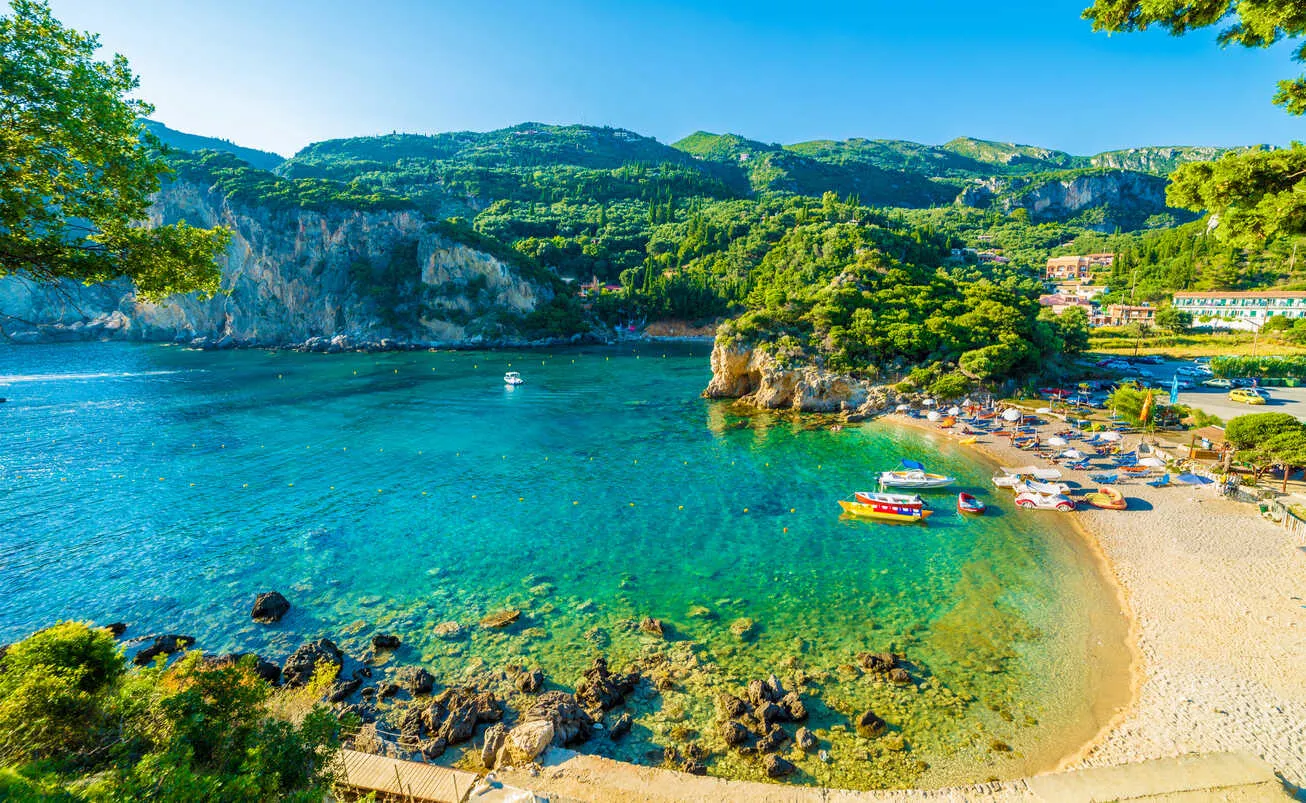
And yet, when I step out onto my terrace on Corfu, with sunlight warming the limestone patio under my feet and glimpses of olive groves with the Ionian Sea stretching toward the horizon, it seems obvious. Greece quietly transforms the way you live.
It’s not just one thing; it’s the climate, the “siga siga” attitude of taking life slowly, the vibrant community, and the daily connection with nature. Gradually, those elements seep into your life, and before you know it, you find yourself living in a new way—feeling more connected and at ease.
Much of Greece has more than 300 days of sunshine a year. Where I live on Corfu, summers are hot and humid, like much of the Ionian Islands, but what surprised me most was how much I’ve come to love the winter.
By November, the last of the seasonal visitors leave. The island settles into itself. Most of the restaurants close down for the off-season, and the few remaining cafés still open fill with familiar faces, and the beaches are empty except for a few year-round swimmers. I’m not one of them, but on crisp days in the 50s°F, I head out on foot, following narrow trails through olive groves. The air is sharp and clean, and the snow-capped mountains of Albania are visible in the distance.
Each month of spring brings its own bloom: white daisies in January, yellow sweetgrass in February, followed by purple wild irises in March, and by April, the hillsides are dotted with the pink blossoms of Judas trees.
Spring in Greece culminates in Easter, the country’s most significant holiday. Leading up to Lent, elaborate Carnival celebrations fill the streets with parades, costumed revelers, and music. Easter is a week-long event, featuring candlelight services and processions. At midnight on Saturday, church bells ring, and fireworks light up the sky. Easter Sunday involves church services and family feasts, often with lamb roasted over coals.
Our monthly expenses are about a third of what they were in Boulder, Colorado. We live on €2,900–€3,000/month, for all our expenses. Our house is paid off, but renting a similar three-bedroom home with sea views would run €800–€1,000/month. A modest two-bedroom goes for €600–€800, and on the mainland, good rentals can be found for €300–€600.
We dine out at least twice a week without having to watch the budget. Dinner for two with wine typically costs €30–€50. Gasoline is pricier in Greece, about €75 a tank, but we drive far less than we used to.
We bought our house in 2022 for €250,000, which qualified us for the Golden Visa. Prices in our area have since risen sharply; similar homes now list closer to €400,000. There are still more affordable options if you look inland or outside the main tourist areas.
My Canadian friend Cindy recently bought a small one-bedroom townhouse in a rural inland village in Crete for €36,000. Her new home only needs some cosmetic work, fresh paint, and some new appliances and furniture.
The private healthcare here has been consistently good. We pay €250/month total for private insurance for the two of us, primarily catastrophic coverage with a €2,500 deductible. For most routine care, we pay out of pocket and have never spent more than €1,000/year.
Last spring, my husband experienced a retinal detachment. Within an hour of calling, he was in the ophthalmologist’s office. The laser treatment, 23 spots in all, plus three follow-up visits and a second small laser procedure, cost €250 in total.
Scheduling appointments is straightforward, with no need for referrals, and usually, you can get an appointment within one week. In addition, the visits are unhurried, and the doctors take their time to get to know you. Also, most doctors here have a strong command of English.
My health has improved in ways I didn’t anticipate. I spend more time outside—hiking in winter, kayaking in summer, dancing with friends once a week. I’ve focused on eating food that is both seasonal and sourced from local farmers. One spring afternoon, I filled my basket with an array of fresh fruits and vegetables—enough to prepare an incredible vegetarian dinner for six guests, plus a week’s supply of produce for the two of us—all for just €28.
We live in a rural part of Corfu where locals and expats know one another. In winter, when many restaurants close, we often host dinners for small groups of friends. We have a friend who’s a personal chef who often cooks for six of us for under €100, groceries included. Every Saturday evening, we enjoy a spiritual discourse followed by a community potluck dinner. On Christmas Eve, we have a large gathering of around thirty people, and we enjoy a banquet feast followed by the singing of Christmas carols.
We also have a weekly board game night, regular dancing, meditation groups, ping pong and billiards, and two community-run silent retreats each year. In summer, the social calendar fills with concerts, art workshops, and local events.
Greece may be small, but it’s varied: 8,000 miles of coastline, rugged mountains, wine regions, large cities like Athens and Thessaloniki, and more than 200 inhabited islands. Wherever you live, the sea is within 90 miles. Each region has its own identity.
Obtaining residency is quite straightforward. Retirees often apply for the Financially Independent Person permit, while property buyers typically seek the Golden Visa. Remote workers have the option of a Digital Nomad Visa. It is not necessary to own a home in order to live here, but many choose to do so because the Golden Visa process is relatively uncomplicated and comes with many benefits, including visa-free access to most of Europe.
When I think back to our life in Boulder—the long winters, the high cost of living, the constant busyness—it feels like a distant memory.
Here, my mornings begin with coffee enjoyed on the terrace, and more frequently than not, they conclude in the presence of friends or with the soothing sound of waves drifting through the evening breeze. The pace of life here is relaxed, yet it is far from dull. It is consistent, communal, balanced, and unexpectedly rich.
Greece offers more than just a change of scenery; it presents a chance to relocate abroad with various residency options. You’ll find that not only can you live at a lower cost, but you can also embrace a rich and fulfilling lifestyle.
Recommended Reading:
5 Best Countries for Expat Visas and Retiree Benefits in 2026
Where to Find the Best Weather for Retirement in the World in 2026
The 7 Categories We Assess
Our Index looks at seven categories…
Housing
This category looks first at the ease of buying and owning property as a foreigner, then the value you’ll receive as a homeowner. We consider factors like the price of housing in expat-friendly locations and property taxes.
We also examine rental values. In many destinations, renting makes better financial sense than buying. We look at long-term leases, the cost of renting a two-bedroom, 900-square-foot furnished apartment in a mid-range area, and whether renters’ rights are well-protected by law.
Visas and Benefits
A place isn’t much good as a retirement destination if you can’t live there easily. We begin with an analysis of available tourist visas: how fast/simple it is to obtain a tourist visa, the ease of exploring a country on a tourist visa, the length of a tourist visa, etc.
But we also investigate the legalities of extending a stay, the ease of becoming a permanent resident, and the availability of special retiree options. We additionally consider retiree benefits and discounts on healthcare, prescription medication, entertainment, eating out, travel, utilities, and local transport.
Cost of Living
Each of our contributors answers an extensive cost-of-living questionnaire, tailored to the needs and wants of an expat retiree, from the cost of rent and utilities to groceries to a flight home to visit family in North America.
The lower the cost of living, the higher the score.
Affinity Rating
This one is where gut feeling comes in. We pride ourselves on being systematic in the way we put the Index together—but the truth is, retiring in a new destination involves the heart as well as the head. So, we ask our experts to rank our destinations according to whether they’d be happy to move there. What’s more, we ask you—our readers—where you would like to move.
For example, how easy will it be to make friends? We find out by evaluating the size and character of the expat community, the number of clubs and activities, and whether or not English is widely spoken. We also rate the range and variety of restaurants, the ease of finding an English-language movie, a concert, a world-class sporting event… essentially, the ability for you to have a thriving social life as an overseas retiree.
Healthcare
We assess healthcare based on both quality and cost. In many of the world’s best retirement destinations—and all of those included in the Index—you’ll find world-class care far cheaper than back home.
Development and Governance
If the roads are good and clean, the public transport excellent, and the internet fast and reliable, then a place will rank highly. We additionally factor in whether your new home offers a stable political environment, well-maintained infrastructure, and an efficient banking system.
Climate
This is our “Goldilocks” category. For some folks the perfect climate is hot and humid, others want spring year-round… So, how do we score somewhere like Roatán—a small Caribbean island with a tropical climate—next to, say, Ireland? Apples to oranges, right?
We score a destination based on how many different climate options it offers. Ecuador’s landscape ranges from permanent snowfields, to cool mountain retreats, to tropical rainforest, to arid coastal plains reminiscent of southern California. In the Andes highlands, in Cuenca at 8,000 feet, it’s cool.
Belize, by contrast, has tropical warmth year-round, but that’s all. For that reason, Ecuador scores higher than Belize. (That said, maybe you love tropical warmth year-round… If so, Belize might be just right for you.)
The World’s Best Retirement Havens for 2026
The World’s Best Retirement Havens for 2026
24 Countries Compared, Contrasted, Ranked, and Rated. You don’t have to be rich to enjoy a pampered retirement, you just need to know where to go. With our 35th Annual Global Retirement Index, our experts hand you a detailed roadmap. Details—and a Special Offer—Here
By submitting your email address, you will receive a free subscription to IL Postcards, Overseas Dream Home, The Untourist Daily and special offers from International Living and our affiliates. You can unsubscribe at any time, and we encourage you to read more about our Privacy Policy.
The 5 Forces Shaping the Future of Retirement Abroad
Forty-six years ago, International Living began sharing a simple but radical idea that a richer, freer, and more fulfilling life might begin after you leave home. That idea—once the domain of adventurers and dreamers—has become a practical reality for hundreds of thousands of Americans who’ve chosen to retire abroad.
Today, that movement is entering a new era. The world is shifting faster than at any time since IL began in 1979. Costs are rising at home, healthcare is going through the roof, the dollar is declining against major world currencies, technology is rewriting what “work” means, and the very definition of retirement is being rewritten. What was once a niche lifestyle is now a global trend reshaping how we think about retirement security, purpose, and freedom in the “Third Age” of life.
So, this year, for the first time ever, alongside our 35th Annual Global Retirement Index, International Living is publishing an exclusive, comprehensive report on the global trends that will shape the future of retirement abroad. Inside, our experts explore where those changes are leading—and what they mean for you.
You can access The 5 Forces Shaping the Future of Retirement Abroad—with insights from Real Estate Trend Alert founder Ronan McMahon, Global Intelligence editor Jeff Opdyke, Barefoot Consultants creator Winton Churchill, and more—here now.